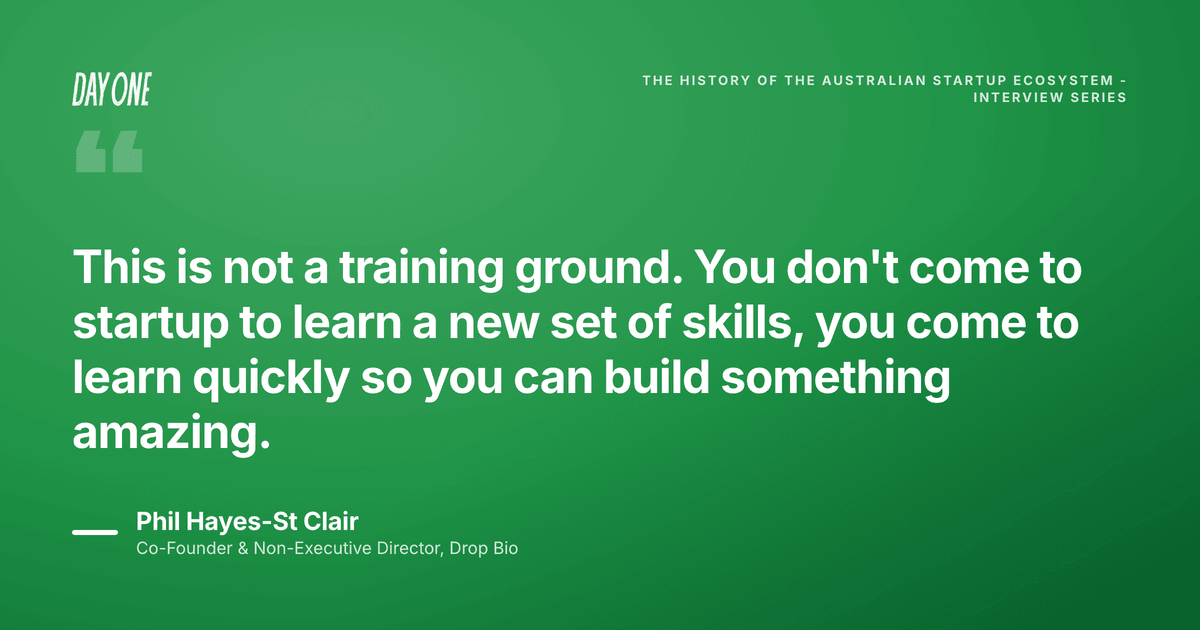
Transcript Synced · select any line to jump ▾ 0:00 Speaker: Let me tell you about our partner, Teamified. If you need to build a top-notch team quickly, Teamified is your go-to solution. They not only provide fractional CTOs, they can also do contractors and even remote team members tailored exactly to your needs. And whether you're looking for expertise in the Philippines, India, or Sri Lanka, Teamified has you covered. What's amazing is that Teamified uses a blend of AI and human expertise to cut hiring times by 50%, cent. The platform handles everything from automated onboarding to day-to-day management and even performance tracking. You can also handle rewards and recognition, buy equipment, and order training all through their platform. Simplify your hiring process and get the best talent fast with Teamified. Check them out now and transform your team. Go to dayone.fm/teamified. That's dayone.fm/teamified. Thank you, T-E-A-M-I-F-I-E-D, and get started today. Hi, I'm Adam Spencer, founder of the Day One Network, which is bringing the history of the Australian startup ecosystem to you. I believe in founders. It's why I do everything I do at Day One and our media company, W2D1 Media. And that's why the Day One Network exists, to create helpful content for founders. We've got some great shows in development, but a large part of what we do couldn't be done without support from our partners and sponsors. And I couldn't be happier than to be working with NTP, who get community better than any other technology recruitment company out there. A Newcastle company like mine, NTP are invested in seeing the growth of the local tech community in Newcastle, Sydney, and more broadly Australia. So thank you, NTP, for helping us bring helpful content to founders and the startup community in Australia. Back to the interview. Hi, I'm Adam Spencer, founder of the Day One Network, which is bringing the history of the Australian startup ecosystem to you. I believe in founders. It's why I do everything I do at Day One and our media company, W2D1 Media. And that's why the Day One Network exists, to create helpful content for for founders. We've got some great shows in development, but a large part of what we do couldn't be done without support from our partners and sponsors. And I couldn't be happier than to be working with NTP, who get community better than any other technology recruitment company out there. A Newcastle company like mine, NTP are invested in seeing the growth of the local tech community in Newcastle, Sydney, and more broadly Australia. So thank you, NTP, for helping us bring helpful content to founders and the startup community in Australia. Back to the interview. 2:46 Speaker: Hi, I'm Adam Spencer and welcome to Day One, the podcast that spotlights Australian startups, founders, and the organizations that empower Australian entrepreneurship. We go back to the beginning to tell a story of Australia's most inspiring founders and how they built their companies. You're listening to a special interview series as part of a documentary W2D1 is producing about the history of the Australian startup ecosystem. On the episode today, we have— 3:18 Phil Hayes-St Clair: I'm Phil Hay-Sinclair, the CEO and co-founder at DropBio. DropBio is a digital health company focused on chronic inflammation. We have a mission to accelerate the world's transition to personalized health, which means that we're trying to put really useful data in the hands of consumers and clinicians and researchers to help allow people to understand more about their health and really take care of themselves more effectively than what they've done so far. 3:47 Speaker: Why did you decide to start a company focusing on inflammation? Is that a personal— was there a personal motivation there? 3:56 Phil Hayes-St Clair: Drop was started Thanks to some research that was done here in Australia, which related to what you could see in whole blood. And whole blood is important because when we go and have blood tests done from our doctors, the way that a blood sample is split is that it looks at a particular component of that blood and not the whole component. And it was discovered that a large number of the, really important markers that help your body govern its immunity get discarded when those blood tests are done. And so we end up looking at a small cross-section of what is actually going on in ourselves when we have a blood test. It's still accurate, it still tells a good story, but when you're trying to look at those markers that tell the underlying story, so things that are maybe a million times lower in concentration than the markers being looked at by blood tests of your doctor, those ones aren't able to be seen easily and the technology that we use helps us do that. And so inflammation is important, chronic inflammation or systemic chronic inflammation is important because it plays a fundamental role in the early warning of chronic disease. And what gets us out of bed every morning is the idea of unlocking the body's natural early warning system because we would like to be able to help people understand that if they do have a family history of chronic disease of any kind, whether it be cancers or arthritis or diabetes or any of these other conditions, that we would be able to give them the most advanced warning possible so that they could get treatment and support so that they don't actually have to face into the more sinister complications that come with these conditions. And the literature on this has been really clear for the last you know, 3 or 4 decades, that if you can detect and measure and track and understand what these markers are telling you, then great treatments can be created. And for the most part, we can stop people from having to suffer really sad and lonely and often very painful deaths. 6:01 Speaker: When, when would you say you first got involved in the thing that we describe as the startup ecosystem in Australia? 6:09 Phil Hayes-St Clair: I think at the age of 7. 6:11 Speaker: Okay, wow. 6:13 Phil Hayes-St Clair: So my first entrepreneurial endeavor, I suppose, was as a bored 7 or 8-year-old collecting all of my friends in the neighborhood, ransacking our parents' garden sheds, taking out all the tools and running around the neighborhood telling people that for $20, which in sort of mid-1980s money was a lot of money for a kid, we would, in inverted commas, fix your garden. And I'm sure we left the gardens in worse state than what it was, but we were able to get people to pay us to do a service. And then we split the money amongst the little gang that we had running around the neighborhood. I'm pretty sure that we lost more tools than we actually had in the first place. But the reality was, it was something, I found it easy to get people to do things they wouldn't ordinarily do, reward them for that effort. And I've been doing that ever since. So it's just a really interesting thing that I've found I had a knack for. And obviously you learn every time you do it time and time again. So company building's a bit of a craft and if you're fortunate enough to do this time and time again, hopefully you get better at it. 7:17 Speaker: Why do you keep doing it? 'Cause it is a hard, I think like the general consensus is it's a pretty hard slog. 7:23 Speaker: Yeah. 7:23 Speaker: Founding and growing a company. Aside from any of those reasons you just listed, like what keeps you doing it again and again? 7:31 Phil Hayes-St Clair: I think I'm a square peg in a round hole. Right, so the idea of trying to sort of fit in and be part of a larger team was born into me when I was in the military, when I enlisted straight out of school. I wasn't able to continue that career because of an eye condition. And when I came out of it, trying to find that place to belong was really tough. You know, I wasn't a lawyer, I wasn't a doctor, wasn't an accountant, wasn't a finance guy. And trying to go these large organizations didn't really seem to work for me, yet I kept on, seeing these opportunities to improve the status quo. And ultimately a mentor of mine said, I think you should start, instead of doing intrapreneurship, you know, building things and changing from the inside, maybe you should go out and start doing it yourself. And so I did that and started a company, blew up that company, learned a bucketload of stuff and just realized that the amount that you can learn and achieve by starting something new or improving something that is, already attempted outside of an organization is something that is intoxicating. And like anything, it takes practice and sometimes you do quite well and sometimes you don't do very well. But I couldn't really find inside really large businesses and large organizations the sort of escalator for progress. Like I could try and conform, but I just found that it really suffocated me trying to do that. So I guess I just found a different path, which has been a lot more tumultuous than I think most paths would be. And every founder will tell you that, but it allows you to learn and experiment and create in a vastly different way. And I think for the most part, Reid Hoffman captures it well in his book, "The Alliance," where he talks about the idea of the career escalator being broken. It's not like it used to be. We don't all retire like our parents did or would like to at age 50, 55, 60. We've gotta forge different paths, industries that were built on that sort of classic retirement path are sort of not really there much anymore. Some of them still persevere, and the internet and information has allowed us to be curious and find out things and try and put new plans into place to create the future. So I find that just a really good investment of time, and I try and get people who I teach at the University of New South Wales in the MBA program— I try to get them to think differently about the opportunities they've got with the skills they've got. Mm-hmm.. And I find that just a massively interesting and invigorating investment of time. 10:01 Speaker: At what point, I'm assuming this is not when you were 7 or 8 years old, but at what point did you start to see the community really start to gain momentum? 10:11 Phil Hayes-St Clair: I think the community was making really good strides well before I even came into it, especially here in Sydney. I think that people like Bill Barty, of Blackbird and of CSIRO did such an amazing job. And it was him, people like him, but you know, he comes to mind first and foremost, being able to bring together collections of people to try and invest more effectively together, really pay forward all the information they'd accumulated to help founders be more successful. Not look at founders as being a product from an investment point of view, but actually trying to find out how do we skill these people up so that they can become successful in their own right. That sort of started the establishment of Blackbird, Nikki and the team there. You know, it's one example about how that has, how that started. And then after that, there were others that just came either into the market or decided, you know, we can actually do some really fantastic work here. And it just attracted, it had a natural magnetism for people to come and to be involved and the specter of building your own company became mainstream over the last decade unlike it had ever been before in Australia. It was very culturally accepted to do this in the US, has been for generations. Very rugged entrepreneurial kind of approach to life in general. Australia hasn't had that, but the last 10, 15 years has seen that really take off. And I really only think we're sort of 10% of the way. The ability for us to catch up is immense. And we always punch above our weight as Australians in just about everything we do. But I think we're starting to create a lot more with a lot less and then finding our ways into much more interesting markets than the traditional, you know, start a business here, then move to the US. Like there are so many other markets across the world that are just fascinating to be part of. It takes a different approach, but I think we're as a country doing some amazing stuff. Yeah. 12:10 Speaker: Speaking about Bill Bartee, bringing people together, deciding to bring people together, deciding to help move things along and make it easier for startups and make it easier for people to invest in startups. What do you think was the thinking behind that? Why was that such an important thing to make happen? 12:27 Phil Hayes-St Clair: I don't know if I can speak on Bill's behalf on this. I think there was just the move. So, you know, in the early or late '90s, early 2000s, the world sort of looked in on Silicon Valley as just being the epicenter for change. It still is to some extent, but it's spread further around the world now. Um, you look at places like the Ukraine, Nigeria, the UK, Belgium, Germany, New York— more now Massachusetts— where a lot of the conventional sort of medical technologies, defense technologies hail from. There are so many places you can go in the world that are now doing such great work, but they all have one thing in common. There is a collection of people that have decided to come together, which is typically the formation of founders and really interesting and productive investors. You know, entrepreneurs that have turned investors, often the best kind, have decided to go, you know what, I've made some good headway in life. I had these opportunities. If I can replicate these opportunities for, younger founders who will think quicker, be smarter, understand the language of consumerism better than any of us will at aged 40 and plus. This is what that sort of effect has had around the world. And I think now as founders who have been in this game for a little while, it's important that we find time to teach what we've learned to people that are coming through to help them avoid making the really basic mistakes that we made in the beginning. 13:58 Speaker: Mm-hmm. 13:59 Phil Hayes-St Clair: Because there's usually 10 or 20% of those founders who are just insatiable to take advantage of that, of those tracks that we've already worn. There'll be many who don't, right? But I think the key thing that people like Bill did was that they said, I can't do this by myself, so I'm going to go and find people who are a bit like me, who can add their different level of color and pizzazz to what's going on and actually make it a real force to be reckoned with. And I think Sydney is one of those, Melbourne is certainly one of those, Brisbane's got a great ecosystem as well. So I don't think you've gotta go far to find those ecosystems now. But if we looked, if we tried to find them a decade ago, I think we'd be looking at one or two small spots and there wouldn't have been hotspots, certainly not in Australia. 14:45 Speaker: You mentioned the community was kicking along quite well before you got involved. What year would you say that was that you kind of jumped in? 14:55 Phil Hayes-St Clair: Look, I think it was 2005, '06, '07, around that time. You know, the dot-com had certainly come and gone. There were Australian entrepreneurs coming back from overseas to either resettle or sort of retool and rearm. And there was certainly the idea of the consumer internet. It hadn't sort of found its revival yet. Obviously iPhone 2007, I still remember seeing Steve Jobs release that and I still, you know, when I think about him saying on stage, "Are you getting it yet?" About the fact that we combined all these things into this device. I did remember thinking, wait a second, this is gonna change everything. And now it probably couldn't be, it wouldn't be understated to say that everyone is trying to pursue something that sort of leverages off the back of that change. And that's really, really exciting. 15:51 Speaker: Some people point to this idea of these Aussies coming back from America, from Silicon Valley. The term that is thrown around is the Aussie Mafia. Do you think around that 2005 time, like, what did the community look like? What kind of support systems were around, if any? How big was this community in Sydney? Was it just those, 'cause I hear that, you know, it was just those pub catch-ups, the little groups catching up at pubs and talking. 16:23 Phil Hayes-St Clair: Yeah, I mean, there were those. I mean, people like Phil Maul, for example, had Catalyzer and other organizations that were doing education and incubation and trying to get people tooled up so they could understand what it meant to do customer discovery, what it meant to do product development, what it meant to do sales. And there were some real capability powerhouses like that, but they were really small and they were trying to seek investment, trying to attract new talent to come and join them. And I still remember downloading, I think one of the first handbooks that was made available for free on their website where it was, these are things you've gotta think about as a founder. It was an education onto itself. And you know, I'm sure Phil could give us some good anecdotal sort of feedback of what it was like to sort of make that work. And well before the mid-2000s, they were considering this well before that. But that's my memory. Sort of, there was a few websites. Typically you were still going to overseas websites to look at, you know, the entrepreneurs that had come before. And there weren't too many Australians that you would point to beyond some of the larger private equity deals that Macquarie had done for LookSmart and the like. So they were sort of few and far between. It didn't feel like it was in reach. Like it was a couple of things that had gone off really, really well. But there wasn't sort of a set of events you could go to or an education that you could get from somewhere that would sort of bring you up to speed on what it meant to be an entrepreneur. 17:49 Speaker: Talking about present day now, what are some of the gaps that you think is still like, where can we improve? What needs to change, if anything? 17:57 Phil Hayes-St Clair: There's always stuff that can improve. I think there's a huge role to be played at universities, particularly in undergraduate courses and in TAFE and in other vocations, to help people understand what it means to create a product or a service that people love, to be able to sell well, to build relationships and create, as opposed to going to study a vocation. So obviously you need to know skills, you need to know what it is you're going to go and sell. But if you asked any doctor who was going through med school, how will you run your practice? You'll be greeted with a complete blank look on your face. They're not taught what it means to do, to do business in medicine, even though medicine is— Yeah. A massive business and industry in and of itself. Ironically, you could go and ask an accounting and commerce student, so what will you do to start running an accounting firm or to make the economics of a Big Four company work? They won't know, they'll just know how to read a balance sheet. So all of these, the ability to make this skillset known across every vocation is super, super important. It's about being entrepreneurial because you go and do an apprenticeship as an electrician or as a plumber or any other, any other trade, at some point you're going to have to sell and you're going to have to make sure that you can bring in the money while still doing the work. And that is often learned on the job. And a lot of the hand-me-down kind of skills that that comes with are learned because you're an apprentice. Well, there's not really an apprenticeship when you graduate from university. You're sort of thrust into a job and hopefully at the end of 10 or 15 years and a massive amount of work and stress and everything else, you are at a point of leadership, but you never knew how to build the business in the first place. And so I think the idea of helping people to understand how to build and create value, there's a massive opportunity for that. 19:48 Speaker: How did you learn to sell? 19:50 Phil Hayes-St Clair: Like most other entrepreneurs, like learning from other founders and making a bucketload of mistakes on the way. You know, I think if you have the gift of the gab, if you can talk to people and you are genuinely interested in how you transform their lives, then that's probably the best type of selling you could possibly do. What you often see people doing is selling products they don't really love, they don't really believe in, and that's terminal in just about every sense of the word. I guess for me, I just love learning about people. Like people, when you hear people say, I love to people watch, I love doing customer discovery. I could sit in an airport and just watch people go back and forth all day just observing human behavior. I just love it. Yeah. And one of my most recent side hustles was off the back of that, right? I was observing an experience which morphed into something very different. But the reality was that it was just something I couldn't stop seeing and it happened hundreds and hundreds and hundreds of times and it just sort of gave, it gave confidence to sort of capitalize on it. 20:49 Speaker: What one piece of advice would you give to a new founder? 20:54 Phil Hayes-St Clair: Take care of yourself. 20:56 Speaker: I haven't heard that one. 20:59 Phil Hayes-St Clair: Yeah, ironic, right? So if there's one thing that you can do to be, just to sort of 10x your own capability, whether that be to sell, to lead, to build, to ship, whatever the case is, if you don't sleep and if you don't eat and if you don't move physically, then you are going to absorb a massive amount of stress and pressure on your mind and on your body, which will ultimately end up in burnout. And every investor that's put any money into your business, any customer that sort of backed you to sort of supply them with whatever it is, and any team member who agreed to take a risk and come and follow you is going to be left with nothing because you as the founder or founding team has blown up and there's nothing left. 21:48 Speaker: Yeah. That one hits home for me. 21:52 Phil Hayes-St Clair: So do yourself a favor, get a good amount of sleep. I know we've gotta work hard, but get a good amount of sleep, eat well, move regularly, and enjoy the process, right? Because if you do this really well and it takes 10 years to build a great company, you might have 4 or 5 times to do this well in your life. Isn't that what you wanna do? So I think that's how I think about it. But take care of yourself. You'll work hard, you'll get it done, but take care of yourself. 22:21 Speaker: Last question. I'm trying to create a documentary here that will hopefully truthfully and holistically tell the history of the Australian startup ecosystem. I want people from all corners of the ecosystem to listen to this story. Founders, investors, academics, policymakers, and everyone in between. Any one of those categories or all of them, what do they need to hear? From Phil? What's something that you think about that maybe we're not talking about? 22:48 Phil Hayes-St Clair: As a country, we have all the building blocks to create amazing industries, to make the country self-sustainable, to help our neighbours become more productive than they've probably ever been. We just need to get out of each other's way. If you're in government, think about why grants are so important to get businesses running. Try and get them what they need as quickly as possible. If you're an investor, say no quickly to an offer to invest. Don't string out the founders. If you're trying to hire people for a role and you're the founder in your team, make sure you give them a quick answer, yes or no. And if you're the founder trying to do something amazing, don't go it alone. Go and get advice and experience from people who have done it before and be a constant learner. Learning machine. If we all did those things, the whole ecosystem would move remarkably well and a lot faster than what we're doing it right now. So that's what I would say to everybody that is involved in this ecosystem. This is not a training ground, right? You don't come to Startup to sort of learn a new set of skills. You come to learn quickly so you can build something amazing. 24:02 Speaker: I hope you enjoyed that interview. 24:20 Speaker: More interviews are on the way. Follow the podcast wherever you're listening right now. Stay tuned for more interviews with many, many more amazing people from the Australian startup ecosystem. Thanks for listening and see you next time.