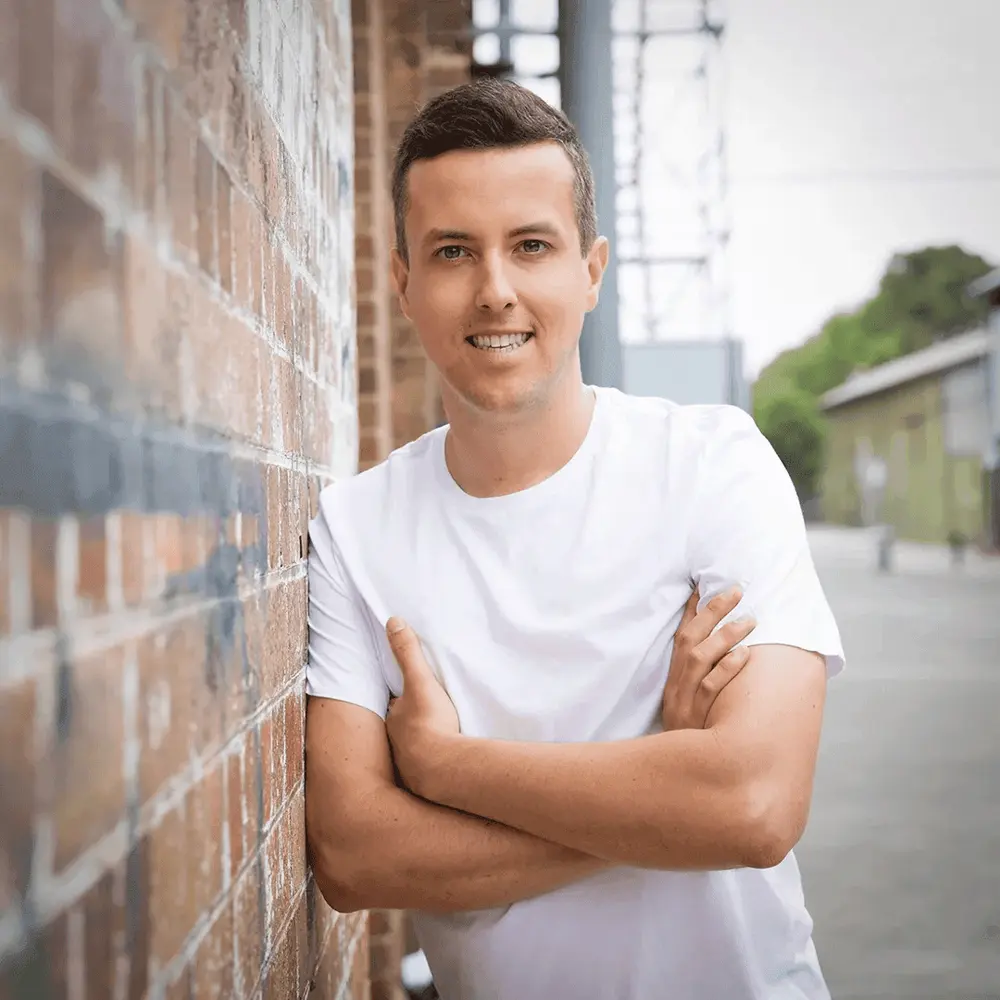
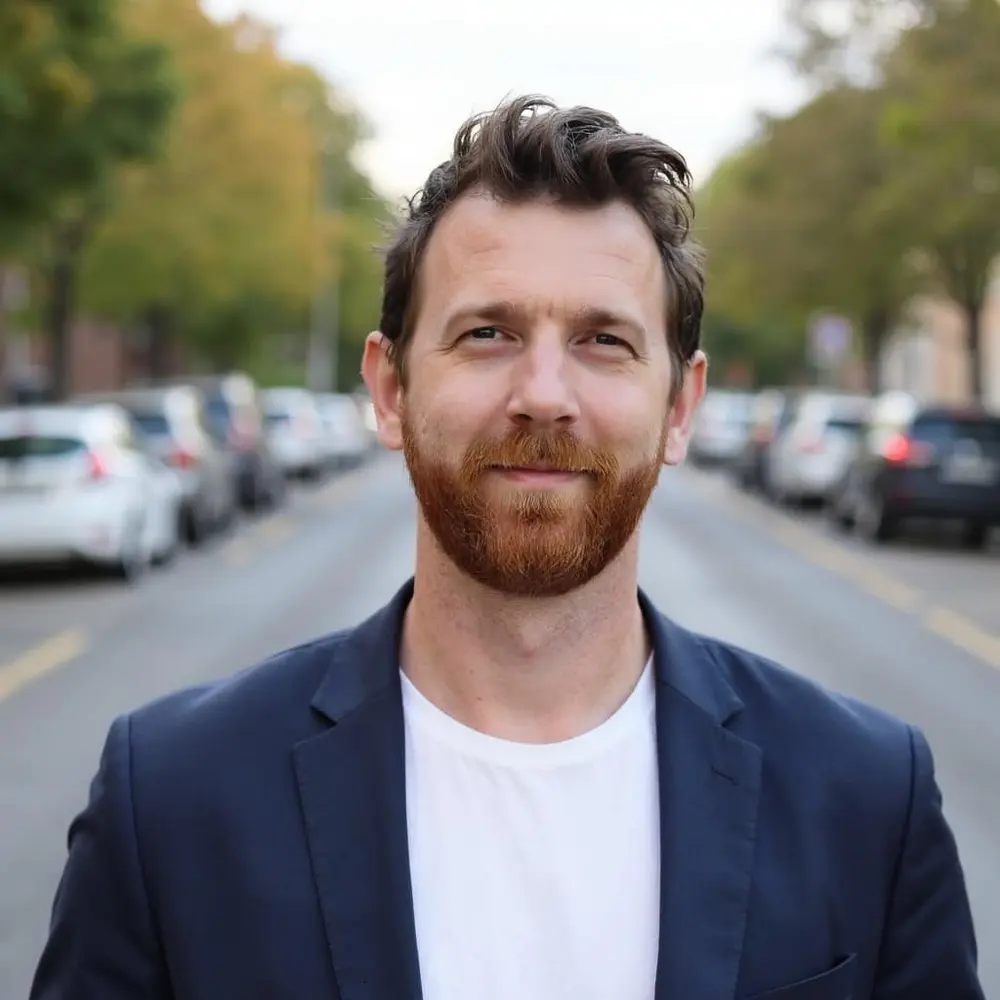
Brendan Hill is an angel investor and startup mentor and advisor. He is Syndicate Lead at Logan and Wayne, a firm that invest in early stage tech startups. Before becoming an investor, Brendan founded and ran an online football marketplace, which was acquired in 2016. In his conversation with Adam, Brendan discusses how Australian technology startups often struggle to hire talented engineers due to them being relatively scarce in Australia, and his unpopular opinion that Australian startups should raise venture capital from the US as early as possible.
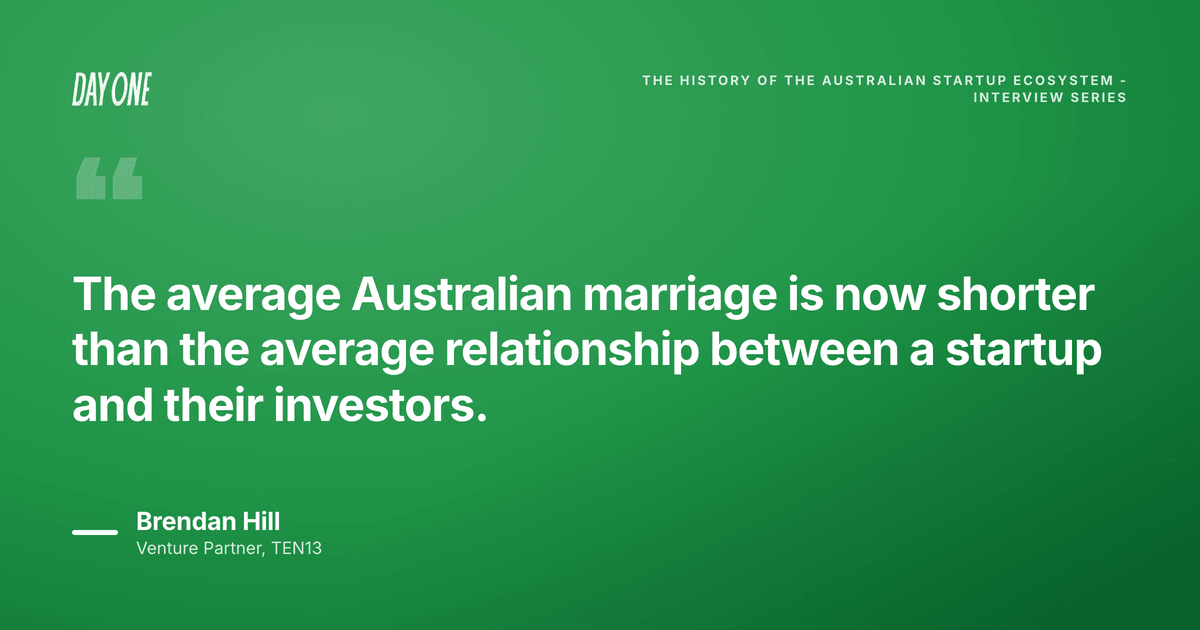
Transcript Synced · select any line to jump ▾ 0:00 Speaker: Let me tell you about our partner, Teamified. If you need to build a top-notch team quickly, Teamified is your go-to solution. They not only provide fractional CTOs, they can also do contractors and even remote team members tailored exactly to your needs. And whether you're looking for expertise in the Philippines, India, or Sri Lanka, Teamified has you covered. What's amazing is that Teamified uses a blend of AI and human expertise to cut hiring times by 50%, cent. The platform handles everything from automated onboarding to day-to-day management and even performance tracking. You can also handle rewards and recognition, buy equipment, and order training all through their platform. Simplify your hiring process and get the best talent fast with Teamified. Check them out now and transform your team. Go to dayone.fm/teamified. That's dayone.fm/teamified. Thank you, T-E-A-M-I-F-I-E-D, and get started today. Hi, I'm Adam Spencer, founder of the Day One Network, which is bringing the history of the Australian startup ecosystem to you. I believe in founders. It's why I do everything I do at Day One and our media company, W2D1 Media. And that's why the Day One Network exists, to create helpful content for founders. We've got some great shows in development, but a large part of what we do couldn't be done without support from our partners and sponsors. And I couldn't be happier than to be working with NTP, who get community better than any other technology recruitment company out there. A Newcastle company like mine, NTP are invested in seeing the growth of the local tech community in Newcastle, Sydney, and more broadly Australia. So thank you, NTP, for helping us bring helpful content to founders and the startup community in Australia. Back to the interview. Hi, I'm Adam Spencer, founder of the Day One Network, which is bringing the history of the Australian startup ecosystem to you. I believe in founders. It's why I do everything I do at Day One and our media company, W2D1 Media. And that's why the Day One Network exists, to create helpful content for for founders. We've got some great shows in development, but a large part of what we do couldn't be done without support from our partners and sponsors. And I couldn't be happier than to be working with NTP, who get community better than any other technology recruitment company out there. A Newcastle company like mine, NTP are invested in seeing the growth of the local tech community in Newcastle, Sydney, and more broadly Australia. So thank you, NTP, for helping us bring helpful content to founders and the startup community in Australia. Back to the interview. Hi, I'm Adam Spencer and welcome to Day One, the podcast that spotlights Australian startups, founders, and the organizations that empower Australian entrepreneurship. We go back to the beginning to tell the story of Australia's most inspiring founders and how they built their companies. You're listening to a special interview series as part of a documentary W2D1 is producing about the history of the Australian startup ecosystem. On the episode today, we have— 3:18 Brendan Hill: Hi, I'm Brendan, angel investor and syndicate lead based in Sydney, Australia. I'm very involved in a lot of different areas in the early stage ecosystem in Australia. Anything from working with founders day to day, getting new investors into this fantastic new asset class of angel investing, working with university accelerators, trying to get US investors investing in Australian startups, and everything in between. 3:48 Speaker: What attracts you to the early-stage investing? 3:55 Brendan Hill: I really think early-stage investing is one of the most exciting things that you can do. You're meeting really interesting founders every day. And these founders are trying to bend the future to their will. They're working on exciting projects, they're super passionate, sometimes a bit crazy, which I always like to meet the crazy founders as well because often, you know, they're the most interesting people that are going to work the hardest and are going to turn their, you know, reality of the future into something real. 4:26 Speaker: Cheryl Mack recommended you. Do you know why she would have put your name forward? 4:31 Brendan Hill: Yeah, I mean, Cheryl and I, we do a lot of mentoring for early-stage startups. We've invested in 3 or 4 startups together as well. So I guess we really love to add value without expecting anything in return. And we also run an event called 361 Angel Club. And this brings together 60 investors and 60 founders once a quarter, very laid back. Very casual down at a pub in Sydney. And it's just a way to introduce great founders to great investors. 5:05 Speaker: When would you say that you really first got involved in kind of startup land? 5:12 Brendan Hill: Yeah, I remember very vividly. It was at a Google event down in Piedmont. They had Melanie Perkins, who had recently launched a startup called Canva. She was talking with her first investor Bill Tai, and it really opened up my eyes on the possibilities of great founders can come from anywhere. You know, Melanie was originally teaching Adobe classes at a university in Western Australia. She started a yearbook business with her partner Cliff, and now this amazing Silicon Valley investor, one of the best, Bill Tai, who first invested in Zoom as well, which has done pretty well. He has come to Australia, invested in founder from Western Australia. They were able to build their product for 1 year before launching. So I remember that talk vividly, just learned so many things and what a great talk to see in 2013, you know, Canva first exploding onto the scene. 6:11 Speaker: So from 2013, from your perspective, what did the ecosystem look like back then? Community size, programs, successful startups that were in the media? 6:24 Brendan Hill: Yeah, so the early days of the Australian startup system are very different. So Blackbird were just just kicking off their first fund. Weren't too many community events. I remember Google were really the ones trying to spark the ecosystem. High-profile speakers, domestic and international speakers, and— 6:42 Speaker: Mm-hmm. 6:43 Brendan Hill: That's how I went to my first event and saw Melanie Perkins and Bill Tye talk on a panel. So there was no Sydney Startup Hub. I think Sydney Angels was just kicking off as well. I mean, if you look at the ecosystem back in 2012 and 2013 compared to today, It's night and day difference. 7:00 Speaker: How did you get involved? Like, what was the origin story of you getting involved in investing? 7:09 Brendan Hill: Yeah, so I'd always been around interesting founders. It's great because you get a surface level across many different areas. Like, you're meeting founders that are trying to paint shark skin on a plane. That's a startup called Micro Tower. They're trying to reduce drag by painting a shark skin-like substance on the outside of planes. And you get to learn about things like, you know, blockchain when it first came out. So you're sort of getting a sneak peek into the future, which is super exciting, and that's what really drew me to the space. So being around the ecosystem, you get— I mean, going to different events, you get to meet lots of great founders and I mean, you quickly get to form some kind of pattern recognition about the ones that you would like to possibly back financially. So that's what happened. You know, I met 4 great founders and they started a startup called GrowSuper, and they were trying to, you know, disrupt the superannuation industry. Got to know them over a couple of months, and that was my very first angel investment back in 2017. And this month June 2021. They just raised their Series C led by Airtree, and they've also got ASX as an investor now. So it's been a fantastic ride, fantastic first investment, and they're going from strength to strength disrupting the financial landscape in Australia. 8:34 Speaker: How do you manage— because I've looked at all of the things that you're invested in or have invested in, and with Startmate, you're a mentor at UNSW, founders? 8:44 Brendan Hill: I mean, I'm currently trying to focus on a couple of areas like growing my AngelList syndicate, and what that does, it democratizes access for Australian startups to get US investors on board in the early days. It's, I mean, I'd sort of liken 2021 as the gold rush. So many opportunities, so many fantastic startups raising, so much capital available. Everyone's plans are really accelerated. During this period because they can raise the money that they want, they can execute on their ideas, and we'll see who the winners are. 9:20 Speaker: What event or series of events happened from your perspective that you would say really got the Australian startup ecosystem on the map? 9:29 Brendan Hill: I think the thing that really got the Sydney startup scene on the map was the success of Atlassian, and then a couple of years down the track, Canva as well. So from an international perspective, whenever I talk to investors in the US, they're always interested in previous employees from Atlassian and Canva. Are they starting startups? What are Blackbird and Airtree investing in? Because they were the first money into Canva's round. So I mean, from a local and international perspective, I'd say the success of Atlassian and Canva were definitely a catalyst for where the Australian startup system is now. 10:06 Speaker: What do you think that we as a startup community or ecosystem is doing really well? Like, what separates us? Like, what's our competitive advantage? 10:17 Brendan Hill: Yeah, I mean, we're doing a lot of things in Australia as a startup ecosystem, but I think one of the main things is the quality of our founders. So we have so many smart founders that are either commercializing their research coming out of some of the world's best universities right here in Australia. You know, we have a deep history in deep tech as well. For example, Wi-Fi, an Australian invention out of CSIRO. So much fantastic solar technology. But at the end of the day, it really comes back to our fantastic founders. And what I said earlier, you know, great founders can come from anywhere. So a lot of the big US funds They're seeing now that these fantastic founders coming out of Australia and a lot of the big funds, they've got scouts looking at all these different Australian deals. And I think it's an advantage now that we don't have to fly over to San Francisco and Silicon Valley to pitch for money. We can do that over Zoom. There's been some fantastic examples lately of some large rounds in Australia that have closed and you know, the founders haven't even left the country, but they're getting these big international funds investing, which is fantastic. 11:31 Speaker: Do you have any unpopular opinions that you absolutely believe are the case but no one else seems to believe? 11:39 Brendan Hill: I think an unpopular opinion is that, you know, you should raise from the US as soon as possible, and it's definitely not a popular opinion. Obviously there's a lot of fantastic VC funds in Australia and you don't have to do that anymore, whereas in the early days you might have, like Atlassian, for example, they had to go to the US to get funding. They had a US investor on their cap table. But I just like the speed and the aggressiveness that US startups move at. They're much more all or nothing, which could be a cultural thing as well. I guess they, they put their foot down on the accelerator a lot harder. Mm-hmm. And you're gonna know a lot faster if this thing is going to, you know, reach an inflection point and take off. Whereas sometimes in Australia, you know, we might take 1 or 2 years to release an MVP. We have a pretty laid-back lifestyle, which may play into it as well. And I think also in the US, there's a lot more funding options as well. So I think in the Bay Area alone, there's about 1,200 VCs. 12:44 Speaker: Mm-hmm. 12:44 Brendan Hill: And if you compare that to Australia, there's probably 100 VCs nationwide. 12:53 Speaker: Do you think we're on the right track? If we keep going the way we are, are we doing everything right? 13:00 Brendan Hill: I think we're on a great trajectory on the whole in the Australian startup ecosystem. Really looking forward to, you know, the new Precinct opening up, the new Atlassian Tower. They're kind of Avengers Tower in the middle of Sydney. And there could be more support from the government. You know, there are some fantastic schemes in place, especially for investors like the ESIC scheme. That's the Early Stage Innovation Company scheme where if you invest in a startup in the early days, if they meet a certain set of criteria, you don't pay any capital gains tax on the liquidation event. But then on the flip side, there's things like early stage employees are still getting taxed on their ESOP. So their employee shares, you know, they're still paying high amounts of rate on tax. Whereas in other countries, you know, they've abolished things like that to really make that more appealing for people to join early stage companies. But I think one of the real challenges that we have at the moment is the war on talent. So there's obviously so much money going around, so many startups getting funded. Every single startup is hiring engineers. And we have to compete against, you know, companies like the Big Four banks. ComBank just came out recently that they're hiring 650 engineers. And they're paying top dollar. A lot of early-stage startups really can't match those salaries. And I have a portfolio company called Tilitha, and they're hiring 30 engineers. And, you know, sometimes I wonder, is there 30 quality engineers in Australia to go around? It's a real shortage of talent. Borders are closed. We haven't got anyone coming in if they need to work in person. The engineering talent— I don't know what the question is. Do we have to go to these startup companies? Yeah. Have to look earlier, just get grads, but that's gonna affect the speed as well that they can execute. 15:02 Speaker: Yeah, that's a really good point. If a brand new, like green entrepreneur come to you tomorrow and you can give them just one piece of advice that would slightly increase the chance of their success, what would you tell them? 15:15 Brendan Hill: I'd say that you need to have a relentless focus on execution. So the startup game, it's all about speed, it's all about getting things done. And you need to be able to show investors particularly that you can execute on your plans and do what you say you're going to do. And it's fantastic that I get to work at many fantastic accelerators in Sydney. I get to meet these founders in their embryonic stages and I get to see if they can execute over time. So are they doing what they say they're going to do? And it's great for me as an investor because I can see that they can get all these runs on the board. They're building a fantastic company. They're attracting talent. Their product's reaching that inflection point. And then I can eventually invest in this dream. 16:06 Speaker: The last question that I usually ask is not really a question. I just open the floor up for you to talk about, like, anything that's top of mind, anything that's just like you think about on a day-to-day basis that is relevant to the Australian startup ecosystem? 16:21 Brendan Hill: There's an interesting statistic that the average Australian marriage is now shorter than the average relationship between a startup and their investors. So the average Australian marriage is now less than 7 years, but when you're entering into a relationship with a startup as an investor, that's a 7 to 10 year journey. So you really need to get to know the founders really well. Like, do you want to enter into a relationship with these founders for the next 10 years? Do you want to give them your money? You're not going to be able to see any of that money for at least 7 to 10 years. Do you have that high conviction that these founders can bend the future to their will, create their version of what they want the future to look like. So it's always important to meet founders in the embryonic stages when they're just starting out. Can they execute? Can they build a great team around them? Can they build a product that's gonna hit that inflection point and potentially be the next Canva, be the next Afterpay, or be the next SafetyCulture? Yeah. 17:35 Speaker: I hope you enjoyed that interview. More interviews are on the way. Follow the podcast wherever you're listening right now. Stay tuned for more interviews with many, many more amazing people from the Australian startup ecosystem. Thanks for listening and see you next time.