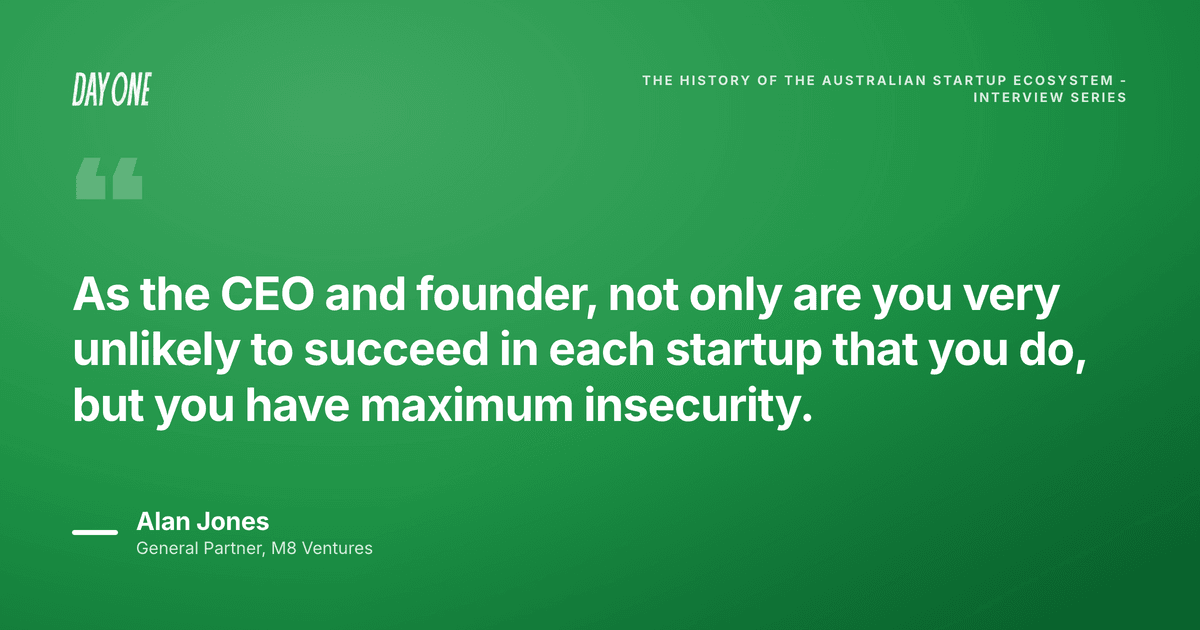
Transcript Synced · select any line to jump ▾ 0:00 Adam Spencer: Let me tell you about our partner, Teamified. If you need to build a top-notch team quickly, Teamified is your go-to solution. They not only provide fractional CTOs, they can also do contractors and even remote team members tailored exactly to your needs. And whether you're looking for expertise in the Philippines, India, or Sri Lanka, Teamified has you covered. What's amazing is that Teamified uses a blend of AI and human expertise to cut hiring times by 50%, cent. The platform handles everything from automated onboarding to day-to-day management and even performance tracking. You can also handle rewards and recognition, buy equipment, and order training all through their platform. Simplify your hiring process and get the best talent fast with Teamified. Check them out now and transform your team. Go to dayone.fm/teamified. That's dayone.fm/teamified. Thank you, T-E-A-M-I-F-I-E-D, and get started today. Hi, I'm Adam Spencer, founder of the Day One Network, which is bringing the history of the Australian startup ecosystem to you. I believe in founders. It's why I do everything I do at Day One and our media company, W2D1 Media. And that's why the Day One Network exists, to create helpful content for founders. We've got some great shows in development, but a large part of what we do couldn't be done without support from our partners and sponsors. And I couldn't be happier than to be working with NTP, who get community better than any other technology recruitment company out there. A Newcastle company like mine, NTP are invested in seeing the growth of the local tech community in Newcastle, Sydney, and more broadly Australia. So thank you, NTP, for helping us bring helpful content to founders and the startup community in Australia. Back to the interview. Hi, I'm Adam Spencer, founder of the Day One Network, which is bringing the history of the Australian startup ecosystem to you. I believe in founders. It's why I do everything I do at Day One and our media company, W2D1 Media. And that's why the Day One Network exists, to create helpful content for founders. We've got some great shows in development, but a large part of what we do couldn't be done without support from our partners and sponsors. And I couldn't be happier than to be working with NTP, who get community better than any other technology recruitment company out there. A Newcastle company like mine, NTP are invested in seeing the growth of the local tech community in Newcastle, Sydney, and more broadly Australia. So thank you, NTP, for helping us bring helpful content to founders and the startup community in Australia. Back to the interview. Hi, I'm Adam Spencer and welcome to Day One, the podcast that spotlights Australian startups, founders, and the organizations that empower Australian entrepreneurship. We go back to the beginning to tell the story of Australia's most inspiring founders and how they built their companies. You're listening to a special interview series as part of a documentary W2D1 is producing about the history of the Australian startup ecosystem. On the episode today, we have— 3:18 Alan Jones: Hi, other Adam Spencer. I'm the other Alan Jones, and I'm a tech angel investor and VC fund investor. 3:28 Speaker: Take us right back, you know, before it was the Australian startup ecosystem. When would you say you were first exposed to the startup world? 3:40 Alan Jones: My dad brought home a personal computer. He was a chiropractor and he had two practices. And some of the patients went from one practice to the other, you know, he'd see them in different places. And so a filing card system to keep track of all his client records wasn't working very well. So he decided to teach himself how to use a personal computer., and build his own database so he could manage his clients on a personal computer. And he didn't know anything about it, I didn't know anything about it, but I was kind of drawn to it back then. And so when he wasn't using, um, the family computer and tying up the family home phone line, um, I would jump onto bulletin boards, which were basically a stack of modems connected to a computer that sat in somebody's cupboard or, you know, under their desk in their spare room. Mm-hmm. And you would dial into these things and they would give you sort of a message board sort of experience. Many of them were connected to similar sorts of bulletin board computers set up on other people's cupboards all around the world. And so gradually these systems would copy and paste, would kind of transfer all of the message traffic from one onto another, onto another. And so if you waited for long enough, maybe 48 hours in some cases, it would all synchronize. So anyway, I was like, I was 16, and nobody knew that I was a 16-year-old, and so I really enjoyed pretending to be an adult and engaging in adult conversations with people from all around the world about all sorts of topics, politics, the environment, technology, that kind of thing, and that was my first love. And then CompuServe came along, and Apple had a service called eWorld, and it became more of a live simultaneous thing. It wasn't just held together by volunteers with, with brown string and sticky tape. It started to become sort of a commercial thing that you had to pay to use. But that thread of wanting to communicate with other people and share openly and be able to debate all sorts of things with minimum of moderation in most cases was kind of the— lit the blue touchpaper underneath me. And I started to write, and writing eventually took me to the internet. I did OK at English at school, thought I wanted to be a chiropractor like my dad, so I spent a few years failing very badly in an anatomy degree and then dropped out, did a bunch of dead-end jobs, and finally managed to make my way into a communications degree and started writing. And of course I wanted to write for computer magazines, which in those days before the real internet were the way that you found out about what was happening in technology. Like the news, you had to— Yeah.— you had to subscribe to technology news. I was walking past Park Avenue in, Park Street in Sydney the other day with someone younger than me and I pointed to the Park Street, what used to be the Park Street headquarters of ACP, Kerry Packer's magazine publishing empire. And I think I remember there being maybe 4 or possibly even 5 different computer publications being published by that one publisher in Australia. The one that I worked for at the time was with a different publisher called IDG, but I was the editor of a publication that was all about all things Apple. Everybody who bought that magazine only cared about Apple stuff, which is a bit of a mind-blowing experience now. But, you know, if you were the person in a company that needed to decide what sort of computers to buy the company, you had to buy a computer magazine or you had to go to a computer expo, which would happen like maybe twice a year in Australia, and it would cost you, you know, $300, $400 a ticket. And this was all because we had no internet, you know, you had to, you had to read something, and you would keep all of the issues, you know, in a folder on your bookshelf so that if somebody, you know, you needed suddenly, oh, I need to know about laser printers or dot matrix printers or something, you could flip to the, to the issue back last July where they did a comparison of the top dot matrix printers, you know. So just as a young reporter, that was a, that was a really great opportunity to get to understand the technology industry because although just in my early 20s, I had, I had great power and influence because whatever I wrote in my magazine, buyers of technology took as gospel. And so I'd get flown business class to San Francisco and picked up in a stretch limo and taken to a 5-star hotel and then I would spend a whole week, you know, interviewing executives, going to other computer trade shows, seeing previews of technology coming up there, all in the hope that I might go and write about that for my publication. Now, of course, at the time I had no idea how huge my privilege was and how rapidly that was gonna disappear. But I do remember the moment that it began to happen. So we took a chunk of the content for our publication from our US sister publication. And back in those days, it was all QuarkXPress page layout files, right? And it's trivial now, but at the time, the idea that you might have like 500 megabytes of page layout, that felt like moving around a nuclear missile, you know? Like it was— it weighed several tons. You had to close the roads when you moved it. It was very fragile and it might explode and break everything. But to take like a 12-page feature from a computer magazine from, from one set of printers in San Francisco to another set of printers in Sydney. It was an incredibly fraught and dangerous exercise. It would all get bundled onto, originally, I think called a Bernoulli drive, which was kind of like an early prototype portable disk drive. And then later on we went to Zip Discs. But then one day somebody invented FTP, and we started to play with FTP at our computer magazine, and we would send these— 9:30 Speaker: What's FTP? 9:30 Alan Jones: Try and send these enormous files across the internet, but it might take a week to get it because the first version of FTP, if the phone line dropped out, you would lose all of the data that, you know, you would have an incomplete data file. So you come in the next morning and find that, that, you know, 100-megabyte file had stopped partway through because somebody else had tried to use the telephone or something. And you'd have to start it again. You'd have to hope that you'd get it the next morning. So when they invented a version of FTP that would automatically pick up after there'd been an interruption to the communication. That massively changed computer magazine publishing for me. So that was our opportunity to start to play with, you know, sending big files over the internet, which is, I guess, you know, what the internet is all about. But I could see as we started to share more of our content from our publications, first of all on what we used to call the World Wide Web, and then we started spreading and, you know, we started to do licensing deals with— With publishers. With portals like AOL and Excite and Yahoo and MSN, it started to look like this might be the beginning of the end of print journalism. And I started to think about, well, you know what? Laying out a web page is a lot like laying out a magazine. Websites were really pretty simple things back then. They were mainly about display. And commercializing them was mainly about putting some pretty photos and words on a web page and selling some ads around that to make that work. And I thought, well, maybe my skills are relatively transferable, and maybe almost nobody else knows how to do web page building as well. So I decided to kind of see if I could take a leap. 11:02 Speaker: What year was that? 11:03 Alan Jones: Um, this was, uh, like '93, '94. I started to explore that. There were a couple of other people from computer journalism in Australia that were, that were thinking the same way and starting to do the similar sorts of things. Jeremy Horry used to be an editor at ACP, and Darren Edwards used to edit a thing called PC Week. There used to be a weekly magazine, it was probably 20, 24 pages, color through most of it. It was, it was broadsheet size, and it was weekly, and it was all about what was going on in the computer industry, and that was just for the Australian market, right, that was published here. There was even a daily thing, there was a daily email newsletter that you would have to you had to pay like $400 or $500 a year to subscribe to. And that was mainly for people who worked in the technology industry itself. That was called Computer Daily News and it was published by a guy called David Fritth. But it probably had about, you know, 750 to 1,000 words. It was all text. There was nothing to link to 'cause we didn't have a worldwide web when it first started. But David and his hardworking team of reporters, eccentric, crazy people like Gareth Powell and Paul Zooko, who's selling Argo with us, would like smash out this stuff overnight. They'd go to a press conference, They'd write it up on what sort of early sort of prototype laptop-y thing that they could persuade a technology vendor to give them for free. And then send it out via email the next morning to, at its peak, like, you know, 4,000 or 5,000 paying subscribers every morning. 12:31 Speaker: Wow. 12:32 Alan Jones: Yeah. And then the internet came along and ruined it for everybody. 12:35 Speaker: Would you say, so you have had a strong interest in computing. or computers. It seems to me that in Australia at least that— well, definitely the tech community and the kind of computing programmer community overlaps, but in Australia it seems like the tech community kind of— well, the people that are in the tech community today, a lot of them come out of the computing and programming, you know, software, etc., communities back in the '90s and early 2000s. Is that how you see it evolving? 13:07 Alan Jones: Yeah, yeah, that's very accurate. There was like a, there was an information technology industry, you know, there was a, and that was largely in Australia about helping big banks and insurance companies and government departments keep track of lots of data. And some of the smart things that early Australian federal governments did back then was, you know, relatively smart. If you wanted to be a big IT vendor selling into Australian government, you had to keep track commit to doing some R&D here in Australia. You had to spend a bunch of money on a computer lab, employ a bunch of computer engineers. You'd usually, you know, import some senior talent from your headquarters overseas to come and sort of get things started here. You might work with the Australian Computer Society, which is kind of the trade union of programmers in Australia, to come up with like a scholarship system and you'd start recruiting talent at universities and you'd try try and influence the way that universities were teaching their computer science students so that they were more familiar with, you know, because the ecosystem was very, very siloed back then. Like each individual IT manufacturer had not only their own dedicated hardware, but usually completely dedicated operating system and programming languages. And the whole stack was not interoperable because there was no need for it to interoperate. 14:30 Speaker: Yeah. 14:31 Alan Jones: You bought from IBM and IBM provided everything. You bought from Fujitsu and Fujitsu provided everything. Now what that led to was effectively, you know, a lot of very smart programmers who were very bored a lot of the time, you know. Some of those people still exist, you know, there's still people who care and maintain these aging DEC VAX mainframes and still experts in COBOL programming. And they are there just to keep, some of the deepest substrata of Australian daily life running. I'm sure still in our big 5 banks and our big insurers and some of our government departments, I'm sure there are still some legacy systems there where people get paid half a million dollars a year to walk around with a pager on their belt that goes off when something weird happens to the ATM network and nobody's quite sure why. 15:23 Speaker: So that transition from writing into web page layouts. Did that transition kind of lead you into Yahoo!? 15:32 Alan Jones: Yeah, it did. Yeah, I mentioned Darren Edwards and Jeremy Horry before, and the third person was Martin Hørg-Guldberg. And Martin and Darren and Jeremy had this little business called TechTalk where they did contract editorial work for a variety of tech vendors. You know, if you were a customer of Microsoft, you used to receive once a quarter a printed magazine from Microsoft about the latest products and tips and tricks on how to use it. It was, you know, the internet in print form. And through doing that, they, you know, their client was Daniel Petrie, now Airtree co-founder, then country manager, managing director of Microsoft Australia. And Daniel sat down with the Tech Talk guys one day and said, you know, you've been doing a great job of of the customer publications for us. But look, there's this thing going on at Microsoft back at head office in Seattle. They're working on this thing called MSN. It's gonna be a bit like AOL. It's gonna be like a safe, high-quality subset of the internet that's gonna be curated for you by Microsoft. And I think there's a role for Australia to create some content in there as well. And he said, you know, I want you guys to, you know, have a think about what you might do. And I got sort of pulled into that orbit, you know, we'd go out for beers and discuss it and I got excited about it and the potential and they said, do you wanna help? And I said, sure, I'd love to do that. So one of the first things that we did was we set up, Microsoft did a little joint venture experiment with Telstra called Telstra on Australia, I think it was called. Mm-hmm. And on the Telstra side, the head of it, You know Nudie Juices? 17:17 Speaker: Yes, yes. 17:18 Alan Jones: Yeah, yeah. So the original founder of Nudie Juice was this guy Tim, Tim Patrick, and his nickname was Tall Tim. But at the time he was a Telstra exec. They literally built like, it was a webpage. That's how it started. And it was called Telstra On Australia. And on the webpage there was like a couple links to some search engines and some daily news that was added manually, you know, some headlines. And one of the things there that we did for them was a weekly chat show, a celebrity interview guest chat show. And this would've been '94, I reckon we probably started. And so you think, oh, you know, I've seen Graham Norton, you know, what's the big deal? You know, the fact that that's happening on the internet. But the remarkable thing about it was that it was text. It was all text chat. 18:07 Speaker: Oh. 18:08 Alan Jones: Because the internet just didn't go fast enough. I had a magazine cover that I think I lost along the way, but it was a magazine cover that, the COVID story of that issue was how Telstra had just upgraded Australia's only connection to the internet and doubled it. And it had gone from like 5 megabits per second to 10, you know, it was, I don't know if that's exactly right, but it was in the order of that sort of magnitude. Nobody in Australia could even listen to a podcast back then, you know, an audio file over the internet was amazing. You know, I had a digital recording of the first 12 bars of Van Halen's Jump and it took up an entire 1.4 megabyte floppy disk. That's how good compression was. So anyway, we did this show at 8:00 PM on a Sunday night every week and the whole thing was text. So we had a— one text chat room where the audience were all together. And if we had enough audience, then it would kind of bud off additional chat rooms. So the audience could all talk to each other and they could also ask questions of the celebrity guests. And then we had another chat room with Darren and I, the two co-hosts, and the celebrity guest. And that's where the, you know, the chat show would happen. And so we'd be looking for interesting questions from the audience And we had obviously our own questions that we'd pre-written and, you know, copy paste, copy paste, you know, paste the next question in and the guest was there. So none of our guests being celebrities and important people had any personal computer experience because there were two kinds of people that used personal computers back then, you know, there were computer nerds and there were secretaries. There were literally, you know, I worked for a PR agency that had a typing pool for a while there. And so yeah, celebrities, celebrities didn't know how to use a computer. They weren't really on the internet. That. They certainly couldn't type fast enough to keep pace in a chat room. So, you know, we had Malcolm Turnbull as a guest, for instance. You know, he wasn't about to sit down at a personal computer and type back then. So we had like an assistant producer who would, you know, read out the question to Mr Turnbull. Mr Turnbull would answer and they'd do their best to sort of, you know, key it in verbatim. I remember one night we had Mental as Anything in for an interview and Greedy Smith spent the entire hour sort of wandering around the office with a very sort of puzzled look on his face. And it wasn't until about 30 minutes in where he went, "So, so all this stuff happening on the— that's— is that where the audience is?" It was such a, such a head spin. So we had like prizes from sponsors, we'd have quizzes and giveaways. And sometimes, you know, we would get several thousand simultaneous audience members in these Sunday night shows. And so that was kind of the beginning of finding an audience really, you know, a mass audience for me and maybe in Australia. But anyway, Daniel Petrie from Microsoft said, "That was really great. I think we could do some stuff. So go away and come up with some more ideas. Go and see what else is really successful on the internet in other markets and come back with some ideas." Okay. Some ideas. And so we came back with a shopping list and there might have been like 15, 20 ideas on that list and we hoped that he might greenlight one or two. And he greenlit nearly all of them. And so suddenly we were on the hook, you know, and we could invoice him and he'd pay us at the end of the month, you know, we were gonna get paid, but we didn't really have any idea how to actually create these things or produce them. 21:34 Speaker: What were some of them? 21:36 Alan Jones: Well, the one that I remember the most that I love so much was called Friday's Beach. And again, like not limited by Australia's lack of bandwidth at the time or the internet's lack of bandwidth at the time. Friday's Beach was a soap opera. There was something similar happening in California at the time. There were a few people that were doing live webcams of their lives, you know, they would set a camera up in their bedroom, whatever, and it would be on all the time and you could just tune in and watch it. And then there was this one thing that was kind of, semi-scripted and semi-live where a bunch of people were all living in a house together and they were trying to stitch a narrative together. And so we decided we wanted to go further into the narrative side of it. And Friday's Beach was a classic Aussie teen soap opera. We literally, we hired somebody from Neighbours to write the scripts for this thing. So we had a live cast, I think of 6 young actors and we had to negotiate with the Media and Entertainment Arts Alliance to get an award rate for an internet actor in Australia so that we knew how much to pay them and so that we knew we wouldn't cause any industrial action. And we would go into a sound studio and briefly rehearse the scripts for each episode. And then we'd all pile onto a minibus and we would go to like the 4 locations where we would shoot video. And then once we'd done that, we'd come back into the audio studio again and we'd record the whole thing as a radio play. Mm-hmm. Basically. And then the script writer, so if you couldn't watch the video, which was nearly everybody, you could maybe listen to the audio. And if you couldn't, didn't have enough bandwidth to listen to the audio, then you could fall back on these like daily blog posts that were ghostwritten by the writer in the style of each character. So you could follow the story along. So we only did one season of Friday's Beach and nobody made it big from there. Nobody went on to a huge career. [LAUGHTER] But yeah, we just started to mess with stuff like that. So I ended up going to work full-time at Microsoft in Australia on something called Sidewalk, which was an international, you know, for the kids listening, there's no direct parallel, but it was a gig guide and it was a restaurant guide and it was a bar guide and it was a beach guide and it was where to go on the Sundays to the best markets in town. 23:56 Speaker: Oh. 23:56 Alan Jones: And it was meant to be, I think, across 7 or 8 cities worldwide, and Sydney was gonna be one of those cities. So that was headed by a guy called David Harrington, who went on to become the founder and CEO of an early sort of small to medium business, a web hosting business called Peekow, that was gonna be one of the superstars of the early Australian tech startup industry, and sadly kind of ran out of puff. Mm-hmm. Because of the high cost back then of hosting data on behalf of businesses. So yes, Sidewalk was a real blast. We set ourselves a goal of ensuring that you could accurately find out, find a review of every currently open bar and restaurant and club and experience that you could have in Sydney. So it was a huge freelance editorial crew running through an outsourced process provider. And obviously it failed. The part of the model that was broken was we were going to sell, you know, marketing to the owners of these businesses. You're a cafe, you don't have time or understand how to build a website for your business, but we can give you like a website lite and you can pay to be exposed to that. And it was way too early for that sort of industry to be interested in. Yeah. And then on the other side for consumers, yes, you and I could plan what we were gonna do on our date tonight, but after we'd agreed on what to do using Sidewalk, we would have to print it out and take it with us because there was still no smartphones. So I got a bit frustrated with Microsoft's need to control the web, you know, make it something that was delivered through Internet Explorer and Internet Explorer only. And had all these gross and subtle ways of discouraging people from from exploring the rest of the web. I was getting very interested in open source at this stage. And so I pretty much made myself unemployable. And then a friend of a friend was recruiting for Yahoo at the time. And the original plan for Yahoo in Australia and New Zealand was that it would be a joint venture with a media publisher. All of Yahoo's previous international efforts had been joint ventures with either an internet service provider, provider, i.e., a telco, or a media company so that there was, you could provide access to the internet to people plus a Yahoo service over the top of it, or you could provide a Yahoo service plus local content. And negotiations with APN fell through before I knew anything about it, but the guy at APN who had been leading the APN side of the negotiations said, well, you know, APN don't want to do it anymore, Yahoo, but but would you back me? And so his name was Tony Foore, and he was introduced to me by a friend of a friend. And so I went to work for him, and we kicked off Yahoo Australia and New Zealand. I think we launched with 3 people working for Yahoo in Australia. And it took us about 6 weeks to go from just an idea to get the thing up and live and launched with advertisers and content. It was a crazy time, a lot of 18-hour days. Mm-hmm. 27:01 Speaker: When did that, 'cause so, Alan Jones, the content creator, producer, when did we, and I'm talking about you, by the way, when did we, 'cause I know you as the startup guy, right? 27:15 Adam Spencer: The technology guy. 27:17 Speaker: When would you say that kind of transition happened, or don't you view it as a transition? 27:22 Alan Jones: Well, I think that first generation of Australian tech startups were media companies. They were just online media companies instead of mobile banking apps. And, you know, so, you know, there wasn't really much of a game, or it wasn't really much of a software publishing industry in Australia at that time. At least, you know, where it existed, it was just in enterprise IT things, things to help banks run more smoothly. The first generation of Australian tech startups were media companies. We put content on pages and sold ads on them. 27:52 Speaker: Mm-hmm. 27:52 Alan Jones: So Optus had a joint venture with a US company called Excite, and there was AyaWorld joint venture, I think with 10 maybe originally, and then 10 launched its own thing. Village Roadshow had something as well. Seven noodled around, and then Nine ended up getting into bed with Microsoft and doing, making MSN Australia into Nine MSN. These were real, really, really media business. We weren't doing very much other than that. The news publishers were really, really cautious about putting any of their precious editorial content on the internet in the early days. The first media licensing deal, I think, in Australia was one that I did with The Australian. And we needed to have some news headlines and as much of the news story itself on Yahoo Australia and New Zealand as we could. And what we wanted to do was serve that news, run ads on it, and share the revenue with our news partner. But News Limited, you know, would say, "Don't you know who the hell we are? You know, we're News Limited, we don't need any help selling ads. And you know, this content costs us a lot of money to produce, you can go jump." And we would say, "Yeah, but you don't understand about these online ads, you know, it's not like selling print ads, it's different, it takes different people, you need different relationships with brands. You know, we're gonna be much, much better at this." And they would say, "Oh yeah, you know, come back in 3 years when you're when you've given up and we'll talk about how little we'll pay for what you've made. So it was very hard. So I ended up, that first news deal was just the headline and I think the first 250 characters of each story. And then the end of the story, there was an ellipsis, you know, a dot, dot, dot, and then a link to the full story on the Australian website. So content was really, really valuable and very, very expensive in the early days. So they didn't leave much space for anything else. The banks were very conservative. Qantas kind of got going a little bit relatively early on and they would show you, you know, flight arrival and departure times. There was a tech startup called travel.com.au that wanted to be offering you online travel bookings, you know, book a flight, book a hotel, that kind of thing. And it kind of looked like you were on the front end. You'd use a, you know, search, you'd fill in a form and you'd hit submit and stuff. Mm-hmm. But then nothing would happen. And then you'd get an email back from travel.com.au. Like, you know, they would display, these are the flight options that you have. And you go, oh yes please, I'll take the 11:00 AM on Tuesday one. And you hit submit and it would go, right, we'll be right back to you. And then that would go to a human that sat at a desk at travel.com.au who had the, you know, the airline's flight booking system open on a mainframe terminal and go, do, do, do, do, do, do, didn't actually make the booking for you and send it to you. So things were, were incredibly manual. I mean, I used to edit the, have to edit the homepage every Sunday night of Yahoo Australia and New Zealand because there was one little ad unit. It was the only ad unit we would allow on a homepage in the early days. Ads in between content were like, there was the church and state battle between advertising sales who would take the entire homepage of Yahoo if we let them, and editorial, which is where I sat, where we, Tried to always make it clear to customers what was editorial and what was advertising, right? And so we had this little tiny ad spot. And it was one of the last ad positions on the Yahoo network to be automated, to be added to our ad serving infrastructure. So it had to be changed manually. So I had to log into Yahoo from wherever I was traveling at that time, you know, business meeting and things, which often meant in a hotel room, unscrewing the phone panel with a little bit of a screwdriver. 31:25 Speaker: Yeah. 31:25 Alan Jones: Bag of tools that I would take, you know, getting some alligator clips and pairing the insulation plastic off the phone cable to attach my alligator clips to my modem so I could dial in and change the advertiser. And mind you, in these days, you know, online advertising was sold in impressions, not in clicks. So advertisers were paying, you know, to get from midnight Sunday to midnight Sunday, however many people came to the homepage on Yahoo. Yeah. That was what they paid for, right? And you know, if nobody clicked on the ad, that was the advertiser's fault. So you still paid Yahoo, you know? Yahoo wasn't gonna go, "Well, terribly sorry you didn't get any clicks. You don't have to pay for that." So yeah, so sometimes I would stuff that up 'cause I'd be in a hurry, I'd be stressed, it'd be late at night, I might have had a big day and I, you know, it was all HTML hand-coded and I'm a writer, not a software engineer. And sometimes I'd bugger it up and I'd hit publish and then I'd go and check the homepage and the homepage was broken. Then I'd have to like debug, figure out what I'd done wrong, fix it and publish it again. 32:35 Speaker: A lot of people point to 2011, '12, that kind of period to say that's when the community really started to get going. 32:45 Alan Jones: Mm-hmm. Yeah, it is. 32:47 Speaker: Why? Well, why, but also what laid the foundation for that that people probably just don't know? 32:54 Alan Jones: I'm gonna go with a couple things. So one thing was the surge of venture capital around '96 through 2000 was mainly spent on establishing brands of the first generation of internet. Ecommerce startups, you know, so Pets.com kinds of startups that were aspiring to deliver you something to your home quicker and easier than the store. And because most consumers still weren't on the internet at that stage, you had to spend a chunk of your money on the side of buses and billboards on highways and television commercials to get people to come to your web address and buy a bag of dog food for the first time. So that was incredibly expensive. But then you had to spend it with these early online media companies as well. And the problem that we kept running into was it was a lack of ad inventory. A big part of my job in those early days was ad salespeople coming to me and saying, "Al, Al, Al, dude, I've just sold this, like, you know, I've just got this new advertising customer. It's Kathmandu, right? And so can we build a Yahoo Outdoors? Can we do that? Can we have that like by next Friday? Can we do that? Is that possible?" 'Cause there's a million "Million dollars on the line here." And I go, "No, no, no, we are just like, where would I get the content from? There is, you know, none of the outdoor magazines are publishing on the web yet. That's impossible. But we've got all this search inventory. You know, people going to Yahoo every day and searching for backpack. We can serve ads there." And that ad salesperson go, "No, no, no, I've been there and all those ad spots are already bought. Other advertisers already have those spots." So we used to run out of the ad inventory on big keywords all the time. And so all of the pricing for all of that was all set manually. There were no algorithms doing that. So that meant that, you know, we would build in a whole bunch of wiggle room there. So that meant that ad inventory got much, much more expensive, much, much more quickly. We were not selling the long tail, the, you know, the words that people hardly ever searched for. We weren't selling that at all. We were just like selling the top 5 or the top 10 keywords for huge money. And so that both built a very small number of successful tech startups, but also destroyed a much, much larger set of tech startups that were venture funded. And again, I'm mostly speaking about US tech startups at that time. But when they imploded, they just released a flood of talented and slightly experienced tech startup founders who were starting to understand a thing or two. Another thing that changed, I think, around that time, so there's two more things. Another thing that changed around that time was social media, early versions of social media started to bring a broader set of society onto the web for the first time to rediscover with old university friends and old high school friends what they were doing now and spend a little bit more time getting to know their workmates, their lives outside of work. So things like Friendster and MySpace and Orkut, you know, all pre-Facebook. And so that meant, that with time online, increasing time online, that freed up a whole lot of inventory. And then the other thing that really changed is that the technology industry realized that the power of the long tail, that it would be much more effective to sell clicks rather than impressions and only charge advertisers when somebody clicked on the ad. And so that made online advertising much more accessible for a much broader set of— Urbanites. Of much less well-funded online brands to get going when they only had to pay for clicks. Now at Yahoo, we fought that to the death. There was a company called Overture that were kind of early out of the gates and then Google followed immediately after. And at Yahoo, we had this editorial and sales thing and we were worried that if somebody was using a search engine to search for a backpack, if we blended advertisers in with actual real web results, that we would be doing our users a disservice. And we actually, you know, we user tested this, we thought, we did user research, but our own cognitive biases led us to misinterpret the data really. And so, you know, we didn't see programmatic advertising coming. We thought our duty was to serve the brand and the brand's agency, not the actual, you know, the startup itself. Well, but— Google empowered a whole bunch of startups to go and figure out their own advertising strategy without an advertising agency involved. And it didn't matter really what was in the ad, all that mattered was if people clicked on it. And you could test a whole bunch of varieties of different ads to see what people clicked on. You could never really afford to do that on a per impression basis. Sorry, there is, there's one more thing. And that is the WiFi. WiFi has played an enormous role in the growth of, of the tech startup industry. Because, you know, prior to Wi-Fi, you had to connect your computer to everybody else's computer via an Ethernet cable. And generally speaking, that meant there had to be, you know, a little socket in the wall where you could plug in. And the cable and the sockets and the device that connected them all together and connected that to the internet was, you know, pretty expensive and non-trivial to install. So offices had them and corporate campuses and maybe universities, but almost nowhere else, right? So if you and 3 friends were thinking about getting started and doing your own startup, almost though like the first thing you had to figure out was like, where are we gonna collaborate on this from? You know, you couldn't just go and sit in a coworking space. You couldn't have a coworking space. You couldn't afford to put in enough internet ports in the space unless, you know, you were a corporation and you know, you were paying a big property manager serious money every year to lease a corporate headquarters. And so when we started Yahoo Australia and New Zealand, we actually, we got a favor from APN, the media company, and we kind of sublet one of their meeting rooms. Now from memory, you know, for probably maybe almost a year, we were all working from this little meeting room with a limited number of Ethernet ports and cable snaking away from the one meeting room table where we all sat. You had to be careful, you know, coming and leaving because you could trip over somebody's Ethernet cable. Bugger what they were doing. Yeah. What we were doing. So Wi-Fi let us work from informal spaces. It allowed us to be connected to the internet from home without interrupting everybody else's use of the telephone. And it also meant that we could collaborate and do our own work at the same time. Back then it was a very foreign concept that we might all take our laptops to a coffee shop and sit there on a table and collaborate and work at the same time. Because the work part, where you needed to have your computer connected to a to the internet was expensive and difficult to arrange. And so like that was dedicated time. And I remember figuring out how to do that after I left Yahoo in 2002. A bunch of us ex-Yahoos came together and we decided to build like a Netflix for Australia called Homescreen. And we had to rent some office space to work from that because it was pre-ubiquitous Wi-Fi. And we rented this windowless room near the railway station in Hurstville and worked me and 4 developers for like 6 months on the web platform for this thing. And we started, we were locked in this room all of the time. And at the beginning we would call a timeout, we'd reconfigure the chairs, we'd go over to a whiteboard and we'd sketch things on the whiteboard and then everybody would come back to their desks and you'd just hear clicking and clicking and clicking, there'd be no talk. And then somebody else would need something to discuss and then we'd get up and we'd do it. And gradually we migrated towards, you know, having a Yahoo Messenger chat window or an AOL, Instant Messenger chat window and have a thread of conversation going all the time while we each did our own work at the same time. And that primarily happened because at the end of each day when we're able to go back home to our homes and continue to work in our spare bedrooms, we could just be connected to the Wi-Fi and so that conversation could continue. 40:37 Speaker: That's just— 40:39 Alan Jones: The past is a foreign world. It's an alien planet. 40:45 Speaker: There's so much I'm realizing we need to talk about, but can we just talk briefly about, from your point of view, what do you think are some areas where we need to improve today still? Like some of the biggest gaps that you've kind of observed. 41:02 Alan Jones: Yeah, I think the Australian tech startup industry still has a bit of a problem with people entering the industry because they want to be the founder of a startup. And that's a pretty inefficient way for the industry to work, where we have to repurpose people who aspire to be a CEO and make them an employee, or even, you know, a senior member of a small but growing team. That can be a pretty tough thing. So one challenge that our industry has is that most of what the rest of the world knows about us is is what they've read about Mike and Scott from Atlassian and Melanie and Cliff from Canva, you know, the CEOs, the leaders. And when they look at the technology companies overseas, you know, they all know Bill Gates's name, they all know Elon Musk, they all know Jeff Bezos. These are all CEOs. And the reality in each case is that all of these companies were initiated by a very small number of people. But, you know, within a couple of months of it getting going, it's not just the, the CEOs or the founders anymore, but it's a team of early people who contribute enormously to the success or failure of the venture. A good friend of mine, Protipha Rai, who's on Twitter as @thecrazyone, and that's a recurring theme for her, you know. She and a number of people talk about how we're kind of trapped in this because the majority of the recognition, the majority of the respect, and the majority of the financial rewards is biased towards the CEO and the founder or co-founders, and not enough is shared with the remaining members of the team. If I could change, you know, one thing, I guess, you know, I would be encouraging people considering a career in tech startups in Australia to think about, you know, how do I develop a skill set that might be useful to a startup so that I can begin to contribute to a people of 20 people? Yeah. You know, the question shouldn't be, how am I gonna find a software engineer to build the idea that I have for my app? It should be, how do I learn enough about software engineering so that when I get my business to the point where I can afford to employ a software engineer, I might know enough about how to manage them effectively and even just express, you know, what I think the vision should be? How do I learn enough about what they bring to the table to actually involve them in the work? Yeah. Of what the strategy should be. You know, the fundamental difference I think between being an employee and being a co-founder is that co-founders have a consensual view of the problem that we're solving, the customer we're solving it for, and how our solution is going to be better and why. And you don't arrive at that by barking instructions, you know? And that's certainly not how Australia's best tech startup founders have achieved it along the way. We just have this kind of naive and simplistic way of looking at it. 43:44 Speaker: Correct. 43:44 Alan Jones: Culturally in Australia. In the US, it's related in a way. You know, certainly all of the publicity and outsized amount of the financial returns go to the original founders of the company. But I think there's much more of an awareness there that begins in high school and leads into some of the great American colleges where you understand that you're being educated. You're looking for internships and work experience with— With— larger technology companies that understand that once you're fully vested, once you've been there for 5 years and your equity is now worth something and you can sell it to somebody, but the most likely outcome for you is that you're gonna leave and, you know, form a new startup maybe with some of your ex-colleagues from the company. You know, that's a healthy, normal part of how we seed our ecosystem that I don't think we do nearly enough of in Australia yet. Yeah. 44:38 Speaker: Podcast idea there called Too Many Chefs, where we talk to product people, software engineers, we talk to all the people that make it possible that don't get the headlines. What advice would you give a new founder? 44:50 Alan Jones: I guess I've just said don't be a founder. 44:55 Speaker: Yeah. 44:55 Alan Jones: Another really good reason to not be a founder is, you know, you're the last person to get paid and all of your eggs are in one basket, you know? So I talked about Homescreen before, there are a few other startups that I tried to found or co-found that never amounted to much. And so I won't go there. But eventually when I hit about 40, I started to realize, you know, I can only do one startup at a time. And by the time I get my crap together and validate this, it's probably gonna be a couple of years before I figure out whether this is really gonna work or not. And at my, you know, average rate of success, I'm gonna be like 75 years old and still trying to get the next one up, hoping that the next one will be successful. You know, I just didn't think that that was viable. Whereas you can go and work for an incredible company, you know, and I think the sweet spot is, you know, somewhere between 5 and 20 employees. But even, you know, in the first couple hundred, depending on the company and how the culture works, you can still make an incredible difference, work with some of the best people in the world. You know, and at the end of the fortnight or the end of the month, you get a payslip and somebody's deposited some money put some money into your super fund for you, and, uh, you know, you can get some annual leave that's paid, and, uh, you know, they give you some money to buy a laptop to use at home, you know. As the CEO and founder, not only are you— you are very unlikely to succeed in each startup that you do, but you have maximum insecurity. So you're betting everything on not just on black, but on 12 black, you know, or 7 or 8 black. So, you know, I would I would say if you wanna have a career in startups rather than be a billionaire, learn some marketable skills and find an early stage startup to go to work for. And right now, just like every other industry category in Australia, it's never been harder to find great talent. So salaries are creeping up, conditions are creeping up, and startups more than any other category of employer in Australia are more prepared to take a bit of a risk to, you know, look beyond whether or not you match up to the minimum requirements of the role and, you know, gradually more likely to give you a bit of a try to see if you work out. 46:57 Speaker: One last question that I ask everybody is, and we might need to do this again because I feel like we only got up to about the mid-'90s. 47:06 Alan Jones: Yeah, there's so much in the 2000s, my God. 47:10 Speaker: As you know, I'm trying to create a documentary here that will tell the entire history of the Australian startup ecosystem. System as well as I can. 47:16 Alan Jones: We didn't even talk about smartphones. 47:18 Speaker: Shit. Yeah, you know, that can go into some of those foundational things that help make the ecosystem kick off. You know, social networking, the advent of smartphones. What else did you mention there? Wi-Fi. Hmm. Yeah. 47:32 Alan Jones: Investors in venture capital had bugger all to do with it. I mean, the development of angel investors and venture capital in Australia played a role. It's important. But it wasn't the tipping point. It was a follower, not a leader in what was going on. In my opinion, Daniel Petrie and Craig Blair had a venture fund called Nettus with Allison Deans. And that was kind of the beginning of the modern generation of Australian tech venture capital. And even then, their primary model, their investment hypothesis was, let's look for ideas that are working in the US, find a couple of smart young people prepared to work really hard, really long hours here in Australia on something which which is basically a knockoff of the US idea, and see if we can get it up. And that was successful. They did that with media properties and with early SME and services kind of related businesses. But that was, you know, that was the kickoff. You'd have to ask them exactly when that was, but it definitely, you know, followed rather than led the expansion of the online media company. Okay. Things. And then Blackbird Ventures and Airtree were kind of the next most important inflection point. And that was, in the case of Airtree, that was Craig and Daniel being able to show decent paper returns and cash-on-cash returns from the Nettus fund. And in Rick and Nicky's case from Blackbird, it was basically, you know, Startmate hadn't been running for a couple of years and they were able to persuade people that there was good deal flow there, that they had curated their own source of great deal flow and that the early paper valuations of those first few startmate companies made an interesting opportunity. So in each case, the startups happened and then investment capital kind of followed and kind of reluctantly. And it took a few crazy passionate VC wannabes to try and persuade some of that money to loosen itself up. I was flipping through Blackbird's first fund I'm an investor in that and I was flipping through the early foundation docs of that. And before everybody had signed on, before they closed the fund, they got a number of very direct and specific questions from some investors. And so they wrote up this memo back to potential investors, you know, answering those questions. And one of the questions was, you know, how much are the general partners going to invest in this fund? How much personal skin are they putting in the game? And I talked about how the $150,000 that each of them were going to invest in the fund was a meaningful, significant commitment for each of them. You know, it was painful. They cared about doing it. They each put in $150K, Nicky, Rick, and— 50:12 Speaker: Oh. 50:13 Alan Jones: I have to do this whole answer again. Bill, Bill Bartee. Sorry, Bill, if you're out there. They all put in $150K. Of their own money. And that was because, you know, the sort of people that were pitching Blackbird Ventures to had probably never invested in a tech venture fund before, had probably never invested in a tech company before. And, you know, now we see superannuation funds and family offices and high net worths and corporates and banks, telcos and airlines, all scrambling to invest in tech so that, you know, A, they're able to, you know, fend off their own pending disruption, but B, just because everybody can see the, with the outstanding market returns over the past 10 or 20 years. But yeah, in those early days, those early Australian tech venture funds were really, really hard to raise. And those people worked very, very hard for their money. Can we talk about smartphones? 51:07 Speaker: Yeah. 51:08 Alan Jones: So what happened with smartphones, right, was basically in the first generation of Australian tech startups, to get you to try my tech startup, I had to get you to my landing page. And you were on your computer mainly at work and maybe in the evenings, right? 'Cause your computer was in your bedroom or in your study or something and maybe you had one at work as well. And you carried around a phone in your pocket that you could send text messages to and from and you could make calls, but that was all it did. So in order to get you to my web address, I had to get you to remember it. And the way that I would do that would be by plastering things in your real world with my ads, you know. So I would put ads on the back of buses and cinema screens and television commercials, radio ads, wherever I could get them. There's old people out there who will still remember the sound of the Yahoo yodel, which was our signature sign-off on our television and radio commercials. I mean, you know, we were building one of the biggest online media properties ever, and most of our advertising media was spent in physical spaces instead of on the internet, right? And all of that was because the the time between when you were exposed to the brand and when you actually got to sit down and type in www.pets.com, that might be 5 or 6 hours in which a bunch of other stuff might happen. And so the huge thing that smartphones changed for the tech startup industry was suddenly we could reach people in between those two tiny slices of their day. You know, so there was a slice of day when you're at work, a slice of day in the evening when you're on your computer, the rest of the time you're not thinking about tech startups. Yeah. Develops at all. And now with a smartphone, we could reach you with a, initially with an email, and then, you know, later you would check into a social media app to see what was going on, and we could serve you an ad there. And then eventually we were able to send you a push notification, actually make you go, "Ooh, my pocket's vibrating," and pull it out and, "Oh, Facebook wants to tell me that my friend just liked my photo," you know? I mean, even Facebook, like, Facebook was, I think, maybe 4 or 5 years old before there was a mobile version of Facebook. 53:01 Speaker: Mm-hmm. 53:01 Alan Jones: You know, so it was, you interacted with your high school friends and your college friends and, you know, so I was part of an Aussie mobile startup called BluePulse, which was, in one of its iterations, was gonna be like Facebook and MySpace but for mobile phones. It was a mobile native social media application because, you know, Facebook had mobile as a very low priority. But smartphones radically changed that overnight because it gave us this opportunity to interact with customers, with consumers, with businesses, you know, all the time. And we did such a great job of it that they got a bit addicted to it, and now we all have to leave our phones outside of our bedroom if we're gonna get any sleep. 53:44 Adam Spencer: I hope you enjoyed that interview. More interviews are on the way. Follow the podcast wherever you're listening right now. Stay tuned for more interviews with many, many many more amazing people from the Australian startup ecosystem. Thanks for listening and see you next time. 53:59 Alan Jones: Thank you.