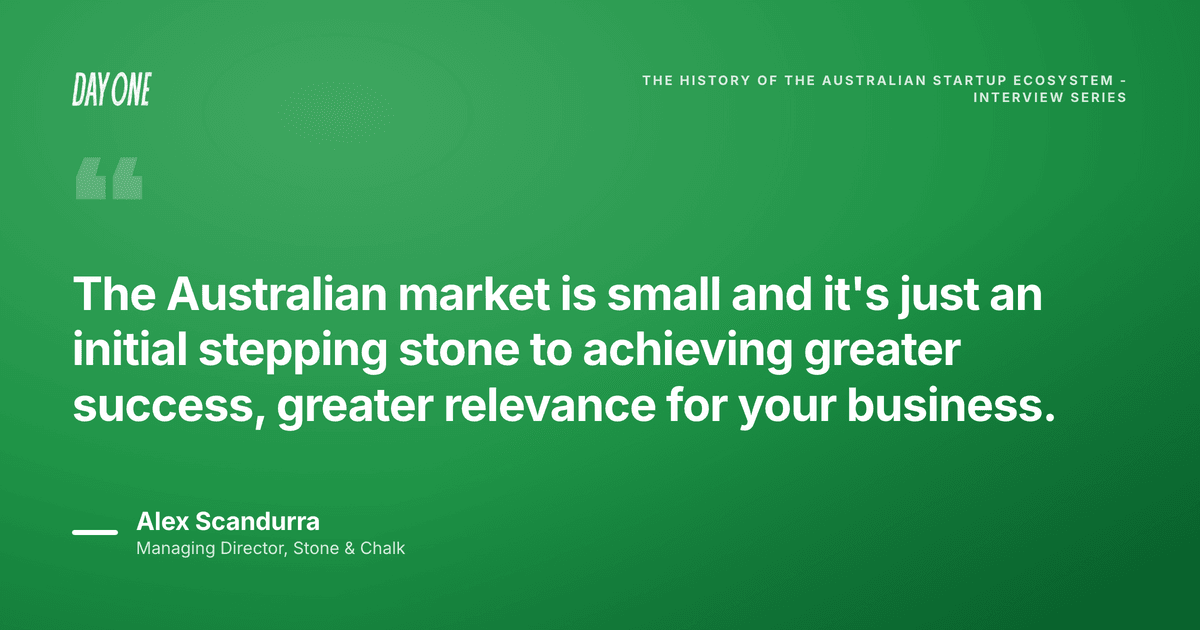
Transcript Synced · select any line to jump ▾ 0:00 Speaker: Let me tell you about our partner, Teamified. If you need to build a top-notch team quickly, Teamified is your go-to solution. They not only provide fractional CTOs, they can also do contractors and even remote team members tailored exactly to your needs. And whether you're looking for expertise in the Philippines, India, or Sri Lanka, Teamified has you covered. What's amazing is that Teamified uses a blend of AI and human expertise to cut hiring times by 50%, cent. Their platform handles everything from automated onboarding to day-to-day management and even performance tracking. You can also handle rewards and recognition, buy equipment, and order training all through their platform. Simplify your hiring process and get the best talent fast with Teamified. Check them out now and transform your team. Go to dayone.fm/teamified. That's dayone.fm/teamified. T-E-A-M-I-F-I-E-D, and get started today. Hi, I'm Adam Spencer, founder of the Day One Network, which is bringing the history of the Australian startup ecosystem to you. I believe in founders. It's why I do everything I do at Day One and our media company, W2D1 Media. And that's why the Day One Network exists, to create helpful content for founders. We've got some great shows in development, but a large part of what we do couldn't be done without support from our partners and sponsors. And I couldn't be happier than to be working with NTP, who get community better than any other technology recruitment company out there. A Newcastle company like mine, NTP are invested in seeing the growth of the local tech community in Newcastle, Sydney, and more broadly Australia. So thank you, NTP, for helping us bring helpful content to founders and the startup community in Australia. Back to the interview. Hi, I'm Adam Spencer, founder of the Day One Network, which is bringing the history of the Australian startup ecosystem to you. I believe in founders. It's why I do everything I do at Day One and our media company, W2D1 Media. And that's why the Day One Network exists, to create helpful content for for founders. We've got some great shows in development, but a large part of what we do couldn't be done without support from our partners and sponsors. And I couldn't be happier than to be working with NTP, who get community better than any other technology recruitment company out there. A Newcastle company like mine, NTP are invested in seeing the growth of the local tech community in Newcastle, Sydney, and more broadly Australia. So thank you, NTP, for helping us bring helpful content to founders and the startup community in Australia. Back to the interview. Hi, I'm Adam Spencer and welcome to Day One, the podcast that spotlights Australian startups, founders, and the organizations that empower Australian entrepreneurship. We go back to the beginning to tell a story of Australia's most inspiring founders and how they built their companies. You're listening to a special interview series as part of a documentary W2D1 is producing about the history of the Australian startup ecosystem. This episode was conducted by guest host Will Cho. 3:20 Speaker: Hi everyone, and welcome back to the Australian Startup Series interviews. Our guest today is Alex Scandura. So good to have you on, Alex. 3:26 Alex Scandurra: Thanks, William. It's great to be here. 3:28 Will Tjo: So could you introduce yourself and tell us a bit about what you're working on now? 3:31 Alex Scandurra: Yeah, sure. So my name is Alex Ghandour and I'm the founding CEO of Stone and Chalk and the co-founder of Spark Festival, both of which are not-for-profits. The concept of Stone and Chalk was born on the back of a report which was actually commissioned by the Committee for Sydney to understand what would be needed to help build a leading fintech ecosystem here in Australia. KPMG led the research and compiled the report with key input from Rianventure and HD Ventures in particular. And so What was founded in fintech in 2015 as this humble little fintech hub has grown and evolved to bring together founders, investors, mentors, as well as industry and government stakeholders into one powerful emerging technology impact workers, as we refer to it. And it's all focused on obviously driving growth, advocacy for the sector, and commercialization as well. Also founded in 2015 was Spark. I returned to Sydney from overseas. One of the things that we, you know, and I say we, very quickly met up with a few great people at Murudhi at the time, and we were really seeing the lack of density and flow of startups that were into entering the startup ecosystem. And so we wanted to create something that would help bring greater awareness, careers and opportunities in startups. And so that's what Spark was all about. And it has one large culminating festival every October. 5:03 Will Tjo: I'd love to dig into these later on in our conversation, although to start us off, Alex, these are some of the most iconic names in the Sydney startup ecosystem. I want to take us back even towards your university days. Would you say that you've always been an entrepreneur? 5:17 Alex Scandurra: You know, it's, it's interesting. Before I really understood entrepreneurship and before it became a thing, I certainly didn't identify As an entrepreneur, you know, to be honest, when we were at uni, we really didn't know anything about Silicon Valley. We didn't really know anything about tech startups. Technology was something that was done in the engineering department and we were all civil engineers. And so we at the time thought that life looked like X in terms of going out and working for large organizations and building a really big infrastructure. And so it was only really something that I got involved in kind of by accident or serendipity as we would have it in our, community. 5:56 Will Tjo: What year would you say this was? 5:58 Alex Scandurra: It would have been 2013 over in London. 6:01 Will Tjo: So when you first got into the ecosystem around 2013, what was your first impression? Did it seem like what you expected it to be or completely different? 6:08 Alex Scandurra: I didn't quite understand what I was to expect, but instantly I fell in love with it. I've never really enjoyed bureaucracy. I've always had the reputation for finding faster ways to do things. Find things that fundamentally needed fixing to improve the way we actually executed and ultimately the outcomes we were able to generate. And so without realizing it, I was kind of like a kind of closet entrepreneur or serial intrapreneur, if you will. I went from the military to construction with Lendlease for 5 years. Then I spent 7 years with Nokia, both in Australia and the Middle East. Which eventually took me to London for 3 years, and we were there post-GFC, and we were charged with helping to reinvent banking. We were one of the first people to be hired by the bank to really create a whole new function and team that would sit across its 50,000 employees globally. We were trying to develop digital product. We came out with Pingit, which is very similar to Kaching here in Australia. 7:12 Speaker: Mm-hmm. 7:12 Speaker: And as a newcomer to banking and what is a very conservative, risk-averse sector, we were literally banging our heads against the wall trying to figure out why we couldn't get product out the door quickly. And that is what led me to startups and that is what led me to entrepreneurship. And so what ensued from that is flipping the model and rather than trying to do everything from the inside of an organization out, we went, well, what if we could collaborate with startups and scale-ups and innovate from the outside in? And that's what really led to launching and creating Barclays Rise in the UK, which in many respects are the precursor to Stone and Chalk. Mm-hmm. As well as the accelerator programs with Techstars. And that was really my first introduction with entrepreneurship and the startup ecosystem. 8:14 Will Tjo: Yeah, I know what you mean when you said that it was by serendipity or accident because you worked in these large corporations, became frustrated at ice bureaucracy, maybe the speed of which things changed, and then decided to go out there and capitalize on an opportunity that you saw. 8:29 Alex Scandurra: Oh, absolutely. And frankly, I've never looked back. The speed at which we're able to accomplish things the impact we're able to make from relatively minute levels of inputs and resources is just incomparable. And I found it to be just so satisfying as well as working with founders. That's one of the greatest pleasures I've had in just helping these guys succeed and really achieve their dreams. 8:56 Speaker: Yeah. What brought you back to Australia? 8:58 Alex Scandurra: We'd been overseas as a family for about 7 years and my oldest son was in year 8 and at the time we were thinking, gee, we're almost at that point where if he continues in high school, you have to see it through. The grandparents are getting older. And at the time, I'd also met some of the people from KPMG and Re:Inventure that had come to London to check out what had led to the fintech boom, what were some of the key things and key learnings that they could then bring back to Sydney as they contemplated creating what was then to become Stone Chalk. And so it was from those conversations actually that really got things started and we crystallized our decision to come home. And it was just fantastic timing that they were then looking to take Stone Chalk from an idea to something that could then become a reality in the immediate future. And yeah, one thing led to another and they kicked off the process in January of 2015 in terms of opening up for candidates, and I ended up being the lucky guy. 10:04 Will Tjo: Yeah, that's awesome. Coming back to Australia after being involved in the startup ecosystem in London must have been a huge difference, wasn't it? 10:13 Alex Scandurra: Oh look, it was massive. And in many respects it was similar because in the UK it was on the back of the GFC. Imagine thousands of jobs in London were completely displaced, literally what felt like overnight, right? So you had experts and big guns and people from every level of experience literally losing their jobs overnight. And you've got a country, again, in particular with London, that has a lot of inherited wealth. And so in many respects, they had almost like this tinderbox that was ready to ignite in terms of what then became the fintech boom. You had the talent that was available and in some ways desperate to do something. 10:56 Will Tjo: Yeah. 10:57 Alex Scandurra: You had access to money and you had problems, real problems to solve. And Europe was in a really bad way still post-GFC with huge numbers of unemployment and recessions across the board. And so coming back to Australia, it was kind of, you know, almost same, same yet different. 11:15 Will Tjo: Mm. 11:15 Alex Scandurra: You know, I found that there was still a lot of complacency here and in many respects, certainly at least until COVID, there still was and has been. And what I mean by that is in the UK, two of the big banks collapsed and became state-owned, whereas Australia relatively sailed through it. And so there didn't seem to be anywhere near the kind of burning platform for change. But what was really similar was that from an ecosystem perspective, we really started to see what I thought were the kind of embers of growth and embers of potential where We'd already seen the airtaskers emerge. Atlassian was a giant. Freelancer had listed. You had Canva that was starting to become a bit of a name. And we'd only really had Afterpay, SocietyOne, and companies like RateSetter, for example, that had really just launched. And Airwallex around the similar timeframe. So we already started to have a little bit of momentum, but— Yeah. In terms of what was fintech and what were startups and their relevance to productivity, GDP growth, and no one really understood its relevance. And no one, you know, therefore really understood, well, why they should care or pay any attention. 12:30 Will Tjo: Yeah, it's interesting that you compare the London ecosystem after a great reset to Australia's because I suppose during that great reset, which happened post-GFC in London, it became sort of like a new ecosystem. In a sense. There was a burning platform, there was a need to change. And Australia was similar to that, but we didn't have such a great impetus like the GFC's impact. But it was nevertheless the birth of a new ecosystem back then. 12:58 Alex Scandurra: Yeah, that's right. And even just from a fintech context, for example, 'cause we had the data available, KPMG had produced a report that looked to survey how many fintechs do we have across Australia. And at the time we launched, there was only about 100, and it would've been 100 at best. And several years later, I think it was at the end of 2018 or 2019, there were well over 800 fintechs in Australia. 13:27 Speaker: Wow. 13:28 Alex Scandurra: And we're not talking about startups only, we're talking about significant scale-ups, and some of those had listed and had various successful exits. And so In that period of time, we've seen a huge amount of growth. And like London, one of the things that I saw that fintech could bring to any economy or jurisdiction, it acts as both a vertical and a horizontal. And what I observed over there is as fintech grew, it pulled up other adjacencies like digital marketing, all aspects of computer science, data science, branding. And I think we've seen to a large extent those types of spillovers and benefits happen here in Australia as well. And we've got a fairly robust and diverse ecosystem that's taking place now, which is super exciting. 14:19 Will Tjo: Yeah. Has the growth been what you expected it to be over the last 5 or so years since coming back to Australia? 14:26 Alex Scandurra: Look, to be honest, I think it's exceeded my expectations. You know, coming back really early '15, you know, we really just had what I considered to be, you know, some very large and already mature, successful, you know, startups that had become listed organizations or soon to be, and this huge gap of gazelles, you know, companies that was, you know, mature scale-ups. And so there seemed to be almost like this canyon in between a whole bunch of accelerators that were looking to pump out very early-stage startups. And a lot of the conversations we were having across the ecosystem was, how can we help generate more gazelles? You know, how do we take these graduates from accelerator programs and help them continue to mature and scale and grow so that we're developing this healthy pipeline of companies that would potentially become unicorns? And I remember sitting there together going, man, I don't know how we're going to do this. We're trying to convince governments that this This is important. We're trying to get regulations changed, legislations changed, incentive schemes adopted. And I'd have to say, looking back on just these last 6 years, it's incredible what Australia's achieving. And yeah, I'm amazed how it feels sometimes on a weekly basis, there's like another news article coming out on a company that's just become another unicorn or a company that's now worth in excess of $100 million with investment that's also coming from overseas. Yeah. Series B or Series C, for example, and it just makes you pumped. 16:06 Will Tjo: Yeah. What are some of the catalysts that are driving that growth? 16:10 Alex Scandurra: Look, I think one of the key things that I've seen, and this is just one of, I'm sure, many, is that we're becoming much more inherently global in our thinking. Initially, I think we were really struggling to teach and expound to founders that Australian market is small and it's just an initial stepping stone to achieving greater success, greater relevance for your business. And that thinking and designing and architecting for that type of global mindset is fundamental from day one. And so I think the first wave or the first several waves of startups that we were seeing were still narrowly focusing on the Australian market and thinking about an exit strategy along those lines. Whereas I think increasingly, certainly from across the country, more and more we're seeing founders that are looking to build global businesses as well as investors that are taking that perspective as well. And I think becoming a little more patient in the way they're deploying their capital. Yeah. And the combination of those two with access to overseas investors, I think is really helping to provide a pathway for Australian startups and scaleups to enter new markets with a soft landing, which wasn't available before. 17:34 Will Tjo: Yeah. Is there any particular reason we suddenly shifted that perspective, wanting to be more global? 17:40 Alex Scandurra: Look, I think it's just belief, right? I think it just takes one and then others that start to be successful. I remember seeing Airwallex have early successes with investors overseas and the way that they were building channels internationally. Afterpay has been a regular news asset and many have seen just how much over the last several years their focus has grown and their success has grown in the US. And I think last time I had a look, at least 50%, if not more, percent of their revenues were now coming from the US market. And that was before they had announced their M&A deal. Mm-hmm. And so I think that starts to build in everyone's minds that actually it's possible. I think that coupled with back in 2015, if you had have asked a US investor or even a UK investor about investing in Australia, I think they would've had a very different perspective on that versus what they're seeing now in terms of the amount of activity, how hot our market is, in terms of the amount of talent that's here, the ingenuity that's here, and also the applicability of what's being built here for the US market. And yeah, I think it's just this awesome hotpot of all these key ingredients. 18:57 Will Tjo: Yeah, absolutely. I like how you mentioned how key drivers was in essence our unicorn examples, how we look towards them and see that they've done it and our founders are getting more confident thinking that they could do it also. 19:10 Alex Scandurra: Yeah, absolutely. And it goes across everything. Employees in big corporates and governments going, "Oh, maybe I can have a crack at working in a startup." And then you see students doing the same, seeing these successful names going, "Oh, maybe I can be a founder," or rather than being a graduate in a corporate, being a graduate in a startup or a scale-up. And I say, I think this starts to build momentum and becomes like a really positive vicious circle. 19:41 Will Tjo: I'd like to shift gears a little bit to discussing what we could still be doing as an ecosystem. What could we still be doing better? 19:50 Alex Scandurra: Yeah, look, it's a really good question, and we can always be doing stuff better. One of the things that comes to mind, and this applies absolutely to me as well, is I think we could be collaborating a lot more. One of the observations I've had, and we all talk about other ecosystems and stuff like this, but I don't think it really requires any comparison any longer. I think as a national startup community now, we're sufficiently connected and we're sufficiently mature. And what I've observed is we all still tend to stay within our circles of comfort. So, you know how after a while it's just natural that you— 20:32 Speaker: Yeah. 20:32 Speaker: Just continue to network and operate within your own kind of circles of influence. I think one of the things reflecting back on my time as CEO of Stone and Chalk is I was so head down busy on trying to help it grow, help the founders that were residents, and help create this sense of an impact network that my capacity and I guess focus or prioritization on collaborating outside of our immediate sphere just wasn't there. And I think we, you know, we missed out on opportunities as a result. And I think we missed out on how effectively we were able to partner and collaborate across the ecosystem. And so that's one of the things definitely that I think we can do much better. 21:18 Will Tjo: Yeah, I'd love to dig into this a little bit. When you say collaborating more, do you mean collaborating within the ecosystem, such as with other founders, or do you mean collaborating with other industries like in banking and government and so on? 21:31 Alex Scandurra: I think there's both. And so there's definitely within the community or within the ecosystem for sure. How do program providers increasing how space providers and others are actually working together, investing in groups and so forth. I think there's a lot that we can improve by doing and opening that a lot more. But probably one of the biggest areas for improvement, there's in my mind two. One talks to your point there around accelerating commercialization, and this is really in my mind the one of the two biggest gaps. Now, what I mean by that isn't the minutia of how do you help an individual founder or company to commercialize. What I'm talking about is a much wider macro point, which is, you know, today and for some time, the Australian economy has been led by and dominated by oligopolies in a whole range of industries. And that has two key ramifications. One, it makes it very difficult for new emerging companies to sell to these enterprise organizations. The B2B or the B2B2C is challenging, but likewise, it becomes really difficult for new entrants that have new novel offerings or business models to compete. 22:48 Will Tjo: Mm-hmm. 22:48 Alex Scandurra: I think there's a huge opportunity on the table for the government to look at a different form of R&D tax incentive that isn't about R&D but is about incentivizing commercial collaboration between large organizations and Australian startups and scale-ups. 23:11 Will Tjo: So Alex, as you know, what we're trying to do on this podcast is to document as historically as possible the history of our ecosystem. Just so that we could look to the future. And we're trying to reach all corners from founders, investors, policymakers, and academics. Is there something that's on your mind that you're constantly thinking about that they need to hear? 23:28 Alex Scandurra: Yeah, it's a great question. I think that point around commercialization incentives between big and small is, is really key because I've seen a lot of companies that are really high-quality companies that could have made it really big on a global scale that weren't able to get the traction they needed locally here and didn't have the capacity, largely to do with capital, to access international markets on time. And so introducing anything that can improve the success rate of Australian companies, and by that I mean startups and scaleups, selling to large organizations, including government and corporates. Mm-hmm. Government as a customer is something that I think is still being given lip service to, and the DTA or the DTO was a classic example of that. And then from a corporate perspective, we've got an R&D tax credit regime that still isn't incentivizing the right outcomes. And so from my perspective, fixing that and supporting or enhancing the ability of startups and scaleups to work with large organizations domestically I think will have huge benefit in both increasing the evidence around product-market fit, customer traction, and therefore reducing the risk profile that's perceived by investors, increasing investment flows, and then helping them position for greater both national and international growth. That's the kind of thinking and thesis that I've had behind that, which I think is, is still an area that you know, we could address and potentially make a significant impact in. 25:11 Will Tjo: Yeah. And lastly, Alex, if a brand new founder came to you, given all your wins, your mistakes, and your experience, what's one piece of advice you'd give them to increase their chances of success? 25:21 Alex Scandurra: Yeah, you know, a brand new founder— and it's interesting, right, because I've worked with founders that are also very close to launching and in some cases have even launched— is to make sure, number one, before you build anything, before you spend any money, is really understand the problem you're trying to solve. And is the problem you think you're solving actually the problem that needs to be solved? Really understand the customer and the difference between, you know, who is the user and who is the customer of the solution that you're looking to pull together. And then finally, as you think about the solution, really do your research in terms of do you genuinely have a unique selling proposition? What aspects that you're pulling together already exist and what aspects are novel, new, you know, defendable or easily scalable? Because I've seen a lot of founders get the first two right, but then they get excited too quickly and develop a solution or an MVP or, you know, even further than that and find themselves in a position where they're essentially, you know, when you really look at it, a me too. 26:35 Speaker: Alex, it's been so great having you on the show today. Thank you so much. 26:38 Alex Scandurra: Oh, my pleasure, William. Thanks for having me. 26:47 Speaker: I hope you enjoyed that interview. More interviews are on the way. Follow the podcast wherever you're listening right now. Stay tuned for more interviews with many, many more amazing people from the Australian startup ecosystem. Thanks for listening and see you next time. 27:03 Will Tjo: Bye.