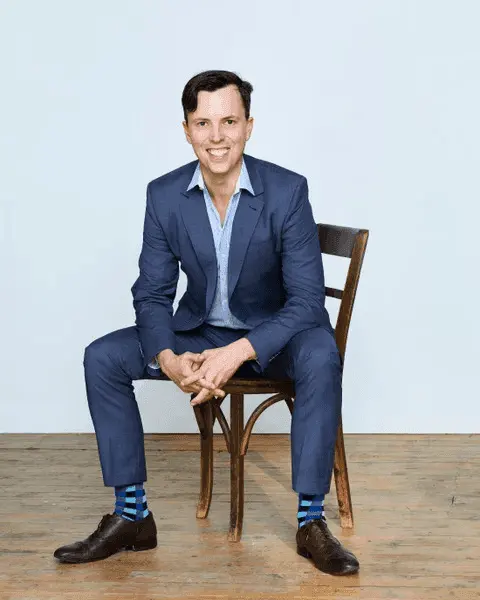
Transcript Synced · select any line to jump ▾ 0:00 Speaker: Let me tell you about our partner, Teamified. 0:03 Speaker: If you need to build a top-notch team quickly, Teamified is your go-to solution. 0:08 Speaker: They not only provide fractional CTOs, they can also do contractors and even remote team members tailored exactly to your needs. And whether you're looking for expertise in the Philippines, India, or Sri Lanka, Teamified has you covered. What's amazing is that Teamified uses a blend of AI and human expertise to cut hiring times by 50%, cent. The platform handles everything from automated onboarding to day-to-day management and even performance tracking. You can also handle rewards and recognition, buy equipment, and order training all through their platform. Simplify your hiring process and get the best talent fast with Teamified. Check them out now and transform your team. Go to dayone.fm/teamified. That's dayone.fm/teamified. Thank you, T-E-A-M-I-F-I-E-D, and get started today. 0:59 Speaker: Hi, I'm Adam Spencer, founder of the Day One Network, which is bringing the history of the Australian startup ecosystem to you. I believe in founders. It's why I do everything I do at Day One and our media company, W2D1 Media. And that's why the Day One Network exists, to create helpful content for founders. We've got some great shows in development. But a large part of what we do couldn't be done without support from our partners and sponsors. And I couldn't be happier than to be working with NTP, who get community better than any other technology recruitment company out there. A Newcastle company like mine, NTP are invested in seeing the growth of the local tech community in Newcastle, Sydney, and more broadly Australia. So thank you NTP for helping us bring— Thank you. Helpful content to founders and the startup community in Australia. 1:52 Speaker: Back to the interview. 1:54 Speaker: Hi, I'm Adam Spencer, founder of the Day One Network, which is bringing the history of the Australian startup ecosystem to you. I believe in founders. It's why I do everything I do at Day One and our media company, W2D1 Media. And that's why the Day One Network exists, to create helpful content for founders. We've got some great shows in development. But a large part of what we do couldn't be done without support from our partners and sponsors. And I couldn't be happier than to be working with NTP, who get community better than any other technology recruitment company out there. A Newcastle company like mine, NTP are invested in seeing the growth of the local tech community in Newcastle, Sydney, and more broadly Australia. So thank you NTP for helping us bring helpful content to founders and the startup community in Australia. 2:45 Speaker: Back to the interview. 2:46 Speaker: Hi, I'm Adam Spencer and welcome to Day One, the podcast that spotlights Australian startups, founders, and the organizations that empower Australian entrepreneurship. We go back to the beginning to tell a story of Australia's most inspiring founders and how they built their companies. You're listening to a special interview series as part of a documentary W2D1 is producing about the history of the Australian startup ecosystem. On the episode today, we have— 3:18 Anthony Ferrier: Hi there, my name's Anthony Ferrier. I'm an innovation and commercialization specialist, primarily working on the corporate side. My career and experience is largely based in the US and in Europe. I spent about 20 years living over in, based mainly New York City, and particularly focusing over the last kind of 13 years of my career on innovation building innovation capabilities, strategies, and systems for corporate organizations, like I said, in the US and Europe. I've been back in Australia now for the past 3 years and most recently took up a role as Head of Commercialization and Innovation for Swinburne Professional, which is a university in Melbourne. 3:58 Speaker: Do you wanna talk a bit more about that and your role at Swinburne? Like, what are you doing on a day-to-day basis? There? 4:04 Anthony Ferrier: Sure, yeah, so Swinburne University pride themselves on having connections to industry and the ability to sort of drive industry growth within the Australian marketplace. And so my role there is really to, to develop connections with industry, to create systems where we can commercialise a lot of the IP, and particularly focused on new ways of working for organisations, and use that as an opportunity to build up new products and solutions we can take to market with partners and ourselves. 4:33 Speaker: Before we jump into the, before we go back in time to when you first got involved in the startup ecosystem or innovation ecosystem or whatever you wanna call it, you mentioned, I think just then in the intro or before we hit record that you specialize in the, or you've worked predominantly in the corporate side. 4:48 Anthony Ferrier: Yes. 4:49 Speaker: And I'm just curious what attracted you to that side and why did you get involved in that side of things? 4:55 Anthony Ferrier: Yeah, sure. Look, I'm an old dog, right? And I've been around the shops and I think when I started my career, quite frankly, the startup world wasn't really an option necessarily, right? It was, you went into small business back in the day or you went into blue chips, is how they looked at it. 5:14 Speaker: Yeah. 5:14 Anthony Ferrier: And what the blue chips provided you was, and what was attractive to me at that time, was an opportunity to travel globally. It gave you global mobility, it gave you stability and a clear career path. Obviously, that's changed, but that was kind of the decision I went into in, back in the day. And what I've been very good at, I think, is finding opportunities to create change and impact in relatively unique ways within corporate. So I think while the attention a lot of the times from career perspectives is focused to startups, and I've been through that from startup 1.0, kind of like internet 1.0 kind of thing in Silicon Valley, but I've always worked on the corporate side because I've been able to find opportunities to sort of latch on to those trends and sort of apply them and drive change within the corporate world. 6:02 Speaker: Yeah, okay, cool. You alluded a bit there to when you first, when you started your career, startups weren't an option. That's where I kind of like to start, so. 6:11 Anthony Ferrier: Sure. 6:12 Speaker: Give us a bit of a timeframe when you kind of began your career and what did the landscape look like then, or probably nonexistent, but if you could give us a bit of an idea. 6:23 Anthony Ferrier: The startup landscape, you mean, or? 6:24 Speaker: Yeah, yeah. 6:25 Anthony Ferrier: Yeah. Different, right? You know, back in the day, and particularly in the Australian sort of sector, um, there, there just wasn't a startup system and, and ecosystem in the market in Australia. What happened was, um, there were small businesses, but they, they weren't largely technology-driven. There were some sort of companies that kind of came out. So, so my career basically started in the mid-'90s, right? So at that time, there, there was, um, that was Web 1.0, right? And so I was in Australia and there were some small organizations that were sort of latching onto the technology and the internet kind of drivers, but it was a very unsophisticated kind of ecosystem as it was globally, right? And you got that kind of like growth coming out of the Silicon Valley kind of drivers. So I kind of like went into that kind of corporate side connected to that. So what happened was I was working with Deloitte at the time and I got invited to move over to Silicon, to San Francisco to lead a marketing initiative particularly focused on Web 1.0 within Silicon Valley. And so what happened was I arrived in San Francisco in, I think it was around May 2000. So I was brought in as part of those 65, brought from all around the world to sort of start up this initiative within Deloitte. And so I arrived in San Francisco at the absolute peak of Web 1.0, and I'll never forget it. I came out on my first day of working on the Monday, the office was downtown, and I came out of the subway and I looked around and every single surface had an ad on it, right? It was the telegraph poles, the sidewalk, the road, the buses, the buildings, everything. People walking past you, every single part of it was advertised. And I thought, oh my God, this is just out of control. This is not gonna last. And within 3 months, it all imploded, right? And so I went from a team of, you know, Deloitte had this big team, like I said, 65 people from all around the world, which went down to a team of 5 very quickly. 8:22 Speaker: Wow. 8:22 Anthony Ferrier: So it was just this, I came at the absolute peak of it and it was just exploding. And it did explode, right? And not in a great way. 8:31 Speaker: Speaking, you know, you've said you've worked all around the world, Europe, New York, Silicon Valley, now you're back in Australia. Can you draw on that vast experience there and talk a bit about what are some of the key differences you see between startup communities/ecosystems around the world compared to Australia and what separates us? Either A, kind of talk to some of our greatest advantages that you see that we have that other startup communities don't have, or if that's not the case, like how much ground do we have to make up? Like what are some of the biggest gaps or areas of opportunity that you see that from other ecosystems that we could learn from? I know that's a massive question. 9:16 Anthony Ferrier: Yeah, yeah. Can I actually adjust it a little bit? 9:18 Speaker: Go for it. 9:19 Anthony Ferrier: Can we direct it more around how corporates engage with startups? 'Cause I think my perspective might be— 100%. Okay, um, okay, so, so in response to how corporates, um, engage with startups, uh, and the regional kind of differences that I've seen, particularly, um, just as a bit of context, um, you know, back in the day, in the early 2000s for example, there was a definite context of startup organizations, and particularly, you know, when you say startup these days, it's a given that it's kind of a digital kind of like play. These organizations were absolutely going out to attack and destroy established mature businesses, right? So you came out there and it was all like, you know, bricks and mortars for retail organizations is absolutely an inhibitor of growth and we are stronger because we don't have that, for example, right? So it was an us versus them mentality and quite frankly on both sides. And that was driven out of Silicon Valley very much so. And so what you saw was everyone looking at the Silicon Valley kind of context there in those days as being very unique and not really applicable to the rest of the world. What happened was that Silicon Valley ethos extended out beyond their kind of like geographic boundaries and became this kind of call-out mantra to corporates. And what happened was corporates took that on and were aggressively pushing against the startup community. And they did that traditionally by deploying their established kind of structures in place to try and sort of attack the startups. Then what happened was they recognized that the digital sort of marketplace and digitization as a concept more broadly should be something they should take up more actively. And so they tried to do that themselves and likely in partnership with some startups, largely failures. And that was a model that was driven actually not so much by Silicon Valley. I think what it was done is the established corporate mature businesses in the US from the East Coast were the ones that were trying to connect with the West Coast. But there were such different corporate ethos, it was really challenging for that to actually work. And so what happened was you saw a lot of failure, a lot of big investments going in, largely driven by established mature East Coast businesses into the West Coast companies, and the cultural drivers were just far too much for them to overcome. 11:36 Speaker: Can you give us a year of like a decade that this was happening? 11:40 Anthony Ferrier: Uh, really up till the 2010s, so early 2000s. 11:46 Adam Spencer: Right. 11:47 Anthony Ferrier: And what happened was that has changed in the last 10 years. And what's happened now, the mindset is much more of a collaborative process. And you see that, I think, started in the US and North America, but actually the Europeans were very good at this in terms of sort of looking at it much less around sort of attack to kill, much more around partnership and much more around understanding what the strengths are of each of those parties and more effectively leveraging into those strengths and leaning into those strengths and driving value from that. So that's where you're starting to see more success around these collaborative models and investment models being driven now out of the US and Europe. In context of Australia, I think Australia has been slow to that game. And so what you're seeing now is more sophisticated and quite frankly impressive responses from the Australian corporate community in engaging in with the startup world more effectively and impactfully and more broadly accepted. And so I think what you're seeing is there's more of a blending now, right? It's less the us and them, it's more around, right, you've got some strengths, we've got some strengths. And I think previously, by the way, the corporates went into this with very much an inferiority mindset. 13:03 Speaker: They kind of like bought into We aren't that great. 13:08 Anthony Ferrier: Startups are unbelievably smart back in the early 2000s, right? Now it's much more, right, we're, we're very good. We've survived through this. You guys can help us achieve our objectives on both sides. And, and that's sort of starting to drive some success. Unfortunately, what's happened is I think on that corporate venturing side, there hasn't actually been a lot of success up until the last kind of 12 to 18 months. But what you're starting to see now is the corporates drive some success around that, and that underpins success for innovation more broadly within the Australian corporate context. 13:37 Speaker: What does that success look like in practical terms? And what do you think, what's your opinion on organizations or companies like Slingshot, if you're familiar with them and the corporate accelerator model? 13:49 Anthony Ferrier: Okay, in terms of what does that success mean for both parties, I think what it means is, you know, you're being able to sustain and drive growth through these partnerships. And you're starting to see that through a number of different entities and sectors, but particularly in financial services. So financial services in the US is really where corporate innovation grew up. It's really where it came out of in terms of the big corporates trying to understand how they can innovate more effectively as a determined strategy process and system capability. So they kind of looked at it in financial services and sort of said, look, we've got— and this is in the context of the GFC, right? And this is when I started in the innovation space. You know, these organizations were being blown apart and everyone in the world hated them. So they wanted to go out there and sort of drive more approaches to drive new innovative growth drivers within their organization. And so they started to look initially at the startup world. That was one of the first areas. So that's where fintech is such a growth kind of area now because they've had that maturity and investment cycle over the last kind of 15 years or so, right? And so they've been the most successful, I think. And you're starting to see that when I talked about that kind of like that models of success being driven, you're actually starting to see that first in financial services in Australia. Yeah. And there's various historical and sustained reasons for that. You know, you've got 4 big players basically driving it, but you know, what you're starting to see now is some announcements coming out from some of the big banks in Australia where they've driven some real impactful growth through partnerships with the startup ecosystem. To your question around the corporate accelerators that are out there in the marketplace, look, I think they've been a mixed bag. You've seen some success, through that, but quite frankly, it's been limited. What you're starting to see now is these homegrown accelerators within organizations, and once again, being led within financial services, where these organizations are taking on that accelerator kind of model and reassessing it and changing it to make actually sense for their organization and owning that themselves rather than investing in a third party setting up those kind of accelerators. So I think maybe that's some, some of the new sort of direction you're seeing. And you see, you're starting to see that being very successfully deployed. Early days still, but really being taken on by executives and leadership. And X15 is the biggest example of that through, um, CommBank. 16:14 Speaker: Uh, two more questions, Anthony. This one is— I ask everybody this question, and I'll, I'll tailor it a bit for you. It's the advice question where I ask people to give their one piece of advice to startups, but changing it just slightly. When a startup is going out into the marketplace or looking for a partnership with corporate, like advice from that angle, like what advice would you give them in terms of dealing or starting a conversation with a corporate entity? 16:43 Anthony Ferrier: Yeah, from a startup perspective, and I've driven, I've launched my own startups, right? So I've been on the corporate side, I've been an advisor, I've been a thought leader and an author, and I've also started as an entrepreneur, started my own businesses. As an entrepreneur and working within a startup, it's very easy to get used to the pace of quick shift, you know, being an agile organization, being mobile, being able to change things very quickly, you know, all these kind of like quick decisions and processes are, you know, part of your DNA. It's very easy when you start working with a corporate organization to look at them and see that they are slower than you, which they are generally, and really kind of be dismissive of that and present your way of working and thinking as the model that a corporate should replicate. The reality is though, what you're not seeing is the legacy success model of that corporate in the background that's often hidden from you as a partner. And so it's, if you wanna change direction as a startup, that's easy, right? You just get amongst your colleagues and you decide to make a change and you go in that direction. In a corporate, it's, there's much more different behaviors and cultural drivers around and expectations of success around shifts and changes. And you've just got to recognize that they are, that they've got these processes that they need to work through. They're not going to work at the pace they're going to be, you're going to be able to. Making changes and quick adjustments is not easy for a corporate. And there's reasons for that. It's not just that there's red tape there. There's often very good reasons for those shifts being assessed and adjusted for and accounted for in different ways than a startup might. 18:21 Speaker: So I just think you just got to go in there and recognize recognize it's going to take longer than you take. 18:27 Anthony Ferrier: Quick shifts and changes are not welcome a lot of the time within corporates, and you need to just be conscious of that and that you're not necessarily better than them, right? They are— they're taking time because there are certain risk profiles, there are certain processes and systems they've got to work through to drive that success over time. 18:45 Speaker: Thank you so much for your time today, Anthony. I really appreciate it, and I wish we had more time. Last question isn't really a question, it's, it's a Keeping in mind that what we're trying to tell here is the story of the startup, the Australian startup ecosystem in a documentary. We want academics, we want founders, we want policymakers, we want everybody in the, any stakeholder in the ecosystem to hear this. And keeping that in mind, what would you want to tell them? What is top of mind for you? What do you think needs to be talked about that isn't being talked about or yeah, just what comes to mind? 19:20 Anthony Ferrier: I think that the Australian ecosystem needs to be really proud of their achievements, right? I mean, I'm sure you're going to hear from many other interviews, you know, it's taken a little bit of time to build up some steam, but I think that this is an area of incredible growth and opportunity for the Australian economy. And hand in hand with the corporates, that you're going to transform and change the way Australian business runs. And that's going to be really exciting, and I think that Australia is in a very strong position to, um, drive further economic growth and be a real powerhouse. Certain things have to combine for that to happen, but I'm very bullish and sort of see a real opportunity around this. 19:57 Speaker: Thank you, Anthony. Um, I'll just end the interview with the fact that I, I'm a Newcastle guy, and I noticed that you, you spent some time in Newcastle. Um, how do you think it compares to all the other cities around the world you've lived in? 20:13 Anthony Ferrier: Mate, I am a big advocate of Newcastle. Last summer I took up 12 of my friends up there from Sydney 'cause they'd never been. I think it's a fantastic town. I think it's great in terms of its, from the university perspective, it's a great university. But I just think it's got all the qualities from a mid-sized city that can be provided. And actually, interestingly, in the States there's lots of cities cities the size of Newcastle and with various degrees of success. But in Australia, there's not many cities that provide the cultural backgrounds, the artistic kind of drivers, the business capabilities, the connections to other international centres that Newcastle can provide. So I think it's just a great place to live and for me to visit. And yeah, I think it really sort of ticks the boxes in a lot of ways. And I think, by the way, in the last 2 years, We've been back in Australia for the last 3 years and even the last 2 years, it's unbelievable the amount of changes going on there and the sense of progress and development is fantastic. 21:10 Speaker: Yeah. Thank you very much for your time, Anthony. Alright, no problem. 21:24 Speaker: I hope you enjoyed that interview. 21:29 Speaker: More interviews are on the way. Follow the podcast wherever you're listening right now. Stay tuned for more interviews with many, many more amazing people from the Australian startup ecosystem. Thanks for listening and see you next time. 21:41 Anthony Ferrier: Bye.