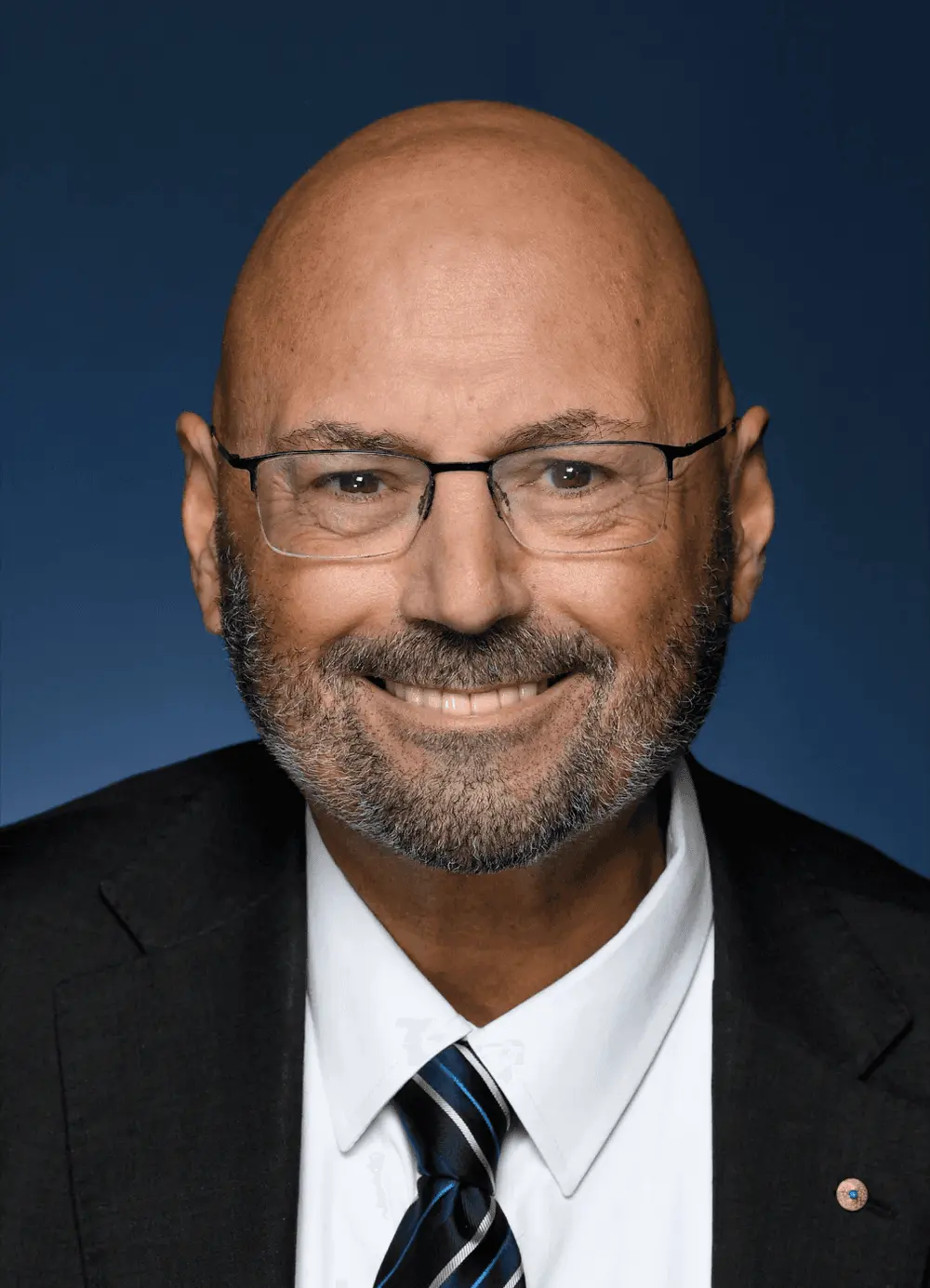
Transcript Synced · select any line to jump ▾ 0:00 Adam Spencer: Let me tell you about our partner, Teamified. If you need to build a top-notch team quickly, Teamified is your go-to solution. They not only provide fractional CTOs, they can also do contractors and even remote team members tailored exactly to your needs. And whether you're looking for expertise in the Philippines, India, or Sri Lanka, Teamified has you covered. What's amazing is that Teamified uses a blend of AI and human expertise to cut hiring times by 50%. Their platform handles everything from automated onboarding to day-to-day management and even performance tracking. You can also handle rewards and recognition, buy equipment, and order training all through their platform. Simplify your hiring process and get the best talent fast with Teamified. Check them out now and transform your team. Go to dayone.fm/teamified. That's dayone.fm/teamified. Thank you. T-E-A-M-I-F-I-E-D, and get started today. Hi, I'm Adam Spencer, founder of the Day One Network, which is bringing the history of the Australian startup ecosystem to you. I believe in founders. It's why I do everything I do at Day One and our media company, W2D1 Media. And that's why the Day One Network exists, to create helpful content for founders. We've got some great shows in development, but a large part of what we do couldn't be done without support from our partners and sponsors. And I couldn't be happier than to be working with NTP, who get community better than any other technology recruitment company out there. A Newcastle company like mine, NTP are invested in seeing the growth of the local tech community in Newcastle, Sydney, and more broadly Australia. So thank you, NTP, for helping us bring helpful content to founders and the startup community in Australia. Back to the interview. Hi, I'm Adam Spencer, founder of the Day One Network, which is bringing the history of the Australian startup ecosystem to you. I believe in founders. It's why I do everything I do at Day One and our media company, W2D1 Media. And that's why the Day One Network exists, to create helpful content for founders. We've got some great shows in development, but a large part of what we do couldn't be done without support from our partners and sponsors. And I couldn't be happier than to be working with NTP, who get community better than any other technology recruitment company out there. A Newcastle company like mine, NTP are invested in seeing the growth of the local tech community in Newcastle, Sydney, and more broadly Australia. So thank you, NTP, for helping us bring helpful content to founders and the startup community in Australia. Back to the interview. Hi, I'm Adam Spencer and welcome to Day One, the podcast that spotlights Australian startups, founders, and the organizations that empower Australian entrepreneurship. We go back to the beginning to tell the story of Australia's most inspiring founders and how they built their companies. You're listening to a special interview series as part of a documentary W2D1 is producing about the history of the Australian startup ecosystem. On the episode today, we have Arthur Sinodinos, Australian Ambassador to the US. 3:22 Arthur Sinodinos: Great to be with you. 3:27 Adam Spencer: The name of this series is The History of the Australian Startup Ecosystem, so we're What we're trying to do here is, to the best of our ability, tell the story of the Australian startup ecosystem. We've interviewed 150 people. We're going right back, you know, Terry Hillsberg, we interviewed Terry Hillsberg and he took us right back to the '70s talking about the investment landscape in Australia back in the '70s. What was your first exposure to the startup sector in Australia? 3:54 Arthur Sinodinos: Well, it's interesting you mentioned Terry Hillsberg because— I worked with a few productivity-related issues in that period when Terry was in the public service. And that was my first exposure to the debate about productivity and innovation in Australia and where does it come from and what we should be doing. Now in those days, I was a Treasury officer, so our attitude was always fairly skeptical, which was— [LAUGHTER] —there's got to be a good case for market intervention. What is the market failure we're trying to deal with here? And I remember working on some papers in Treasury which were published around— Treasury Economic Papers, they were called in those days— which talked about identifying the circumstances in which you subsidise investment in research, how far along the chain from basic to applied to final do you do it. And when you're thinking about the final outcomes, the idea was, well, if companies have enough incentive to invest in something, they will. Yeah. So if it's commercial enough, at that stage the government should be out of the picture and it's more the private sector. But then as time moved on and as I became more educated in the Australian economy, as I started to meet firms in the Australian economy more directly, particularly when I went up to the Hill to work in the opposition as it was in the late '80s, I started to meet more companies from business. Mm-hmm. And small business in particular. And I started to see there was more to the debate than that. And my views started to evolve further. And then in various jobs I had after that, including in banking and seeing the issues with financing, particularly of new businesses as opposed to established businesses, small versus large businesses, I started to get a better feel for in the real world, where is it more appropriate government should intervene? 5:45 Adam Spencer: Mm-hmm. 5:45 Arthur Sinodinos: I had worked on some of these policies in the Howard government called Backing Australia's Ability. But it wasn't until the 2000s and post the tech boom in particular, we started to think more about where should we take policy. So by the time I hit the Senate in 2011, in my first speech or maiden speech as they used to be called, I talked about the fact that we needed to do more to promote science and innovation in Australia, and I also talked there a fair bit about the crucial opportunities to commercialize, that where we were falling down according to the data and the stats was we punched above our weight in coming up with ideas, but the issue was getting those ideas to be realized. Commercialization was a real issue, and that's an area where I focused as well when I was in the ministry, and particularly as Minister for Industry, Innovation and Science. Mm-hmm. That's why I'm happy that in recent years there's been more done to promote R&D tax incentives. We've done more to give government a role in promoting strategic investments in manufacturing, working off the back of our defence procurement to create more opportunities for enterprises. So for me, it's been an evolution in my thinking and also about the role of government. And my view on the role of government is that we're competing in a global context. 7:08 Adam Spencer: Mm-hmm. 7:08 Arthur Sinodinos: And it's like a global version of competitive federalism, right? How do you try and get more of a slice of the pie? What are the attributes of your economy that you need to strengthen to do that? And increasingly promoting new enterprises, which overwhelmingly can be the source of job creation, is important. And I started to worry about how startups are funded and encouraged in this country vis-à-vis other countries. And while I've seen Things changed in recent years. For me, this is very much a work in progress. We should never be complacent about where we're going, particularly in regards to venture capital, in regards to commercialization. Governments have done more over the years on both sides of the politics, but I think it's an evolution that's going on. So it's great that a series like this actually tries to understand the history of innovation and tries to provide a context for our future policy options. 8:04 Adam Spencer: It's really interesting that you brought up commercialization and the impact, I guess, that universities have on the ecosystem. It's come up a number of times in interviews that we've done, and someone was even talking about it on Twitter yesterday from listening to one of the episodes of this series. I'll talk about the role of government a little bit later, but I wanted to get your view on that, on commercialization and the role that universities should be playing, if they're not already playing, in the startup ecosystem in Australia? 8:34 Arthur Sinodinos: Well, I've seen an evolution in the role of universities in this sector over time. They've set up units to spin out companies based on inventions and discoveries. There's been a question about, is that as effective as the way, for example, the US does it in their system? Is there more of a mindset in American universities around innovation and commercialization? In Australia, is there still a bit of a feeling that if you're doing research in a university, that's an unalloyed good, but if you then dabble in commercialization, that's a bit crass and commercial? I don't know that it's necessarily a lingering thing across the whole system, but I think we have to take a very active approach to commercializing and developing the ideas in our universities because, you know, when I go around universities here and whatever, they're very impressive, but I think Australian universities have nothing to fear. 9:30 Adam Spencer: Mm-hmm. 9:31 Arthur Sinodinos: I think they're really good in what they do, but I do think that there's more scope for commercialization in the Australian context. I know that before the election, there was work being done around incentives for greater commercialization within universities. We did change things a few years ago with National Innovation Science Agenda, the incentives within research grants and all the rest of it. Now I'm not one who says that everything in life has to be monetized. We want research for the public good. But what I'm saying is, I think there are a lot of opportunities that go begging because we don't operationalize, commercialize them here. They have to go offshore because of the funding that's available or the scale. And the net losers from that are Australia. So I'm really keen for us to keep pursuing those incentives to make our universities as commercialisation ready as any in the world. 10:24 Adam Spencer: This question, tackle this however you like, whether from a policy standpoint or improving commercialisation, what's the biggest change you think that we could make today that would have the biggest positive impact on the startup ecosystem? 10:38 Arthur Sinodinos: That's a good question. I think one thing that strikes me is the mindset within the public sector. Around issues of permission to fail, permission to take risks. Because we're in the public sector, stewards of public money, there are a lot of compliance obligations, and that's as it should be. But what I have in mind, for example, is a country like Israel. They made it very clear early on when they set up their sort of venture funds and whatever that were administered by the chief scientist that— 11:11 Adam Spencer: Chief scientist. 11:11 Arthur Sinodinos: It was okay to fail as long as you learnt from failure. So what I'm getting at is, is the mindset that the public sector is projecting to the rest of the economy one of, we will help you have a greater risk appetite. And that this will be manifested both in what we are prepared to fund, it'll be manifested in how we do government procurement, it'll be manifested in how we seek to understand how different government activities. The biggest example now is defence. There's a lot of money going into the defence space, into capability. That can have huge spinoffs in other ways for the innovation ecosystem and for capability development through the rest of the economy and commercial spinoffs. So from my perspective, I think the role of the public sector as a risk taker, sort of like an entrepreneur. I know there'll be some purists who'll say, hang on, governments by their nature cannot be entrepreneurs and if they are, they'll pick the wrong horses and you'll have trouble. Yes, the old models, certainly true. But I think in today's world, if you do procurement in a strategic way, if you're prepared to back SMEs, we tried to create a digital marketplace a few years ago under the Digital Transformation Agency to try and provide a more level playing field for SMEs. Mm-hmm. Bidding for government business in the digital space. Things like that more across the board I think would be good. 12:41 Adam Spencer: Earlier you did make a small comparison between Australian universities and US universities. And this question is kind of a follow-up to that, but what other comparisons can you draw between the US startup ecosystem and the Australian ecosystem? And what would you have us learn from them and integrate? The best that we can take from them to improve our ecosystem? 13:05 Arthur Sinodinos: Yeah, that's a great question 'cause that's one of my missions here, to better understand what is transferable. Now there might be elements of culture like risk and entrepreneurship that we just talked about. To what extent are they transferable? I think they can be if you create a competitive environment and if you send the sort of signals I mentioned before about the role of government as being active in this field. I think that's important. One thing that strikes me about the US is very deep and liquid capital markets, the deepest, most liquid capital markets in the world, and therefore you get great access to funding here, and that's why this is such an attractive market for Australian companies and enterprises. You know, it's the old song, if you can make it here, you can make it anywhere. It's tough, it's a competitive environment, but there are so many opportunities and there's so much I mean, there are savings around the world. The world is awash with savings, but here in the US in particular, their appetite for risk, the venture capital that's available, many multiples of what's available clearly in an economy the size of Australia, and the risk appetite that I mentioned before create great opportunities. I think in the Australian context, whatever we can do to make our capital markets as innovation-friendly as possible, we've tried to do this through government programs, early start venture capital and various tax and other incentives. 14:25 Adam Spencer: Mm-hmm. 14:26 Arthur Sinodinos: And I think that's all important. Further developing the capital market to ease access to debt and equity instruments. I think some of the work that's been done around employee share ownership in recent years has been really good. That's something that I think we should always keep under observation to see whether what we've done is having the impact we want and what further might need to be done. Not to line the pockets of those who are already rich, the 1%. This is to make it easier for all those people out there who are developing things in their garages, right? 14:59 Adam Spencer: Mm-hmm. 14:59 Arthur Sinodinos: And who are potentially the Canvas, the Atlassians, and the others of the future. See, my vision ultimately is to have an economy where a Canvas and an Atlassian don't feel that they've gotta go overseas for funding, or in Canvas cases, they've gotta go around and ask people 60 times, 100 times for money before they get started and then look how they've gone. We want as many unicorns growing in Australia. Now, that's easy to trip off the tongue. 15:28 Adam Spencer: Mm-hmm. 15:29 Arthur Sinodinos: But you know, when I've gone around the Australian ecosystem, Adam, and I've seen some of the stuff that's going on, there's a lot of really good stuff there. And one of my missions here is how do we get more of the American venture capital and other systems, understanding what's happening in Australia. That's very important. That is key. 15:49 Adam Spencer: Ambassador, what do you think the role of super funds should be in relation to investing in high-growth businesses? 16:00 Arthur Sinodinos: Well, you know, it's interesting because we now have about the fourth largest sort of retirement pool in the world, I think. People look at this longingly and say it could be used for all sorts of purposes. But of course, the first obligation, the fiduciary duty of people is to look after people's savings. But that said, what are the areas which are having some of the highest returns? It's when you get disruption and you get new industries developing. And so there's a bit of a question, I suppose, if you're a super fund about, well, how do you get some sort of exposure to that sort of growth, which can add real spice to a portfolio. And so what we've seen in recent years is a number of the super funds in Australia set up their own venture capital funds or whatever, and they're getting involved in things like private equity. And I've spoken with AustralianSuper here in the US about some of their activities. I think subject to the fiduciary obligations I mentioned before, I think it's a good thing if super funds look at their exposure to emerging industries. Obviously, they have to be very careful about how they do that. And I'm certainly not in favor of governments just mandating that a certain proportion of funds should go into that automatically. I think these have got to be market-based decisions. But what that means is that governments and others have got to create the conditions which make it more likely that super funds will think it's a good investment for them to do that. A few years ago in my first speech to the parliament, I talked about the government setting up a sovereign wealth fund in due course to actually invest in emerging industries and sectors and countries because it's trying to get that growth premium. And I talked about that in the context of turbocharging the growth of Australia's venture capital sector. Now, things have moved on since then, but I still think that Those large pools of capital provide potential for doing this, but the best way for super funds to judge that, in my view, from my current role, and this is what I'm encouraging, is come over to the US and just see the breadth and depth of the market here and the opportunities that that raises to have a portfolio which can reflect that potential growth premium. 18:14 Adam Spencer: We interviewed former Prime Minister Malcolm Turnbull for the series and we we spoke about NISA. And I'd love to get your thoughts on what was trying to be achieved there and whether it was successful or not. I'd just love to get your opinion on that. 18:28 Arthur Sinodinos: Yeah, I loved NISA. I really did. I thought that it was a genuine attempt to create a coherent integrated package of measures to address the various pillars of the situation, whether it was about personnel, whether it was about funding, whether it was about incentives in the public versus the private sector. The fact that there were all these lateral ideas brought in like, should we fund Michelle Simmons at the University of New South Wales, where she is trying to do this groundbreaking work on the next generation of quantum computing? I can go through the list of measures, but I thought it was an attempt to create a new agenda for the Australian economy. And by sort of sponsoring it from the top, create a different mindset, an innovation mindset across traditional and emerging sectors. Mm-hmm. This wasn't just about people sitting around in black skivvies talking about the future. This was very practical in terms of the measures that we took across the economy. It wasn't just restricted to just the newest tech sectors. It started with a bang. I thought there were really good measures in there. The government put some genuine resources into it. We did run into a challenge with the 2016 election. There was a debate that the word innovation scared some people that they might lose their jobs. 19:47 Adam Spencer: Mm-hmm. 19:47 Arthur Sinodinos: I mean, I haven't seen the research post the election on that, 2016 election on that, but it's like all these things. I think certainly my time as innovation minister after the election, when I took the reins up from Greg Hunt, I was very keen to keep talking about innovation. 'Cause I think it's like all these things, you gotta talk about something and you gotta keep repeating the message. And as Neville Rand used to say, "When you get sick and tired of saying it, maybe it'll start to get through to people." [LAUGHTER] that we, and I still do, we should keep talking about what innovation is. I mean, I think the biggest challenge always is the fear that people have, where are the jobs gonna come from? It's great for you to talk about automation and tech change and this and that, and it all sounds whiz-bang, and some people look like they'll do really well out of it, but what does it mean for me? And I think the challenge always is to explain that innovation is the way New jobs always come through. This is how we create new jobs, new dynamism in the economy. This is what's helping places like the Hunter Valley through strategies of smart specialization to create a new future for themselves. 20:57 Adam Spencer: Right. 20:59 Arthur Sinodinos: So I think that positivity, that dynamism is what we need to keep harnessing and promoting. So I remain an unabashed supporter. We don't officially have a NISA agenda now, it's moved on to a whole series of other initiatives. But if you look at those new initiatives that actually build on what that agenda was about. 21:21 Adam Spencer: A whole bunch of questions just come into my head because you mentioned Hunter Valley. I'm from the Hunter Valley. 21:25 Arthur Sinodinos: Yep, so am I. 21:26 Adam Spencer: Oh, really? I'd be interested to hear more. What was that you were just saying about those initiatives? 21:30 Arthur Sinodinos: Well, look, what happened is the Hunter Valley went through a process of mourning when the steelworks closed in the mid-'90s. And I remember I was working in John Howard's office then and we had to come up with adjustment packages to help the region cope. And that was a fraught time and the unions were anxious. We ended up working with a number of the unions there on what should be done, as well as management and others. And once the region got through grieving what had happened and made up their mind that they had to move on, then we were in a position with state government and others to help provide them with ways to diversify and redevelop the Hunter Valley economy and the Newcastle economy. And what we saw in that period is new industries start to develop, including off the back of the university there, which is my alma mater, the University of Newcastle, which had a great track record in science, engineering, and innovation. And that also helped to provide new avenues for jobs. I mean, the Hunter in some ways was fortunate that it has very good infrastructure. It has a good skilled labor force. It had a lot of the attributes of being able to adjust. But once they got over the steel industry, they started to see a new future for themselves. Just as now they're contemplating what is the future in a clean energy world as coal and fossil fuels are phased out. But I think that same mindset from that period will help them cope with all of that. But that's the period when they came up with the smart specialization strategy based in part on what they had seen work within the EU context. 23:06 Adam Spencer: Right. 23:07 Arthur Sinodinos: And so I remember going back to The Hunter at various times over the last few years and helping to promote that strategy and working with them on what the future looks like. And I'm really gratified at what they've done. They're a great example of, you know, what might be perceived as a traditional Rust Belt community picking itself up by its bootlaces and getting on with it. 23:29 Adam Spencer: Speaking about the future, do you feel as though we are on the right track? If we keep going in the direction we're going? And what does that mean for Australia's economy? 23:38 Arthur Sinodinos: I've seen a change in mindset in the political sphere. If I look at some of the programs governments now have around modern manufacturing strategies, around capitalising on our defence investment, I think we're doing— we used to be afraid about picking winners. Now we realise we've got to pick attributes. What are the attributes we want in our economy to help promote that greater industry development, efficiency, innovation, and all the rest of it. So I'm by nature have to be an optimist, right? 24:10 Adam Spencer: Mm-hmm. 24:10 Arthur Sinodinos: But I think there are reasons for optimism. But the other thing I wanna do in this role here in the US is keep promoting the links between the two economies. I want more links between American universities and Australian universities. I want more links between the innovation ecosystems. I think that is happening, but I want to promote those links more and more, and I want to make sure American capital is being fully exposed to the menu of opportunities available in the Australian innovation scene. 24:40 Adam Spencer: Thank you so much for your time today, Ambassador. This is a question I ask everybody at the end of each interview. If you don't have an answer, that's fine, but what we're trying to do here is create a documentary that will tell the history of the Australian startup ecosystem to the best of our ability. We want founders, investors, policymakers, academics, everybody from every corner of the ecosystem to listen to this story. 25:02 Arthur Sinodinos: Mm-hmm. 25:03 Adam Spencer: Any one of those categories or everyone, what is a final message that you would like to share with them? 25:09 Arthur Sinodinos: I think I want to reiterate something I said before. We shouldn't be afraid of focusing on innovation as a mindset across the whole economy. It's important in today's world to accept that those countries that are on the tech frontier, on the productivity frontier, are the countries that will shape the future. At the moment, in various international contexts like the Quad, we're in a working group on critical and emerging technologies covering areas like AI, machine learning, cyber, quantum, biotech, go through the list, 6G, plus 6G telecommunications. We're looking at all these areas which will shape the future. So the future is changing around us. Look at the way the pandemic has accelerated digitisation and the opportunities that that opens up for us. We've got a digitisation strategy, but we've got to keep accelerating the pace across all the areas of the innovation ecosystem. 26:07 Adam Spencer: Thank you so much for your time, Ambassador. 26:09 Arthur Sinodinos: Thanks, Adam. Great to be with you. 26:17 Adam Spencer: I hope you enjoyed that interview. More interviews are on the way. Follow the podcast wherever you're listening right now. Stay tuned for more interviews with many, many more amazing people from the Australian startup ecosystem. Thanks for listening and see you next time.