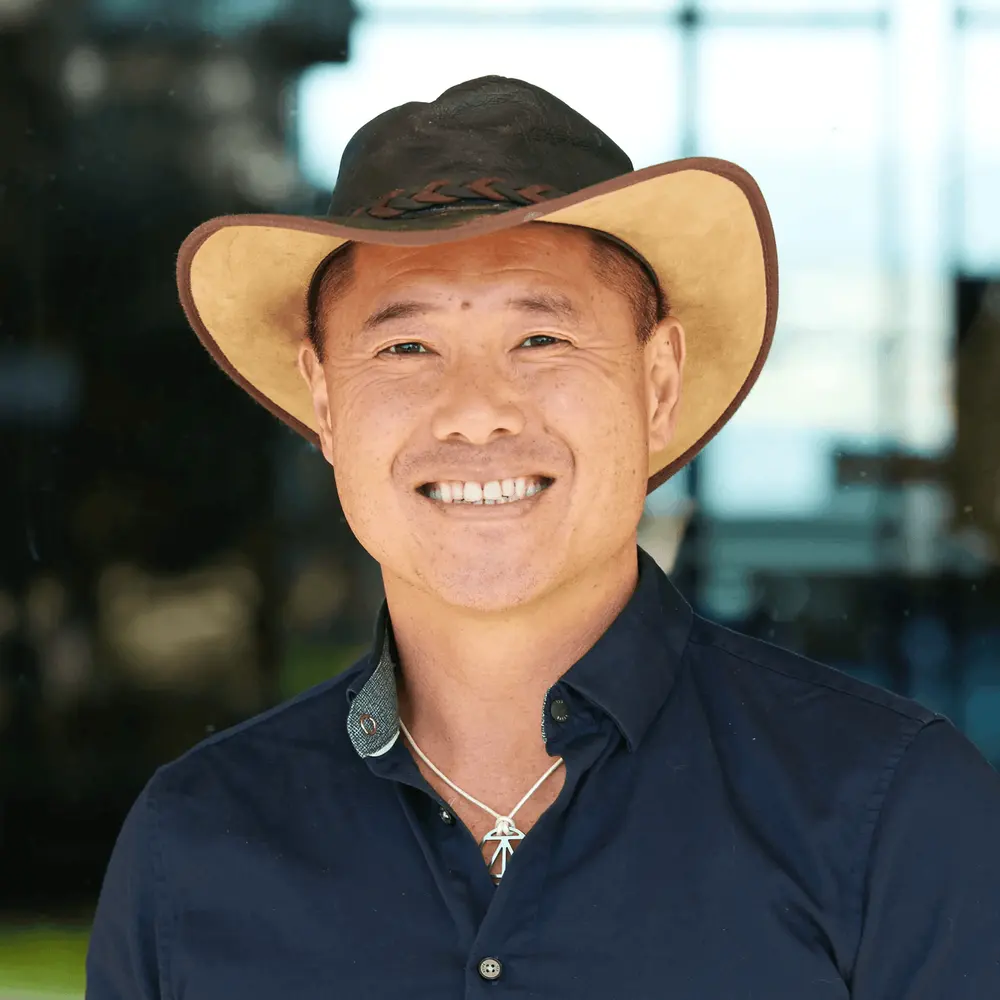
Transcript Synced · select any line to jump ▾ 0:00 Speaker: Let me tell you about our partner, Teamified. If you need to build a top-notch team quickly, Teamified is your go-to solution. They not only provide fractional CTOs, they can also do contractors and even remote team members tailored exactly to your needs. And whether you're looking for expertise in the Philippines, India, or Sri Lanka, Teamified has you covered. What's amazing is that Teamified uses a blend of AI and human expertise to cut hiring times by 50%. Their platform handles everything from automated onboarding to day-to-day management and even performance tracking. You can also handle rewards and recognition, buy equipment, and order training all through their platform. Simplify your hiring process and get the best talent fast with Teamified. Check them out now and transform your team. Go to dayone.fm/teamified. That's dayone.fm/t-e-a-m-i-f-i-e-d and get started today. 0:59 Speaker: Thank you. 1:01 Speaker: Hi, I'm Adam Spencer, founder of the Day One Network, which is bringing the history of the Australian startup ecosystem to you. I believe in founders. It's why I do everything I do at Day One and our media company, W2D1 Media. And that's why the Day One Network exists, to create helpful content for founders. We've got some great shows in development, but a large part of what we do couldn't be done without support from our partners and sponsors. And I couldn't be happier than to be working with NTP, who get community better than any other technology recruitment company out there. A Newcastle company like mine, NTP are invested in seeing the growth of the local tech community in Newcastle, Sydney, and more broadly Australia. So thank you NTP for helping us bring helpful content to founders and the startup community in Australia. Back to the interview. Hi, I'm Adam Spencer, founder of the Day One Network, which is bringing the history of the Australian startup ecosystem to you. I believe in founders. It's why I do everything I do at Day One and our media company, W2D1 Media. And that's why the Day One Network exists, to create helpful content for founders. We've got some great shows in development, but a large part of what we do couldn't be done without support from our partners and sponsors. And I couldn't be happier than to be working with NTP, who get community better than any other technology recruitment company out there. A Newcastle company like mine, NTP are invested in seeing the growth of the local tech community in Newcastle, Sydney, and more broadly Australia. So thank you NTP for helping us bring helpful content to founders and the startup community in Australia. Back to the interview. Hi, I'm Adam Spencer and welcome to Day One, the podcast that spotlights Australian startups, founders, and the organizations that empower Australian entrepreneurship. We go back to the beginning to tell the story of Australia's most inspiring founders and how they built their companies. You're listening to a special interview series as part of a documentary W2D1 is producing about the history of the Australian startup ecosystem. On the episode today, we have— 3:18 Bill Tai: Hi, I'm Bill Tai. I'm a venture capitalist based in Silicon Valley and one of the original investors in companies like Zoom Video and Canva. 3:32 Speaker: Zoom, the pandemic, I mean, obviously it was horrible, but being invested in Zoom, that would've been amazing. 3:39 Bill Tai: Right? You know, it was already amazing before the pandemic hit. Zoom went public about a year and a half before the pandemic hit. And at the time it went public, it was already doing $300 million a year in trailing 12-month revenue at 80% gross margins and very profitable. And so it was already kind of the leader in its field from a, usability and financial perspective, but the pandemic just accelerated its usage worldwide. 4:13 Speaker: What was your first exposure to the startup world? And there was probably no vocabulary around it. 4:18 Bill Tai: Sure. 4:19 Speaker: Or maybe there was when you first got involved. 4:21 Bill Tai: When I first got involved in what we would know as startups today, I was coming out of college and I had been trained As an electrical engineer with a specialty around semiconductor physics and computer chip design, and I came out to Silicon Valley in 1984 to join a startup which had been founded by the CEO of a company called Fairchild Semiconductor. And some of you that might have heard stories of Silicon Valley would know that Fairchild Semiconductor was kind of the genesis block of many of the other companies. Other companies that came out of Fairchild would, would be companies like Intel or Advanced Micro Devices or National Semiconductor. Venture firms like Kleiner Perkins and Sequoia Capital were formed by people that had come out of the Fairchild ecosystem. Yeah, and I joined the startup founded by the CEO of Fairchild. 5:24 Speaker: Yeah, that— what would you say would be the 'Cause there is that, you know, you do need that kind of company, or maybe you don't need it, but that has that exit and mints, you know, all these millionaires who then go to support the ecosystem and help build it. What would you say would be the equivalent in Australia? Is there an equivalent? 5:45 Bill Tai: You know, I wouldn't say there's one company, but I would say the examples that are being formed today in real time, are companies like Atlassian. And, uh, I'd say, you know, Canva is going to be one of those as well. But, um, yeah, probably the closest thing there is, it is probably Atlassian, with, you know, Mike Cannon-Brookes and Scott Farquhar being generous supporters of other entrepreneurs in the ecosystem starting companies. 6:14 Speaker: Uh, I think I heard that, you know, I don't know the, the specifics about this, but the Australian government And I don't know if you know the specifics about this, you know, with the ability for early employees to take shares, I think that was a problem that we had when Atlassian was formed. And I'm imagining that that wasn't the case in the US because you've got these companies like Fairchild that, you know, minted all these millionaires. Is Atlassian doing the same? Or is the equity all tied up in, you know, the main founders of the company and not the employees? 6:48 Bill Tai: It has been the case, I think, that Silicon Valley got its momentum because there was a very egalitarian system stemming back to, I think, the '70s, where the management teams of companies that were starting would set aside pretty good amounts of their share capital structure to give to employees that would join them. And I think because those companies worked and a lot of people did well financially, it sort of became part of the culture, ethos, and expectations of people from all over the country moving to Silicon Valley that they would have their shot at making a fortune by following their dreams by coming to California and joining companies led by young founders that were willing to share rather than going to gigantic older corporations where any ownership they could get was kind of a drop in the bucket. 7:54 Speaker: Jumping forward, what prompted your desire to come to Australia and start that, you're now an adjunct professor at Curtin. Can you tell me that story? 8:08 Bill Tai: Yeah, it's not obvious, you know, so through the '80s and '90s, I became a very passionate and addicted windsurfer, and in the early 2000s, converted to kiteboarding. And by year 2000, I had already had my 19th company that I had funded through venture funds. Become public companies, and I basically had retired for a bit. And when kiteboarding came into the water sports scene right around that time, I picked up the sport, and I was always a pretty decent athlete and pretty good at water sports. So I picked up that sport immediately and just loved it. I got pretty good at it. I ultimately became a sponsored athlete in the sport. Mm-hmm. But along the way, everybody in the Valley knew that I was the venture guy that liked to kiteboard. And so there was a, there is a person that's pretty prominent in the Australian tech scene named Larry Lopez, who had worked at Silicon Valley Bank out here where a lot of the main tech investors are. He married an Australian woman. Moved to Perth and was setting up a conference to be held at Curtin University called Univation. And somehow I think Larry knew that I liked to kiteboard and, you know, Australia, Western Australia in particular, is on kind of the bucket list for anyone in the sport. So he managed to network to me, called me, and said, Bill, if you would be willing to get on a plane to come all the way on the other side of the globe to do a talk for me as the keynote at my conference, Unovation. I think I can get the university to cover your flights and you go kiteboard all week. 10:07 Speaker: Yeah. 10:07 Bill Tai: And I said, well, sure. And so I came out to speak at Unovation. And I did, I did kite Margaret River, all the way down south to Margaret River, kited Layton Beach, went all the way up to I think it's Esperance or Geraldton, Layton Beach, or yeah, Geraldton, and kind of basically really enjoyed the coast, and then I ended up doing my talk at Curtin, and that was a first and wonderful, magical experience, and I was determined to come back after that. 10:44 Speaker: Yeah, well, okay, that was gonna be my next question. What made you stick around and keep coming back? 10:50 Bill Tai: Well, right at that time, I was, so I had been, I started in venture capital in 1991, So, you know, at the time of this podcast recording, it's been like 30 years of funding companies for me. By that time, which was roughly 2011, I had already been in the game for, you know, 2 decades. And earlier in my career, I used to fund a lot of things very tightly coupled with my original background, you know, kind of computer chip companies and then hardware companies, internet infrastructure companies. But by that time, I was funding a lot of what people would call Web 2.0 companies. So applications and mobile things built on top of the internet infrastructure. And the entire field had changed. The funding targets had shifted from what used to be, you know, 50-person hardcore engineering teams building heavy equipment to 1 or 2 or 3, typically young kids working out of their dorm rooms coding things up. And I had funded effectively a one-person company in TweetDeck and a one-person company in TangoVideo. I was just in the process of putting together this seeding of Treasure Data and Zoom and young companies like that. And when I was at that conference with Larry, it just occurred to me that, wow, Guys like Mark Zuckerberg, who had founded Facebook in a dorm room at Harvard, were moving to California. They were like sole founders. I was funding a lot of sole founders, and I thought, you know what? Anybody can code something up in their dorm room, and I'll bet somebody in this audience is gonna do the same thing. I should find out who that is. So at that conference, I ended up concluding that I should throw a little startup competition, bring a bunch of my friends, tech people from Silicon Valley that like to kite, to Perth to enjoy the water with me and throw a contest. And that if we could throw a contest and provide a really fun prize, and in this case, we wanted to provide some free hosting, that maybe I'd smoke out a couple of interesting people. And it worked. 13:12 Speaker: Who were those people? Can you remember who the people, companies were that you— 13:15 Bill Tai: Well, Larry, that's the trip I think where I met Melanie Perkins. Larry introduced me to a young woman named Melanie Perkins who showed up in a suit who wanted to convince me to hear her out on what she was building. And she had at the time that company called Fusion Books that some people may have heard of. But that trip and the discussions with Larry, introduction to Rowan McDougall ended up in me forming a contest with Larry and Curtin called the Western Australia App Awards. In that contest, we basically invited students from Curtin, UWA, ECU, and Murdoch to enter with ideas around mobile apps, and it was kind of a more of a student kind of thing, but that contest ultimately grew in scope and size to include not just university students. It was renamed the OzApp Awards a few years after that, and then much later became the, the genesis block for what today is a worldwide startup competition that I helped start called the Extreme Tech Challenge. Wow. Which now partners with 21 conferences around the world, draws about 4,000 entrants, and has produced a bunch of companies with good products and good momentum now. 14:41 Speaker: That's the one that at some point, I don't know if it still does, but culminated in a pitch to Richard Branson on Necker Island, is that right? 14:49 Bill Tai: That's correct, yeah. Richard Branson is also a very good kiteboarder. Of course, he lives on an island, so he's with wind part of the year, so. He's quite good at that. And I had been throwing kind of kiteboarding outings where a bunch of tech entrepreneurs would show up on Necker, hang with Richard, and kiteboard. So that ultimately did become, at one point, part of the finals. So the Extreme Tech Challenge at one point was, it moved from sort of mobile apps to consumer technology in general. Partnered with the Consumer Electronics Show, which is one of the world's largest electronics shows focused on consumer tech. We would hold the semifinals at the CES, Consumer Electronics Show, pick out kind of 10 companies among the pile of entrants, and then 3 of those would go on to pitch Richard Branson and a bunch of other very accomplished judges on Necker Island. Kind of a 1-year cycle, that contest would be held annually. And it's quite a blast. More recently, I've pivoted that contest to partner with the United Nations Sustainable Development Goals. So rather than just being a kind of commercially driven, it's now a contest that draws thousands of companies who are focused on building products that are good for the planet and its people and environment that can do well, profitably do well, also while doing good for this world. 16:26 Speaker: I wanna rewind to that kiteboarding and Melanie Perkins' story just for a second. What were your first impressions of her and the pitch? 'Cause you were an early investor in Canva. 16:38 Bill Tai: Yeah, so, you know, I found her to be very, just a kind of a strong person. She seemed to have a lot of, you know, like spunk. You know, a kind of a great spirit, very fearless, and she had a fascinating and big idea. During that kind of couple-year period, I was also very convinced that changes occurring to internet infrastructure, meaning what we today call the cloud, were going to change fundamentally a lot of industries. And in the '94, '95 timeframe, I had founded an internet service provider that ultimately shifted to become a data center company. And we had data centers in 10 countries throughout Asia. So I had a lot of insight into the cost structure of those kinds of businesses and the kinds of things you could do in the more current era with things like Amazon Web Services and the ability to spin up servers and store things in the cloud versus locally. And as she described to me what she wanted to do, it struck me that the cloud was going to change design in the same way that it was going to change video. I was about to fund Zoom and other kinds of things. So cloud Hadoop was Treasure Data, cloud video was Zoom, cloud design would be Canva. And there were very large companies in each of those spaces that I thought were vulnerable because their business models were higher cost and not as scalable. And in this particular space, Adobe at that time was worth about $30 billion. And the problem that you've heard Melanie describe often, meaning that, you know, at the time you would have to pay thousands of dollars for a bunch of software that was delivered to you in a box on a CD-ROM. Mm-hmm. Load it up, and then take classes for thousands of dollars for weeks to learn how to use it? That just made no sense to me, as explained by Melanie. And it made a lot of sense to me that you, you, you could see products coming through your browser at that point that were more modular, more incremental, that could be fully loaded with a ton of features coming at you later as you learn the product through the web. Mm-hmm. And so when she described what she wanted to build, to me, it just made a lot of conceptual sense. And I think my only question to her was, "Oh, can you build this?" And she's not technical in that way. She's not a coder. So she said, "No, I'm not, you know, I'm not the person that can build this myself. You know, can you help me find that?" And that turned into a conversation about, "Can you help me find a technical co-founder?" You know, and I said, "Hey, you know, if you're ever in California," "Look me up, you know, if you can find somebody good to help build this, I might fund you." And that's how that dialogue started and ultimately concluded with us together leading down a path to find a technical co-founder who was great and is great. 19:59 Speaker: Did you have a hand in the introduction between her and Cameron? 20:02 Bill Tai: Yes, well, indirectly, yes. So when she did come out to California, I did, make a bunch of introductions to people that I knew were in kind of like CTO circles. And the main one that ended up being productive in this case, and I think several others ended up investing in Canva too, but the main one, the main good lead was an introduction to Lars Rasmussen. I had thought of Lars because Lars had built Google Maps in Sydney. And people may not know that story, but he had a wife at the at the time, or a girlfriend or wife that was not able to get a visa to enter the United States. So he moved from the Netherlands to Sydney and started a company that was acquired by Google to become Google Maps. And over the course of years, built up an engineering team of hundreds, launched Google Maps, Google Wave, a bunch of other enterprise search-related products. And had a big base of, you know, talent there. So I thought immediately, wow, you know, Lars probably, if there's anybody that might have a good person in their Rolodex, it's going to be Lars. And it so happened that he had been trying to get me to fund a company that was going to compete with Gmail. It was a smoother, slicker, nicer email client in a company that at the time was named Fluent. Fluent.— and Cameron Adams was one of the co-founders. Another friend of mine was running Gmail, and when I got to understand the economics of running Gmail through my friend who I wanted to poach out of Google to team up with Cameron and crew, he ultimately decided not to do that. And with that, I ultimately decided not to fund that company, and no one else funded it then either, and then Cameron was free. Mm-hmm. And so Lars ended up pairing him up with Mel and Cliff. 22:10 Speaker: Yeah, I love how this, 'cause I've interviewed Cameron and a bunch of other people from that kind of, from the Wave team. And I love how this story is fitting together. 22:18 Bill Tai: Yeah. 22:19 Speaker: Like I'm always thinking about how I'm gonna make this documentary work. And I just love it when there's stories like this that are told and it just kind of all, it's like a puzzle that just fits together nicely. Why did you wanna become an investor? And what do you think, like, what makes you so good at it? 22:34 Bill Tai: Well, so I remember when LSI Logic, when I looked at, you know, that first startup that I was at, it became a public company. And when I looked at the IPO prospectus, I saw that there were, you know, all the executives in the company that I knew, you know, like the CEO, the VP of marketing, et cetera, who had good stakes in the company. And there were a couple of other folks that I didn't know that had very big stakes in the company. One was Don Valentine through Sequoia Capital, who was on our board. The other was Tom Perkins of Kleiner Perkins, who was also on our board. And I was like, well, how did they get those stakes? And then I started to understand what they did to fund the company, help build the teams, and help guide the business. 23:24 Speaker: Mm-hmm. 23:25 Bill Tai: And I thought, "Oh, that's interesting." And that was my first exposure to, you know, what is a venture capitalist? Like, what do they do? What are their roles? And then later I had gone to Harvard Business School, and when I got out of Harvard, I started to get more into the financial side of building businesses and decided that I wanted to, you know, to go do that. And so I was still interested in starting companies, and I still do start companies now on occasion. But I found Venture to be a wonderful platform for me because I have a kind of a broad purview. I can see a lot of things. I meet a lot of people. It's just my personality is quite gregarious. And I was able to leverage kind of, you know, natural interests and curiosity in what's coming next with the mapping of people and teams to to meet those markets. And I had enough working knowledge of finance to know how to put these things together. So that's how I kind of got into it. And over time, I think it's just, you know, I've been doing this for so long, a lot of the entrepreneurs I fund, I've been doing venture longer than they've been alive. 24:41 Speaker: Wow. You're in a very unique position to have seen the growth and evolution of the US ecosystem and also coming here and the early 2010s, seen a lot of the Australian ecosystem evolve. Can you draw any parallels or just make any comments on the observations you've made between the differences between the two ecosystems? 25:05 Bill Tai: Yeah, well, I can tell you that, you know, when I, I had been to Australia like on vacations before, the Great Barrier Reef and some other places, but when I got to Perth, and was in that university setting with Larry, having just been out on the beaches, I think I said to Larry, I said, "You know, Larry, this reminds me of what California must have been like 20 or 30 or 40 years ago, except," I said, "it has some advantages." I said, "If you took California and you turned the gray water turquoise blue, you turn the brown sand beaches to white sand beaches, and you raise the air temperature by about 10 degrees, that's what you'd have. And I said, this place just rocks. I said, I love it here. And the spirit felt very open to me in terms of, you know, kind of a lot of young people, because I was at the university setting, that, you know, just wanted to go and make their mark. And I think there were different kinds of industries, you know, kind of more natural resource mining in Perth than California, which at the time had, when I came out to California, it was mostly orchards with some defense companies. But I thought, you know what, there's no reason that you couldn't have a good startup ecosystem here. It just feels right. It feels like the environment's right. A lot of the bigger companies today actually do testing, like, you know, Apple, before they launch products, will test them first in Australia and New Zealand because the demographics and usage are similar to the bigger Western markets and they can do it in a contained way. So I said, you know, why couldn't you just try it out here, you know, and see what might happen? And when we threw that first startup competition, and I remember telling Rohan, I said, hey Rohan, look, I don't know what's going to happen, right? 27:10 Speaker: Yeah. 27:11 Bill Tai: We could never guess whether we're gonna get 5 entrants or 20 entrants or 100 entrants, or if they're gonna be any good. But if there's ever a time to do this, it's now. And so Rowan took a shot, you know, he took a chance on it and we launched that contest and, you know, lo and behold, it worked. 27:36 Speaker: What do you think are some of the challenges that, from your perspective, that Australia faces now? 27:41 Bill Tai: You know, the challenges have changed over time, and I'd say it's gotten a lot easier these days than it had obviously any other time that I'd been coming back and forth. When I first came out to Australia in the kind of 2010, 2011 timeframe, there wasn't as much willingness for experienced people to choose what appeared to be the high-risk, reward path of startups. Versus traditional companies. And there was definitely a gap in the market for funding. So I think one of the strong advantages that Silicon Valley has always had is a number of funds that existed because they somehow got lucky enough to be in a role to invest in the many companies that have worked out here. 28:34 Speaker: Mm-hmm. 28:34 Bill Tai: And so, you know, once you know what can happen, it's a lot easier to try again. And it's, you know, getting past that first bump that matters. And I think that when I had come out, Atlassian was still not yet a public company. And there weren't really— there wasn't yet an example of an Australian-born and led company that was world dominating in its category. I mean, Atlassian was already kind of dominating its category, but was still, relatively small, not yet publicly listed, so people didn't really know who it was. And so there wasn't the confidence that it could be done. And I think after Atlassian got public and Mike Cannon-Brookes and crew got better known, I think the world's liquidity and funding also kind of got better and better as interest rates have fallen over the years. 29:30 Speaker: Mm-hmm. 29:30 Bill Tai: And capital became more available and willing to experiment. And then a couple of examples happened where there were good outcomes, and then the funding ecosystem developed. And you've probably met Rick Baker, I think, of Blackbird Ventures. 29:46 Speaker: Mm-hmm. 29:46 Bill Tai: Rick, I got to know Rick also in the, I think, 2008, '09, '06, '07, '08, '09, '10 period when he was building the fund of funds practice for MLC, which is a part of NAB Bank. And what a fund of funds does is they basically aggregate larger capital, and then instead of investing directly in startups, they'll invest in venture funds that then invest in startups. So Rick was building up his practice by picking out leading Silicon Valley venture firms to fund. And the General Motors pension fund, which had invested in my fund at the time, introduced me to Rick because Rick was a windsurfer. And then Rick basically learned how to kiteboard with me. And then over the years, he left and started Blackbird. And I was, I may be one of the, I'm pretty sure I'm either the first or second or third person that committed to put money in his fund. 30:48 Speaker: Wow. 30:49 Bill Tai: So my DNA is a little bit in that ecosystem too. Rick and I ended up funding a couple of startups, Posse, Shoes of Prey, Canva. I think we're together, we're the first investors in SafetyCulture. So that pairing, you know, he's been great 'cause I needed help from somebody that understood the ways of Silicon Valley, but that was local in the Australian ecosystem. Mm-hmm. Which is why I was very happy to write a check to Blackbird when they got started. So I guess I've rambled a bit, but I'd say the things that have changed, there are now examples to inspire people that can tell them, hey, you know, it can be done, to give them their confidence, you know, to take the first steps. The layers of early-stage funding beyond seed now exist. 31:40 Speaker: Mm-hmm.— 31:41 Bill Tai: and there's a lot of— there are a lot of other resources available to young people. It doesn't have to be young people, but often it's young people. There's a lot of resources available to the people starting companies through the variety of communities or startup accelerators like, you know, SpaceCubed or York Butter Factory or, you know, the kind of the Startup Australia groups in Sydney. 32:09 Speaker: Do you think we're on the right track? And like, what's next? What do you think needs to happen next for us to kind of get to that next level? 32:19 Bill Tai: Yeah, I think, I do think, you know, the Australian startup economy is on the right track. I think a lot of things had to shift to allow it to even exist beyond the things I described. If you think about the progression of technology waves that people can try to ride, the foundational waves around designing computer chip and creating what became Silicon Valley, that's a very different game than building a Canva or an Atlassian. You need hundreds of people that are trained in semiconductor physics and computer design in certain key fields. And they kind of in that era had to be in one place. And so I think in that era what would happen is people with that kind of skill or talent or knowledge would leave wherever they were and move to California to go build these computer chips because that's the only place you could do that. And then as that wave kind of matured and then you could build computer products and communication systems like routers and switches and hubs and then build internet, That also was largely a heavy team, heavy capital business model that existed pretty much in Silicon Valley. And then I think once that infrastructure was built out and you could access it from anywhere through a browser, then the game changed. So when I was talking about, you know, kind of funding any kid in a dorm room, Mark Zuckerberg was evidence of that. While he did pick up to move to California, he didn't necessarily have to. It was better for him because it was easier to scale a business in California than other places. But I think the startup part of getting a business off the ground became frictionless and abstracted once the World Wide Web got built out for that kind of business. It's still likely the case that it's quicker to scale a company in California because there are hundreds and hundreds of thousands of people that had already done what you want them to do at companies like Yahoo and Google and Facebook and you name it. Those kinds of ecosystems for scaling are not yet super mature in other countries. But I think getting them off the ground and growing them at lower cost structures in nice environments like Australia has proven to work. You know, the cultures and cost structures at Atlassian Canada are great and very sticky. Now, it might take a little bit longer to deliver on things, but if they're started right, those teams can still win. So I think, you know, things are— things have been falling into place. 35:05 Speaker: Yeah. When you say other countries aren't as mature as Silicon Valley, what needs to happen? Is it just time? Is it just successful exits? And reinvesting back into the ecosystem to help it grow, to get to that maturity level? 35:19 Bill Tai: Well, yes and no. I think those things are kind of like, you know, there's the necessary and there's the sufficient kind of, you know, what's necessary versus sufficient. And I think those kinds of things are necessary. I think the other thing that has to happen, that has to continue to happen, is the entrepreneurs have to be on the right wave, right? So I think where things differ, I'd say, are, you know, things worked out in Australia because of the confluence of cloud, mobile, internet access, those kinds of things put Australia on equal footing with respect to starting companies in the sweet spot of what could grow at the time that it did. Mm-hmm. I think now going forward, there's a big push, at least at the time of this podcast, around blockchains, cryptocurrencies, and NFTs. And so I'd say if there's a lot of intellectual curiosity from the entrepreneur crowd to stay at the leading edge, to be where others are not yet, or at parity with other areas that are coming into a space, then there's a shot. But you cannot be behind a wave and ride it. So I think it's a combination of the things that we talked about, plus putting yourself in the right place. 36:46 Speaker: That's a great analogy. You can't ride the wave if you're behind it. 36:50 Bill Tai: I'll add on to that because I do, as I give talks on this subject, I do use the analogy of surfing a lot because I think, and particularly in Australia, everyone's tried to surf probably. And so, if you think about your surfboard as your resources as a startup, you're paddling out into the water, and if there are waves, you can either be in front of one by a lot, or be on it, or you can be behind it. And if you're behind it, there's no possible way to paddle up the back and drop in, and someone else is already there, so you can't be late. If you're too far out in front, and you paddle too much, you're just tired when the wave actually comes. So, you know, I use this phrase, being early is a lot like being wrong, feels a lot like being wrong. And then I'd say if you're, if you time it right and you see the wave coming, all you have to do is paddle once. So the expenditure of energy is not that much. It's, it's very efficient and you start to go with it and then you steer. Right. So I think a lot of the proper positioning, building of a startup or riding the wave is the same. It's kind of, getting into the right position so that the energy you expend, whether in people or capital, is spent efficiently. And if you can do that right, you're going to be fine. So there's another phrase which is, "I'd rather be lucky than smart." And sometimes you can be an entrepreneur where you're working on something a little bit weird, but suddenly the market wants it and you get hit in the head with a 2x4 of luck. And by the way, that happens a lot in Israel. Where you have a lot of defense spending on arcane, interesting, powerful technologies, and then suddenly they find a home in a market. But rather than relying on luck in that, you know, I'd rather be lucky than smart, I always say, well, being smart is putting yourself in the path of luck. So back to the prior topic we just had, I think to the extent that entrepreneurs can see what's coming be prepared and put themselves in the path so that the chances they get hit in the head with a 2x4 of luck are a lot higher, that helps you a lot. And I think in a way that's what Melanie did. You know, she built up to it over almost a decade or half a decade, but she always knew what she wanted and her timing was great when she entered. 39:09 Speaker: Are there any Australian startups that we should keep an eye on in the crypto/blockchain space? 39:15 Bill Tai: You know, there are a couple of protocol companies that have been coming up. You know, I don't know them well enough to name names and endorse things here yet. You know, so there's a little bit of activity, but I do think as I talk about this segment as a, you know, kind of a big wave, there's a lot of talent in Australia that I think could be quite applicable to this wave, particularly in the area of game design, you know, because there's a lot of kind of studio work that gets done to develop video games and online games and things like that. And there's quite a crossover of online game activity and the metaverse. And, you know, what with Facebook's recent renaming, you know, that's kind of a sign, right? I mean, there are communities online, whether they're playing games or not, You can call them metaverses, or you can call them online communities or online games or whatever, but venture is entering a phase now where folks like me are not just looking to fund a product. We're looking to fund what can be a microeconomy or a virtual nation. You look at things like Roblox. Yeah, that's an online game, but it's really an economy. Yeah. Right? It's people around the world that are borderless that transact and have economic activity, and that's where they make their money. You know, so I think a lot of the big hits that we will see for the next 10, 15, 20 years are going to come out of that transition towards funding virtual nations, communities, metaverses, economies, as opposed to a product. 40:59 Speaker: I'm really interested in that space myself. Almost last question, I think, and this is a two-parter. I normally ask people your one piece of advice for brand new founders, but I'd also like to ask you what you look for as an investor in new founders and startups. 41:17 Bill Tai: You know, the one piece of advice would be pick a good market. When I started in venture, I had a wonderful piece of advice from Don Valentine, who was on our board at LSI Logic and ended up starting Sequoia Capital. He told me, he said, "Look, it's pretty simple. You gotta get the right market, the right team, and don't overpay." And if you think about each of those components, he said, "If you get a bad market and a great team and infinite money, you'll lose money every time." So just make sure that you're in a good market that's coming and on time and big. 41:54 Speaker: Yeah. 41:55 Bill Tai: So I'd say, you know, really think about the market you're in and how to enter it. And then I'd say what I look for, I'd say it's those 3 things. You know, give me a big market that's undergoing structural change where a small company has an advantage over a big one, an incumbent that has a lot of legacy stuff. And then give me an entrepreneur that has good judgment. And if those 2 exist, the money will always come. So the financing risk of projects,— you know, it's— you can deal with that if you have the other risks contained, right? So if you think about starting a company, you have market risk, management risk, funding risk. If you have a great market and a great team, the money will always come, as long as it's not overpriced. Like, it's a kind of self-imposed issues if you have funding risk in that kind of a situation. But if you have a bad market, even if you have a good team, it's sometimes hard to raise money, right? So you really need a great market, great team. 42:54 Speaker: Keeping in mind that we're really trying to create a documentary here that will holistically and honestly tell the history of the Australian startup ecosystem. I want founders, academics, investors, policymakers, people from all corners of the ecosystem to listen to this story. What do they need to hear from from Bill Tai? 43:16 Bill Tai: Yeah, you know, I'd say the world is changing all the time, as we know. And I think what we're experiencing today is the deconstruction of the structures and, you know, kind of the big company model that has existed for the last 100 years. And we're moving from an economy of digging things out of the ground with big capital equipment to moving ones and zeros around screens. And the granularization of the economy is right in front of us. And there's so many opportunities that are so much lighter and more profitable than the kinds of things that your parents and their parents worked on, that we're entering a golden age. It's really, really fun because— Yeah. You can put teams together connected on Zoom anywhere in the world working on cool stuff if you have— if you can demonstrate a little bit of thought leadership and aggregate some good people around you. You know, and I think we're also in a period where there's so much money around. It feels hard to get it as a startup until you've got a little traction, but it's there. And if you have a good idea, execute well with a good team, all kinds of money is going to flow. So if there's ever been a time to try, it's now. 44:44 Speaker: I'm sorry, I have one more question because I just, I just hear your passion and excitement for, for technology. I don't know if it's just technology or if it's ideas or— but, but what kind of world are you looking forward to over the next 30 years? Like Looking back at how far we've come with technology over the last 2, 3 decades, what excites you about the future? 45:08 Bill Tai: You know, I see a world where there's a much more egalitarian participation by broader groups of people where it's not as controlled and centralized. And this does bring up kind of a much longer discussion, but You know, when I think about how humans have evolved over hundreds of thousands or millions of years, if you think back to sort of like tribes and the cavemen days, you lived a life where your job was multiple jobs during the day, every day, paired up with different groups of people whenever you were inspired to do something. You might have a handful of people you went and picked berries with for a little while and a different group you went and hunted with, a different group you went fishing with, different group tend a garden, whatever, and you were quite flexible all day. And it wasn't really until the Industrial Revolution, the invention of machinery, which has benefited mankind for sure, uh, and the concentration of capital and oil to power those machines, that we entered a couple hundred year period of heavy centralization where he who controlled capital controlled the machines. And therefore controlled marginal productivity and all the money. And they were, in that era, you know, the idea of the kind of the robber baron that could, you know, put up the big company and take people and turn them into monkeys turning cranks on the assembly line to only do one thing, not many things. You know, we kind of dehumanized people to generate capital for a few. 46:52 Speaker: Mm-hmm. 46:52 Bill Tai: Now we're in this mode where there's an ability for really anybody to spin up a company through a web browser, reach communities all over the world. You're not bounded by geography and you're not really limited by capital because the cost to put up a business isn't the same. It's a— you don't have to, you know, build gigantic factories anymore. So the startup baseline is kind of just, it's a lot more even now. And I think we're moving into a world where you see it in the young people today. They don't work on one job. They work on 4 or 5 different things a day. And they work on the things that are productive to them at the moment. So we're kind of returning to how humans were meant to be. And the marginal person productivity is no longer controlled by he who controls the capital, but it's he who can lead others on the web and can drive things using electrons, not long-chain hydrocarbon molecules that if you use them, you pollute the Earth. So I think we're moving into a cleaner, greener, flatter, more participative economy where people aren't controlled and centralized anymore. Yeah. 48:22 Speaker: I hope you enjoyed that interview. More interviews are on the way. Follow the podcast wherever you're listening right now. Stay tuned for more interviews with many, many more amazing people from the Australian startup ecosystem. Thanks for listening. And see you next time.