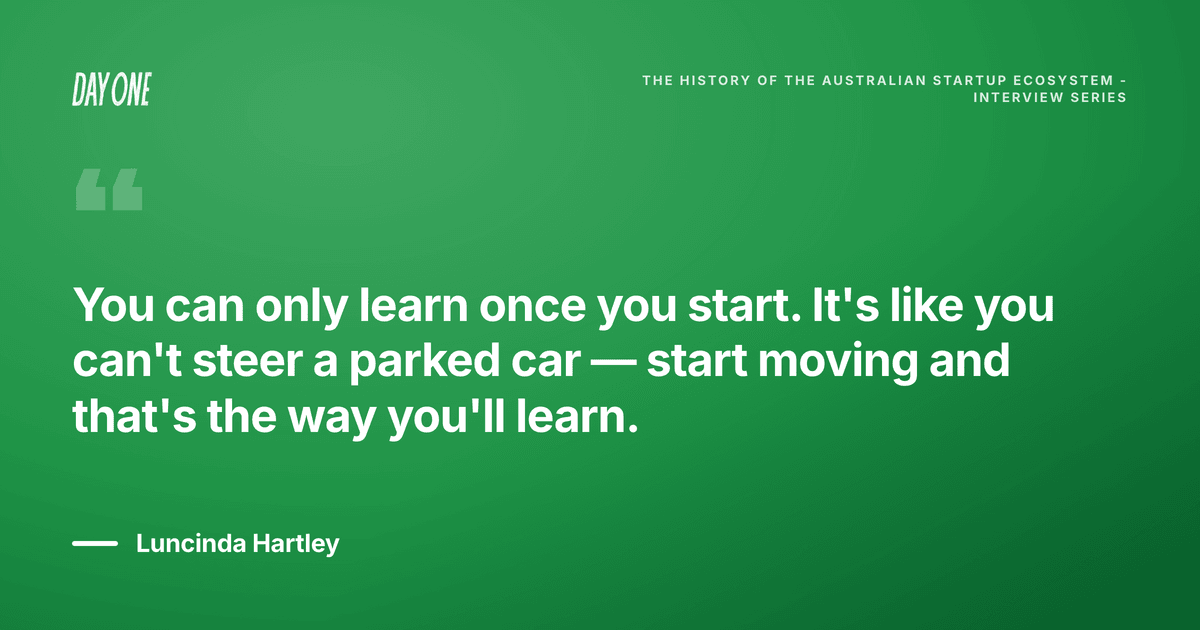
Transcript Synced · select any line to jump ▾ 0:00 Adam Spencer: Let me tell you about our partner, Teamified. If you need to build a top-notch team quickly, Teamified is your go-to solution. They not only provide fractional CTOs, they can also do contractors and even remote team members tailored exactly to your needs. And whether you're looking for expertise in the Philippines, India, or Sri Lanka, Teamified has you covered. What's amazing is that Teamified uses a blend of AI and human expertise to cut hiring times by 50%, cent. The platform handles everything from automated onboarding to day-to-day management and even performance tracking. You can also handle rewards and recognition, buy equipment, and order training all through their platform. Simplify your hiring process and get the best talent fast with Teamified. Check them out now and transform your team. Go to dayone.fm/teamified. That's dayone.fm/teamified. Thank you, T-E-A-M-I-F-I-E-D, and get started today. Hi, I'm Adam Spencer, founder of the Day One Network, which is bringing the history of the Australian startup ecosystem to you. I believe in founders. It's why I do everything I do at Day One and our media company, W2D1 Media. And that's why the Day One Network exists, to create helpful content for founders. We've got some great shows in development, but a large part of what we do couldn't be done without support from our partners and sponsors. And I couldn't be happier than to be working with NTP, who get community better than any other technology recruitment company out there. A Newcastle company like mine, NTP are invested in seeing the growth of the local tech community in Newcastle, Sydney, and more broadly Australia. So thank you, NTP, for helping us bring helpful content to founders and the startup community in Australia. Back to the interview. Hi, I'm Adam Spencer, founder of the Day One Network, which is bringing the history of the Australian startup ecosystem to you. I believe in founders. It's why I do everything I do at Day One and our media company, W2D1 Media. And that's why the Day One Network exists, to create helpful content for for founders. We've got some great shows in development, but a large part of what we do couldn't be done without support from our partners and sponsors. And I couldn't be happier than to be working with NTP, who get community better than any other technology recruitment company out there. A Newcastle company like mine, NTP are invested in seeing the growth of the local tech community in Newcastle, Sydney, and more broadly Australia. So thank you, NTP, for helping us bring helpful content to founders and the startup community in Australia. Back to the interview. Hi, I'm Adam Spencer and welcome to Day One, the podcast that spotlights Australian startups, founders, and the organizations that empower Australian entrepreneurship. We go back to the beginning to tell the story of Australia's most inspiring founders and how they built their companies. You're listening to a special interview series as part of a documentary W2D1 is producing about the history of the Australian startup ecosystem. On the episode today, we have— 3:18 Lucinda Hartley: My name's Lucinda. I'm a founding director of Neighbourlytics. We are a social analytics platform for neighborhoods that solves the human data gap for the property sector by providing access to information and insights about urban life, the everyday activity that goes on in neighborhoods. 3:38 Speaker: How did you discover the problem for Neighborlytics? Like, what's your background? How did you start this company? 3:46 Lucinda Hartley: Yeah, I've been an urban designer for 20 years, but my interest in cities and neighborhoods, it sounds cliché, but it actually began during my childhood. You know, I lived in many different countries around the world. I had this experience of many different places places and really saw that the neighborhoods that you live in have this profound impact on how you live your life. And that was a form of great curiosity to me. And I became an urban designer because I was interested in being part of a story of how we shape cities and communities. And, you know, I did that for a number of years working around the world. I had the opportunity to work with the United Nations on the Sustainable Development Goals for cities. I ran a consultancy. Um, with my business partner, Jessica, for a number of years where we looked at placemaking and activation of cities. But across all of those spectrums, we noticed that there was a data gap. When you're a city maker, the only information that you have access to is about your physical environment, the height of the buildings, the speed of the traffic. But what we all care about is, you know, the culture and the lifestyle. And is there a great café? Are there places I can go to the park and meet my friends? Friends or walk my dog. These are the experiences and the moments that make neighborhoods great. It's also what makes property development profitable. And so we really started to dive into how we could solve that data gap. Traditionally, that might be done manually with things like surveys, and we started to explore what kind of technology might be available to us. 5:14 Speaker: My, my partner works for a council, a local council, and, and it's, it's a point of frustration for her to see, I want to get your point of view on this. Yeah. All of these suburbs that pop up with no trees. 5:28 Lucinda Hartley: Yeah. 5:30 Speaker: Zero trees, it's just house, house, house. 5:33 Speaker: What are you— 5:33 Speaker: What's your opinion on that? 5:35 Lucinda Hartley: Apart from causing a major heat island problem. 5:38 Speaker: Yeah. Why does that happen, though? 5:41 Lucinda Hartley: Yeah. I mean, I think we have a long way to go in our planning controls that allow that kind of development, but, you know, I think we've forgotten to design cities for humans. If you think about it in its most basic way, cities are like zoos for people. But you wouldn't design a zoo for an animal by like removing it from its habitat. But we kind of do that for people sometimes without really thinking about it. And a lot of what Nabolitics does, and certainly the themes that we're keen to explore, is how do we create human-centered cities? How do we create places where people want to be? And, you know, trees is part of that story. Having great access to shade and comfort is a really important part of that. 6:19 Speaker: When did you first get involved in this thing that we call a startup ecosystem? 6:26 Lucinda Hartley: I became involved in the startup ecosystem completely by accident sometime in 2017. I'm not new to business. I've run a bunch of companies before, but I never really saw myself as a tech founder. In fact, I wasn't really even interested in that because my brother's a software engineer and it just looks really boring from the outside. Apologies to all the devs out there. I guess became more and more curious about this problem of how do we create more data and insights to create better cities? And at the time I was living in Samoa in the Pacific, that's a totally different story, which I won't go into, but I put in an application to join the SheStarts accelerator with not more than a back of an envelope of idea of like, I reckon we could use social media and digital data to solve this problem. Like, what do you think? And then to like our enormous surprise From like 800 applications, we were accepted to join this accelerator. And it was, it was this, you know, jumpstart and sort of like we were suddenly propelled into this startup ecosystem, which I'd really given very little thought to before. I'd given a huge amount of thought to how we solve the problem and how we create the property sec— you know, how we solve this problem for the property sector. But I hadn't given much thought to what the startup ecosystem actually was. 7:43 Speaker: What do you understand it to be now? 7:45 Lucinda Hartley: I think even in the last 4 or 5 years, it's really evolved in lots of ways. You know, I would say that I thought that to be, you know, naively and wrongly, I thought that to be involved in the startup ecosystem, you needed to, you know, be a full technology person. You know, you need to be a data scientist or a software engineer and that there wasn't really a place to play for others. But I now see it as a very broad conversation of which I'm part of, as there are people solving really interesting problems. That's why you would have a startup because you wanna solve really interesting problem, not necessarily 'cause you're great at programming. And so, I now see that there's a much more nuanced, diverse conversation around how we solve problems. But coming into it at the start, it just felt like it played by a totally different set of rules than what I'd been familiar with, even though I had been involved in starting companies several times before. Yeah. For. 8:43 Speaker: Back in 2017, aside from SheStarts, was that what the one that you applied for, SheStarts? 8:51 Lucinda Hartley: Yeah, SheStarts, yep. 8:52 Speaker: Aside from that one, what was, what else 2017 was visible to you? Like how much of the ecosystem could you see? Like who were the kind of beacons that you looked to, like organization-wise and all, but also people? Like just give me an idea of the community. 9:08 Lucinda Hartley: Yeah, I mean, I suppose I was aware of some of the unicorns that had come through, like the Atlanteans and the people that you might read about in mainstream media. But I would say I was not very well acquainted, um, with the stardate ecosystem. I mean, I, I was aware of like some of the consulting companies like ThoughtWorks and others that I'd come across because I worked in consulting previously. Uh, but yeah, I would actually say it was relatively opaque to me, only that I saw this stereotype play out in real life. Mm-hmm. Of, you know, the bros in their t-shirts and playing ping pong. By the way, who wants a ping pong table in their office? No one. That's so annoying. But I sort of, you know, I had that vision of what it was like. And unfortunately, at the start it was like that. And I think it's changing. But I do feel that there is kind of a dominant culture that excludes the wrong sort of people. 10:03 Speaker: Okay, forget the ping pong table. What would you put in the office? 10:06 Lucinda Hartley: Well, in our office we have a parents' room instead of a ping pong table. And I would put art, I would put a couch. I mean, I think like you need space to collaborate and have fun at work for sure. But ping pong is just really noisy and disruptive for other people. 10:23 Speaker: Yes. Someone needs to start a ping pong startup that makes the balls bounce quietly. 10:28 Lucinda Hartley: Oh, wow. I like that. 10:31 Speaker: Anyway. 10:31 Lucinda Hartley: Yeah, I actually quite like ping pong. I just don't want it in the office. 10:34 Speaker: What was maybe the biggest win coming out of SheStarts? Like, what was the biggest, most valuable lesson that you got? 10:42 Lucinda Hartley: There was a lot of lessons at that time that have been very impactful on our journey. I felt like probably the biggest thing that we got out of SheStarts was having access to a very wide network into the startup ecosystem. So other founders, mentors, We were introduced to a lot of investors. That program got a lot of PR, so we got a lot of visibility, like perhaps more than we might in, you know, our first fledgling year of a startup. And I felt that that kind of gave us inroads to the ecosystem, which gave us a lot of network and platform to grow through. And many of the founders from that program we're still in touch with regularly, like they've become a real network for us. Yeah. 11:27 Speaker: Fast-forwarding to present day, what are some of the gaps that you observe? Like, where could we make the biggest improvements? 11:34 Lucinda Hartley: There's a lot of attention being paid at the moment into, you know, how we diversify, how we think about startups. You know, what does a startup founder look like? How do we challenge stereotypes in that way? And I know that whether that's through female-focused programs, of which there's quite a lot now, and That's really, I think, starting to really have an impact, as well as, you know, people of color and all kinds of other areas of difference that people need to be more inclusive of in the startup ecosystem. So there are, you know, waves being made in that area that I'm observing are making a difference. I would also just like to see, you know, some of the broader skill sets diversified a little bit. I think a high-growth successful company doesn't have to be, fully high-tech. I think that there are a lot of experts, problem experts out there who wouldn't see themselves as startup founders. And I've been one of those, but I think there are thousands of others who, they would actually be brilliant founders, but they wouldn't see the startup ecosystem as accessible to them because they perhaps don't understand all of the different dynamics of how it works. And that could be because of a gender or racial barrier, but it may actually just also be a— A cultural barrier. Just an acknowledgement of different skill sets and feeling comfortable in different spaces. 13:00 Speaker: What do you think we're doing really well in this community? Like, where do we excel? 13:06 Lucinda Hartley: I found my experience is the very early stage seed startup accelerator community is well covered. There's kind of an accelerator almost for everything. And while there's limitations on that, 'cause in lots of ways I think you can't necessarily accelerate someone, they need to run their own business. But, uh, there is a lot of support available for very early stage founders, and that's— I think, you know, we've certainly benefited from that. But yeah, but then you stop being early stage and it gets a little bit harder. 13:48 Speaker: What's been the biggest surprise to you of you being a startup founder? 13:54 Lucinda Hartley: That I like it? 13:56 Speaker: Oh, okay. You didn't think you were going to like it. 14:00 Lucinda Hartley: Well, yeah, I kind of resisted that journey for 10, 15 years because I wasn't really interested in the ping pong table stereotype. I'm actually serious. Like, I thought that's not the kind of job I want, but you can create whatever you want. And that's, I think that there is incredibly diverse companies out there doing amazing work. But the thing that really motivated me the most was scale. You know, the problems that we want to solve at Nabelitics and that I'm personally interested in solving are huge. You know, 80% of the world is going to live in the city by 2050. That means that we essentially need to build as much city in the next 30 years as we've ever built to date. And we have this narrow window of opportunity to get it right and create these fantastic environments where people are healthy and happy. Or essentially to create an awful place where we're going to spend generations recovering from. And so we're at this sort of precipice. And, you know, in our previous business, we were able to solve that one project at a time and create meaningful work, but just not anywhere close to the scale of impact that's needed. So that's been really motivating. 15:15 Speaker: What's been the biggest challenge in the last Like in the last 5 years, what's been the biggest challenge that you've had to overcome with Navelitics? 15:25 Lucinda Hartley: You know, we had, because we're such a unique product in the market, we've had a lot of customers even from the very beginning, even before we really had an MVP, we had people wanting to pay for it, and that's a really exciting position to be in. But there's been lots of challenges about how we think about growth in that model. But I would say one of our biggest challenges has been finding the right team. And finding the right team at the right time. Recruitment's, you know, it's really hard. It's also really expensive. And if you don't get the right people, it can have such a huge impact on your business, particularly when you're small. So finding a CTO, which we have, and you know, we have a brilliant CTO and that's been fantastic, but it really took us a long time and held back a lot of our product development while we were waiting for that. And similarly, as we're looking to scale again now, you know, just thinking about where are we gonna find the right people from at the right time is a big challenge in some ways. 16:25 Speaker: Yeah. What advice would you give yourself before you went down this road? 16:30 Lucinda Hartley: I would give myself the advice to think so much bigger than I was able to at the time. While I had a very big vision for solving problems in the world, I was, I would say, quite blinkered with the methods and tools that I had available to me to solve them. And now that I can see that, I can see just almost infinite possibility and opportunity of how we would continue to grow and continue to scale and continue to solve these really important problems. 17:02 Speaker: Is that the same advice you would give to a, if you were to be a mentor for an up-and-coming founder, is that the same advice you would give them? 17:09 Lucinda Hartley: I would give them that advice, but through the lens that, you know, everyone has their own, monkeys on their shoulders, I guess. And, uh, sometimes that's about a mindset shift and really backing and believing in yourself. And so I would certainly give that advice to any founder, but I would also encourage people to get started. I think it's very easy to have ideas brewing in the back of your mind for years, um, and not necessarily putting them into action, but you can only learn Once you start, it's like you can't steer a parked car. And so, that would be the advice that I gave to anyone is to start moving and that's the way you'll learn. You'll never be able to learn those things like hypothetically without actually doing it. 17:56 Speaker: Yeah, that's a great audio snippet, by the way. You can't steer a parked car. I want to just give you a few minutes to talk about something that's top of mind, something that you're constantly thinking about, but through the lens of, you know, we're trying to create a documentary here that will tell the entire history of the Australian startup ecosystem. We want people from all corners of the ecosystem to listen to this story. Do you have a message for them? Like, what would you want to tell people? 18:23 Lucinda Hartley: I feel like we have a huge opportunity here in Australia and to be based here in Australia. And one of the narratives that I would completely challenge, particularly in a post-COVID COVID environment is that you would need to be based elsewhere in the world to run a successful technology company, whether that's, you know, in Silicon Valley or Silicon Circle in London or other places. Now, that's great. It's fantastic to be close to market, close to networks, close to talent. But in a post-COVID world, I would challenge whether that's necessarily the case. And can we think bigger about how we solve problems as an ecosystem and actually see that talent can come from anywhere and that the Australian ecosystem is a really great place to run a global company from. 19:10 Speaker: Is there anything that I didn't ask you that you, that you want to talk about? 19:15 Lucinda Hartley: I mean, you know, some of the challenges I think I've found coming into the startup ecosystem later career is a lack of trust. by investors and not our current investors who are brilliant, but a lack of trust by a lot of others in the ecosystem that, that we're the ones to solve this problem. And that's partly a gender thing. It's partly that perhaps I don't use the right buzzwords even though I know how to solve it, but might not use exactly the right language or not interested in wearing t-shirts and playing ping pong. I don't know. Those very subtle barriers make life very tiring, actually, because I do feel like I spend quite a lot of time stating my case as to why I should be listened to before I say what I want to say, rather than just being listened to because we should listen to people. And, and that's just— I find that exhausting. But it's actually getting less and less, I think, as we have more success and runs on the board that we can point to, but I feel like that's a, that's a challenge. 20:29 Adam Spencer: I hope you enjoyed that interview. More interviews are on the way. Follow the podcast wherever you're listening right now. Stay tuned for more interviews with many, many more amazing people from the Australian startup ecosystem. Thanks for listening and see you next time.