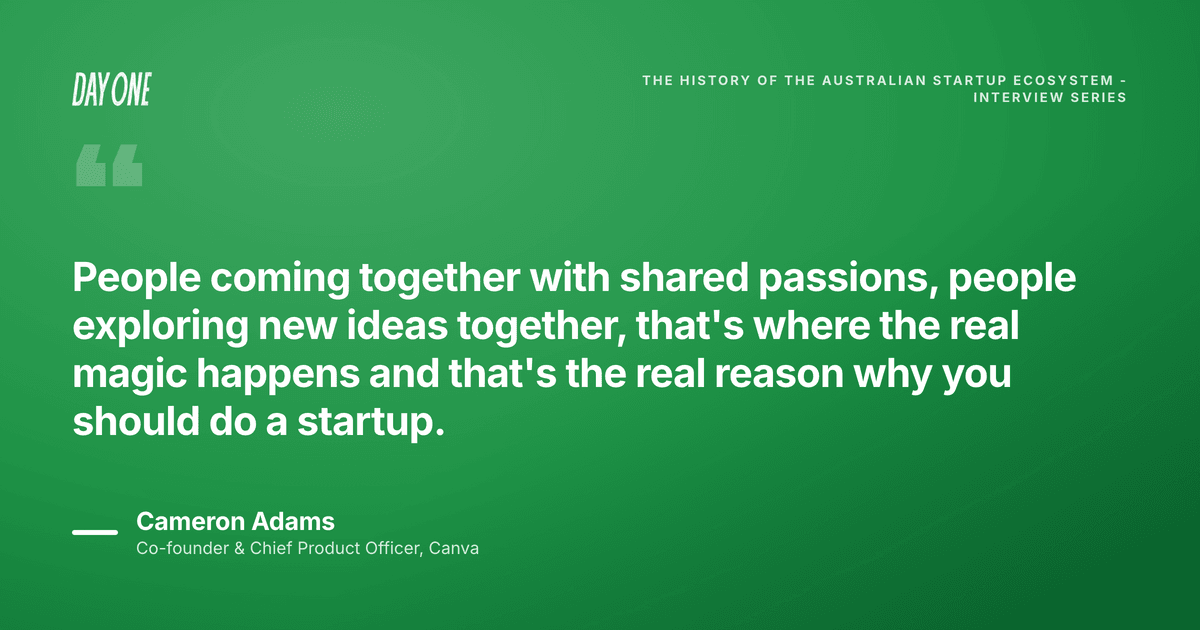
Transcript Synced · select any line to jump ▾ 0:00 Adam Spencer: Let me tell you about our partner, Teamified. If you need to build a top-notch team quickly, Teamified is your go-to solution. They not only provide fractional CTOs, they can also do contractors and even remote team members tailored exactly to your needs. And whether you're looking for expertise in the Philippines, India, or Sri Lanka, Teamified has you covered. What's amazing is that Teamified uses a blend of AI and human expertise to cut hiring times by 50%. Their platform handles everything from automated onboarding to day-to-day management and even performance tracking. You can also handle rewards and recognition, buy equipment, and order training all through their platform. Simplify your hiring process and get the best talent fast with Teamified. Check them out now and transform your team. Go to dayone.fm/teamified. That's dayone.fm/t-e-a-m-i-f-i-e-d and get started today. Thank you. Hi, I'm Adam Spencer, founder of the Day One Network, which is bringing the history of the Australian startup ecosystem to you. I believe in founders. It's why I do everything I do at Day One and our media company, W2D1 Media. And that's why the Day One Network exists, to create helpful content for founders. We've got some great shows in development, but a large part of what we do couldn't be done without support from our partners and sponsors. And I couldn't be happier than to be working with NTP, who get community better than any other technology recruitment company out there. A Newcastle company like mine, NTP are invested in seeing the growth of the local tech community in Newcastle, Sydney, and more broadly Australia. So thank you NTP for helping us bring helpful content to founders and the startup community in Australia. Back to the interview. Hi, I'm Adam Spencer, founder of the Day One Network, which is bringing the history of the Australian startup ecosystem to you. I believe in founders. It's why I do everything I do at Day One and our media company, W2D1 Media. And that's why the Day One Network exists, to create helpful content for founders. We've got some great shows in development, but a large part of what we do couldn't be done without support from our partners and sponsors. And I couldn't be happier than to be working with NTP, who get community better than any other technology recruitment company out there. A Newcastle company like mine, NTP are invested in seeing the growth of the local tech community in Newcastle, Sydney, and more broadly Australia. So thank you NTP for helping us bring helpful content to founders and the startup community in Australia. Back to the interview. Thank you. Hi, I'm Adam Spencer and welcome to Day One, the podcast that spotlights Australian startups, founders, and the organizations that empower Australian entrepreneurship. We go back to the beginning to tell the story of Australia's most inspiring founders and how they built their companies. You're listening to a special interview series as part of a documentary W2D1 is producing about the history of the Australian startup ecosystem. 3:16 Speaker: On the episode today, we have— 3:18 Cameron Adams: Hey, I'm Cameron Adams. I'm one of the co-founders and Chief Product Officer of Canva. Canva is a design platform for pretty much anyone. So we make design accessible to people all over the world, no matter what they're doing. And they can make anything from a social media post to a presentation, to a t-shirt, and even a coffee mug. 3:41 Speaker: And you've just recently went into video? 3:44 Cameron Adams: We did, yeah. Video was the big launch last week. 3:47 Speaker: And I heard on a podcast, I don't remember which one, but it was— you basically want Canva to be whenever someone has any idea that they want to represent visually, from graphics, videos, right through to website design, I think I heard, like you want Canva to be that, to the place that people go to do that. 4:04 Cameron Adams: Yeah, we see a big gap between what people want to achieve and what they're capable of. And for a long time, the tools for visualizing your ideas in a really proper manner were inaccessible to people. So you had to go to a professional designer, you had to spend a lot of time, you had to spend a lot of money to actually get your idea into something that you could communicate. And with Canva, we love seeing that power being put into the hands of everyday people so that they can communicate their first business, communicate that nonprofit organization they're working with, or just communicate something inside their company that they need to explain to their coworkers. 4:42 Speaker: Before we get into the heavy questions about the ecosystem, here's another heavy question. What— why? Why do you do this? Because in the early days, it wouldn't have been an easy thing, right? You would have been struggling, you would have been— there would have been a lot of challenges. Why do you care? Why do you put yourself through this kind of work? 5:00 Cameron Adams: Yeah, I think for me personally, it's probably two different things. One is just wanting to explore and try out new things and be creative. And often, you can only do that truly as part of your own company. If you're inside a big company, you know, even when I was at Google, you're still constrained. There's certain things you can't do, certain paths you can't follow. And when you start your own company, you're free to set those paths. You can do whatever the hell you want. And being able to follow the creative threads of technology and design is something I've done for the last 20 years, and Canva is just an extension of that. And then there's the second part, which is creating something that's truly useful to people, creating this product that people can use to solve a problem. And it could be a tiny problem. You know, I've created heaps of different products over the years that just do one little thing and maybe involve people for 10 seconds. I'm very fortunate with Canva that we tackled a problem that is a huge problem for lots of people all over the world and something that they will use for hours a week, hours a day even. And we've managed to create this product that has just resonated with people and solved so many problems for different people in different walks of life, in different countries and cultures, you know, every place you can think of around the planet. Mm-hmm. 6:21 Speaker: I can't tell you how many hours I've spent in Canva just for this series alone. Every single asset, every single visual asset you see for this series, which there are thousands, or you will see when it starts coming out, it's all Canva. So thank you for building it. 6:37 Cameron Adams: Absolute pleasure. 6:39 Speaker: When did you first get involved in the startup ecosystem/community/whatever you want to call it? 6:46 Cameron Adams: Yeah, I suppose for me, startup Startup might mean a different thing to me than it might to other people. If you look over the last 10 years, I think what a startup is, what it means to be involved in a startup, is a fairly well-trodden path. You know, it follows a lot of what you see in Silicon Valley press, et cetera. But my startup journey probably started 20 years ago, maybe more than that. You know, just towards the tail end of my university degree, computer science student as well as a law student, which basically meant I didn't know what the hell I wanted to do. [LAUGHTER] And through my computer science side, I started getting involved with the internet. And at the time, I think Australia was a bit of a laggard behind the States. So the States had a dot-com boom, and there were heaps of web properties springing up over there, crazy valuations, crazy funding flying around, and I think Australia missed a lot of that. And I caught just the tail end of the dot-com boom, and the web had basically gone into hibernation. This big promise that was the internet hadn't really materialized, and lots of companies had dissolved and vanished. But what was left behind was a really strong technology base, and I think it was a great playground for engineers, technology-minded folks who just wanted to poke around and play with things. 8:09 Speaker: Mm-hmm. 8:09 Cameron Adams: And that's where I started. I was actually a graphic designer as a part-time job during university. And the internet was the perfect merger between graphic design and engineering for me because I could dream up something that I wanted to show someone, and I could code it up, turn it into a website, and have someone halfway around the world see it in, you know, 30 seconds. So it was an amazing creative platform for me. And I started creating, making web pages. My graphic design job turned into a web design job as we started making these really crappy websites for businesses who somehow paid us to put their shop online. And I learnt my trade, learnt a whole heap, and through that process started pushing the envelope and writing about it. And I set up my blog called The Man in Blue. How long ago was that? I think in the year 2000. And I just used it as a platform for writing about the things I discovered, the things I was playing with, cool things you could do on a web page with CSS and JavaScript. And it got a bit of a following at the time. Back then, your blog could be popular with just about 100 readers. And I had lots of other like-minded folks just check out my stuff, and we would have great conversations. Mm-hmm. Comment forms on websites were actually useful back then. [LAUGHTER] So people would leave comments on your blog post, giving you tips on how to improve it, or ways in which they'd adapted your work. And it was just this really great sharing community who just wanted to explore together, learn new stuff, and build upon each other's knowledge. So there's this big network spanning the world. This wasn't just here in Australia. You had people in Canada, people in the UK, people of course in San Francisco who were trying out new stuff, maybe working on it in their day jobs, but most often not, and just sharing it online. And yeah, my blog got a bit of a following. I got a couple of book deals out of it. Tech book deals aren't really worth much. I think I've made a sum total of about $10,000 off the 5 books which I've published in the last 20 years. Um, but yeah, gave me a bit of bit of notoriety. And after I left university, I managed to start up my own business just running a website design agency. And it was basically me and a couple of contractors whenever I needed them. And I ran that for like 5 or 6 years. One of my— actually, one of my clients for that was Atlassian. I did one of their first— well, I did their first good-looking website. Um, and and ended up working on one of their products as well. And I was living down in Melbourne at the time and started coming up to Sydney a bit to meet with Mike Cannon-Brookes and a bunch of the team and did a bit of work for them. And eventually someone recommended me for a job at Google. And this was off the back of a bunch of conference talks and stuff that I'd given. Mm-hmm. Actually, one thing I should highlight is not only was there a fantastic online community filled with blogs and stuff like that, but there was this amazing group, community group that had spun up. And it started here in Sydney. And it was called the Web Standards Group. And they focused on very technical bits like HTML, CSS, Cascading Style Sheets, and a bit of JavaScript. 11:35 Speaker: What year are we talking roughly? 11:36 Cameron Adams: I think that started— Actually, I gave my first talk in 2003 at that. So I'd say it started in 2002 or 2003. Yeah, it was a fantastic group of people from all sorts of backgrounds. I eventually met my wife through Web Standards Group. And she was working at the Australian Museum. She was a zoologist who somehow fell into the web. We had people working at universities, government institutes. We had people like me running their own web design agencies. People inside corporations just running internal websites, stuff like that. You know, a real band of misfits. But yeah, really brought together by this creativity and this exploration that it could afford. And Web Standards Group, a few of the alumni of that have spun out to various things. So Tim Lucas from Buildkite was one of the people who attended the early Web Standards Groups. You had people like Lachlan Donald, who ended up being, I think, CTO of 99designs. 12:33 Speaker: Yeah. 12:34 Cameron Adams: And a whole bunch of people who contributed to the web and to the startup scene. Because I kind of consider startups in Australia spinning a lot out of the web scene from back then. Web Standards Group turned into WebEssentials and WebDirections, which are conferences, which is a conference that's still running today. And yeah, that was probably one of my favorite times of my career, is just like being in a room with those people and throwing ideas around. 13:00 Speaker: Quick side note, Men in Blue, how did you come up with that name? 13:05 Cameron Adams: That was a very random one. I think I came up with that when I was about 15 and I was in high school and just wanted to have some business cards that I could hand around to the other students, 'cause I started doing work for the kids at school. They would want like their head pasted onto someone else's body and I was a real Photoshop jockey at the time. So I started doing this little bit of work and needed to have a business card that I could hand someone, so I came up with that. It was something that was fairly anonymous, easy to draw, and it just has turned into my identity for the next 21 years. 13:41 Speaker: So around, are we still around that kind of 2003, 2004 timeframe when you started getting involved with Google, or is that further down the line? 13:52 Cameron Adams: Google, that was around 2007. So yeah, actually someone from Web Standards Group referred me to Lars Rasmussen at Google, who was one of the co-founders of Google Maps. And they had essentially started the Sydney office of Google. There were a couple of people who existed in Google Sydney, but they were largely on the sales side. And when Google Maps got acquired, that basically spun up Google Sydney's product team. And they'd worked on Maps for about 5 years by that stage. And I think Lars had been getting itchy feet. He'd worked on it. He'd integrated into Google. It had grown into this massive thing. And he wanted to move on to the next idea. And the next idea happened to be this thing called Google Wave, which I knew nothing about when I first walked into the office. But yeah, someone came to me and said, hey, do you want to do some work for Google? They need a contractor. And you can't say no to Google. So I said, "Sure, sign me up." And I walked into the office, and I remember on the first day I went to reception, I'm like, "I'm here to see Lars." And they're like, "Oh yeah, come this way." And they took me through reception, through security, and they took me to this meeting room that was completely blacked out. Like most of the meeting rooms at the time, glass walls, so you could like peer over the top, see who was in there. This one, they'd papered up all the walls so you couldn't see in. And they opened the door. And inside, it was very humid, very sweaty, and there were 4 guys in there just coding away. And they'd been working on this prototype for a product they'd called Google Wave for a few months. And it was this next-generation communication tool that Lars and his brother had come up with. And it was basically like an evolution, the next stage of email. So what if email was real-time, collaborative, a lot more like chat, kind of a mashup of docs and chat and spreadsheets and photo sharing and a whole bunch of stuff. And it was a really fantastic idea, and they brought me on to kind of give it a polish and actually make sure the experience was more than just a couple of engineers could create. 16:00 Speaker: Has that idea as a product ever really materialized at all? 16:04 Cameron Adams: That exact product? Has not materialized, but I think you can see its heritage in a bunch of stuff that we use today. It was actually used as kind of a crowbar of sorts to get Google Docs, Spreadsheets, what we know as the Google Suite today to be a lot more effective. It was almost pitched internally as a leapfrog to what Google Docs was at the time. So a lot of the real-time collaboration, the speed, was kind of inspired by Google Wave from Google Docs. And I think you can see, you know, stuff like Slack, Microsoft Teams, that real immediate communication, very informal chat style. I think that's also partly driven by some inspiration that came from Google Wave. And it also really pushed browser technology. So Google Maps was famous for pushing a browser beyond what people could thought it to do to actually create like an awesome maps experience. And Google Wave was similar in terms of productivity and collaboration and even creativity. Like the amount of stuff that you could do in Google Wave just by using a browser was incredible at the time. 17:12 Speaker: From your perspective around that 2007 time, like looking outside of Google, and I suppose this is like the Sydney ecosystem probably, you were very heavily involved with, like what else could you see happening? What else was visible in terms of Looking through a startup lens, support networks out there, other big name companies that were kind of up and coming? 17:33 Cameron Adams: Yeah, I can't think of support networks other than community meetup groups that were running at the time. Definitely getting funding was something that you went to the States for. I hadn't heard of anyone here in Australia really getting VC or anything like that. The biggest companies I can think of at the time that were in the startup flavor were Atlassian, which in 2007 I think was about 40 people. They were in the one office down on George Street in Sydney. And there was another really firing company at the time, which was Campaign Monitor as well. So they had not been directly involved in Web Standards and Web Directions, but were definitely part of that scene. And the way that they'd bootstrapped their company, gone from zero to, to something that was making, you know, decent revenue and building a great team, I think to me that was definitely one of the leading lights and one of the inspirations for my later career. 18:33 Speaker: A lot of people kind of point to around the 2012 mark is when things really started to amp up in the ecosystem. I think Fishburner started that year. I can't remember off the top of my head when Blackbird started, But it would have been, Startmate would have been around 2012, I think. What do you think happened between that 2007 kind of time period where the campaign monitor at Atlassian, but not much else going on apart from small community meetups, to 2012 when things really started to gain momentum? 19:07 Cameron Adams: I think you had a few people coming back from the States and wondering what they could do back here in Australia. So there's a real, it wasn't overnight, but there was a gathering momentum in belief of what you could build from here in Australia without having to be in Silicon Valley and running off rack servers and stuff like that. Yeah, I think it was a whole confluence of things, like even access to technology, being able to run on cloud servers as opposed to having to have a physical server that you bought and put put somewhere. It was an incredible democratizer. The Blackbird, I can't remember whether they officially started at the start of 2013 or the end of 2012, but they were definitely raising their fund at the end of 2012. And I actually, I talked to Blackbird about my previous startup before Canva, and they weren't quite ready. And then when Canva happened, it was perfect timing because Blackbird spun up, you know, pretty much as we were doing our round. Blackbird, Airtree, and Square Peg as well, their success has kind of opened up the market for VC here in Australia. And now you can quite comfortably start a startup here and only get funding from Australian funders. But back then it was an impossibility. We had to go to, the United States, and we ended up doing our first round was half US, half Australian, and the Australians pretty much would only come on board because the US people were involved. So you needed that stamp of legitimacy before you could even think of doing something here in Australia. 20:50 Speaker: Right, why was that? Just because people, the investment community wasn't here, wasn't as sophisticated? 20:57 Cameron Adams: Yeah, the investors didn't exactly know what their model was, they didn't know what a successful team looked like, They're a bit more risk-averse. Some of the capital was moving over from stuff like mining, so it wasn't necessarily, you know, if you think of a successful VC firm, it's someone who's built their own software company before. That wasn't what VCs in Australia were about. So people moving over from other industries had to learn what a software company looked like, what a technology company looked like, and what they should be investing in. So they're very cautious in the early days. Okay. 21:30 Speaker: How were you feeling off the back of, what was the next startup you did, it was Fluent? 21:37 Cameron Adams: Yeah, so I left Google in 2011 and started Fluent, which was a new type of email product, and did that for about a year. I did that with two other Google engineers, and yeah, we went through a massive rollercoaster of building the product, getting a lot of hype about the product, having investors email us and say that they'd invest straight away, and then eventually going to San Francisco to bring back a briefcase full of cash, which unfortunately didn't materialize. [LAUGHTER] We spent about a month, 2 months traipsing up and down Sand Hill Road trying to convince people to invest and what sort of terms they were going to do it on. Got extremely close to finding our long docs, collapsed at the last minute. We kind of came home very demoralized and not knowing what to do essentially with this product that we'd built, but we couldn't afford to run it anymore. And that's fortunately is when I met Mel and Cliff and when the idea of Canva sort of blossomed. 22:41 Speaker: I'm wondering, after that failure of Fluent going into Canva, what were you thinking about Canva at that point? Were you thinking, oh, this, this This could just be another fluent, like, is it going to go anywhere? Like, did that ever cross your mind or did you just think this is an amazing, this is an amazing idea, we need to do this? 23:00 Cameron Adams: I mean, it did cross my mind. You always have to have, you know, some understanding of the risks involved and nothing's ever a sure, surefire hit. But I was still keen to try, try something out and see if we could, we could give it a go. And that need to explore a new idea and just put put it out there and see what happens to it was still there. One of the key lessons I learned from Fluent was that you really need the right team. And you particularly need a team that's well-rounded. So on Fluent, we had two great engineers, me, who was like a designer, but none of us really thought about the business and the company. We just wanted to put a great product out, and we didn't think about how we're gonna fund it, what our business model should be. 23:44 Speaker: Mm-hmm. 23:45 Cameron Adams: How we're gonna onboard people so we could like get a subscription fee off them and actually make a sustainable business. So when the rubber hit the road there and we needed to fund all these servers that we needed to bring people on, it was incredibly costly business, email. So we couldn't afford to bring 80,000 people off our waitlist onto the product. And it was only then that we started going, okay, maybe we should get an investor on board. What does an investor look like? What do terms look like? How are we gonna actually make this happen? Um, and that was one of the biggest things I took from that experience was that aside from just having a great product team, you also need a team who can understand the business and create a company, like a holistic company, that is gonna support more than just the building of the product. And when I met Mel and Cliff, I kind of, recognized that they were the jigsaw pieces that fit together with my skill set that could create that real company. More than just a product, a company that could live, employ people, bring money in, spread around the world. Like, we had the three, three kind of legs of the stool that we needed in order to actually give it a proper go this time. 24:59 Speaker: How did you meet your co-founders? 25:01 Cameron Adams: It was actually through my boss at Google, Lars. So Lars had bumped into Melanie somehow. I think Mel met an investor, and that investor knew Lars, so they got connected, and Lars was helping them, you know, find the right people to actually help them get Canva off the ground. So Lars intro'd me, and he actually did it quite casually to begin with. He was like, Go talk to these people about technology. They need a bit of help. They had just moved to Sydney from Perth, in 2012, and I walked into their office, and Mel said to me, "Oh, you're here for the PHP developer role?" And I'm like, "No, I'm not here to work for you. I'm here to, like, tell you how to properly build a product." And we started chatting, and she talked to me about Canva and talked about the vision for it, and it was incredibly exciting for all those reasons that I talked about before, like massive area to explore, something that was really useful to build for people, And yeah, it just inspired me and I wanted to help her build this thing. And yeah, that came together and we officially started in July 2012. 26:10 Speaker: What did the next 6 months of your life look like? 26:15 Cameron Adams: It was extremely fun. We didn't have an office, we didn't have anything. When we actually started, Cliff and Mel were over in San Francisco, so we were actually Skyping and actually using Skype text chat to communicate, which seems a bit of a long ago technology. But yeah, so we started remotely and then they came back to Sydney. They had an office for their old business, which is a school yearbooks business called Fusion Books. And we worked from the boardroom table there for a few months and went hunting around for offices. This was here in Surry Hills in Sydney, which is right near— Sydney. The central train station. And we eventually found an office. It was out the back of an art gallery. Really great space for us, like completely open canvas. We could do whatever we want with it. And we set up shop there. And for a while it was just me and Mel in this cavernous room that could fit 30 people. And we're just prototyping, throwing around ideas, sketching. I would code up some prototypes and see how they worked. And we eventually gravitated around what the product would be. And that took about, that whole process, yeah, probably took about 6 months. During that time, we're also building the team. So we didn't have any engineers or designers or anything like that. So we went out, we found our CTO, which is Dave Herndon. He's actually a guy I worked with at Google. And he was a fantastic hire. He's still with us and still drives the technology fusion for Canva incredibly hard. We built up some graphic designers who could help us out with the kind of meat and potatoes of Canva, like the actual templates that you use and the elements that you use. We got more front-end engineers, we started getting some marketing people on, and yeah, it just grew. And over a year, took us a year to build the complete experience. Wow. And we launched the product to real people in August of 2013. 28:20 Speaker: Do you miss that space at all? That first office space? 28:24 Cameron Adams: The first office space, I probably don't miss it. It has fantastic memories. It was a great space for us. We had my turntable set up in the corner. Every lunchtime I'd play some vinyl while we sat around and ate hot dogs. And yeah, it's a fantastic space for 20 people, but we obviously outgrew it after about a year, year and a half. And we've stayed in Surry Hills the whole time, but we just moved down the road. 28:52 Speaker: Is Canva everything you guys thought it was going to be back then in those first, you know, 6 months pulling it all together? 28:59 Cameron Adams: I can only answer personally, and it's definitely more than I ever dreamed it could be. When you approach an idea that's totally unproven, you always have a hope that it will be a big success, but that your idea of success back then is like, oh yeah, lots of people using it, and there's enough money coming in to grow the business and keep it going. Thinking about where we are now with 2,000 people and close to, close to a billion dollars in revenue, like, Those numbers just boggle my mind. And if you had told me that 9 years ago, I don't think I would have believed you. But, you know, as with everything, it's incremental. It changes day to day. You get one more user every day, every minute, and that slowly mounts up into the millions. And your team grows, and the size of the product grows, and your ambitions grow as well. I think we've done a lot of stuff that I don't think we imagined we could have tackled. But as the team has grown and our confidence in what we can do has grown, our ambition has grown alongside it. 30:06 Speaker: What a momentous, you know, meeting, being intro'd to Mel and Cliff through Lars. Do you ever pinch yourself? What if I didn't go? What if I was doing something else? Does that, do you ever think about that? 30:18 Cameron Adams: I do think about it. And yeah, I don't necessarily think about what would have happened if it didn't happen. But I do see the randomness and the luck in it, because over the years I've tried to get a huge number of things off the ground, different products, different companies, working with different people. And sometimes those ideas turn out to be amazing things. Like ages ago, a friend came to me and said, Hey, what if people could like trade stocks just as easily as they could chat online? And we tried to give it a go. Didn't work out for various reasons. Not saying we're geniuses for having the idea at all. But like now you have things like Robinhood that have sprung up. And it was just the right time, the right moment, the right technology coming together, the right people, and also the right customers to be there to actually use the product. And the same thing happened with Google Wave. Like there were so many features in there that that we kind of take for granted in our products nowadays. So it was really pushing the envelope in that regard, but it just wasn't the right time. People weren't ready for it. You know, mobile phones didn't really exist, so the need to communicate on the go wasn't highly prevalent. So you just need all these different parts to come together, and magically it did for Canva, but you just need to keep trying, I think. Mm-hmm. Given it so many goes with so many different people and so many different ideas, and Canva was the one that stuck. 31:48 Speaker: Focusing now on the ecosystem a bit, what do you think are some of the challenges or gaps in the ecosystem, in the community today? Like, where could we improve? 32:01 Cameron Adams: Interesting question. I think we definitely need more companies like Atlassian and Canva to look up to. Particularly here in Australia, so it's not just these couple of stories that people trot out. And a couple of stories that could just be attributed to luck, like, you know, random, the randomness of the universe happening. And I'm highly confident that that will happen over time, and we'll eventually build up a really good foundation of engineers, designers, product managers who know all the mechanics of this stuff and can just do it for any new idea that comes along. We still do require a bit of skills, knowledge, and experience coming from other places, so hiring people from the United States, getting advisors from big tech companies over there, you know, in the States or in Europe. And Australia will get there, I think. It'll just take a bit of time. It doesn't just happen overnight. And you'll, I think you'll see alumni from all these various companies start up their own companies, and build those hubs of talent and experience that will grow and grow and grow. 33:07 Speaker: What do you think the community here does really well? What do you think maybe separates us from other communities? 33:14 Cameron Adams: I do feel like we share really well. You know, I haven't been involved in startups directly in other places. I hung around San Francisco a lot and had a lot of friends who were working in in startups and in tech, you know, throughout the last 2 decades, it always felt a bit more combative over there. Like, your idea had to fight someone else's idea for funding, for oxygen, for airspace, for talent. And over here in Australia, it feels like we share a bit more and like everyone's in it together and everyone wants to help each other. So, I mean, that's one of the real great strengths, and you know, there's a lot of incubators, there's a lot of accelerators here in Australia, and I think that's a sign of that collaborative nature of us wanting to share our knowledge and help each other up. 34:06 Speaker: If a brand new founder came to you tomorrow, or even if you want to give advice to 20-year-old Cameron, given everything you've learned, your amazing kind of journey that you've been on, what one piece of advice would you give a new founder? 34:19 Cameron Adams: I would give different advice to 20-year-old Cameron as I would to a founder. To a founder, I would say that, is this idea something that you're passionate about? Something that you will devote the next 10 years of your life to? And I particularly say that to founders who kind of analyze an area and choose where to go, but they aren't inherently invested in that. You know, you can think of something like, you know, Bitcoin. I've got to do something with Bitcoin, it's a big growth area. I'm gonna create this product that does X, Y, and Z. Those type of people I don't see as having the stamina to keep going through everything that a startup is gonna throw at you. And to also have the vision to go somewhere big and achieve something that is impactful to the world, positive to the world, and something that people can rally around. So, When I look at a founder, I firstly ask, are they passionate about this area? Do they have some particular insight? Is there something that drives them to this problem that is gonna keep them going through those dark nights, those moments where your funding gets pulled, or this key member of your team leaves, or your press embargo breaks before your product's ready for any visitors? Are they gonna wanna go through that? And then the advice to my 20-year-old self would be to be patient. So I think I've learnt an incredible amount over the years, and there's always these people who you look at, who are incredibly successful, who are doing everything you wish you could do, but you just need to be patient and learn and try new things and work with different people, work on different ideas, learn about new technologies, and go through the motions. It's a really hard graft, and you can only learn, I think, through going through the process of doing it. 36:19 Speaker: Were there any of those dark moments for you guys at Canva? 36:23 Cameron Adams: Yeah, there certainly was. There's, you know, there's been moments where we're doing a funding round and lead funder pulled out and like totally scuttled the deal, and we had to scramble to find a new funder to come in, to totally rewrite the term sheet. On one occasion, Mel and Cliff basically jumped on a plane on Christmas Eve to go to San Francisco to do that. So that was, that was probably one of our most stressful moments. Then there's stuff like, yeah, some journalist jumps early on a story and you have to deal with the fallout from that amongst all the other journalists with this product launch which you'd meticulously crafted so it all landed at the right times, that people would all be driven to the landing page and sign up. Stuff like that. It definitely stresses you out at the time, and it's an incredible amount of work, but looking back on it, we always learn from those experiences, and we fold it into our next plans, and I think it makes you more resilient, and also gives you that wisdom that you can take into your next projects. Mm-hmm. 37:27 Speaker: What do you today, like today, what do you enjoy most about your job? 37:32 Cameron Adams: With my job, I've kind of gone in ups and downs. I started out very much as a maker of things. Like I could have an idea and I could actually make it come to life and give it to people so they could use. And I had a good period at the start of Canva where that's all I did and I really enjoyed that. As the company has grown and scaled and what we've wanted to achieve has grown and scaled, That then means you need to work through teams, you need to help other people come up with their vision and their roadmap for how to plan it and execute upon it. And that's been a real struggle for me. And I've kind of gone up and down in waves of feeling good about doing that and then feeling bad about doing that. For the last couple of years, I've been on a really good footing with that and really found my place in being able to inspire our teams, help them, to come up with a big vision that they can chase after and then figure out what they need to do within Canva to make that actually happen. 38:29 Speaker: This last question isn't so much a question as just to give you a few minutes to talk about something that's, that comes to mind here with what I'm about to say. So as you know, I'm trying to put together a very holistic and authentic documentary about the Australian startup ecosystem and how it came to be. We want founders, investors, academics, people from all corners of the ecosystem to listen to this story. Pick any one of those categories or all of them, or just ignore everything I've just said and just say whatever you wanna say. What comes to mind? What would you like to tell people about the ecosystem, about maybe where we're going, some challenges that we've had, some lessons we've learned? Just what comes to mind that you think the startup community needs to hear? 39:18 Cameron Adams: I think through all this success, through the growth, through the scene, whatever it is, it's really a story about the connections between people. And I strongly believe that the friendships I've had, the relationships I've had, random meetups I've turned to which have ended up at the pub and resulted in a 3-hour chat. Like, those are the moments which really push things forward. And all the opportunities that I've had have come through other people that I've got to know, and people that I've generally gotten to know because I've put myself out there. I'm a bit of an introvert. I don't particularly like talking to people, but getting to know someone else and throwing your ideas at them, listening to their ideas, that has created the, the moments in my life which have made it the happiest, and the moments in my life which have totally changed the course of my life. So I strongly believe that, like, community groups, people coming together with shared passions, people exploring new ideas together, like, that's where the real magic happens. And that's the real reason why you should do a startup. It's to create those moments of connection, uh, and create a moment of connection not only between the people that work with you, but the people that use your product, that will hopefully inspire the next generation of people to be creators, uh, create their own startup, create their own products, forge forward with their own ideas. Um, and I think that's what it's all about. Like, it's not, it's not necessarily about metrics or growth or shareholder value or revenue. It's about helping humans be better together and essentially about making a better society. It's a bit like way too high level for my philosophical tastes, but really that's what it is. 41:17 Speaker: Thank you so much, Cameron. Thank you for being a part of this series. I really appreciate it. Is there anything you want to leave us with? 41:24 Cameron Adams: No, I think nothing really except that I hope your documentary really shines a light on the wonderful story of technology in Australia and how it's evolved into the startup scene that we know now. And really the wonderful twists and turns that it took to get there. As you kind of alluded to, it is, a lot of it's random chance and these people bouncing around that somehow collide together. And I think it's really wonderful to trace the journey of those paths. And figure out how we got here and where it might lead to in the future. 42:02 Adam Spencer: I hope you enjoyed that interview. More interviews are on the way. Follow the podcast wherever you're listening right now. Stay tuned for more interviews with many, many more amazing people from the Australian startup ecosystem. Thanks for listening and see you next time.