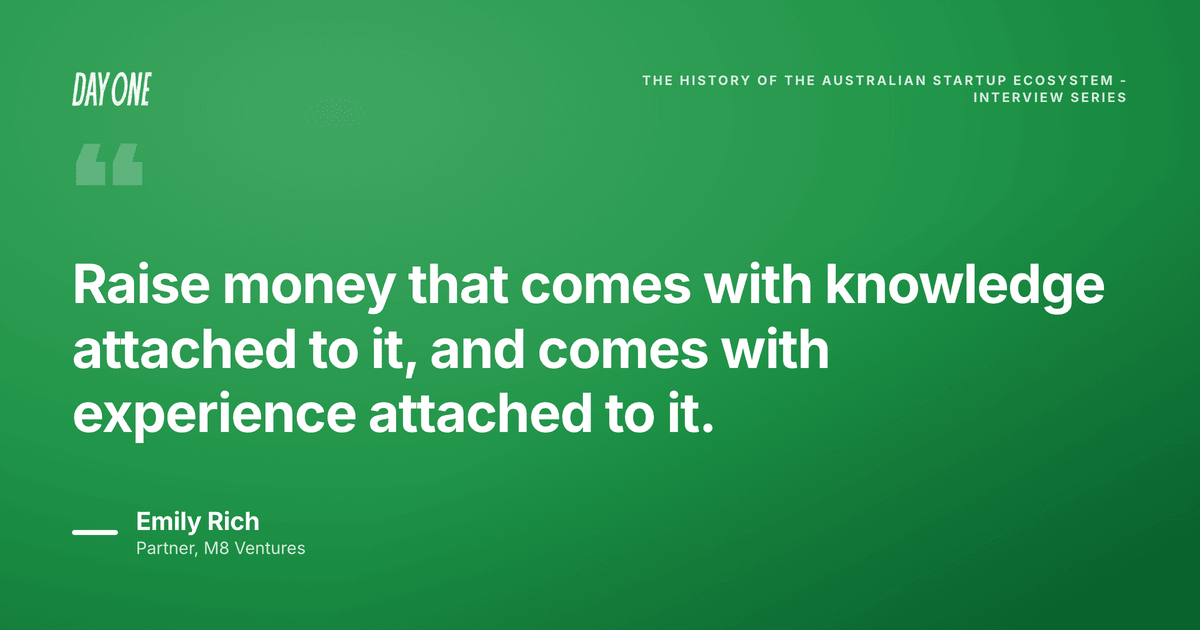
Transcript Synced · select any line to jump ▾ 0:00 Speaker: Let me tell you about our partner, Teamified. If you need to build a top-notch team quickly, Teamified is your go-to solution. They not only provide fractional CTOs, they can also do contractors and even remote team members tailored exactly to your needs. And whether you're looking for expertise in the Philippines, India, or Sri Lanka, Teamified has you covered. What's amazing is that Teamified uses a blend of AI and human expertise to cut hiring times by 50%, cent. The platform handles everything from automated onboarding to day-to-day management and even performance tracking. You can also handle rewards and recognition, buy equipment, and order training all through their platform. Simplify your hiring process and get the best talent fast with Teamified. Check them out now and transform your team. Go to dayone.fm/teamified. That's dayone.fm/teamified. Thank you, T-E-A-M-I-F-I-E-D, and get started today. Hi, I'm Adam Spencer, founder of the Day One Network, which is bringing the history of the Australian startup ecosystem to you. I believe in founders. It's why I do everything I do at Day One and our media company, W2D1 Media. And that's why the Day One Network exists, to create helpful content for founders. We've got some great shows in development, but a large part of what we do couldn't be done without support from our partners and sponsors. And I couldn't be happier than to be working with NTP, who get community better than any other technology recruitment company out there. A Newcastle company like mine, NTP are invested in seeing the growth of the local tech community in Newcastle, Sydney, and more broadly Australia. So thank you, NTP, for helping us bring helpful content to founders and the startup community in Australia. Back to the interview. Hi, I'm Adam Spencer, founder of the Day One Network, which is bringing the history of the Australian startup ecosystem to you. I believe in founders. It's why I do everything I do at Day One and our media company, W2D1 Media. And that's why the Day One Network exists, to create helpful content for for founders. We've got some great shows in development, but a large part of what we do couldn't be done without support from our partners and sponsors. And I couldn't be happier than to be working with NTP, who get community better than any other technology recruitment company out there. A Newcastle company like mine, NTP are invested in seeing the growth of the local tech community in Newcastle, Sydney, and more broadly Australia. So thank you, NTP, for helping us bring helpful content to founders and the startup community in Australia. Back to the interview. 2:46 Speaker: Hi, I'm Allan Jones, and I'm the guest host for today's episode of Welcome to Day One, the podcast for Aussie founders, startups, and the organizations that support Australian entrepreneurship. And I'm here today talking to my good friend and close colleague, Emily Rich. Emily, can you please introduce yourself? 3:04 Emily Rich: Hey, I'm Emily Rich. I'm a former founder of an AI company. I am the general partner at M8 Ventures, a VC fund that invests in remarkable founders from pre-seed to Series B, and I'm also the director of startups for Microsoft in Asia Pacific. 3:27 Speaker: And full disclosure to listeners, Emily and I are both partners in M8 Ventures. The pre-seed to Series A fund that Emily mentioned. And we've been friends a long time. So just, you know, if it seems like we already know each other, we do. But my job here today is to help you get to know Emily better and to help Emily share her stories of the beginnings of the startup industry the way she remembers it. Thanks for joining us, Emily. 3:55 Emily Rich: No worries. Thanks for having me. Yes, it feels very unusual because usually when I'm doing these, I'm not talking to such a good friend, but this is awesome. Awesome. 4:09 Speaker: It is, it's really fun. Hey, I wanna go back to the beginning, and I think the beginning for you begins with your first memories of your interest in technology. Where did your interest in technology begin and what was going on for you at that time? 4:27 Emily Rich: Yeah, so I think for me, I jumped around a bit in terms of what did I want to actually what I was going to do with my life after school. And, you know, I was never very— well, I was terrible at math. I wasn't good. I didn't do science. But then I sort of had this— I had a few ideas. At one point, I thought about going into medicine. And I think I landed on tech because I'd always been really interested in the latest gadget, you know. And, and back then it was like, oh, well, what's the new iPod Nano? Or, you know, something like that. But it was, it was always so fascinating to me how technology was growing so quickly and at such a rapid rate. And, um, we always had a computer in our house because my, my dad was actually in the field. So he, he did a lot in the IT space, and I would say that I was definitely not encouraged by him because it was not a space that women were in in those days, taking into account that, uh, you know, he's much of a much different generation. And but I think that from actually having a computer in the house, having worked with, you know, MS-DOS and, you know, loading up games and seeing all of that stuff and just being fascinated by it, just thinking it was so cool. And then I always wanted to have the latest console or the latest, whatever it was that was happening technically at the time, just so I could understand it. And also was just so fascinated by how technology actually advanced everything. And so I think that's where it really started. That's when I decided, like, hey, I'm actually going to do computer science. I'm going to go down that route. 6:34 Speaker: Yeah, cool. I think I remember a similar sort of introduction to computers, a computer at home, it being my dad's work computer, and me loading games up onto it. And I think one of the things that's different to today was that the standard of games in programming and software development in terms of it was quite a bit lower, and games were much more hackable back back then. And I think some of my early coding experiences were mucking around with my friends, trying to hack some of our games and do things that we shouldn't have done. Was that some of your early programming? 7:12 Emily Rich: Yeah, I've definitely done some things like that. Definitely have tried my hand at a number of those things. I think my first coding experience was honestly when you had MySpace and you could create your own, you would do all your own CSS. And that was my first real introduction to coding. And then as I progressed, I did start sort of trying to, yeah, as you say, sort of this white hacking sort of experience that I think you go through when you're really interested in computers and technology. I would definitely try my hand at those. And then as I sort of went further down And as I got older, I was really interested in cybersecurity and digital forensics. So started trying to do some things around, you know, everything around cybersecurity was so fascinating to me and so wild, the things that they could actually dissect out of, you know, USBs, out of things that you would just never even think you would be able to recover things from. That they were recovering. And so that was another form of hacking also, again, white hat. 8:33 Speaker: Did you study cybersecurity at university? 8:35 Emily Rich: I did. 8:36 Speaker: Yeah, okay. And roughly when did you graduate? 8:41 Emily Rich: I did not graduate. 8:44 Speaker: Again, another common story. 8:44 Emily Rich: That's a loaded question. 8:47 Speaker: Sorry, listeners, I knew the answer to that one, but it establishes street cred in a particular generation of startup founder, doesn't it? Particularly in cybersecurity. So where did you graduate from? 9:02 Emily Rich: Where did I not graduate from? 9:05 Speaker: Sorry, where did you not graduate from? 9:09 Emily Rich: The University of South Australia. 9:12 Speaker: All right, cool. So tell us about the cybersecurity or the startup community in South Australia in those days. Where was it located? How big or small was it? 9:25 Emily Rich: Yeah, I'll talk about the startup community, and I'll talk about— because when I was at uni and I was studying, that's when I actually started my startup. And so I never have actually worked in cybersecurity, and I've never actually, um, I'm not keeping up with the trends at the moment. I do things, little things here and there, read things, and that I'm really interested in, but I've never worked in the space. But How, you know, in terms of when everything sort of— for me, I sort of started and dove into startups in 2013, and that was in Adelaide. And for those of you who don't know, Adelaide is quite small in population. The startup community was very small. It's I was just reminiscing and I was thinking I spent my days at Majoren Distillery, which is now— they dropped the distillery at some point. It's now just called Majoren Adelaide. It still exists today. I believe it had around 30 desks at that time, but I can't exactly recall, but it was not as significant. And it was established the year before I started my startup in 2012, and it was the first coworking space in Adelaide. And the longest standing one, so. 10:52 Speaker: Still standing today, yeah. So, so 30 desks in that room. Did you start your startup in, in Majora? 11:00 Emily Rich: So started at home, so did the whole started in the lounge room thing, and then eventually were, you know, was going to meetups, getting into the community a little bit more. Albeit very small, but actually having access to a community that existed rather than just going it alone with my co-founder. And yeah, from there it was pretty, pretty soon after that we actually moved into Majoran, and then a little while after that We spent time at the Innovation and Collaboration Center, which is in Adelaide as well as part of the University of South Australia. So part of that deal was we actually won a grant of $50,000 and the space— we were also given space as part of that prize. So we moved there. Yeah. We hung out there for a couple of years and again, quite small, a few desks. There are a few companies in there, even less than at Majoran because you had to have, you know, been a grant recipient or be affiliated in some way to the university. So yeah, it was all just a very, you know, small, quaint existence, I suppose, where you knew everyone. Everyone knew everyone. 12:31 Speaker: For good or for bad. And what was that first startup? What was it called and what did it do? 12:37 Emily Rich: The startup was called Jamsoft, and basically we actually started in security. So we actually incorporated as Jamsoft Security and we later dropped the security. So the initial product itself was actually built upon computer vision machine learning. And we were essentially looking at the problem of armed holdups or shrinkage or robberies or, you know, then we sort of started looking at war zone attacks, you know, army bases, airports, all these sorts of things where the initial product was basically an identification product that would look for faces, it would look for weapons, it would look for if your face is covered, it would look for, you know, you basically had all these different endpoints in which you would just be looking to see, hey, is this a threatening situation? So we built out that and that turned into, and that didn't work. So of course, as you know, in good startup form, we pivoted. And so— 13:56 Speaker: So did that not work because you were a little bit early and the technology wasn't quite capable of delivering on that promise? Or was it a market thing, a customer demand thing? You were solving the wrong problem? 14:09 Emily Rich: It was definitely a market thing. It was definitely— we had done a lot of market research in this space before we actually, you know, started. Well, we had started developing, but we actually hadn't gone really strictly into this product until we'd done a lot of market research and paid market research as well. And a lot of the feedback we got was really, really positive. I think there's a couple of things. So, A, we were targeting retail, and there is significant— basically, the, the bottom line for retail is very— it's it's not a wealthy, wealthy, wealthy business, right? So it's not like they're just going to be spending tons of money on security, whereas we thought they would. And so that was the first thing. And then I think the technology was definitely ready for it. 15:07 Speaker: Even— 15:07 Speaker: oh gosh, even more so now because it would be so much quicker. But back then it was already at a point where you could definitely— that could definitely be in a commercial setting. We proved that it could, but I think that the market, the market wasn't ready for it. And also, you know, it ended up— we tried to go down the route of going, okay, so your insurance covers a lot of shrinkage, so that's not of interest to you. Okay, how about we do what we've seen before in terms of what you do with house insurance, where you know, if you have additional security on your house, your insurance premium goes down. So we started to work with insurance companies and tried to guide it that way. And that was a hard slog, and that didn't work either. That was really, really tough. It's really tough to sell into insurance and to sort of, you know, to become a security provider that would get on the books to then say, hey, you get a discount in your premium. Yeah. So that was tough. And then, yeah, we completely pivoted the— so we said, "Hey, we have all the technology. We have facial recognition. We have facial detection. We have object detection. We have tons of machine learning. We have so much stuff we've built over the last 18 months. Let's turn it into an API." And so that's what we did. We turned it into an enterprise-grade API. Then we started actually gaining traction. 16:36 Speaker: Cool. You started selling the shovels. 16:38 Emily Rich: Yeah, we started selling. And also the first product was also hardware with embedded software, which for any of those hardware companies out there, know how hard it is to sell hardware. 16:52 Speaker: Yeah, definitely, until you can do over-the-air updates. 16:56 Emily Rich: Yeah, and then we decided, okay, software business for us, thanks. That's good. 17:02 Speaker: Cool. So how long did Jamsoft last? And, you know, broad terms, you know, why are you no longer at Jamsoft today? 17:11 Emily Rich: Oh my goodness, it's— what is it, 2022? Yeah, I guess it's— 17:16 Speaker: It's all lost in the mists of time. 17:19 Emily Rich: Yeah, no, no, no, it's just like, why aren't you there today? I'm like, oh wow, it's been so long. It's been almost 10 years. Well, Yeah, almost 10 years. So, 2013 we started and then we, as I said, pivoted out of security, created the API, won our first big enterprise contract that then allowed us to gain that sort of real trust in a lot of the other bigger companies. And so, from there we won a few more contracts, we established our own office, we grew our team, we, you know, we did the whole thing where we were like, yes, we're hitting a million, you know, in annual rev. Uh, you know, that was all, all of these sort of milestones that we were hitting. We had a contract with a company where we were working on— so that they were using our API. And at that point in time also, we were running bespoke services. So if you didn't have an in-house dev team we could provide you with one. And a lot of people at that point in time didn't have the capacity that they do now to deploy AI solutions and people with that expertise. So that was a service that we offered as part of the services side of the business. 18:44 Speaker: Mm-hmm. 18:44 Emily Rich: And then there was obviously a product side of the business. So with that, the last contract that we were working on, they wanted to acquire us. We were at a point where we wanted to sell. We were either going to sell or raise more money. And we worked through that acquisition and exited in 2017. 19:07 Speaker: Cool. 19:07 Speaker: So, but we'd been working on it for about 5 years, I think. Yeah. 19:10 Speaker: Yeah, great. That's a great story. Thinking back to that period, like 2012 to 2017 sort of time, you know, back to the 2012 days and Majoran and so on, Back then, who were the— which were the Australian startups that you remember most admiring? Like, who were the archetypes? Who were the heroes of the industry back then? Did we have any in Australia? Were they all offshore? 19:37 Emily Rich: Oh my goodness. I remember— I only remember a few. I think because I was so busy with my company, I was sort of head down for so many years. But I do remember that I got to speak with companies that had done really well through sessions that Majoren would run. We would have people come and speak to us from the ecosystem. So, people like Steve Baxter, we had, you know, Jindo from HappiCo. Yeah. We had a conversation with him around the US market when we were looking. We, we did go into the US market, so when we were actually looking to get into the US market, um, spoke to him. There's— there were a few people that I remember in that time, but it was honestly a lot of the people that I was around. I mean, I remember Atlassian, um, because, you know, everyone was talking about them And I don't know if— I just think no one had done anything that big at that point, uh, in Australia, but that's just my recollection of it. And yeah, there was some really cool people that I, you know, I was working— I, I got to work with some other startups as well. So when we went to New York and we were selling in New York We got to hang out with some really cool data companies. I can't remember the names of any of these people, which is so bad, but they were just amazing, amazing data companies, digital companies in New York, like really cool. So yeah, had a really great experience, but that's, yeah, that's what I can sort of remember from that time. 21:31 Speaker: Cool, some international travel and some overseas customers and dealing with time zones and foreign currency support. 21:38 Emily Rich: Oh yeah. 21:39 Speaker: Probably at a time where it was a little bit difficult to manage all of that in cloud accounting software. And what sort of, so you mentioned before that you won a $50,000 grant in the early days, or $50,000 in value. Were there other government programs that were useful to Jamsoft and to other startups at that time, or was it all a bit of a wasteland of no government support? 22:06 Emily Rich: Honestly, there wasn't a lot. I— the, the one thing that I will call out is— but there's a few, there's a few things that I would call out. So definitely the, the grant that we received from University of South Australia from their commercialization department changed our world. And you think it's such a small amount of money, but it's so meaningful to us to be able to develop and it was so much money to us at that point in time. You know, we didn't have any revenue, but we had this great technology. And still to this day, you know, we, we did some things with that technology that were first in the world as far as we know for a couple of those things. So that, that support meant so much. And then secondly, Majoran actually— 22:58 Speaker: Majoran. 22:58 Speaker: Hosted us for free. So we were actually in there for free, which was just— again, made the biggest difference to everything that we did. It was established by a guy called Michael Reed, and he's someone that I'm so thankful for because he actually basically gave us free space and said, you know, I know you can't, can't afford it, but you know, we want you here and we know you're doing something amazing. What was— 23:30 Speaker: sorry, what was Michael doing? And he wasn't giving free space to startup founders. 23:35 Emily Rich: He was running Majoren, making money off of— making money off the other founders that could afford it, I guess. 23:45 Speaker: I remember him. I think he was an accountant. 23:47 Emily Rich: He was at once. At one stage he was, I believe. But yeah, that's That was— but not while he was at Majoran. 23:56 Speaker: There's been a few people in each capital city that are kind of necessary for the beginnings of a startup community. And often, you know, a lawyer and an accountant who are prepared to give some of their advice for free to the startups. I know just because they find startups more interesting than their own regular business customers, I think, is the main motivation. 24:18 Emily Rich: Yeah, I agree. And I think also the same goes for people who are in this, in the actual co-working spaces themselves. You see a lot of, you know, they might be a former lawyer or a former accountant, or, you know, I had one of the other companies that sat in there with us, um, I was like, hey, can you help us do our accounting for free? 24:45 Speaker: Yeah. 24:46 Emily Rich: Because he was an accountant, well, former accountant, and I was like, can you just help us with like leveling out some of these things? Because at that point in time I was doing all the finances. So that was really helpful too. So there were quite a few things like that that happened. And then obviously with the Innovation and Collaboration Center, they, gave us free space, they introduced us to our first customer, they obviously provided us, you know, this, this $50,000, which as I said meant so much. And the other government support in terms of what was happening at that time was the Commercialisation Australia grant. So we did also receive that much later down the track. But that was the only other thing happening. 25:40 Speaker: After you did the Gensoft startup experience, was your first impulse to go back in and found or co-found another startup, or what was going on in your head? You know, what did you learn from that experience and what should you decide to do next? 25:55 Emily Rich: So as soon as, as soon as we sold the company, I knew that I wanted to stay in startup land. It's so infectious and I knew that I wanted to assist other startups. I'd already, when I was doing Jamsoft, I'd already started mentoring in programs like Techstars and a few other, you know, smaller ones that popped up here and there. And I loved it, and I loved being able to, you know, share my knowledge. And that was my passion. That was what I knew I wanted to do with my life was invest in amazing companies, mentor amazing companies. So as soon as, as soon as that happened, I knew that I wanted to start investing as an angel, which I started doing. And then I knew I wanted to be a VC, and I knew that I wanted to also, you know, mentor startups in whatever capacity I could and share all of my mistakes, anything that worked, you know, all of those things, all of that knowledge that I had picked up, that I loved the journey. I wasn't ready to jump into another startup or start another startup, and I, I still haven't since. I, I think about it every now and again, and maybe further down the track I will, but at the moment, yeah, I really just enjoy, enjoy that aspect of it is the investing and the mentoring. 27:27 Speaker: So tell us a bit about— so you get a big emotional reward and hopefully sometimes some financial rewards from being an angel investor because you're helping founders of multiple companies rather than helping the team that you've employed in your own startup, I guess. Is the decision to step up from angel investing to venture capital partly about being able to do that for even more companies? What's that about? Because obviously there's, you know, there are bigger pressures, um, there's, there's more at risk when you step up into VC. Why is that important to you? 28:00 Emily Rich: Yeah, I think I always wanted to go into— I knew that I wanted to be able to help out at scale, so I knew I wanted to do VC, but angel investing was that sort of leapfrog for me that would at least give me some, some sort of a portfolio and some sort of credibility in market. And yeah, for me, it's, it's the same reason that I also took the role at Microsoft, is I help hundreds of thousands of founders, you know, and that's powerful. And I am able to do that because I have a large company behind me, who— which means I'm able to actually achieve a lot of the things that I want to achieve at scale rather than, to your point, yeah, helping one or two companies. That's really— it is really meaningful, but it's also, you know, how do we as people who have been former founders, as people who have lived through it, as people who have the experience, how do we— I don't know, impart some wisdom? I don't know what you would even call it, you know, but Basically just our knowledge that we actually have learned and things that seem so obvious to me, and I don't obviously know everything about this space at all, but things that seem obvious to me would not be obvious to someone who's day one in their startup. 29:33 Speaker: Yep. And so does that kind of encapsulate what Microsoft for Startups does and what you and your teams do? You are there to provide that knowledge, which is, that's second nature to you, which just seems obvious because you've deployed that knowledge so many times to people that have yet to be exposed to that? 29:54 Emily Rich: Yeah, I mean, sometimes people get me on really tough questions that I'm like, oh no. 30:00 Speaker: What does Microsoft for Startups do? 30:02 Emily Rich: What do you do there? Microsoft for Startups is exactly that, right? We support companies to access up to 350 $100,000 in benefits through access to technical and business resources. So everything from cloud, mentoring, we've got subject matter experts in pretty much every area you can think of. So we've got executives, we've got sales, we've got everything. And then when you speak to someone like myself or one of my colleagues, we all have startup experience, right? So we can come on that journey with you and actually feel that empathy. And, you know, when I'm doing deep dives with companies and I'm looking at their business or I'm looking at their deck and I'm, you know, I think we're in this unique position where we can say, hey, we see, you know, and I know you do too, Allan, we see 500 of these a year. Yeah. I have a pretty good idea of what's going on in terms of, hey, who's got a really good deck? What made it really nice? A lot of the things that I'm doing with companies are around their growth and how do they grow, how do they scale sustainably, all those sorts of things. And then we do that the same, the exact same thing on the technical side. Yeah. So how do you scale securely, stably, everything? So that's what we're all about is, and as I've said, I can, you know, because of the machine that is Microsoft, because it's such a large company, I have so many founders that I, you know, not just myself, that my whole team can actually, influence and assist. 31:59 Speaker: Emily, I wanna ask you now about the ecosystem that we have today. You sit in an influential position, the branches of your tree go a long way out into the ecosystem, go down deep and far across. Can you tell us about some of the gaps you think our ecosystem has today? 32:25 Emily Rich: So I think the biggest gap is talent, massively. Just being able to procure talent. I'm constantly being hit up for recommendations for technical talent specifically. The irony is that they're going to the biggest startups who can pay more, or they'll go to a Microsoft, Amazon, Google who can also pay much more. So the technical talent shortage that we have is no secret. It's, you know, we are all facing that same thing. Even the largest companies are facing technical talent shortages. But, you know, when it comes down to it, people are graduating and they're going, oh, am I going to take this job in a startup for $50,000 or Am I going to take this job over at big X scale-up or big company for $150,000, $200,000? 33:27 Speaker: Yeah. 33:27 Speaker: You know, and they've just graduated. It's tough. 33:31 Speaker: Yep, yep. And I think if you go right back to the root cause of that problem, you know, when you think about how many other kids were interested in a career in technology in your graduating class in high school, you know, or if I think about how many kids in my graduating class in 1982 were interested Now you're showing your age, Allan. I don't think that ratio has really changed much. There's more kids graduating from Year 12 than there were back then, but I still think the ratio is pretty unchanged, right? And the number of kids who go to university, the percentage of them who, maybe the percentage that now study, now are interested in a STEM career might have increased a little bit, but I don't think when it comes to people that want to study software engineering, I don't feel like we're graduating any more software engineers that are remaining in Australia than we were 10, 20, 30 years ago, do you? 34:26 Emily Rich: No, I don't think it's significant at all. I mean, if we can start telling people, hey, we have too many lawyers, stop being a lawyer, you know, maybe. But, you know, there's— and that's a really good point as well, is that you I do think that we're keeping more talent because we do have a lot of technical teams here. And because we are seeing, you know, the Canvas, the Atlassians, you know, the Coltramps, all of these large scale-ups, if you will, who are able to pay, you know, at a market level for talent. They're able to compete with the Microsofts, the Amazons, the Googles. They're absolutely able to compete with them now. And so we are retaining talent in Australia. But I— for me, for example, you know, the— my technical team that was with me at Gemsoft, the majority of them are overseas now. 35:25 Speaker: Yeah. 35:26 Emily Rich: Working at— yeah, working at Facebook, because, you know, they all wanted to go into artificial intelligence and So for them, it's okay, go work at Meta under the AI program, you know, go work at world-class institutions. And I mean, I'm so happy for them, but we don't retain that talent. 35:53 Speaker: Yeah, yeah, yeah. That's a really important gap. And so, you know, to balance that out, Where do you think we in Australia are doing well? 36:04 Emily Rich: All right, what are we doing well? I think that as, as a community, I think that we come together really well. I think that's the thing that I, I notice the most is that we collaborate really well. We co-invest in a way that I haven't seen in other markets. It's really friendly. And I know you and I, we do a lot of co-investing with with funds and, you know, other angels and all sorts of things. And it's never— I'm sure people have bad experiences, but it's, it's never— it's very unique to this ecosystem, uh, from, from what I've seen working now all across Asia, as I have been for the last few years with Microsoft, is it's, it's really— it's a real standout for me is how close that ecosystem actually is and how we're able to come together and not necessarily be competing against each other as well. 37:02 Speaker: Yeah, it doesn't seem— 37:02 Emily Rich: You can do that really well. 37:03 Speaker: Yeah, it doesn't seem like it's ever a battle to the death. It's more like a battle for space, light, and nutrients, right? You know, like, you know, we feel like the opportunity for everybody to succeed is much, much bigger than the opportunity for us to to crush our competitor. 37:21 Emily Rich: Yeah, which is very different in certain markets. And I mean, definitely if you're talking about Silicon Valley, I mean, it's crush or be crushed as a VC there. So it's very different. It's a very, you know, it's very friendly and it's very, it's a really very unique actually from anywhere I've seen, even in any other parts of Asia, that they're not co-investing the same way we are, they're not collaborating the same way we are. 37:54 Speaker: Yep. And do you think that, you know, the last couple of years of lockdown, has that made any difference in what you see around that challenge that we've always had around the distance between us and Silicon Valley? 38:09 Emily Rich: I think that That from, from what I've heard from people who have taken investment from the US, for example, for founders that I've worked with, they're seeing that gap close a lot because it used to be, okay, you have to travel there, you have to be there, you have to see someone. Okay, not possible. How do we get around it? And it's become It's become okay, you know, it's just become normal to, to pitch on a Zoom call to investors, to actually write checks based on not seeing someone face to face. And that's been really normal. That's just been the way that it's been having to work. I mean, people couldn't just stop deploying capital, so, you know, they had to work their way around it, and they did that. And I think the because of that, we're going to see a change. I mean, I'm not sure that we've seen it entirely yet, but I think that we'll see a change in, you know, just being able to actually take investment from all sorts of places and not have to necessarily be in that country physically. 39:20 Speaker: Cool. I look forward to seeing more of that. When I ask other guests this question, it's always a little bit of a challenge because, you know, Australians often prefer to share our unpopular opinions in private and our popular opinions in public. But do Do you hold an unpopular opinion about the Australian startup ecosystem? It can be a positive one or a negative. What do you think that most other people would disagree with? 39:45 Emily Rich: I don't know if people would disagree, but I suppose it's more of an observation, and it could be slightly unpopular in some circles. But I think, you know, to caveat, I think we have great government support, but I just think we could do even better. I think we could do even more in this space. I've seen some amazing things in places like Singapore, for example. They have done investing dollar for dollar in private capital with guidelines that are not— you're not jumping hoops for that money. You are— sure, you, you absolutely have to apply for it, but they're making it really easy for you to start a startup there. 40:35 Speaker: So just, just to be clear, dollar for dollar for investing means that there are Singapore government venture funds that will invest alongside other venture funds to the same degree. So, you know, an AirTree or Blackbird Ventures puts in a dollar, the government puts in a dollar too. Is that right? 40:51 Emily Rich: Correct. Yes, that's right. So they have— and I'm not sure of the exact dollar amount that they they have allocated. But, uh, the majority of the companies that I work with in Singapore have received that dollar-for-dollar investment, and it means obviously they can grow significantly. And it also keeps them in Singapore, which is what they— which is what the Singaporean government wants, obviously. 41:17 Speaker: Yeah. 41:18 Emily Rich: And the private capital firms are very happy about that because they're essentially doubling their investment straight away. So it's a nice incentive for them to get involved in. You know, there's other places that— so I don't do a lot of work there, but Germany, they have a really great system where it's so easy and it's, it's like 10 minutes to set up a— basically set up everything you need to start a company there. 41:49 Speaker: Wow. 41:50 Emily Rich: And it's just so easy. I Personally haven't seen the process, but my, my counterpart in Europe was telling me about, and I was, I was amazed, so I had to look it up. But yeah, really impressive stuff that some of those governments are doing that I think we could learn from and say, okay, why are they becoming, you know, startup hotbeds, if you will? Why are they doing so well? It's because, you know, as I mentioned previously in my story, you know, what that $50,000 meant for me, what the Accelerating Commercialization Grant meant for me at that time was not a lot of money in the grand scheme of things, but was a huge amount of money to us. It meant we could start acquiring customers, and eventually we turned that $50,000 into, you know, a million sort of thing. So, you know, really I think that private companies and private capitals have a large place to play, but grants and zero-interest loans go a long way at the start of the journey. 42:58 Speaker: Cool, very cool. What about us as a community? What does the startup community itself, what could it be doing better in the future? What's the most important thing that we need to improve? 43:09 Emily Rich: I really would like to see even more former founders investing in companies, investing in the next generation of founders, because I believe that they not only have the money to provide, but as we spoke about, they have the knowledge to share. 43:29 Speaker: Mm-hmm. 43:29 Emily Rich: And I think that's really important. And I think that that means that could be the difference between you being able to scale and grow a lot faster with that. So that's what I believe we could really implement a lot better as a community. 43:48 Speaker: Yeah, cool. So somewhere out there, there's a whole cohort, a whole generation of early employees, you know, people who are in the first 100 employees at Atlassian, Canva, Safety of Culture. Exactly. The list goes on. And, uh, yeah, where are they, huh? 44:07 Emily Rich: Yeah, they've got to be— that they, they should— 44:09 Speaker: There's a handful, there's some, but there's more out there, right? 44:12 Emily Rich: There are, there are. And I know there's a lot of— there's already, you know, a number of people that are, that are doing it. I'm just saying that, yeah, it would be great to see that even increase, just to see what would happen. I think some really cool things would happen. And you're right, that experience of, you know, being being a first 100 employees of Canva or being a first 100 employee at Atlassian. I mean, that knowledge, that experience you have, that's not something you learn overnight. 44:44 Speaker: Yeah, yeah. And some of the most useful people in the ecosystem now are that handful of people with hands-on operator experience who've been part of building a successful startup. 44:54 Emily Rich: Absolutely. 44:56 Speaker: Is there a category outside of investment So a startup founder at the beginning or partway through their startup founder journey right now, it's probably best for them not to start angel investing while they're still trying to build their first startup. But what's an action item we can give them? 45:13 Emily Rich: Yes, please keep doing that. 45:15 Speaker: What do we need them to be doing better? 45:17 Emily Rich: What do we need our founders to be doing better? That's a good question. I think— 45:22 Speaker: Thank you. 45:26 Emily Rich: But I think that— let's have something that I'm really passionate about is our DE&I efforts. And I think, you know, we've made a— and I know a lot of other funds have— we've made particular caveats in who we invest in based on the representation of minorities within their company. And so that's what we can do as investors. But what can you do as a startup? You can actually start thinking about how do you have a better representation of the whole world. And I'm still not seeing that enough. I'm still seeing that— Mm-hmm. We might be getting into this trap of, hey, we're building product, we're building great product, but we're building it with one way of thinking or we're building it with two ways of thinking. We're not building it with all these, with everyone in mind, every community in mind. That's when we get accessibility issues. That's when we have all sorts of things, right? Like you'll develop a product and say, and sorry, white guys, but you'll say, you know, have a team of four white male founders, and you think, okay, fine, you need to know that you have limitations then on what you can understand about other people in the community and how to build products for them. 47:04 Speaker: Yeah. 47:05 Emily Rich: And that's where I'd like to see— and I encourage founders all the time to think about how do you make the best product You make the product for everyone. That's how you make the best product. 47:16 Speaker: That's awesome. And then, you know, when you look back at the history of the Australian startup ecosystem, it was founded by misfits and outsiders, you know? And yes, those misfits and outsiders were largely male and almost exclusively white, but they were still misfits and outsiders. Now we have a viable, successful industry that the rest of the world recognizes as a huge opportunity. If you suddenly shut off the supply of misfits, outsiders, marginalized people, then you miss out on all that creativity and all of that insight that they bring, you know, and you end up building a product for a monoculture. And that just means you're addressing a smaller market. Why would any startup want to do that? 47:57 Emily Rich: Exactly. Why do you want to address a smaller market when you can have a whole, you know, a whole market? 48:03 Speaker: That's an awesome answer. Thank you. So the advice question: if a new entrepreneur came to you, given all of your experience, mistakes, the wins and the losses, what one piece of advice would you give them that might help increase their chances of success? 48:18 Emily Rich: Okay, I actually have sort of two answers to this. 48:23 Speaker: Oh, I don't know if— yeah, okay, I'll give you two. 48:25 Emily Rich: One's really quick. One's just, I think, just start. And it's, it's really easy to incorporate a company now and get a low-code or a no-code prototype going. So technology has facilitated that for us, which I did not have that ability back when I started, and we are much further along now. That's sort of one small thing that I think you can just start and you can do and you can prototype really easily. 48:56 Speaker: Mm-hmm. 48:56 Emily Rich: The, the biggest piece of advice that I actually have is and this is slightly controversial to people who are bootstrapping, but I— this is from my experience— is raising money earlier and raising smart money. And what I mean by that is raise money that comes with knowledge attached to it and comes with experience attached to it. Mm-hmm. So raising from reputable angels, VCs, obviously government grants if you can get them, of course, um, an excellent way of, of doing that. Um, I thought that it was a really great, amazing feat that I could bootstrap, and I look back and I go, I would never do that again because I could have grown it's so much bigger and so much quicker than what I was able to do by bootstrapping. So, you know, and one of the— it sort of ties into one of the biggest mistakes I ever made was taking money from inexperienced angels. And so I'm really passionate about people taking money, smart money, from experienced, knowledgeable people in this area. It also deeply feeds into my passion of being a former founder who's now a VC and also running and implementing a really founder-friendly environment at Microsoft as well. 50:32 Speaker: Yeah, great answer, thank you. So time to put your futurist hat on, your futurist skater cap. And what's been a recent development in the startup world that you think is gonna be a really big deal? 50:44 Emily Rich: Well, I actually think that seeing more unicorns coming out of Australia means the world knows who we are, which we're being seen now to be on a global scale thanks to, you know, our ecosystem that's grown so much. And the, you know, we have, we have names, we have logos that people recognize, and I think I think that's actually going to be really, really positive for investors investing here, bringing money into the country. Also for our funds, as we're seeing our funds now are raising, you know, huge amounts of money and having really, really large funds that they can deploy capital through. I think that we could, you know, for instance, India, for example, produces a unicorn on average every 9 days. 51:39 Speaker: Wow. 51:40 Emily Rich: Isn't that crazy? 51:41 Speaker: That is. 51:43 Emily Rich: But I don't think we're gonna be there because we don't have the population to support it. And it's not just about producing unicorns, but I think it's helped us put us on this global scale, which means that, oh, people are thinking of us as, oh wow, okay, you really are a startup economy. Ecosystem to watch. 52:03 Speaker: What if we set the goal every 90 days? Can we do that, Australia? 52:07 Emily Rich: One unicorn every 90 days. We just add a zero on. 52:11 Speaker: The ATO might explode. Emily, is there anything else that we should cover in today's interview? Is there a question that you wish that I'd asked you that I haven't? 52:31 Emily Rich: I think your questions were phenomenal. 52:34 Speaker: Thank you, I think your answers were incredible. 52:36 Emily Rich: Thank you. 52:39 Speaker: So Emily Rich, coding founder, angel investor, VC, head of startup stuff for Microsoft for Startups, just wanna thank you very much for your time today. It's been a very informative and interesting interview. 52:52 Emily Rich: Thanks, Alan. It's been so great to be here. 52:55 Speaker: Folks at home, I'm Allan Jones, today's guest host for this episode of Welcome to Day One, the podcast for Aussie founders, startups, and the organizations that support Australian entrepreneurship. Hit like and subscribe and listen to us in all the podcasting tools. You've been an awesome audience and we love you. Thanks for listening. 53:25 Speaker: I hope you enjoyed that interview. More interviews are on the way. Follow the podcast wherever you're listening right now. Stay tuned for more interviews with many, many more amazing people from the Australian startup ecosystem. Thanks for listening and see you next time.