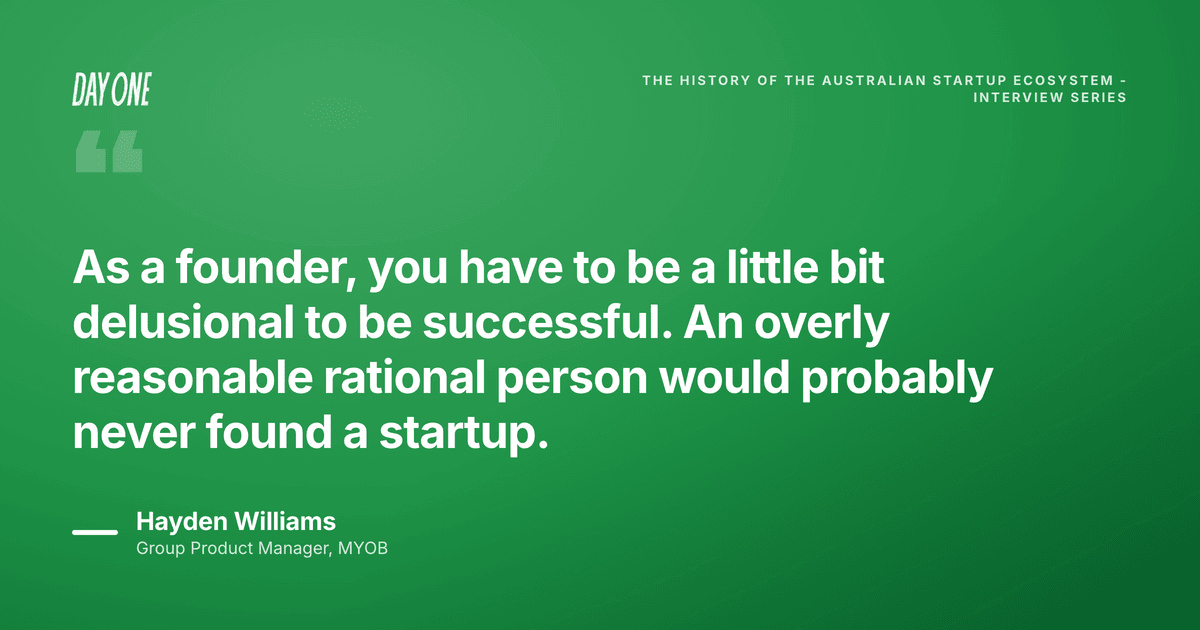
Transcript Synced · select any line to jump ▾ 0:00 Speaker: Let me tell you about our partner, Teamified. If you need to build a top-notch team quickly, Teamified is your go-to solution. They not only provide fractional CTOs, they can also do contractors and even remote team members tailored exactly to your needs. And whether you're looking for expertise in the Philippines, India, or Sri Lanka, Teamified has you covered. What's amazing is that Teamified uses a blend of AI and human expertise to cut hiring times by 50%, cent. The platform handles everything from automated onboarding to day-to-day management and even performance tracking. You can also handle rewards and recognition, buy equipment, and order training all through their platform. Simplify your hiring process and get the best talent fast with Teamified. Check them out now and transform your team. Go to dayone.fm/teamified. That's dayone.fm/teamified. Thank you, T-E-A-M-I-F-I-E-D, and get started today. Hi, I'm Adam Spencer, founder of the Day One Network, which is bringing the history of the Australian startup ecosystem to you. I believe in founders. It's why I do everything I do at Day One and our media company, W2D1 Media. And that's why the Day One Network exists, to create helpful content for founders. We've got some great shows in development, but a large part of what we do couldn't be done without support from our partners and sponsors. And I couldn't be happier than to be working with NTP, who get community better than any other technology recruitment company out there. A Newcastle company like mine, NTP are invested in seeing the growth of the local tech community in Newcastle, Sydney, and more broadly Australia. So thank you, NTP, for helping us bring helpful content to founders and the startup community in Australia. Back to the interview. Hi, I'm Adam Spencer, founder of the Day One Network, which is bringing the history of the Australian startup ecosystem to you. I believe in founders. It's why I do everything I do at Day One and our media company, W2D1 Media. And that's why the Day One Network exists, to create helpful content for for founders. We've got some great shows in development, but a large part of what we do couldn't be done without support from our partners and sponsors. And I couldn't be happier than to be working with NTP, who get community better than any other technology recruitment company out there. A Newcastle company like mine, NTP are invested in seeing the growth of the local tech community in Newcastle, Sydney, and more broadly Australia. So thank you, NTP, for helping us bring helpful content to founders and the startup community in Australia. Back to the interview. Hi, I'm Adam Spencer and welcome to Day One, the podcast that spotlights Australian startups, founders, and the organizations that empower Australian entrepreneurship. We go back to the beginning to tell a story of Australia's most inspiring founders and how they built their companies. You're listening to a special interview series as part of a documentary W2D1 is producing about the history of the Australian startup ecosystem. On the episode today, we have— 3:18 Hayden Williams: My name's Hayden Williams and I'm one of the lead product managers at MYOB. 3:26 Speaker: What does kind of day-to-day look like for you as senior product manager? 3:30 Hayden Williams: Yeah, sure. So in essence, I work with a group of really smart, really you know, really capable people. And it's leading them is my main job. And our collective job is to really decide, well, in terms of how we go about solving customer problems in the market, like, well, what are we going to do next? Like, what's the next thing that we want to work on? And so we're in the product world at MYB very much the, what do we build and why are we building it? What are the problems that we're solving? And then we work with our colleagues in tech to really work out the, how are we going to build it and when are we going to take it out to market? So that's That's really the crux of the role is like, at MYB, what are we going to build next? You know, why are we doing it? And what problems do we think we'll solve for customers in the marketplace by doing that? 4:16 Speaker: Okay, yeah, that helps me. I mean, I'm a student and I'm always learning and the whole senior product manager thing, I don't really understand what's going on there and what you guys do. Obviously apart from, you know, building and helping to build the product. 4:31 Hayden Williams: Yeah, it's a, like product management's one of those weird like dark arts 'cause everyone's got a different definition of like, well, what exactly does that mean? But at the end of the day, what good product management boils down to is just like, are you, you know, if you only have a dollar, where are you placing your next bet in terms of where you put your development resource? That's what it ultimately boils down to. 4:52 Speaker: And to lead into the next question, like startups, founders, what percentage of the customer base are people that are working for startups? 5:03 Hayden Williams: And MYB's customer base? 5:05 Speaker: Yeah. 5:05 Hayden Williams: Yeah. Yeah, it's probably in, in start— and like digital startups, as you'd like, as you classify them, it's probably around about 25%, right? And then the majority being, you know, your more traditional industry-based, you know, small, small to, small to medium businesses. 5:21 Speaker: So, so for that, that 25% startup kind of base, what was your first exposure to that whole world? How did you get introduced to it? 5:31 Hayden Williams: Yeah, well, it actually predates MYOB, so like I've kind of been around the, well, and I'll use, and I'll go into the small business sort of ecosystem initially and then go into the startup world. But my first exposure to the small business ecosystem was, I've been around the small business world for about 15 years now. So I'm 34, so that's most of my working life. 5:56 Speaker: Wow. 5:57 Hayden Williams: And so I started in telco. So you probably tell by the accent, I'm originally from New Zealand and I was working in New Zealand in a retail store for Spark. So similar to Telstra here. And I was working in, you know, consumer mass market retail. And this guy comes in, his name's Paul Beswick, and he was starting a company called Dynamic Eyewear. And he wanted help setting up a landline and a toll-free number and all of those things. And in the stores, we didn't normally do that stuff, but, you know, I got to talking with him and he was telling me about his business and what he was doing to get it set up. And I was like, I was completely fascinated. I was like this wide-eyed kid, like, whoa, you can do that? Um, like I wasn't one of those kids that grew up in the back of a shop. Like I really didn't have much of a concept of like what small business was, certainly not what it took to start one and understanding what motivated people to do it. But hearing about what he was, how he was putting it on the line to go out on his own and to do things the way that he thinks that they should be done in his industry, which was eyewear. I was, I was like really like energized and inspired. I was like, well, this is rad. This is like so much more, um, energizing and interesting than selling mobile phones to kids. So. So like I moved into, in that gig, I moved into the small business part of that company and I've been in small business ever since. And I've really kind of been addicted to the small business and startup community for, you know, for that time. So that's, you know, 15 years. And as far as like startups in like the truest sense, probably my first experience was actually pre-MYOB as well. It was a friend of mine bringing me to this meetup in Melbourne, maybe like 2010. 7:38 Speaker: Mm-hmm. 7:38 Hayden Williams: He was this guy I went to school with from from, he was from Washington and he'd spent time in the Valley. So he was like this really cool guy that was ahead of the game back then. And he'd brought these people together and it was in this cafe in the city and there were maybe 20 people there in total. And maybe 8 of those actually had something that they were working on, that they were doing a little presentation and were looking for feedback on their idea or their product. And it was that same feeling of like fascination and admiration and that rush of like a couple of people getting together and smashing ideas into each other and sort of seeing that change and that evolution almost in real time. And it felt like this ragtag, like scrappy bunch of outsiders, misfits that were trying to take on the world. And, you know, I think that that was my first exposure to startup land, and that was pretty close to when I joined MYOB. And throughout my whole time at MYOB, I've stayed reasonably active in meeting with founders and sharing those ideas. And I really think that there is still that scrappiness and that edginess that those startups have, like, you know, 10 years later, even though it's sort of very much in the mainstream. But that was, yeah, that was the distinct first memory I have of the the Australian startup economy. 9:01 Speaker: Wow, that's pretty early on too, 2010. A lot of the conversations I've had with people kind of puts the date around 2012 is when things really started to ramp up and there was definitely meetups and cafes, pubs, whatever, and just like meetup kind of events happening before then. But 2010 is pretty early. 9:27 Hayden Williams: Yeah, like I would, I would never have known anything about it if it wasn't for Jeremy, this guy who was like, hey, we're doing a, we're doing it, and he called it by its name. He's like, we're doing a meetup, and I'm like, I've got no idea what that is, but it sounds cool, count me in. 9:39 Speaker: So 2010, you, you've been in your current role or thereabouts for— I just looked before— 8, 8 and a half years or something? 9:48 Hayden Williams: Um, coming up, coming up to— I'm over 11 years now. 9:51 Speaker: Oh wow. 9:52 Hayden Williams: Yeah, like, no, coming up 12 years. My LinkedIn's just— I'm terrible at updating my LinkedIn. 9:56 Speaker: So, that was, that does date it perfectly, like right about that 2010 time you joined MYOB. 10:02 Hayden Williams: Yeah, I'm pretty sure it was like maybe a few months, like maybe 3 or 4 months before I joined MYOB. 10:08 Speaker: How did that happen? Just so, give us some context so that when we start talking about MYOB's early days in a second, it all makes sense to people listening. 10:19 Hayden Williams: Yeah, so I kind of, I joined MYOB Almost by mistake. So I was working in that telco in sales and I was looking for it. I needed to get out of sales because I was a bit burnt out and I was looking for a gig that I could do for a little while before going on the OE to Canada for a year-long holiday in Canada, which as one does in your 20s. 10:49 Speaker: Yeah. 10:50 Hayden Williams: And then, so I started this gig working at MYB in like a, you know, in a service job. And the same thing happened that happened to me when I had that first conversation with Paul and when I met those, you know, those early stage founders in the cafe. It was, I just like, I just fell in love with it again and I couldn't get out. And I've worked across a bunch of different roles in MYB across a variety of, you know, parts of the business, everything from tech to product to marketing to customer success. Like you name it, I've done it. But yeah, that's really how I got started. I was just looking for a job going, hey, I'm in small business now. It'd be a nice easy transition. Only looking for something to do for about 6 months or so that turned into coming up 12 years. 11:44 Speaker: So you joined MYOB in around 2010, but Around, you know, 20 years earlier, 3 guys in a garage were building what would be MYOB. We talked a bit about this before we hit record, but can you just give us a little bit of a look into what that was like for them or just from your point of view, just from what you've heard? 12:06 Hayden Williams: Yeah, no, no, absolutely. Like it was one of the classic sort of, I think, Australian startup stories. Like, you know, we talk about it at MYOB that like we're one of the OG startups, you know, like definitely one of the one of the earliest ones. 12:20 Speaker: Yeah. 12:21 Hayden Williams: Certainly one of the best tenured. And it was the, you know, it was the same story as you hear so often. It is just a couple of founders that are starting a business from a garage that are trying to solve a really specific problem that they're really close to. And really, it grows legs and it sort of almost gets away from them and they're just trying to sort of hold on for dear life. So that was kind of the You know, through the, through the '90s, that was that first stage of, um, of MYB's life. I think that MYB's been through— I would classify 3 big kind of evolutions. So like when MYB started out, it was very much about enabling small businesses to do accounting. You know, there were a handful of kind of money management products that were out there, but, you know, universally accepted to be pretty terrible. And, and really having a real tool that you could use to, to manage the books was like a pretty novel thing in the industry. But really what it was about, that idea of enabling small business accounting, you could mount the argument that the small business and the accountant were actually competing for the same business around that kind of, you know, record-keeping, data entry, like really core compliance stuff. 13:30 Speaker: Mm-hmm. 13:31 Hayden Williams: So like that was kind of, I think the first age of MYOB was very much about, you know, that enabling small businesses to do their own accounts, which they couldn't really do before certainly couldn't do easily. And then the next big evolution I would say would be when we really started to build tools that helped accounting practices to work more closely with the small business. So rather than the small business does it or the accountant does it, actually really starting to facilitate that relationship. And I think MYOB really sort of started that client accountant ecosystem, which is still evolving today. And I think that we really doubled down on that in around 2004 when Solution 6 joined MYOB, which provides tools for practices to manage their practice and to work with SMEs. That was '04. Then the next big evolution I think is we really started to become an online business and that's about 8 years later. That's getting into about 2012. So that's really where I think that we probably learned the most lessons as a company. And that was also, you know, not long after I joined MYOB. So like I'll talk about those lessons in a sec because I think they are pretty valuable. Yeah. And the third really big evolution, or the fourth sort of age of MYOB, is the, is the one that we're in now, which is trying to actually become less about the accounting software and more about being a platform that small businesses can use and startups can use to really manage their business. And it's a subtle but subtle and nuanced but really important shift. In terms of the lessons that I'd mentioned around like transitioning to being an online business, I think the biggest thing that's allowed us to keep up with, you know, the changing nature of the market that we participate in. One of the biggest lessons we learned was probably how big an impact culture has. And I know that it's like a clichéd thing to say, like, everything's culture, but like, man, is it true. Like, when we first got into online software, we thought, okay, let's build the same software with the same people, and you put it online rather than on a local machine, and that's that's online software, right? Like, surely. But as we all know now, like, being a SaaS business, like, is so much more than that. Like, it's not even about having your products in a browser or on a recurring, like, subscription. That's— it's not that. It's like, it's the customer expectations that come with having a SaaS product. That was the thing that really went overlooked, that really was overlooked, I think. And that's ease of use, performance, stability, the service experience, how you communicate with your customers. You know, we really underestimated that, I think. And I think a lot of startups do today as well. And that all starts with people, and that's everyone. That's everyone in the organization needs to have that understanding of the purpose of the company. What problems is it solving for customers? How is it different? You know, you need to have great customer empathy and you need to be hungry for change and restless with the status quo. Like, that's a collective mindset thing. You know, that's not something that you change with a company memo. That's not something that you decide that, you know, is going to happen when you want to move from being a desktop business to an online business. In MYOB's case, that's a fundamental altering of the cultural bedrock of many businesses, especially businesses the size of MYOB. And I think that we properly understand that now, and we're making really good headway. But, you know, understanding what it takes to be a SaaS business and the customer expectations that come with that and the the changing nature of those expectations and really doing it, that cultural shift is certainly the one that's been the biggest lesson that we've learned. 17:20 Speaker: How are you and your team and the other teams at MOAB approaching that, tackling that, trying to get it across the entire organization? How is that happening? 17:30 Hayden Williams: Yeah, well, I think the biggest thing that is what we talked about around being really clear on your purpose and being really clear on like, and who is the customer that you're going, you're going after here. Like, we've been pretty, you know, in the past we've been a little bit ambiguous. It's kind of been like, you know, we build accounting software and it's kind of like, okay, cool, what does that mean? Like, what do you do with that? And so being able to actually really articulate, like, to both the people inside MYOB and the people outside of MYOB, like, that's, you know, what are we actually— like, being really clear on what do we do and what do we want to help you to do, I think is really important. 18:07 Speaker: If I can ask, what is that? What is— you've got really clear on that. What is that thing now that you do? 18:13 Hayden Williams: Yeah, absolutely. So we create tools that help businesses and startups to really run their business. 18:21 Speaker: Yeah, right. So that is that shift more to a platform. 18:24 Hayden Williams: Yeah, that's that distinction. 18:26 Speaker: Yeah. 18:27 Hayden Williams: You know, like, and the difference really is that accounting software is very much a consequence of being in business versus the tools that we want to build are those that actually help you to run your business and to be more prosperous and to really get on top of the things that you use to run the business so that the business doesn't end up running you around. So that's being able to keep on top of cash flow, being able to get invoices out the door, being able to get the staff paid, all that stuff. Like that's the other tools that we build. 18:56 Speaker: Yeah. Yeah. So you're in this fourth age now, whereas you described it trying to be less about the software and more about the platform and helping the businesses and the business owners. How do you keep up? How do you kind of keeping up with the market and the change in expectations of customers moving forward? 19:13 Hayden Williams: Yeah, I think that what I talked about earlier around the cultural piece is still the most important piece to that question as well, like, because that's really about caring and being attentive to the market. Like, if you don't have that and you don't have the motivations, you don't really have much to go on. 19:29 Speaker: Yeah. 19:30 Hayden Williams: In practical terms though, like, keeping up with the marketplace, there's a couple of, there's a couple of changes that we've made that I think have been pretty pretty monumental. The first is really breaking down how we deliver product to market. So we used to have these big, heavy annual product cycles with really rigid roadmaps, and you know, you'd have anywhere from quarterly to annual releases that would go against these big annual plans. And anyone that's listening that's worked in software companies over the last 20 years probably is rolling their eyes going, I know exactly what that feels like. You know, whereas now it's very much about, you know, breaking that down into smaller chunks that are just more manageable and mean that you can deliver faster. So now we plan in 90-day cycles, uh, and we constantly replan within those, uh, 90 days. So that, that means that we get to kind of look up and out of the business at like what's actually going on in the market, the industry, government, etc., and make sure we're really getting the lay of the land and capturing those customer needs much more frequently. Um, which sounds like really obvious when you say it, but it's, um, The more exposure I get to more businesses, the more I learn that that is a thing that's really underserved pretty much universally. 20:45 Speaker: Mm-hmm. 20:46 Hayden Williams: That's really helped with making sure that our releases and the stuff that we're building really will meet the need out there in the marketplace. And then rather than those big quarterly or annual release cycles, we're releasing multiple times each week now, which is huge because it allows us to not just get the value in the hands of customers much more faster and in a way that's easier for them to digest. Like, you know, how often do you read the release notes of something when you get an update, right? Like, probably not that often. So it's really important that you're not releasing, you know, 100 things all at once and then asking anyone to read War and Peace every time that you release a, you know, a new version. Like, it's— you got to make sure that you're releasing small changes that people can understand, can get the value. You got to do that. You got to do that regularly. Otherwise, people just go TL;DR. 21:34 Speaker: Yeah. 21:34 Hayden Williams: Just— and never, never understand, you know, never understand the value that you're doing. And it's a if a tree falls in the forest and no one's around to hear it kind of thing. 21:42 Speaker: Yeah, I love this glimpse behind the curtain of how you guys are thinking. 21:47 Hayden Williams: Yeah, it's so much, I can tell you like having been on both sides of it, like it really is a pretty profound shift and it takes a while to translate to the real results that you're having out in market, but we're really seeing good shoots of that now. And I'm really stoked with how the teams are going and it's starting to be received really well in the marketplace. Place. One of the, like, other interesting things in terms of, like, how we are keeping up with the, like, landscape is actually, like, how we're helping to shape it now, which I think is another big shift, especially in partnership with the government. And that's both in Australia and New Zealand. Like, the government— the governments in both countries have been pretty proactive in recent years around digitization of themselves and their agencies and business more broadly. And Initiatives like Single Touch Payroll and SuperStream and e-invoicing and SBR, like all of these government initiatives are really around digitization and digital adoption, like really have or will help to streamline these businesses by like cutting down the shuttling around of data and the manual data entry and human error. And so I think that they're really great initiatives and it's great to see those, you know, being, you know, put into market in a really strong way by the government. And then, you know, we're also working with the government to like champion the needs of small business and the startup ecosystem more broadly. Like that's had some really killer outcomes here and across the Tasman. So here you may have heard of the digital tax incentive, which is 120% tax incentive for investing in digital technologies. Like that's obviously a huge outcome and we've been working with the government for a long time on that. Mm-hmm. Um, through to in New Zealand, we've been working with the government to really try and simplify some of the more complex, um, payroll legislation called the Holidays Act, which I spent a lot of time with, which is like truly hardcore. And that's catching a lot of small businesses out. And so, you know, we've worked with the government to actually make legislation changes, which will be making their way out, which will help to simplify things for businesses over there. So that's probably the other really big shift in terms of like, how do you keep up with the environment is like. Through these types of partnerships with government and industry, like really starting to, well, go, cool, okay, well, we really need to, on behalf of startups and small businesses everywhere, really like actually shape that landscape rather than deal with it, you know. 24:16 Speaker: Yeah. So you've gone through this monumental change internally, looking at, you know, how are you supporting business owners and founders. I'm curious, because again, before we hit record, we did you briefly mentioned the 3 core values, I guess that's what we call them, that you've kind of, that helps guide your decision-making, you know, on the product for businesses, for founders that are using your product. Just before we talk about what they are internally, what prompted to go, we need to rethink this? 24:47 Hayden Williams: Yeah, I think that we, it's really important to make sure that you're thinking about things in the right way and consistent, but more importantly that you're thinking about them in like these consistent and different sort of like frames of reference. So you've got to look at the same problem through a few different prisms, I think, to really make sure that the solutions that you're developing are actually the right solutions. And so this is just another framework that you can use to, when you're asking yourself the question of, is there a need for this? Like, do the customers want it? Does it make sense for us to do it as MYOB? Yes, yes. Okay, cool. Well, what are the, if that's true, like, what are the kind of attributes that we want to imbue that thing with? And like, what are we trying to achieve in terms of like the type of product that we want to deliver to the, to the market. And so having some names that we can put on that and kind of like go, is it this, is it this, is it this, is just another way that we can help to make sure that we're kind of going to hit the nail on the head first time, you know. 25:49 Speaker: You guys have rethought what the focus is, what the values are. Can you talk us through these three, were we calling them pillars? 26:00 Hayden Williams: We're labeling them as connection, adaptability, and decisive. So, you know, what, what does that mean? Like, practically, um, there's a, there's a lot of software out there in the world now, and you can get software that basically meets any need that you could possibly have as a startup or a small business. And so it's really important that as our way of standing out, that we want to actually have these as the things that you really, you know, that you really feel when you're using the product. So when it comes to connected is the first one, like that, what that means is that like not just are you connected to the tools that you use in terms of that you understand how they work, you understand the value that they give to you and you, and you know, you're getting a meaningful value exchange with them in terms of the thing, in terms of how they help you to run your business. But the latest data that we have tells us that Australian and New Zealand SMEs, they're spending $2.6 $26 billion a year on digital tools, but only 43% of them are saying that most of these actually connect well. And so there's this massive gap here of all of these tools that have no interop between them, right? That are just like a whole bunch of islands that are in your business that you're having to constantly dip in and out of. 27:18 Speaker: Yeah. 27:18 Hayden Williams: And that creates a load of wasted energy, time, money, like you name it. Like on average, you know, these people that are working in startups, startups, small businesses, you know, they're spending a full day a week just manually doing tasks that could be automated if the tools that they use in their business just talked to each other and worked together seamlessly. 27:39 Speaker: Yeah. This is kind of hitting home for me. 27:43 Hayden Williams: Oh yeah? 27:44 Speaker: Yeah, I'm part of that whatever, $2-something billion. 27:49 Hayden Williams: No, I think like you're definitely in good company. And so that's the mission. Is to try and figure out like, how can we actually help to bring those things together in a more meaningful way that's not just about the exchange of information? Like, we really believe that the next evolution of that is, you know, really bringing things together and bringing the experience of using these things together. So rather than having to maintain all of these different softwares and opening this, get that bit of information, close that, open the next thing, get that bit of information, hope that you've got a reasonably good short-term memory, and then use all of that to make a decision. You know, we want to really find a way to bring all of that stuff together to allow you to make really good decisions on, you know, as a business or as a startup, like where are you going to put your next bet? And that's what that decisive point is all about. Like, you know, having that more holistic view of like what's going on in your business. Like, you know, having good data integrity so that you can trust the data, you know, making sure that, you know, you have the right data available to you in the right place at the right time. And you're not having to do a whole bunch of life admin to figure out like, how long you've got before you run out of cash. Like, you know, all of, all of those things, like bringing it all together and presenting it in such a way that allows you to make really good quality quick decisions on what you're going to do in terms of like running your business. 29:07 Speaker: Mm-hmm. 29:07 Hayden Williams: That's really what that decisive element is all about, is using that connected data to enable good timely high quality decisions because, you know, that's what's going to help these businesses, you, you know, that are starting out really survive that first, that, you know, crucial first, you know, 1 or 2 years. Um, and then the adaptable piece, like that, that really is just about us, uh, as a business acknowledging that, you know, when it comes to businesses now more than ever, like one size really like don't fit all. 29:35 Speaker: Yeah. 29:36 Hayden Williams: And so making sure that we have products that are out there in the market that you can tailor them to your specific needs and that it's showing you more of what's relevant to you and, and, and less of what isn't. Like, that's all that's about. Out. 29:47 Speaker: Having gone through all of that, that kind of a lot of changes happened, is there anything that's come out the other side that you can, you would advise, you know, customers on, particularly startups, you know, how to keep up, how to stay relevant, how to listen to the market? Any advice there? 30:04 Hayden Williams: Yeah, I mean, I think that it's— I'll keep coming back to what we've already, like, we've already talked about, but it really is just quite simply be really clear in your purpose, be really considered in how you stand out from that, you know, from a big crowd and a crowd that's getting bigger and bigger. Like, understand the importance of the culture that you're creating because that absolutely is going to manifest in the outcomes that you deliver to your customers. Stay close to them, pick the right metrics to watch, and don't confuse those metrics with, uh, with activity. The other advice I'd give would be like, use digital solutions wisely. Mm-hmm. Definitely make sure that you get yourself some good business management early on and don't kind of, you know, don't wing it out of spreadsheets for too long because really like any, any time that you spend there is time that probably could be better spent somewhere else. And so it's really important to, you know, a lot of— I speak to so many founders are just like, oh yeah, but I'm really early stage. Like I, I'm really, I really don't justify that just yet. And like the reality is, is that software like that's cheap. 31:11 Speaker: Mm. 31:12 Hayden Williams: And you've got to understand that it's not the capital outlay that's the issue. It's actually like the stuff that you're not doing because you're spending time shuffling paper. Like that's the big lesson there. And I still am surprised week in, week out with, you know, how many, you know, whether it's small business owners, founders that I talk to that aren't readily adopting digital solutions that could really help them propel their business forward because they think that their size of their business doesn't justify it. And people still fail to see their time as money and to realize the, you know, the opportunity cost of, you know, time not spent optimally. 31:52 Speaker: That's fantastic. I love be clear on your purpose and stay close to your customers. That's something that I'm going to stick to the wall right next to my monitor because I, it's, yeah, we could all be better at that. 32:04 Hayden Williams: No, absolutely. Absolutely. Like it's an ongoing journey for sure, but you know, it's advice to live by. 32:11 Speaker: What we're trying to do is create a documentary that will as holistically and as true to the actual story as possible, create this story that will tell the history of the Australian startup ecosystem. All right, we want founders, investors, academics, policymakers, everyone from every corner of the ecosystem to listen to this story. Anything that you want to share with them? What's, what's top of mind? What do they— you think that they— founders maybe, or maybe policymakers— what do you think they need to hear from you? 32:40 Hayden Williams: Uh, I think something that I talk to founders a lot is the fact that they're businesses too. And so founders of startups like really tend to forget that they're small businesses with a cool title. And at the end of the day, like that same rigor and discipline and support that any small business needs is not that different for them. I think that ego can sometimes come a little bit into play here as well. Like, you know, as a founder, I think that you have to be a little bit delusional to be successful. Like, an overly reasonable, rational person would probably never found a startup or start a small business. You kind of have to have that unreasonable, verging on unreasonable belief to really make it happen. But it's a bit of a double-edged sword because you can sometimes just get sort of caught up in drinking your own Kool-Aid and forget that you actually have a business that you need to run. You need to make sure that you are managing your costs well and that you've got, and that you've, you know, really aware of your cash flow. And so it's really those like fundamental elements of like discipline around running the business. 33:47 Speaker: Mm-hmm. 33:47 Hayden Williams: The things that so many founders, I think, don't pay enough attention to. And then all of a, you know, all of a sudden get really caught up in the, the glitz and the glamor that they forget that they need to, you know, nail those fundamentals. That they need to in order to keep going. 34:04 Speaker: Mm. 34:04 Hayden Williams: And then on the keep going thing, one of the interesting things that I've observed about the Australian startup industry, which may be a bit of a hot take, but I think that we haven't really embraced the fail fast thing here really, I don't think. There are a ton of startups out there right now, particularly in the fintech space that they have these big vivacious founders that really have like, have a great pitch and a great spiel, but ultimately like, you know, they have a product that's looking for a customer problem to solve. You know, can't find market fit, they're not growing volume, they're not growing revenue, but like they, you know, they keep limping on because, you know, they have this borderline delusional self-belief. 34:44 Speaker: Mm-hmm. 34:45 Hayden Williams: That means that they can't really see the forest for the trees and, and, and, you know, they, they keep a, they keep a business that really doesn't have a good future limping on, you know, by either selling it to investors or, or tipping in more of their own money. Like you don't see culture of the head in the sand, cling on to the last moment to the same extent in other countries, I think, as to what you do here. So that's why I think that having that rigor around running the business and keeping an eye on those really fundamental business metrics is so important, because not just does it enable you to run a business well, but it helps you to kind of become grounded back to reality, no matter the scale of that, you know, of that reality. 35:24 Speaker: I love that. And if the person listening to this right now is feeling like we're talking to them, we are. So take this as a wake-up call. 35:35 Hayden Williams: Absolutely. Like, failure now is better than failure later, and it's not the last go. 35:40 Speaker: Now for the fun one, and I don't know what your answer is going to be here, but I'm just curious. How do you think the emerging kind of crypto, whole NFT world is going to impact startups? 35:52 Hayden Williams: I actually think that there's a lot of opportunity in both crypto and NFTs, but definitely not in the way that we're using them today. So crypto, for example, it depends how you look at it. Like, the way that people look at it today is pretty much like a commodity. So you've got to look at it and go, crypto, like, is it a, is it a commodity or is it a currency? I think that The opportunity that crypto has, and you're starting to see this with— there's a couple of things that are starting to prove that this is the way that it's going. So the emergence of stablecoins and the interest from banks in crypto more broadly, and then also the way that crypto is starting to become kind of tethered to the broader market. We're really seeing crypto falling with the broader economy in a much more closely linked way than we have before. And so there are a couple of demonstrations on how it's kind of moving a little bit more towards, you know, a much more sort of embedded part of the economy rather than this bizarre thing that sits off in its own, it's off in its own economy. But that's kind of as a commodity. But if you think about it as a currency, like the ability to have a universal currency to facilitate global trade, but that's where I think that it has an interesting— It has interesting application, particularly for small businesses. Like at the moment, for example, it's a really tough time to be an Australian importer. 37:19 Speaker: Yeah. 37:20 Hayden Williams: You know, the dollar falling to 69 US cents, like, you know, it's a, you know, the Australian importers right now are really vulnerable to shifts in the US dollar. And so the idea that you can have a currency that is normalized globally, that is less susceptible to those sorts of shifts, I think that there's opportunity there. But yeah, the opportunity I see for crypto really is around, you know, less reliance on banks and facilitating global trade. Trade more than it is investing in it like it's a, like it's a commodity. 37:49 Speaker: Yeah. 37:50 Hayden Williams: NFTs is a kind of similar story. Like, I think NFTs applied well could become an entire industry on its own, or certainly have the potential to change a bunch of existing industries. So like everything from property, cars, healthcare, you like, you name it, I think that NFTs have potential scope for real change. Think of you buy a house, how do you prove that you own the house? I think that like an NFT that says that you own the house and then all of the records that are attached to that, you know, you could have plans, ownership history, you know, value over time, all of that sort of stuff. The ability to have that record, you know, sort of uncorruptible and in the blockchain, I think actually creates some really interesting opportunities as Web 3.0 is coming up. And I think that that there's actually like a good potential for a lot of, you know, more traditional industries to actually jump on that. Like, it's the same deal for cars. Like, you know, imagine that there's a universal ledger that anything to do with your car actually is put into. Like, recently a friend of mine bought a car from a dealership that turned out to be a lemon because it had been in an accident and it had been really poorly repaired. 39:00 Speaker: Mm. 39:00 Hayden Williams: Like, you know, imagine if anyone Anyone that's repairing a car has to make this entry into a, you know, into the, you know, you've got a token which is the car and the token is transferred to the owner and then linked to that a variety of entries to the blockchain of its service history and every repair that it's had. And, you know, that, so I think it really does have the potential to change those types of industries, like, but it's not how it's being used today. It's not paying $400,000 for a picture of a monkey to flex on your mates. Like, it's, it's, it's, you know, I think, but I think that it does have real applicability, and it's actually something I'm pretty excited about. 39:37 Speaker: Yeah, that's a great answer. I love that. Yeah, it's, it's all very interesting. 39:40 Hayden Williams: Yeah, it really is. It really is. But I really, I have to say, I really hate how it is today. Yeah. Yep. 39:46 Speaker: All these pictures of monkeys, man. Yeah, it's crazy. Thanks for your time today, Hayden. Appreciate it. 39:52 Hayden Williams: No, hey, thank you. No, it's been awesome. 39:54 Speaker: I really appreciate I hope you enjoyed that interview. More interviews are on the way. Follow the podcast wherever you're listening right now. Stay tuned for more interviews with many, many more amazing people from the Australian startup ecosystem. Thanks for listening and see you next time.