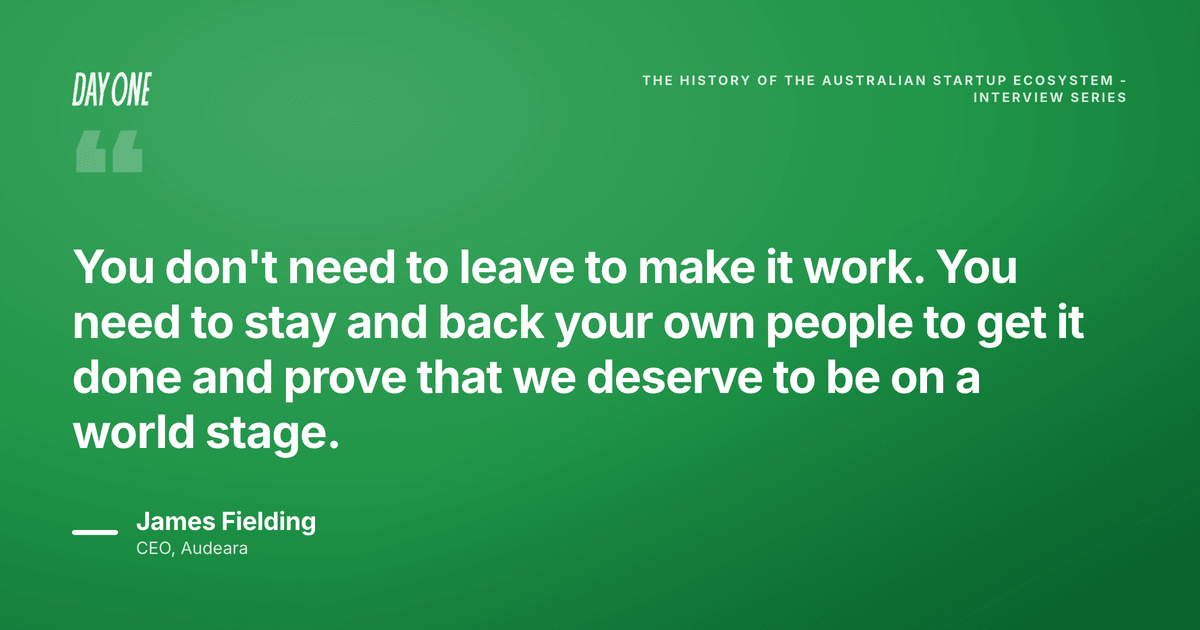
Transcript Synced · select any line to jump ▾ 0:00 Adam Spencer: Let me tell you about our partner, Teamified. If you need to build a top-notch team quickly, Teamified is your go-to solution. They not only provide fractional CTOs, they can also do contractors and even remote team members tailored exactly to your needs. And whether you're looking for expertise in the Philippines, India, or Sri Lanka, Teamified has you covered. What's amazing is that Teamified uses a blend of AI and human expertise to cut hiring times by 50%, cent. The platform handles everything from automated onboarding to day-to-day management and even performance tracking. You can also handle rewards and recognition, buy equipment, and order training all through their platform. Simplify your hiring process and get the best talent fast with Teamified. Check them out now and transform your team. Go to dayone.fm/teamified. That's dayone.fm/teamified. Thank you, T-E-A-M-I-F-I-E-D, and get started today. Hi, I'm Adam Spencer, founder of the Day One Network, which is bringing the history of the Australian startup ecosystem to you. I believe in founders. It's why I do everything I do at Day One and our media company, W2D1 Media. And that's why the Day One Network exists, to create helpful content for founders. We've got some great shows in development, but a large part of what we do couldn't be done without support from our partners and sponsors. And I couldn't be happier than to be working with NTP, who get community better than any other technology recruitment company out there. A Newcastle company like mine, NTP are invested in seeing the growth of the local tech community in Newcastle, Sydney, and more broadly Australia. So thank you, NTP, for helping us bring helpful content to founders and the startup community in Australia. Back to the interview. Hi, I'm Adam Spencer, founder of the Day One Network, which is bringing the history of the Australian startup ecosystem to you. I believe in founders. It's why I do everything I do at Day One and our media company, W2D1 Media. And that's why the Day One Network exists, to create helpful content for for founders. We've got some great shows in development, but a large part of what we do couldn't be done without support from our partners and sponsors. And I couldn't be happier than to be working with NTP, who get community better than any other technology recruitment company out there. A Newcastle company like mine, NTP are invested in seeing the growth of the local tech community in Newcastle, Sydney, and more broadly Australia. So thank you, NTP, for helping us bring helpful content to founders and the startup community in Australia. Back to the interview. Hi, I'm Adam Spencer and welcome to Day One, the podcast that spotlights Australian startups, founders, and the organizations that empower Australian entrepreneurship. We go back to the beginning to tell the story of Australia's most inspiring founders and how they built their companies. You're listening to a special interview series as part of a documentary W2D1 is producing about the history of the Australian startup ecosystem. On the episode today, we have— 3:18 James Fielding: Hi everyone, I'm Dr. James Fielding, founder and managing director of Audera. We make headphones that focus on what really matters, which is what you can hear, and we do that by offering personalized sound through a hearing check algorithm on our smartphone. So we tailor the sound to the individual needs and sell our product through predominantly audiology clinics in Australia and spreading around the world. 3:46 Speaker: I wanna just try to pick up where we were just then before I hit record. You were talking about the community in the pockets and it's not just the valley and the city now, I think you said. Can we just try to pick up there and what you were talking about? 4:00 James Fielding: Yeah, absolutely. I think what has changed over the last 5 or 6 years since we were entering the system, so we were starting to muck around during medical school, which was kind of in the early 2010s and graduated 2015 and started these 5 companies that we kicked off and back in the day, you were either in the city or you were in the valley, and, and that was that. And if you were anywhere else, then you weren't really on the map. And what's happened over the last 5 or 6 years is these little pockets have opened up, these technology parks. There's been local government ones, state government ones, lots of people trying to create an avenue for people to bring their ideas to life. 4:51 Speaker: Mm-hmm. 4:51 James Fielding: And that's been backed by a lot of really cool real estate changes and reclaiming of territory in these little pockets. You know, there's, there's Newstead, there's Bulimba, there's Stones Corner, there's technology parks out at Atmar Plains, there's manufacturing centers. There's all these places where it used to just be industrial kind of wasteland, to be a bit harsh about it. And now it's filled with startups and hubs and and people trying to get stuff done. And it's really exciting to be called out to see something cool, visit an office, and it's a place of Brisbane that you may never have been before, and you get there and there's 30, 40 companies out there. It's not just this idea that you're either in the city or you're at home, and it creates a lot of amazing opportunity for people. 5:39 Speaker: I'm sorry, did I hear that correctly when you said Finnish Union started 5 companies? 5:44 James Fielding: Yeah, I did. So finished a medical degree. During the medical degree, did most of an MBA. It was this combined medical school, business school MBA thing. And my buddy came to me with a clever idea about making hearing tests easier for people. And then we had another clever idea about a magnetic total wrist replacement. And then we had another clever idea about mental wellness chocolate to focus on resilience and fulfillment. And then we had another idea about a cool camera vision tech piece, which was nice. And then we made the most R&D-sounding company I could think of called Robotics Engineering Research Laboratories, where we just got a bunch of clever people and started working on really different problems for people because obviously we didn't have enough to do. And so while I was a junior doctor working in the hospital, I was doing the iLab startup accelerator piece on Audera, and we had field orthopedics. Mm-hmm. Aurea Medics, Yum, Aurea 360, and Aurea Labs all kind of cooking at once and just built a whole bunch of really clever people and asked them to work as hard as they could across a whole bunch of different projects that then became companies. And now, Audere is listed, Field's going gangbusters, Yum's kicking some really great goals with mental wellness in corporate and education, and Unfortunately, the other two are on ice because we just decided to prioritize the ones that had gained the most traction. So, it's been a pretty exciting few years. 7:15 Speaker: Can I ask how old you are now? 7:18 James Fielding: I am 33. I'm turning 34 in 6 days. 7:22 Speaker: Well, happy pre-birthday. 7:24 James Fielding: Thank you. 7:25 Speaker: It's become abundantly clear to me why UQ Ventures put your name forward as a guest for this series. Insane. 7:35 James Fielding: It feels a bit that way, but it also just kind of happened. 7:40 Adam Spencer: Yeah. 7:40 James Fielding: And if you keep saying yes, it doesn't feel as insane. Well, it does sometimes, but when you look at it on paper, and we had this award ceremony last night and, you know, my imposter syndrome was on high alert, and thank God my ego's there to keep me afloat. But it's You know, when you hear it all read out and I just think about, 'cause I get to wave the flag, right? I get to do the podcast, I get to go on the stage, I get to make the speeches, I get to do the public-facing piece 'cause that's part of my skillset, that's part of my offering to the group. But, you know, we had 30, 40 people making this reality and, you know, Chris Jeffrey who brought me into the piece originally and Alex Affleck who's my CTO at Audero. I mean, Ross Pryor who's left us and gone on to Greener Pastures and helping these other medical device companies. We got FDA and TGA certification on a medical device company while launching a headphone Kickstarter. Like, we just had a bunch of people doing really interesting things because they simply said, okay, let's do it, not let's wait for someone else, what if we can't do it. It was always a how will we make this work, not can we make this work. And we probably should have done a bit of should we make this work, but we also just Got on with it. You start at page 1 and by the time you're at page 200, you're done. You know, these things aren't as complicated as people make out if you're willing to find the right resource, put the right people together and get on with it. 9:15 Speaker: That's a promo spot right there, that sentence. What drives you? Why do you do this? 9:22 James Fielding: I like helping people and I know that sounds naff, but I like the sense of satisfaction I get from knowing that I've improved someone's life. So I, I get to do that every day, and now I get to do it at scale, which is really cool. Because I was going to be a surgeon, and I still do surgical assisting once a month. I've got surgery tomorrow morning, actually, which, which I love, you know, see a problem, fix a problem, go home. It's a truly gratifying experience, and it gets me out of bed every day. I I treat every single one of our customers like they are one of my family because most often, not in the first few years, they were and people would never know. And it created this really amazing culture because if there was a customer writing in or if there was someone engaging with our companies, people had to be damn sure it wasn't one of my uncles or aunties, you know, and it sets this really great foundation for that's how you treat people. Yeah. Because if they have a problem, you will solve it. And if you look at the, you know, tens of thousands of people whose quality of life we improve with the headphones now, which is really gratifying. And it's like government support in that space, you know, we're supporting veterans, we're supporting the hearing impaired, we're supporting kids with autism struggling to do homeschooling because it's all laptop-based and they have hearing impairment, signal-to-noise ratio issues. So we can fix those problems. Mm-hmm. And then we get these heartfelt emails from parents, and I don't believe in altruism. I think there's always a driver for this, and the driver for me is how good it feels, and I own that. I love that feeling of someone saying, wow, this has changed my life, thank you. That's why I get out of bed. 11:11 Speaker: We're gonna skirt around the outsides of the Aldera story, but the Welcome to Day One podcast, you know, we normally do founder stories where we kind of dive deep into the, the whole story of the startup. And I'd love to do that with you at some point. 11:26 Speaker: Sure. 11:26 Speaker: To soundtrack a little bit here with this documentary we're trying to create about the Australian startup ecosystem, when would you say you very first got exposed to this startup ecosystem? Was it through iLab? Was that the first touchpoint? 11:41 James Fielding: I think over university, you hear about it and you see it and you're aware of it. But I never really engaged with formally the ecosystem until probably medical school. So yeah, I did business and science first, the first 3 or 4 years of uni life, and then went and worked in New York for a bit. And in that stage I was in a hedge fund, so I was looking at distressed assets and, and different companies. And part of that was, oh, look at all these different companies and The first time I went across and went on some adventures when I was 18, there was this thing called Facebook and I was in Portland. People were talking about it and I was like, that's creepy as hell. Like, I've got no interest in that. I still don't, actually. But, you know, it's— that was his first like, ah, people are doing interesting stuff. That's cool. And I was very much on the I'm going to be a doctor path. And then my parents, who are amazing, were saying, ah, why don't you do something more interesting? Why don't you think about some stuff? And so I met some interesting people and I worked in a casino in Vegas for a while and I went around and, you know, there was this idea that streamlined pathways aren't the norm. And I think that's the first exposure to an ecosystem where you're in this world where going and working for someone else in a well-established business isn't necessarily your path forwards. That's the ecosystem that I think about in this terms of startup. We're going to have a crack, we're going to think about it differently, we're going to try and do it ourselves. That notion, I think, started probably when I was 18, 19, but in terms of the Brisbane piece and the formal exposure to what is a startup, how does it work, what am I going to do next, middle of med school when we're doing the MBA piece. And then, do we have any cool ideas? What are we going to do with them? Um, so that was probably, yeah, 2012, 2013. And then iLab was the official— well, we're in it now, we're signed up, we're in an accelerator. What is an accelerator? Okay, I get this now, kind of stuff. Because we were all far too clever for ourselves anyway. We were working hospitals and we were big boy doctors, and they were coming and asking us to do incorporate this and do a pitch deck and people much smarter than us were challenging our ideas and telling us they weren't right. How dare they? And then that's when we knew that there are all these really cool people that were gonna change how we were gonna live our lives and we just never looked back. 14:18 Speaker: You said one of your mates come to you with this idea to help people with hearing. Is that the business idea that turned into Audera? 14:25 James Fielding: That's right, yeah. So we were at the graduation ceremony of our MBA piece and Dr. Chris Jeffrey, who's now the MD of Fieldwork, orthopedics. We kind of divided the empire. He took orthopedics, I took headphones, because we just couldn't keep doing both, to the credit that they each deserved. And yeah, he said, hey, I've had this idea, could you help me with it? I said yep, and that was that. 14:47 Speaker: How far into that idea, ideation, figuring out the technology, did you go, we need help with this, we need like look around, what, what can we do to— where can we get help from? How far into that, and was it i-Lab straight away, or was there some other stuff that you went through first? 15:03 James Fielding: It was pretty much iLab straight away from my point of view, because the day after that I went on my honeymoon for 5 weeks before coming back and starting as a junior doctor. And Chris went off with 2 other junior doctors, another engineer mate. And it's important to understand that Chris is an R&D mechatronics engineer for the military who was on deployment bunking with the trauma surgeon, said what you do is more interesting than what I do, came back, got into medicine. And then I met Chris. So this is not a normal doctor mate going, "Hey, I've had an idea." This is one of the smartest people on the planet who was deploying engineering solutions live in combat, saying, "Hey, I've had this idea." Ah. "Cool. I reckon you could make a thing that goes beep. Let's play that game." And we had a signal engineer from Boeing who's gone on to become a cardiologist. And we had, you know, a junior business leading executive who was doing this MBA course with us who's now doing obstetrics in New York. We had this very interesting culmination of human beings. 16:05 Adam Spencer: Yeah. 16:05 James Fielding: And so I just had complete faith we were going to do it. So when I was off my honeymoon, we were over New York, I was talking to people about financing and funding and keeping up to date with all the stuff that they're doing here. And then when I got back, we just hit the ground running. It's the same notion, but it changes exponentially when you're in that ecosystem where all the ideas are challenged. And yeah, and we made our pivots and pivots and pivots. But yeah, we just kept saying let's go and haven't stopped. 16:34 Speaker: What year are we talking that you got back? 16:36 James Fielding: That was 2014. We had the chat in November 2015. On the 14th of January, I came back because the first day of being a junior doctor was the 15th January. So got back from the honeymoon, started as a junior doctor, and the next day was in i-Lab. 16:57 Speaker: So 2015, apart from i-Lab and UQ Ventures, looking around the Brisbane landscape, what else was visible to you in terms of community and support infrastructure to help startups and founders? 17:12 James Fielding: Well, the Innovation Nation piece had just kind of kicked off, so there was a lot of talk around startups and funding and these R&D grants and bits and pieces. So it was kind of a looming government piece, and the— I don't think the Office of the Chief Entrepreneur in Queensland had started just at that point, but it was kind of the next year that that kicked off. And there was River City Labs was there, and Steve Baxter was running around. 17:42 Speaker: Interviewing him next week. 17:44 James Fielding: Yeah, and he's an absolute legend. I've got a lot of time and respect and genuine appreciation for Steve. He's a really genuinely decent bloke with a very, very, very sharp mind. But yeah, so he was around and he was this Shark Tank guy who was in Brisbane telling companies to get on with it. So yep, you know the tagline, "Execution is everything," was the River City Labs tagline. And then that got incorporated into this central kind of precinct thing in 2016, I think. So for the 2015 years, i-Lab, we were kind of, we were kind of doing our thing, um, and there were a few other pieces that were, were coming along as well. There was Little Tokyo 2, there were these kind of workspaces that were kicking off, and it was a really interesting time to be in Brisbane with all these pockets that we're talking about at the beginning that was starting to take shape. So when we're out and about and doing funding pitches and, and doing all these things, it felt like it was a normal thing to be doing, which I think is very important when you're taking huge risks and, and changing your life entirely. There was this idea that it wasn't nuts, it was a cool, exciting thing to be doing. It wasn't a scary, what will we do next thing to be doing. 19:06 Speaker: Talking about present day now, what are some of the gaps that you observe either in the Brisbane, Queensland ecosystem or nationally? Like, where can we improve? 19:15 James Fielding: The one that everyone always talks about is this mid-range between couple hundred grand high net worth seed funding and the kind of 10, 20 big boy rounds This kind of $500 grand to $5 mil piece is a big area of enormous opportunity that I think is currently being underserviced, as well as the impact space. I think we've got huge capacity for impact investing, and that's come an awfully long way, but people— People still don't really know what it means. I think a lot of investors want to be part of it, And we're very lucky that our seed investor who backed all 5 of our ventures was an impact investor without really knowing it. And now we've got labels for it. This profit for purpose piece with a long-term view, I think, is, is interesting as well as supporting what Australia seems to be very good at, which is high-tech style platforms. Yeah. As well as obviously hardware. In our world where we make devices, hardware is hard, and a lot of investors really shy away from that. They want the next Canva, they want the next Atlassian, they want this big kind of SaaS, immediately globally scalable models, which make perfect sense. But there's more than enough opportunity for hardware solutions, agtech, in this space where Yeah, it's not a friends and family piece and you're not down with AirTree getting big bucks. You're kind of in no man's land and it's the no man's land that is strengthening, but is the area where I think we'll get the biggest bang for our buck. I mean, I've started playing in that space. I've, I've had a bit of extra cash, so I can, I can back some of these things with a bit of cash now, not just sweat equity kind of approach to things. And Yeah, it's interesting looking at companies that sort of need a million bucks. They don't need $100 million. We don't have that Silicon Valley mentality of raise $100 million, ah, didn't work. That's just not an Australian way of doing things, which I have a lot of respect for. I think the $100 mil, ah, we'll give it a crack next time approach, it just doesn't suit the way we like to get things done. And so it leaves people in limbo a bit. And there's some work to do there. 21:45 Speaker: If a brand new founder came to you tomorrow, what one piece of advice would you give him or her to help not fail? 21:51 James Fielding: Actually do it is the one thing I say. You have to actually do it. Planning it and thinking about it and doing all of the different elements and breakdowns and stuff, at some point you've gotta actually do it. And the cruder version is the suigawi method, of shut up and get on with it, which is the same kind of notion. But I, mate, I had a founder come to me yesterday and ask me for my one bit, you know, I said, well, you gotta actually do it. 'Cause if not you, then who, right? So get on with it. 22:25 Speaker: Yeah, I love that. 22:26 James Fielding: If you've got a problem worth solving, solve it. 22:28 Speaker: With these last few minutes that we have, I wanna just leave the floor open for you to talk about just whatever's on your mind, keeping in mind that What we're trying to do here is create a documentary that is going to accurately tell the story of the Australian startup ecosystem and how we got to where we are. We want founders, investors, academics, and policymakers, everybody really in the startup community to listen to this series. What do they need to hear? 22:53 Adam Spencer: What do we need to be talking about maybe that we're not? 22:55 James Fielding: I think we need a resounding confidence in the fact That Australians are as smart, as talented, as hardworking, and as capable as any people on the planet. And you don't need to leave to make it work. You need to stay and back your own people to get it done and prove that we deserve to be on a world stage. And that mindset I think will change the way we approach a startup ecosystem. This idea of backwards pro-occurrence I think is just complete rubbish. I think we're the smartest people on the planet. There are people just as smart, sure, but there aren't any smarter. And we have the capacity— and by we I mean Australian startup people, Australian engineers, Australian talent is just as talented as anywhere else on the planet, and the difference is resource and connectivity. And I think instead of saying, I'm going to go to London, New York, Singapore, Tel Aviv, Silicon Valley because that's where they have it, stay here and build it because then we'll have it. 24:15 Adam Spencer: Hmm. 24:16 James Fielding: And once we have it, we'll have more of it and more of it and more of it and keep proving it. And then the world will be better off because people will feel they can get it done in a way that's gonna be bigger, faster, and better. 24:39 Adam Spencer: I hope you enjoyed that interview. More interviews are on the way. Follow the podcast wherever you're listening right now. Stay tuned for more interviews with many, many more amazing people from the Australian startup ecosystem. Thanks for listening and see you next time. 24:57 James Fielding: Thank you.