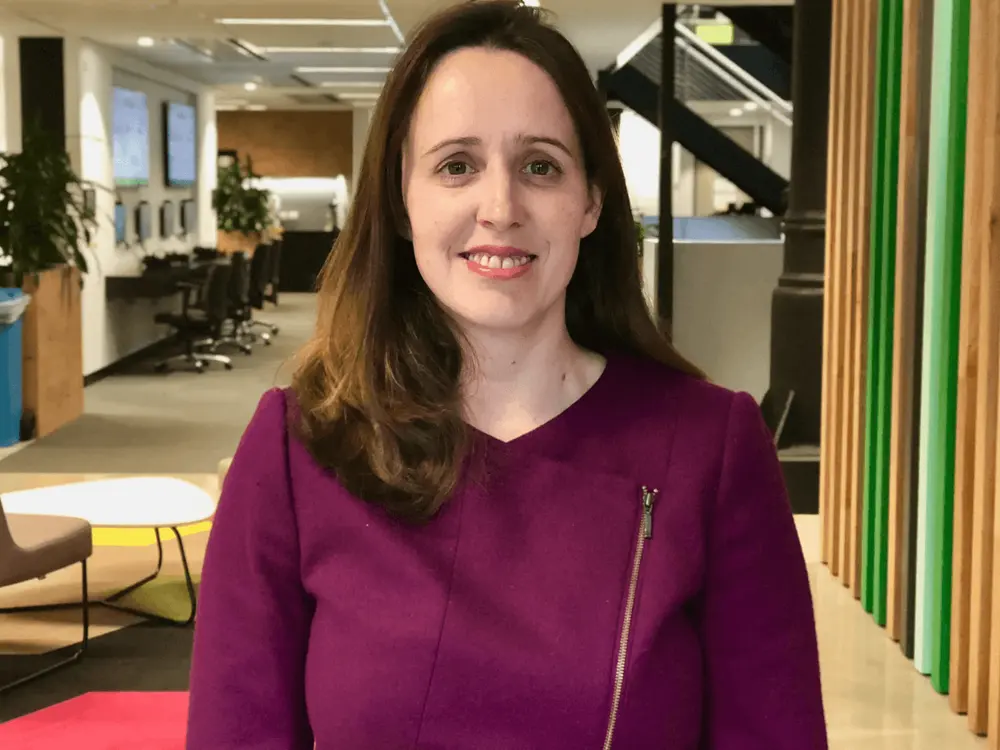
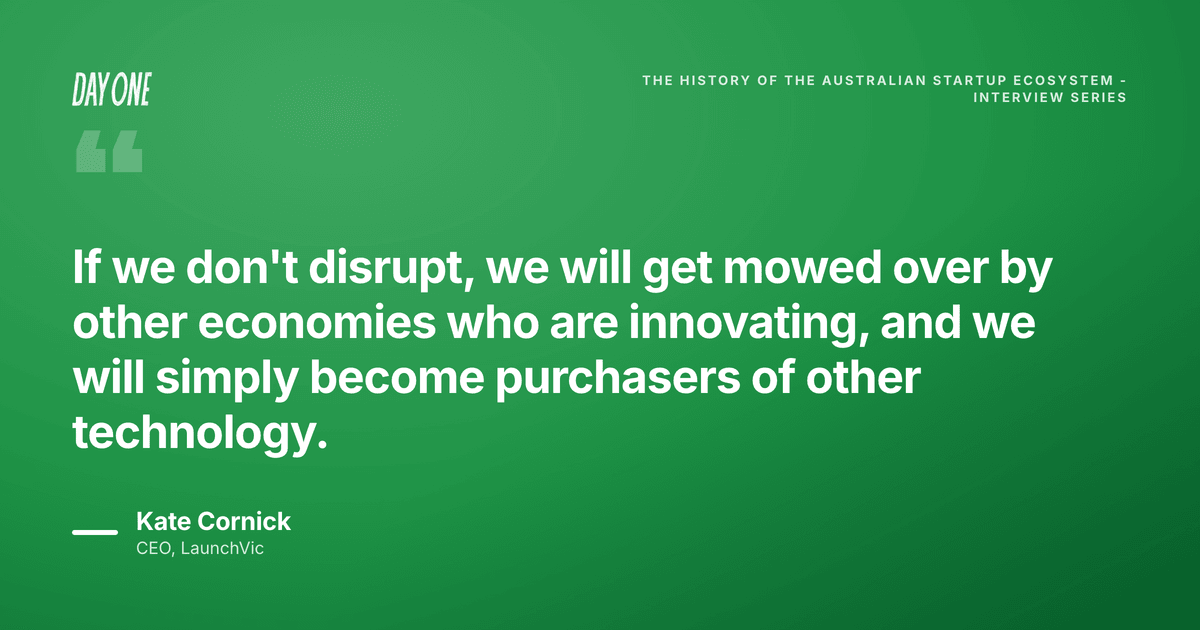
Transcript Synced · select any line to jump ▾ 0:00 Speaker: Let me tell you about our partner, Teamified. If you need to build a top-notch team quickly, Teamified is your go-to solution. They not only provide fractional CTOs, they can also do contractors and even remote team members tailored exactly to your needs. And whether you're looking for expertise in the Philippines, India, or Sri Lanka, Teamified has you covered. What's amazing is that Teamified uses a blend of AI and human expertise to cut hiring times by 50%, cent. Their platform handles everything from automated onboarding to day-to-day management and even performance tracking. You can also handle rewards and recognition, buy equipment, and order training all through their platform. Simplify your hiring process and get the best talent fast with Teamified. Check them out now and transform your team. Go to dayone.fm/teamified. That's dayone.fm/teamified. Thank you, T-E-A-M-I-F-I-E-D, and get started today. Hi, I'm Adam Spencer, founder of the Day One Network, which is bringing the history of the Australian startup ecosystem to you. I believe in founders. It's why I do everything I do at Day One and our media company, W2D1 Media. And that's why the Day One Network exists, to create helpful content for founders. We've got some great shows in development, but a large part of what we do couldn't be done without support from our partners and sponsors. And I couldn't be happier than to be working with NTP, who get community better than any other technology recruitment company out there. A Newcastle company like mine, NTP are invested in seeing the growth of the local tech community in Newcastle, Sydney, and more broadly Australia. So thank you, NTP, for helping us bring helpful content to founders and the startup community in Australia. Back to the interview. Hi, I'm Adam Spencer, founder of the Day One Network, which is bringing the history of the Australian startup ecosystem to you. I believe in founders. It's why I do everything I do at Day One and our media company, W2D1 Media. And that's why the Day One Network exists, to create helpful content for founders. We've got some great shows in development, but a large part of what we do couldn't be done without support from our partners and sponsors. And I couldn't be happier than to be working with NTP, who get community better than any other technology recruitment company out there. A Newcastle company like mine, NTP are invested in seeing the growth of the local tech community in Newcastle, Sydney, and more broadly Australia. So thank you, NTP, for helping us bring helpful content to founders and the startup community in Australia. Back to the interview. Hi, I'm Adam Spencer and welcome to Day One, the podcast that spotlights Australian startups, founders, and the organizations that empower Australian entrepreneurship. We go back to the beginning to tell a story of Australia's most inspiring founders and how they built their companies. You're listening to a special interview series as part of a documentary W2D1 is producing about the history of the Australian startup ecosystem. This episode was conducted by guest host Alex Carpenter. On the episode today, we have— 3:22 Kate Cornick: So my name's Kate Cornick, and I'm the CEO of Launch Vic, the Victorian government startup agency. 3:28 Speaker: So to start off with, when did you start getting involved in the startup scene? 3:33 Kate Cornick: So, I think I always had a real interest in the startup scene because I did my degree in electrical engineering at the University of Melbourne in the early 2000s, and it was around that time that the dot-com boom had happened, and there was also the bursting of the bubble. But it was an area that there was certainly a lot of chatter around it during my degree, and that led me to have a lot of friends that I studied with who ended up moving to Silicon Valley and had successful startup careers. I always had a dream of running my own startup, which I did finally finally get to do in 2014 onwards. And yeah, so I think it was something that was always in me, but running my own startup was when I really got involved in understanding the pain. I can't say I got that involved in the ecosystem, and I wish there was the support then that I had now. You know, I was involved in, as many people are, sort of thinking about how to run a startup for many years and getting ideas around, but it wasn't until 2013, 2014 that I really took the plunge and left my day job and ran this organization full-time, and that was very early days. There wasn't a huge amount of support, and I was so focused on growing the business, I didn't really engage in the ecosystem. So when I really started to understand the ecosystem was when I was approached about running Launch Vic after I had an exit from the startup. And that was when I really started to deep dive and understand what the ecosystem had to offer. 4:59 Speaker: Yeah, wow, okay, that, that's an interesting journey. I'm curious on like, how could we do better to articulate the supports that are available in the ecosystem? Because I'm sure you're not the only person that's built startups without even realizing there is support out there. 5:14 Kate Cornick: Well, it was a very big part of what Launch Vic was set up to achieve, is to really promote the ecosystem, put in place programs, and we've proudly supported over 125 programs to come into being. So there is, I think now, a lot more support out there, and you can Google what support is there and come up and find things, which back in 2013, 2014, you couldn't do so easily, and you really had to know the ecosystem to engage with it. But I do think it's still a problem, we need to really shout from the rooftops that there is a huge amount of support out there. And if you have a great idea and you're toying with the idea of setting up a startup, um, that there are places to go to really help you. And there's investment capital out there and there are opportunities to grow and mentors who will support you and talent to help your company scale and all those things that in the early days were, were points of stress. So I think there's a lot more support out there, but there's still a lot more work to do to tell people that there's that support out there. 6:11 Speaker: Yeah, fantastic. And I'm a huge supporter of your work. So going back a smidge, I suppose you weren't too engaged with the ecosystem when you were a startup founder yourself, but I'm curious on like, when did you have any interactions with like how many other people around you were doing a startup and how big that like sub-community might be? 6:33 Kate Cornick: I think it was rather difficult to find that out. And I think that there was definitely a sub-community, and when I started Launch Vic and, and really got engaged, I got to know that community. They're a fabulous group of people. But I think when you are growing a company, and we had reached a size where we were scaling quite rapidly, we had international offices, we had quite a sizable amount of seed capital under our wings, you tend as a founder not to engage in the community, and you tend to really put your heads down and bums up and get on with scaling and just doing the work you have to do to grow your business. And I think there are now more scaling support programs out there, which is a great thing. But it can be a very lonely job being a founder because when it's the very early days and you're sort of fluffing around trying to find an idea and you're trying to find co-founders and you might be trying to find your product market fit, that's a time that is really great to engage in the community and grow your network. 7:33 Speaker: Mm-hmm. 7:34 Kate Cornick: The challenge is when you actually do start growing your company, you get into the pressures of having investors that want to see results, and you become so focused on the business, you forget that it is actually still really important to take time out for yourself, meet with peers. There's a huge amount of learning that you can get from peers, and I didn't take advantage of that, and that was a mistake. And I should have done more of that engagement. But to me, the community was much more early stage than where my company was at the time in Victoria. I don't think that's true, but that was my perception at at that time, and that made it very hard to find my peers. I didn't know who they were. I knew who my competitors were, but you don't necessarily want to talk to them. But who are the people at similar stage of business to me and trying to grow? I just didn't have the networks, and I should have made more of an effort back at that time to reach out and find those people. Hopefully, with the advent of Launch Vic and the growth of the sector, that is now much, much easier to do, and you don't have to look too hard to find your peers and to get involved and get that support. 8:37 Speaker: Mm, that's fantastic. And so, like, building on that, as that was a gap back then of being able to identify who your peers were, what do you think are the biggest gaps at the moment? 8:49 Kate Cornick: I think there are two gaps that we see at Launch Vic. The first is the number of entrepreneurs per capita, so the number of people that are actually trying to start their own startup, and it's much lower in Australia than it is in the rest of the world. And we really need to change that because I don't think Australians are any less entrepreneurial. I think they've probably had a few less levers to force an entrepreneurial outcome. So by that, if I look to the UK where I'm from, I, uh, you've got friends over there. I followed the UK tech scene very closely. The GFC in 2007 to 2009 had a really big impetus on driving the tech sector because so many people who were university qualified, had got good corporate careers, lost their jobs, and had to find their own employment. It was entrepreneurship by necessity. And that spurred a huge growth in the ecosystem over there. And London's now gone on to be one of the greatest ecosystems in the world. I don't think we've had that impetus until very recently with COVID We've had a very safe environment for employment. We've, you know, got good corporates. The corporate life is much safer than the startup life, and therefore people haven't had to necessarily take the plunge into entrepreneurship. So it's really been very much a choice of a very small subset of people. And I think we need to encourage more risk-taking because through that risk-taking, we will see more companies like the Atlassians, the Canvas, the Airwallexes, the Afterpays, the Akinexes, et cetera, that go on to become the next generation of corporate enterprise that create jobs for our economy, future-proof Australia, and that's really important. So I think that, Startup creation and encouraging more people to actually take the plunge is really important. And we are starting to see drivers. We've seen that through COVID. It's been an incredibly tough time for a lot of people, but we also recognize that more people are stepping up and saying, "I, I don't want this job that I've had," or, "I don't have that job anymore, and therefore I'm going to be an entrepreneur." And also we've seen a number of startups do exceptionally well. And in Victoria, we've got a 10.75% growth rate in jobs. Wow. From the startup community, which is way higher than the broader economy. So, you know, this sector is doing well. 10:59 Speaker: Mm. 11:00 Kate Cornick: So increasing startups is one. The second one is increasing access to particularly that first money in the seed Series A capital, early-stage funding is a real problem. And it's again, across Australia, we see venture capital grow year on year, but what we're seeing is that it's actually growing late-stage capital, not early-stage capital. And certainly in Victoria, which we follow very closely, but I suspect More broadly in Australia, we've actually seen a stagnation of early-stage capital for many years. Certainly since we've been tracking it at Launch Vic, it's never peaked above $100 million early-stage capital in Victoria, despite the fact that late-stage capital's on an exponential growth. And so if we've not got enough early-stage capital in market, it means we can do everything we can to encourage startups to create, but if there's no capital to pick them up and help them grow, we're actually doing a disservice to the community. So we've got to increase start-up capital commensurate with increasing start-up creation, and they're two things that Launchspace is very focused on. 11:59 Speaker: That is fantastic to hear you say that. I could not agree with those, both of those points more. I'm curious on like, what are we doing well though? 12:05 Kate Cornick: Well, I think Australia is doing well at producing great companies, and I listed a few before. We are a tiny nation, a long way from the rest of the world, and yet we are producing some really great companies. Would we like to see them be produced at greater scale and faster? Absolutely. But the reality The reality is we are being noticed and we have got great founders, the Atlassians, the Canvas, the Akinexes, the Airwallexes, the Afterpays, et cetera, that are proving that you don't have to jump ship, move to Silicon Valley, and go and grow your business overseas. Absolutely, we're talking startups, we're talking businesses with global potential. They have to necessarily have global offices. At Launchvic, we're not particularly interested in startups that don't have that that international trajectory. We recognize that there will be strong presence internationally for these companies, but the fact that headquarters aren't jumping ship and moving to the US or the UK is really fantastic. It's fantastic for the startup sector, it's fantastic for the founders, it's fantastic for the people that do well, whether it's a founder exiting or an employee with a piece of equity who then exit, who then come back as often very experienced staff into new startups or invest into the ecosystem. So I think we're starting to see that flywheel kick off, and that's really a great thing for the community. 13:26 Speaker: I 100% agree. And I think as those exits happen, that's potentially going to be a great impact on the early stage angel investor stage. Do you have an unpopular opinion about the Australian startup ecosystem? 13:41 Kate Cornick: It's changed over time. I think when I first started at Launchvic, you know, I went to a lot of the community events they were very beer and pizza, they were very predominantly white men, and we've worked really hard to build diversity and inclusion into our journey. So, I think very early on, there was this propensity to be a bit of the bro culture that you've seen in Silicon Valley and other places, sort of, it was almost like we were replicating that. I think that's changed over time, and I think, on the contrary, now you go to events and they're certainly, everyone we work with in Victoria is so mindful of multiculturalism. When we could go to events before COVID rarely would it be beer and pizza. Yeah. It was often cheese and wine and beautiful nibbles from all over the world. And people really thought hard around all aspects of their program in the context of diversity and inclusion and making sure that the doors swung wide open and no one felt uncomfortable, whether it was attending event or program or whatever it might be. So I think that unpopular opinion that we were moving down a bit of a bro culture has definitely changed, which is a really good thing. A really good thing. I think now, I think there's things that I wouldn't necessarily say are unpopular. I think there are definitely things that I think the community could improve on. I think we're actually quite a conservative nation and particularly in corporate. And as a result, I think a lot of our founders are very humble people that don't speak up. And as a result, you can't be who you can't see. So it's that classic analogy with sports people where we put them on pedestals, we really— Yeah. Know who our sporting heroes are. As a community, I don't think we do that enough with our startup heroes. And these are people who have done exceptionally well from a business perspective, but we forget that they're also the people that are building the economy of the future. They're the people that are supporting disruption, but it's disruption so that Australia's economy remains advanced. If we don't disrupt, we will get mowed over by other economies who are innovating, and we will simply become purchasers of other technology. 15:46 Speaker: Mm-hmm. 15:46 Kate Cornick: So I do think there's a real thing about the tall poppy syndrome, and we don't profile people strongly enough in the ecosystem, and I think that is a sad thing. I think there's also a view that the ecosystem is quite male-orientated, and the reality is it is. In Victoria, only 1 in 5 founders are female, but we also have to accept that it's gonna take time for that to change. Many of the successful founders that are having exits today are people that started their companies 10, 20 years ago. And back then there was even fewer representation of women. So I think the idea that the sector is very male orientated is a challenge for the sector. And there's certainly, you know, we know unconscious bias exists in many forms, not just about women, but people from backgrounds, etc. And that is a real challenge for the sector to overcome. But I'm also— Certainly don't want to I don't see any sexism or racism in the sector, but I also think the sector has stepped up to that challenge and is really trying to grapple with it. And we've seen VCs really pay a huge amount of attention, for example, on their application processes and making sure that they are conscious of unconscious bias. And in fact, even in some instances, let's call it out, there's conscious bias. But we are seeing people move. So I think that's something that can be seen as being negative, but it's also going to take a long time to fix. You know, startups don't grow overnight, and I think that's a challenge. The final thing I'll touch on is, I think the way the startup community is viewed by the broader community is really interesting. And 5 years ago, when I started this role, 8 years ago, when I founded my startup, startups were really niche, kind of nice-to-have, bit of innovation theater, "Yep, we've got one of them. Yep, I know a startup," kind of attitude. And it was a very nice-to-have, but it wasn't taken seriously as a sector. Mm-hmm. And I think we're seeing that change now and government, not just the Victorian government, but other governments are really recognizing that the startup sector is a really important part of the economy, but there's still more work to do there. And I think that across the entire community in terms of encouraging startup creation, as I spoke to before, but also making sure that corporates are prepared to buy from startups. If, if you're beginning a startup here, you want to have your first customers here. And if our large corporates aren't prepared to buy from startups, It makes it very hard for people to grow those businesses. And it's all well and good to say, I know a startup and I'm working with a startup, but the rubber hits the road when people are talking about startups and procuring from startups and actually recognizing that the startup sector, which is underpinned by technology and these young technology companies, are incredibly important to our future. And we've seen that dialogue change, but I think it's still got a way to go in some parts of the broader dialogue around the startup sector, how much support it gets, how much support it gets at a federal level. Having said that, I have to give a big shout out to the Victorian government. Yes, they fund Launch Vic, but you know, we got $110 million in the state budget last year, a phenomenal outcome. We also in Victoria have announced a $2 billion innovation fund. So, you know, the Victorian government do recognize this and are placing importance on this sector, but there's still a way to go before it gets up there with other parts of the economy that do get viewed and, and talked about very favorably as key economic contributors. Yeah. 19:00 Speaker: Mm, 100%. I mean, I was thrilled when I heard that announcement because especially during a time of economic uncertainty, to fund it by that amount was a huge win for the whole ecosystem. I am curious though, how you've been competing with the travel lobbies and the mining lobbies and the retail lobbies and all of these players who are much larger proportions of our economy and seem to have so much more government support and government ear time How have you been trying to get your toe in the door and pull that door open a little bit more? 19:34 Kate Cornick: Well, to be honest with you, I mean, for us it's the great relationship we have with the Victorian government, both at a departmental level and at ministerial level. And at Launch Vic, we've had multiple different ministers, all of whom have been very supportive of the work that we do. It's very much about that sort of closed-door daily grind of doing the right thing by the people that feed you. And, you know, the government funds Launch Vic. Hopefully a pretty good job of keeping government informed of what they should be doing in Victoria Victoria and continually working with the government to make sure we're putting in place really good responses to challenges the sector faces. But I think it touches on a point at a federal level, and we've seen Startup Aus morph into the Tech Council, which is very exciting and fantastic news for Startup Aus, but I do think that leaves a gap in the sector and an area that Launch Vic can play more of a role in terms of the federal government. And there are some key challenges. Mm-hmm. That the federal government, you know, as with every government, need to address in the context of startups. And without a doubt, the retail lobby, the mining lobby, etc., are getting far more airtime than the startup lobby is. And I think that's something that we at Launchvic started to turn our attention to. We haven't done a particularly good job of that, if any job of that, in a sizable way. But I think that is changing. And I think it's now the right time for us. A few years ago, we were just too small. We needed to just buckle down, grow the ecosystem, prove Launch Vic is doing a good job to our stakeholders, which I think on the whole stakeholders in Victoria do see Launch Vic as being a key part of the sector, and that's great. I think as we move forward, we need to think a little bit more strongly about how we're promoting our ecosystem, how we're advocating for our ecosystem, and how we're connecting our ecosystem. You certainly see that come through in our new strategy, which we announced a month ago. It's one of our key pillars and an area that we're definitely going to be putting more attention in the coming months and years to come. 21:24 Speaker: And that's fantastic to hear. I'm curious, going back a smidge, the importance of profiling these diverse and positive role models is so important. I'm curious on if you could put a couple of organizations or groups that you think do a really good job of that, who are doing their best in profiling entrepreneurs to the wider community of Australia. Who's doing that well? 21:50 Kate Cornick: I actually think it's our media friends. I think it's Yolanda at the AFR, it's David Swan at The Australian, Kara Waters at The Age, Page in Victoria and Sydney Morning Herald, and, and of course the team at Startup Daily. They're the people that are actually putting these people up in lights and advocating for them. And so I think they're the people that have done the best job of profiling our top founders. I think the community is quite good at talking amongst itself, and we all know who our wonderful founders are, we all know who our wonderful community builders are, but we're not necessarily getting that into the mainstream. But I— Yeah. I do think our journalists are doing a great job and have a real interest in understanding the stories and the people behind the stories, which is great. But there's definitely more to do there. 22:36 Speaker: So turning to that really early stage, possibly uni student or possibly high school student, you know, they bump into you in an elevator and they've got you for 30 seconds. What piece of advice would you give them? 22:49 Kate Cornick: So I would say to them, do it. It's a great journey and you will get so much experience out of all the jobs I've had, and I've had a few in my life. The job I learned the most from was running my own business and running my startup. It set me up in a career that— thought I would be running a government agency, but here I am and loving it. But a lot of what I do was learned at the wheels of leading a startup. So I think it's a great experience. I'd also say make sure you get as much help as you can early on to set your business up as well as you can. And that means having the right team around you. It means having the right investors around you, having the right mentors around you and making sure that you really are getting top-quality advice. I certainly wish I had better advice in the very early days, because in my startup, I made decisions that, in hindsight, put some writing on the wall that would have meant we could have had a very different future had we played our cards differently. And they were simple mistakes, getting the wrong investors very early in the business and, and structuring the business from an investment perspective. Mm-hmm. In not the soundest way was a key mistake I made. I've certainly seen founders have challenges with co-founders and not having agreements in place on how they manage those challenges. Making sure that you are getting great advice from people that really understand how to grow a business, not great advice from business leaders who often don't have an experience at working at a tiny company. They've got fantastic business experience with huge amounts of HR support and finance support and team and all the rest of it behind very large corporate structures. So, you know, get the right advice. Advice at the right time from the right people is really critical. 24:28 Speaker: What do you think defines a startup? I know Launchvic has thought a lot about this, and it comes through in how you're conceptualizing your support structures, and I, I think that deserves a bit of acknowledgement that it's a really difficult subject. People gloss over, like, the definition of a startup, and they just think that there is a definition, and there really isn't, and every organization needs to think about this a bit more, and it'd be good to get some clarity and uniformity on this. And I would like to hear what— how LaunchVic's come to that conclusion and what benefits do they see coming after now you've defined it? 25:02 Kate Cornick: Yeah, it's a really big problem, and it's a problem for Australia. We don't have a consistent definition between the states. Our definition at LaunchVic is we ultimately will use a qualitative definition, which is that startups are technology-based companies that are using innovation typically to disrupt markets. To grow globally. And so, when you break that down, we say technology-driven, and we mean technology in the broadest sense, agtech, fintech, medtech, biotech, SaaS, etc. But this is not about muesli bar companies, because, you know, and I always pick on the poor muesli bar companies, great businesses, love them, eat a lot of muesli bars. Your average muesli bar is not a global brand, the average muesli bar is going to be something that's domestic market, and often much smaller markets than that. And so that's a great small and medium enterprise, but it will have a different growth trajectory from a business that is innovating through a Deliveroo or a MenuLog that has got a global opportunity and has got global markets to chase after. We say that they're innovative because they are disrupting, typically, and so they're the next generation of company. They're not your high street accountant, They're a firm that's trying to make accountancy available at a cheaper cost to a global audience. And so that disruption is a key part of it. And global is really important for us. We don't believe there are very many startups at all that can function purely on a domestic basis. That doesn't mean to say that they don't have a solely domestic focus for a period of time, but we are such a small market in Australia, they necessarily have to be thinking global. 26:40 Speaker: Mm-hmm. 26:41 Kate Cornick: And so, when you add all of that up together, what are we trying to say? We're really trying to get behind companies that have a very rapid growth trajectory, can reach a billion-dollar valuation, and can hire many hundreds of staff. And that is very different from a small and medium business trajectory. For us at Launchvic, it's really important that we do differentiate from small businesses. If we blur the boundary between small and medium enterprises that have very different funding needs, very different growth needs, very different talent needs, you end up blurring the boundary about what a startup is, and you don't get to the Puritan part of it. And, you know, focusing on the Puritan part of it for us is really important, because we don't want to be helping a company that's got an ambition to grow from 1 to 20 people, to target an Australian domestic market. We want to target entrepreneurs who are visionary, who have a dream of reaching a billion-dollar company, have a dream of hiring 500 people. Mm-hmm. Have a vision about changing the world and having real impact. And that means their products and services reach many millions of people. And that is a very different trajectory, and you have different supports. So, our concern is when you muddy the water between the two, you don't get the right supports in place. And if you don't have the right supports in place, the people who do have those really big visions are the people who miss out as a result of that. So, for us, a startup, as I say, is a technology-based, innovation-led company that is disrupting markets and growing globally. Mm-hmm. And we want many more of them. We want more Atlassians, more Canvas, more Aconyxes, more Afterpays, more Airwallexes, more Culture Amps, etc. These are the companies that are going to recreate Australia's future. They're creating industries of the future. They're going to secure employment for our children and our grandchildren for years to come. And what's more, they're making a massive difference. They're creating products and services that make people's lives better in many different ways. Yeah. 28:34 Speaker: Love that. And I can tell you've spent so much time thinking about this and working through it over the 5 years because it is very difficult. Because I talk to many SME entrepreneurs and they get frustrated. I want the support that they get. And it's very difficult to, especially when the likelihood of success is so low. It's they're trying to build something enormous and they're unlikely to succeed. So, we need to support them in order to increase those chances, whereas your following a well-trodden path and your chances of success launching another accounting firm is pretty good because we know how to do that and you need different supports and those supports are sometimes there, but it is difficult to differentiate and it's often a very difficult political conversation. 29:22 Kate Cornick: Yeah, it is difficult and there's always cases on the fringe and also I should say we love our SME entrepreneurs. They're, you know, a very important part of the Australian economy. Small business is a huge driver of our economy and we do need to make sure that other supports are available for those entrepreneurs too. In, in Victoria, we have Small Business Victoria to help those entrepreneurs, and we have Launch Vic to help our startup entrepreneurs. So, it is really important to have pathways, and it's not one at the expense of the other. It's just at Launch Vic, our focus is our rather puritan definition of startups. 29:55 Speaker: Mm, I love that. So, what about the uniqueness of the ecosystem, and how does the Australian culture play into that to give us our, you know, unique benefits or unique difficulties? 30:09 Kate Cornick: I think uniqueness is around Australia as a place, and that's both a positive and a negative. The negative is that we're a long way from anywhere, and that's a challenge, and we're a tiny population. The positive is, you know, we've now changed the way we work, and, you know, we're much more online, the world is much more accessible, you know, you don't have to you don't have to fly to the US to have a meeting, you can just set up a Zoom call and that will change the way we work forever. I think place is also a real positive for Australia and we've seen a lot of ecosystems like Silicon Valley that have been very ruthless in terms of driving entrepreneurs and you've seen entrepreneur burnout and, you know, some real challenges around how you get that work-life balance. I think in Australia, we do operate at a different pace. It's not a slower pace, but it's a different pace. And I think a lot of people that I speak to returned from Silicon Valley or moved here from the US or the UK or Israel or other great ecosystems often comment to me about how lovely the ecosystem is, the fact that it's not a 24/7 always-on mentality. There's a work bloody hard mentality, but there's also you've gotta take your time and relax and recuperate, and you've got in Melbourne beautiful vineyards and beaches and mountains. Yeah. All within an easy drive from the city if you want to escape when we can, not in lockdown. But you know, the reality is that place does make a really big difference, and I think that's both our positive and negative. 31:40 Speaker: And that's all the scheduled questions, but I'm curious if there's anything else that you wanted to put on the record that helps fill out this picture of the history of the ecosystem as well as, you know, where you see where do you see it heading? And is there anything else that you'd like to put into that dialogue? 31:56 Kate Cornick: Only that I think this is an incredibly important sector for Australia. It is changing our economy fundamentally. And the reality is our economy is changing fundamentally and it is partly driven by startups, but it's majority driven by what's happening in the innovation that's happening overseas. And we've seen that with the automotive sector and the rise and then subsequent decline of that. We need to protect our economy against that, and it's the entrepreneurs that are disrupting traditional ways of doing things that are doing that. So we don't need to think about disruption and innovation as dirty words. These are actually words that are going to create a better future for Australia in the very long term. And yes, we recognize that industries will be disrupted along the way, but it's far better that we're disrupting them internally than that we're just waiting for for the international decisions to be made to come and disrupt them. And that's exactly what happened with the automotive industry. And there's been decisions made overseas by large corporates that have affected many thousands of Australians. How about we generate the industries here? We create the industries here, we back our entrepreneurs and create a brighter future for ourselves. So I think that's really important. 33:06 Speaker: I hope you enjoyed that interview. More interviews are on the way. Follow the podcast wherever you're listening right now. Stay tuned for more interviews with many, many more amazing people from the Australian startup ecosystem. Thanks for listening and see you next time. 33:22 Kate Cornick: Bye.