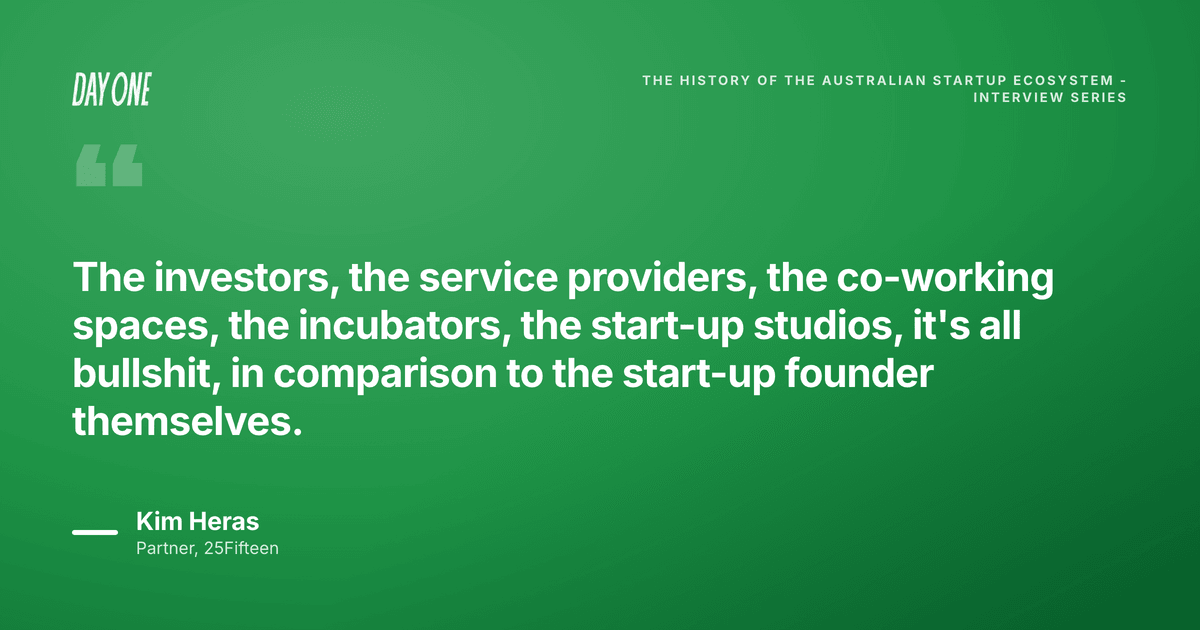
Transcript Synced · select any line to jump ▾ 0:00 Adam Spencer: Let me tell you about our partner, Teamified. If you need to build a top-notch team quickly, Teamified is your go-to solution. They not only provide fractional CTOs, they can also do contractors and even remote team members tailored exactly to your needs. And whether you're looking for expertise in the Philippines, India, or Sri Lanka, Teamified has you covered. What's amazing is that Teamified uses a blend of AI and human expertise to cut hiring times by 50%, cent. The platform handles everything from automated onboarding to day-to-day management and even performance tracking. You can also handle rewards and recognition, buy equipment, and order training all through their platform. Simplify your hiring process and get the best talent fast with Teamified. Check them out now and transform your team. Go to dayone.fm/teamified. That's dayone.fm/teamified. Thank you, T-E-A-M-I-F-I-E-D, and get started today. Hi, I'm Adam Spencer, founder of the Day One Network, which is bringing the history of the Australian startup ecosystem to you. I believe in founders. It's why I do everything I do at Day One and our media company, W2D1 Media. And that's why the Day One Network exists, to create helpful content for founders. We've got some great shows in development, but a large part of what we do couldn't be done without support from our partners and sponsors. And I couldn't be happier than to be working with NTP, who get community better than any other technology recruitment company out there. A Newcastle company like mine, NTP are invested in seeing the growth of the local tech community in Newcastle, Sydney, and more broadly Australia. So thank you, NTP, for helping us bring helpful content to founders and the startup community in Australia. 1:52 Speaker: Back to the interview. 1:54 Adam Spencer: Hi, I'm Adam Spencer, founder of the Day One Network, which is bringing the history of the Australian startup ecosystem to you. I believe in founders. It's why I do everything I do at Day One and our media company, W2D1 Media. And that's why the Day One Network exists, to create helpful content for founders. We've got some great shows in development, but a large part of what we do couldn't be done without support from our partners and sponsors. And I couldn't be happier than to be working with NTP, who get community better than any other technology recruitment company out there. A Newcastle company like mine, NTP are invested in seeing the growth of the local tech community in Newcastle, Sydney, and more broadly Australia. So thank you, NTP, for helping us bring helpful content to founders and the startup community in Australia. Back to the interview. Hi, I'm Adam Spencer and welcome to Day One, the podcast that spotlights Australian startups, founders, and the organizations that empower Australian entrepreneurship. We go back to the beginning to tell the story of Australia's most inspiring founders and how they built their companies. You're listening to a special interview series as part of a documentary W2D1 is producing about the history of the Australian startup ecosystem. On the episode today, we have— 3:18 Kim Heras: Kim Harris, currently a partner at a startup studio in Sydney called 2515, and right now super focused on a startup in the credit risk space, B2B credit risk space called Evenly. 3:35 Speaker: Follow-up question, when you say startup studio, how does that differ from, you know, an incubator or a traditional venture firm? 3:44 Kim Heras: It's kind of semantics when it comes to an incubator. Like, it's still, you have a space or one umbrella that multiple startups are working under. The difference with startup studios is they've kind of changed over time. They're a relatively new idea. Typically inside a startup studio, you're generating ideas, you're ideating internally or involved from the very beginning of a project. There are shared resources, but a key component of it as well is recycled learnings and recycled people so that as you're working across different projects, it's not— Yeah. Everything goes into a startup and then if it's successful or if it fails, all the learnings along that way disappear. It's, they then go into the next project and the next project and then when a project has enough traction for it to move on, then it moves outside of the studio physically, but it's still part of the studio portfolio. 4:47 Speaker: Right. 4:48 Kim Heras: So I think if I was to say that the main difference, the main difference is, how closely connected we are to each business that goes through a studio and the fact that there is a process of growing those startups that is key to what a studio does. 5:05 Speaker: Why did you wanna do it that way? 5:07 Kim Heras: That's an interesting question. Really early on, I was working on my own startups as a founder. I was somebody who was interested in building companies. Around 2010, started a, what became one of Australia's first accelerator programs called Push Start. And alongside Roger Kermode and John Hanning, and we were helping a lot of these startups grow, going through a typical acceleration kind of program. And then it came time to do it again. And I realized that I had this problem, which was as an operator at heart, I felt that I could do better in many of those startups myself. If I was operating, they'd do better. And it doesn't mean it's true, you know what I mean? It's just when you're an operator at heart, you're like, listen, I wish I was in charge of this because I could do it, I would do it differently. 6:04 Speaker: Yeah. 6:05 Kim Heras: And then, so what I did, some more angel investing and then I was just talking to people saying I've got this problem where I don't want to get deep into one startup again. At that time. But at the same time, I can't just do angel investing and have this large portfolio because angel investing requires a large portfolio to get those returns. Um, I want to be deeply involved in the businesses. And so just speaking to Luke Carruthers, who's my co-founder here, and a bunch of others, we're just trying to find a model where we could be founders but on more than one project. Mm-hmm. When we kicked off 2515, which was in 2013, startup studio wasn't really a thing. We just said, "Hey, we're just going to build companies from scratch and try to get good people involved." And then, yeah, kind of went from there. So operator at heart, didn't want to keep doing investing and be a passive investor in a lot of different businesses. So the studio was the best approach to get exposure to a few different businesses. 7:08 Speaker: Before I ask the question around when did you first get involved in the Australian startup ecosystem, just the 2515 name, where'd that come from? 7:17 Kim Heras: Well, we've told lots of different stories about it. Should this be the actual place where I tell the truth? That'd be great. Alright, here's the scoop. So we didn't come up with the idea in Tharawal, which has postcode 2515. We didn't come up with it in lots of different ways. What happened was originally, There are a bunch of incubators in Australia and overseas, and there wasn't a lot of success coming out of those incubators. And in the starting group, or the group of founders that were there at the beginning of 2515, there were 6 people. We said, listen, this thing only works if we're capable of building, successfully building companies and exiting them because that's the economics of a startup studio. And between the 6 founders, we'd started 25 businesses and exited 15. We were like, "Listen, that's an awesome track record as individuals. If we can replicate that at an organizational level, then we'll be doing really well." So we used it as a working title and— 8:21 Speaker: It just stuck. 8:24 Kim Heras: Let me tell you, we got people calling it 2512, 247, all these. The reality is it was never— 2515 was never customer-facing. It was always this umbrella organization and the focus was always going to be on the projects that came out of the studio. So, the thinking was it didn't matter that it was hard to remember sometimes, it was what we were calling it and so it was stuck. So, it was the success rate before we started. 8:53 Speaker: Yeah, cool. So, when did you first get involved in this thing we call the Australian startup ecosystem? 8:59 Kim Heras: Yeah. It's interesting because I first got involved in working on my first startup in around 2002. So that's about 20 years ago. But there wasn't really an Australian startup community or ecosystem then. 9:14 Adam Spencer: Yeah. 9:14 Kim Heras: Right, there were people doing things, but we were just in this really weird place after the dot-com crash and kind of in this valley before we'd moved into Web 2.0. And so I think that things had already started to pick up in the US. And there were interesting things happening. And what you had in Australia were a bunch of people who were working on new companies like I was, but most of our connections and most of our understanding of how those new types of businesses would be created was based on what was happening in the US. 9:45 Speaker: What did the community look like from your point of view in terms of size? 9:50 Kim Heras: When I first started trying to engage with the community, which was a couple of years after my first startup, where I was like, listen, I wanna connect more with people who are local rather than just people who are overseas. There was, and this is just for context, this is mostly Sydney, right? 'Cause this is where I've spent most of my time and there may be people in Melbourne or Brisbane or Adelaide saying, no, it was different for us. But in Sydney at least, the only community or group of people I could find was a group called Dinner 2.0. Mm-hmm. And, Like I always used to joke, it was called Dinner 2.0 because they used to meet around a dinner table and that was the size of the startup community. You'd fit around a dinner table. But interestingly, that group had some of the people that would go on to be super important to the Sydney and the Australian startup community later on. So there were people like Mick and Phil from Pollinizer. Mike was there, Mike Cannon-Brookes from Atlassian. I'm not sure if Scott was there. Marty Wells. Who early on had a company called Tangla that was doing really good things. Pratibha Rai, who was one of the first real, really well-known product people. There were just a bunch of them, maybe Nick Krubrilovic, but that's a story for another time for anyone who knows that. But there were just a small group of people that they all knew each other and they were just hanging out with each other. And that was, as far as I was concerned, the Sydney startup community. 11:25 Speaker: So 2004, 2005 time, what was that? 11:29 Kim Heras: Yeah, a touch later, maybe 2006, 2007 for them. 11:33 Speaker: What do you think happened between that kind of that 2006 period to maybe 2015 that kind of put the rocket boosters on the ecosystem? 11:44 Kim Heras: I think like what happened was, There are a few people who were committed to building out a community and connecting people. We did it through different events. It wasn't just one avenue. It was a few different people. We all knew each other, but just starting to piece together the base requirements of a startup community. And some of those base requirements are you need to find ways that people, like real people, to connect. So those people can get to know each other and serendipitously figure out, hey, yeah, we're working on similar problems we can help each other with, or we should work on a program together. So that was things through, for instance, an event that I started called Open Coffee that went on to become the Sydney Tech Startup Meetup. There was Friday Night Drinks that Mick, two other awesome guys, Bart Jellermar and Lachlan Hardy, which was a way for people to meet Friday after— like Friday after work and everyone would come and get together. There was an online community called Silicon Beach and there was a guy named Elia Basanis who— I'm not too sure what he's up to. I suspect he might still be in San Francisco now. He's kind of dropped out of the picture a little bit. But in terms of somebody who drove this online community and connected people and put together ideas and engaged with government. He was like, for a few years there, he was driving the Australian startup community. And so you've got all these different connections and different ways that people can connect. Then on top of that, you had things like Pollinizer, where people would start working on startups without actually founding them. So it started to create the concept of— Mm-hmm. Working on startups as a career rather than you have to take all these risks, successful businesses being formed and then things like accelerator programs, Push Start that I mentioned before, Startmate, Angel Cube in Melbourne and of course, in Sydney at least, Fishburners. 13:56 Speaker: That would be a great segue into Fishburners if it weren't for the fact that I had this other question queued up in my mind. Both Colette and Dean McAvoy recommended you for the series. Why? Why do you think they did? 14:11 Kim Heras: I think there weren't many people doing stuff at the beginning of the tech startup community and there was a period of time in which somebody or some people needed to put their hand up and volunteer to try to bring people together and for a long period of time because you've kind of got this exponential growth in the community but for a long time in any exponential growth feels flat, right? 14:36 Speaker: Yeah, yeah. 14:37 Kim Heras: And so for a very long time, there was a lot of work that needed to be done in community building, and there weren't many of us doing it. Not because people wouldn't have if they were in that position. I just think it just so happened that I was there, it needed to be done, and I had this ulterior motive as well, which was I was an operator at heart, and I wanted to be based out of Australia, and it the community wasn't what it needed to be for me to be based here. And so you have to have something if you're doing volunteer work to motivate you. If it's not kind of— if you're not being paid, you can't just go on doing work unpaid forever. And I was very explicit, for me it was, I think there's a long-term benefit to me if I can help build out this community because down the track when I'm working on my own startups, I'll be able to, um— Mm-hmm. Stay here and not be forced to move to the West Coast. So that's it, just a long time spent doing a lot of activities early on when it mattered. 15:35 Speaker: Okay, so that's also a great segue, Community Builder into Fishburners. What was the motivation for you there to join Fishburners? 15:44 Kim Heras: I was invited to come along, right? And at this time, you need to understand, and again, there are heaps of coworking spaces in Australia now, When we're talking about the early days of the startup community, you have to realize it wasn't what it is now, right? There was nothing. Fishburners was the first physical representation of the Sydney startup community. And so it was a place that people could actually go anytime and be around other people. It wasn't an event. It wasn't like, let's just show up and then leave. It was a place that everyone could be in at the same time. I was doing a lot of work on the other side of the community, both through like just the events and then the Accelerator push starts, some of their push starts activities and then the Accelerator as well. And it just, we were feeding people and trying to help Fishburners grow 'cause it was critical that that physical space existed. And so when I was speaking to Dave Vandenberg and Pete Brett, I think, who were there kind of who came on after the original founders, Mike and Pete Davidson had founded it. Mm-hmm. They said, "Hey, we need a new director. Do you wanna come and be a director?" And I thought, "This is, this space is awesome." And like, if you were there, and there'll be listeners to this who were there at the time, it was like, it was the best place 'cause it was, you would go there and it's the only place you could go to where people understood, actually understood what you were doing. And we all had this kind of, we're all trying to do similar things and we were all trying to help each other. And it was like this little subculture that existed in the city where You know, if your parents didn't understand what you were doing, you could go hang out with your friends at Fishburners and they would understand. And there was a lot of critique of Fishburners in the end around, hey, it's, it's not driving success. And I think those people fail to understand what the point of Fishburners was initially. And the point was to kind of coalesce the people that were part of the Sydney startup community and get them near each other. And all good research into building startup communities like says that you can't create these businesses. What you have to do is put the people near each other and the people create the businesses. And that was Fishburner's role. It was an awesome time back then. 17:56 Speaker: What was the energy like and how many people were there in those kind of? 18:00 Kim Heras: When I joined, it was only one floor. I'd be guessing, I'd say maybe 50 people on the floor. Push Start, the accelerator program, was the anchor tenant for taking the second floor in the building.— And so I imagine, I don't know what it was in the end, you'd think about 50 or 60 people per floor. And then there was also the space in Darlinghurst too, which was for a short time a fishburner space. But like, the energy was— we were there doing this thing together, right? And all the things you were reading about overseas, like this small group of people, like we were actually doing it. And people would have success and we'd all cheer each other on and you all knew each other. Like— Mm-hmm. Everybody that went there knew each other. And I still, you know, I'll catch up or I'll just run into people that were working out of there at the same time I was from 10 years ago. And it's like this shared experience, right? Like, it's like almost like you went to high school together. You've had this shared experience and kind of formative experience in life. And we all kind of reminisce because the startup community has grown massively. And that's what we all wanted. Yeah. But there was a point in time where you more or less knew everyone in the startup community and they spent some point in time at Fishburners. Awesome place. It can't be replicated because we've moved on from there and it's awesome that the community's moved on from what was inside Fishburners. But in terms of something that had to happen and that was this kind of formative or unique experience for the people that was there, Fishburners was pretty special. Yeah. 19:40 Speaker: Yeah, it's grown into Australia's largest coworking space, I believe, and the best one, maybe. What do you think made it that? Like, why did it survive the test of time and come out on top? 19:55 Kim Heras: Because the dirty secret of coworking spaces is people think, hey, I've got an idea, I'll pay X rent, I'll divide that up into 100, and I'll charge kind of, 0.02 rent to every single person in there and I'll double my money, like I'll make money. People think that coworking spaces are there to generate money because you take a whole, you divide it up and you sell it for more, you sell each part for more than, um, than its kind of pro-rated value. And so most coworking spaces were focused on the economics of them, right? The thing that Fishburners could do at the beginning was because it was cheap, it was like in this, the building and the part of town it was in, but also the support it had from Pete Davidson early on and then the support of the sponsors meant that it could be cheap and that we could focus on building the actual community there. And I think what you'll see is that over time, co-working spaces started and they kind of disappeared because they're not these massive profit centers, right? 20:59 Speaker: Mm-hmm. 20:59 Kim Heras: It costs a lot of money and it takes a lot of effort to run a co-working space. And if you're not, doing it for the right reasons, then people would just kind of move between cheapest desks. So by virtue of building a community, first of all, it being cheap, but then as people came in, building a community and allowing people to connect, then word of mouth was awesome. Everyone was like, you need to go there, even though there are other, um, coworking spaces. And that was it. It's just there was a really good community built out of that building. And still today, like, that's what drives that business, which is how do we build a business around a how do we get the community around it rather than how do we get the unit economics of a square meter right? Of course, you have to do that to be sustainable, but it's all about the prioritization of them. 21:45 Speaker: So people aren't buying a desk, they're buying a community. 21:48 Kim Heras: Well, that's the pitch, right? 21:50 Speaker: Can you tell me the story about Push Start? 21:53 Kim Heras: Yes. So again, you gotta go back, right? And these things flow naturally. So I create Open Coffee. Out of Open Coffee where people, or the Sydney Tech Startup Meetup, people are meeting each other. I'm sitting there every week hearing about people's interesting stories. I'm like, but no one else knows about them. So the next thing I do is start, I write a tech blog called Tech Nation Australia and then wrote for The Next Web because I wanted to tell the stories of the people I was meeting because they weren't being written about elsewhere. And then The next thing out of that was people saying, "Hey, we need help." We need, like, asking me questions, "Do you know someone who can help me with this or with that?" And so I was talking to two people I knew, Roger Kermode and John Henning, and I was initially, I was like, "Listen, I think we can do more where we can actively try to help those people and connect the right people within the community." So we went out and we spoke to— Mm-hmm. In the end, we had about 100 mentors, right? And these were people who had different experiences and different skills. And we were like, great, we just want full coverage of the areas that people might need help with and the stage that they might need help with. And our thesis or our hypothesis was somebody that if, if the startup journey is like 10 steps, someone who's at step 2 has the most relevant information for someone at step 1. Right. So we wanted people who were at step 2, we wanted people who were at step 5, people who were at step 8, legal, dev, operations, marketing, whatever it was. So we went out and spoke to the people that we'd met in the startup community and said, "Hey, listen, anyone who's got any experience, tell us what it is." And we created a little marketplace, if you will. And then we opened that up to any startup and said, "Hey, if you want, put what you need and we'll connect you with somebody who can help you." And that was the genesis of Pushstart. Then from there, after that online matching, then we started running events. So we did like speed dating for startups, which is like a cliché event now, but it just didn't exist then. You just have to understand it wasn't a thing. And then we did Corporate Connect where we started to connect corporates with startups. Again, it just wasn't done. We're just trying to fill all these gaps that didn't exist, which is connecting people with someone that's got the exact bit of information that they need at that point in time. Or trying to help them if they need some sort of support from industry. And then we did that for a little while and then off the back of that, more or less at the same time, Y Combinator was becoming better and better known out of the Bay Area. Actually, they ran out Boston and the Bay Area, then they pulled back just to the Bay Area and we said, "Hey, we think there's an opportunity to do even more," because there wasn't much early-stage funding around for startups back then. 24:50 Speaker: Hmm. 24:51 Kim Heras: And we think the Y Combinator model's interesting, so maybe we can take the experience we have and the connections we've had out of Push Start and then run an accelerator program. And fortunately, at the same time in Melbourne, AngelCube was thinking the same thing, and Startmate in Sydney was thinking the same thing. So quite quickly, Push Start, alongside those other organizations, created this new source of early-stage funding for startups that just simply didn't exist before. Thank you. 25:20 Speaker: I wanna kind of jump to modern day for a sec. What are some of the challenges that you see today? Like, where can we make the biggest improvements? 25:30 Kim Heras: The challenge with that question is that the thing that makes startups good is resilience, ability to kind of excel in times of resource constraint, kind of ingenuity. And so what you don't wanna do in any particular community is have, at least in my mind, is have everything available and kind of spoon-feed everything to every startup. You don't want everybody thinking they can be a startup founder. It's just the fact you don't want to have any, an environment that encourages everyone to be a founder. Not everyone should be a founder. Most people should be employees at certain times to learn how startups work and so on. So, Where we are now, if you look at the components that matter, I mentioned it before, all research and all anecdotal evidence and kind of my firsthand evidence is the most important thing for a startup community is person-to-person connection. Are there ways that people can accidentally bump into each other at any given time and serendipitously say, "Oh, hey, what are you working on?" "Yeah, that's interesting for me. Can you connect me? Do you wanna work together?" And so on. And that's kind of San Francisco, right? That's the most important thing about being there is the amount of people that you can bump into. So we've sorted that layer. If you want, you can be in lots of different places where you can just bump into people, COVID notwithstanding, of course, right? The next thing you go is, well, are there ways for people to get more knowledge or to kind of speed up their learning about how to run a startup because it's a different type of business? To a traditional business? And the answer is yes, of course there are. You can do formal courses, you can just learn stuff online, you can talk to people, you can go to events. So that's solved for as well. The question is then, is can businesses who need funding get funding? I say yes. You know, go back a year or so, I would have said funding, you're kind of moving towards these mega funds, and a lot of the early stage funding, like funders are kind of moving towards much larger funds. Um, but there's been a flood of kind of institutional, kind of far smaller ASV CLPs, so proper structured VC funds that have come out of late, and more being announced all the time. And then there's a lot of angel activity too. So I say funding-wise, it's— for the volume of startups we have, um, it's pretty good. And the dynamic between investors and startups is pretty good, as evidenced by the valuations. that startups are raising at locally. And so you look at all these different parts and you say the component parts of the startup community are there, right? I think that if there's one thing that's missing out of that is talent. And one of the big issues for us is that we're pretty early on in the startup community cycle. It's grown rapidly, but we just haven't had as many generations as elsewhere. 28:31 Speaker: Mm-hmm. 28:31 Kim Heras: And we haven't had as many really big companies grow be successful and exit. And so we're getting more people who are experienced in fast growth businesses, but still, if you look now, everyone's competing for the same smallish pool of talent. When you're looking for really good people, there's only a smallish pool of talent. It's just kind of difficult to get more talent in from overseas. You spoke about Dean before. Dean, when we were working at Tech Sydney, Dean and I spoke often about like, what's one of the big gaps? It's talent and how can we try to get talent, more talent to come down to Australia because it takes time to grow it locally so you can shortcut that process. So maybe talent is a gap, experience is a gap, but that comes with time and it's hard to shortcut that process. But in terms of if you're a want-to-be founder today, there is nothing that's missing from Australia that's gonna stop you from building a global-scale business if that's what you want or a great lifestyle business if that's what you want. And if you're an employee or somebody who wants to work in startups, there are enough startups looking for people now that there shouldn't be anything that stops you from getting a job inside a startup if you want experience. 29:51 Speaker: I'm really glad you mentioned Tech Sydney. Touched on that with Dean. But can you tell it from your point of view? Where does that fit into the puzzle? 30:00 Kim Heras: So Tech Sydney was an interesting one where at the time you had, before Tech Sydney came around, you had Startup Australia, Startup Aus. Startup Australia had become this advocacy body, peak industry body, self-declared peak industry body for the startup community. And it's great, right? Like there was advocacy work as an industry, we're terrible at advocacy. And you can see that in terms of the number of ministers that kind of pick up and then leave the portfolio and just the amount of airplay we get politically. But they were taking on more of an advocacy role and we were like, well, there's a role for an organisation that's elected, for want of a better word, by the community and represents the community directly and the needs of the community. And advocacy and kind of political influence is one part of that, but there's a lot of other things at that time that the community needed that we felt Startup Aus wasn't doing. And the reality was that those of us who were working at Tech Sydney, we were based in Sydney, and the feeling was Australia's awesome, we believe in the Australian tech startup community, but startup communities are built around cities and not countries, especially not countries as large as Australia, and so— because you need density of activity. And so we choose Sydney. And so we want an organization that builds density in Sydney because we believe that Sydney is the premier or was already the furthest along in terms of density of startup communities across the country. So we said, hey, there are a bunch of us talking about it. We had a meeting, we had a really good few sessions about what was needed. Dean came along, he was doing some work for UTS and said, hold on, I'm gonna convince UTS to to support me and pay me to work at Tech Sydney instead because there was alignment between Tech Sydney's goals and UTS's goals. And so Tech Sydney came about. Now, there's a story I wrote, there's a post I wrote, and there's some other stuff around that the intentions of Tech Sydney were very pure, right? But what Tech Sydney ran into was the fact that by trying to be this overarching organization, it would almost by necessity step on some of the toes of smaller organizations. And the hope was that it would be member-funded, but at the same time you had coworking spaces trying to get startups to pay, you had Startup Aus trying to get people to pay, you had FinTech Australia trying to get people to pay, you had the health tech and the, the everyone trying to get members to pay. Yeah. We did a crowdfunding campaign. There were all these things that we tried to do to just try and kick off this community that aggregated all of the effort that was happening in Sydney. And for a variety of reasons, it didn't happen. It just— sometimes it just doesn't happen. Sometimes there's noise, sometimes it's lack of demand. There was some, like, scandal along the way. There was a— It was a bad start in terms of, like, we had an initial like a picture at the launch and in the planning groups for Tech Sydney, like there was about 40% of those planning groups were female. So there was about 60/40/60 split. And then on the actual day where we launched it, just who knows why, there were no women there. And so the picture the paper took was all men and it looked like, again, it's all contextual, right? Where we knew how involved women had been in the process. 33:33 Adam Spencer: Yeah. 33:33 Kim Heras: And so for us, there was no issue with that. But it was pointed out the optics were terrible and it was, the optics were terrible and we should have done better to try and make sure that there were more women present because women in tech was a big issue there, still is. 33:45 Speaker: Yeah. 33:45 Kim Heras: We just hit some road bumps pretty early on. I still think there's a role for Tech Sydney. There's probably a role for a Tech Melbourne, oh, they've kind of got one. But again, density in specific geographies is what matters for a startup community. So you have an overarching thing at a national level, 'cause most policy that's related to startups happens at a national level. And then you should have these organizations at a kind of state level looking to support their own individual states and their own individual members. I think something like that should happen at some point in time. And maybe it'll happen, and maybe that's the role for Tech Sydney later on. 34:25 Speaker: What advice would you give to a brand new founder? Or what advice would you give, you know, 2002 Kim? 34:31 Kim Heras: Well, it's very different. Give me both. Back then, probably go overseas. Like, if I'm being honest, it's just, if you think about it, it would've been, like if you're trying to be an actor, it would've made sense to be in Hollywood, not in Bourke. Which in Sydney back then was the equivalent of Bourke, right? Like, it was like, an absolute backwater. So the smart kind of— and a lot of local people did go overseas and do really well, and the smart decision would have been to go overseas. Now the advice is completely different. The advice is— and it's like really cliché, but it's just— I tell people this all the time because people are always asking me, and you know, friends and colleagues and people of people I know are like, hey, can they talk to you about a business? It's like, listen, just go You've got an idea, that's awesome. Just go make sure, go talk to some people. I like to simplify it, right? Just go talk to some people in that market and confirm that they think it's a good idea too. And if it does, just get started. You don't need to spend 50 grand developing an app. You don't need to do all these things. There's a lot of information online about how you can develop something and get it in front of people that will help you understand whether you're wasting your time or not. Yeah. 'cause that's early on, that's the only thing that matters. Are you wasting your time or not? And most founders are. 35:56 Speaker: In a second or in a minute, I'm gonna ask you the last question, which will be around a message that you wanna leave the audience. You know, we want everyone from all corners of the ecosystem to listen to the story. Like what's something they need to hear from you? But before I ask that, is there anything that we've missed that you think is really important in, you know, for the story? 36:17 Kim Heras: There's lots. There's a lot. 36:19 Speaker: Yeah, I'm sure there is. 36:20 Adam Spencer: I'm sure. 36:21 Speaker: I'm sure. 36:22 Kim Heras: We could talk for hours, do you know what I mean, about the path from where we were to where we are was not certain and it was not straight at all. And there are a lot of good people that took a lot of risks. You know, hindsight is awesome. You know, you can say, oh yeah, they knew what they were doing, but they were taking risks and trying to do things that there was no guarantee of success and those people made material difference to all future startup founders because they took those risks. But I think I mentioned to you like there's a place if you just want to get a bit old school and take a look at some historical stuff, if you look up— 36:59 Speaker: The Forum? 36:59 Kim Heras: Yeah, this thing called, what's it called, Startup Australia Wiki, I think that's what it was. 37:05 Speaker: I have the link from you, I'll put it in the show notes for your episode. 37:09 Kim Heras: Yeah, in there was like a directory of people that were doing things. And then also look up in the Wayback Machine in the web archives for Tech Nation Australia and just kind of see, and you'll see stuff that was happening back then and see who was around and who wasn't. It's a bit of reminiscing. A lot of it's not relevant to today. It's kind of like your parents talking about Elvis Presley or something. Great musician, but— but probably not of interest to the kids today. But yeah, if anything's missed, you can dig it up. And I suppose I reckon you've spoken to enough people that if they listen to all of your interviews, they'll probably get a good sense of anything that I've skipped over. 37:54 Speaker: So yeah, that question. We're trying to make a documentary here that will tell the story as well as we can. Policy advisors, investors, founders, academics, people from all corners of the ecosystem, pick any one of those categories or everybody, but What's something that you think about all the time or just something you think that they need to hear? 38:10 Kim Heras: I think the important thing to think about, or the important thing that those who know it need to be told constantly and those who don't know it need to be told, is that there is no reason why you can't build a successful tech business out of Australia or that future people can't. From a policy perspective, if they're thinking, hey, this is not an industry, like it's all happening overseas, it's not an industry that we you need to support. That's completely wrong, right? It can be done here. It is being done here. From startup founders, absolutely can be done here. You don't have to be elsewhere. Investors, there are enough investors, but get involved. It's where we are now with the startup community. My slight caveat is around talent, but there's always a solution for talent. There are no more blockers for startup founders and their businesses to be successful. And this is what it's all about, right? We talk about the startup community and the ecosystem. There's one actor at the very center of all of that, and if that actor doesn't exist, nothing else exists. And it's the startup founder, right? The investors, the service providers, the co-working spaces, the incubators, the startup studios— it's all bullshit, right? Like, in comparison to the startup founder themselves, right? So it's important that the startup founder themselves believes, "Hey, yeah, I can give this a go. I can do it in a way that isn't expensive. I just have to not expect quick wins. I need to be resilient, but I know that I can start building a company from Australia and it can be successful." And if you're young, the lessons you'll learn, even if you fail, are lessons that you can take on in life and into a career in some other kind of more traditional job, but there is no reason why you oughtn't just have a go and try to do something if you think you can. 40:10 Adam Spencer: I hope you enjoyed that interview. More interviews are on the way. Follow the podcast wherever you're listening right now. Stay tuned for more interviews with many, many more amazing people from the Australian startup ecosystem. Thanks for listening and see you next time. 40:26 Kim Heras: Bye.