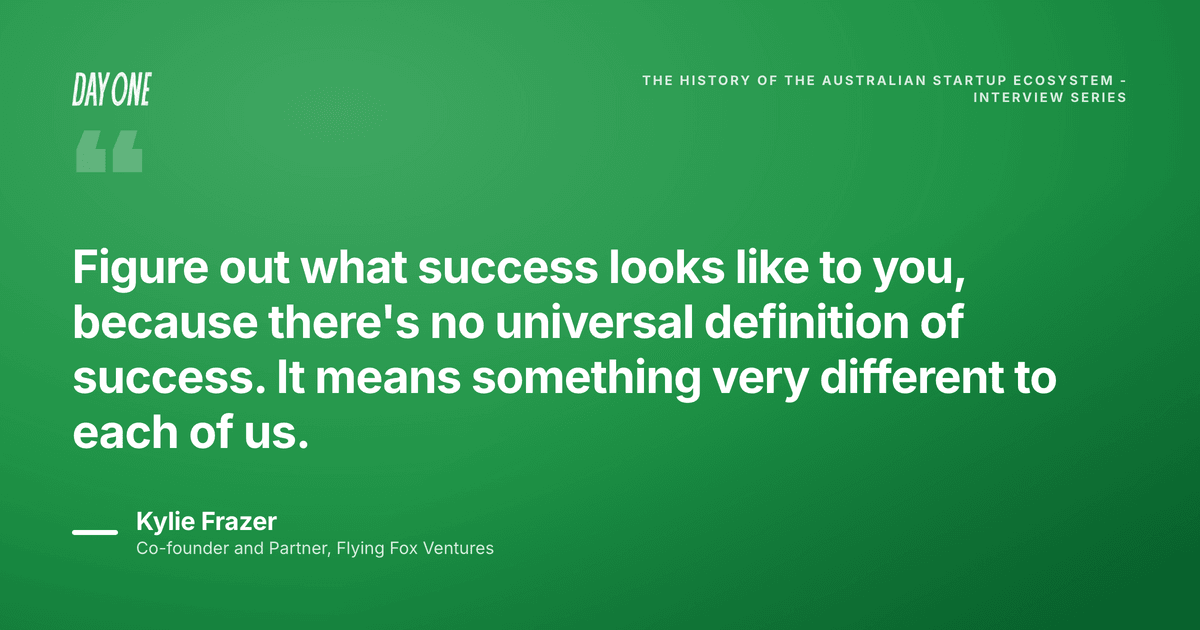
Transcript Synced · select any line to jump ▾ 0:00 Speaker: Let me tell you about our partner, Teamified. If you need to build a top-notch team quickly, Teamified is your go-to solution. They not only provide fractional CTOs, they can also do contractors and even remote team members tailored exactly to your needs. And whether you're looking for expertise in the Philippines, India, or Sri Lanka, Teamified has you covered. What's amazing is that Teamified uses a blend of AI and human expertise to cut hiring times by 50%, cent. The platform handles everything from automated onboarding to day-to-day management and even performance tracking. You can also handle rewards and recognition, buy equipment, and order training all through their platform. Simplify your hiring process and get the best talent fast with Teamified. Check them out now and transform your team. Go to dayone.fm/teamified. That's dayone.fm/teamified. Thank you, T-E-A-M-I-F-I-E-D, and get started today. Hi, I'm Adam Spencer, founder of the Day One Network, which is bringing the history of the Australian startup ecosystem to you. I believe in founders. It's why I do everything I do at Day One and our media company, W2D1 Media. And that's why the Day One Network exists, to create helpful content for founders. We've got some great shows in development, but a large part of what we do couldn't be done without support from our partners and sponsors. And I couldn't be happier than to be working with NTP, who get community better than any other technology recruitment company out there. A Newcastle company like mine, NTP are invested in seeing the growth of the local tech community in Newcastle, Sydney, and more broadly Australia. So thank you, NTP, for helping us bring helpful content to founders and the startup community in Australia. Back to the interview. Hi, I'm Adam Spencer, founder of the Day One Network, which is bringing the history of the Australian startup ecosystem to you. I believe in founders. It's why I do everything I do at Day One and our media company, W2D1 Media. And that's why the Day One Network exists, to create helpful content for founders. We've got some great shows in development, but a large part of what we do couldn't be done without support from our partners and sponsors. And I couldn't be happier than to be working with NTP, who get community better than any other technology recruitment company out there. A Newcastle company like mine, NTP are invested in seeing the growth of the local tech community in Newcastle, Sydney, and more broadly Australia. So thank you, NTP, for helping us bring helpful content to founders and the startup community in Australia. Back to the interview. Hi, I'm Adam Spencer and welcome to Day One, the podcast that spotlights Australian startups, founders, and the organizations that empower Australian entrepreneurship. We go back to the beginning to tell the story of Australia's most inspiring founders and how they built their companies. You're listening to a special interview series as part of a documentary W2D1 is producing about the history of the Australian startup ecosystem. On the episode today, we have— 3:18 Kylie Frazer: Hi, I'm Kylie Fraser, the co-founder of Flying Fox Ventures. Flying Fox Ventures is Australia's first rolling fund that makes it really easy for people to begin their tech investment journeys. We bring on individuals and high net worths, and we've invested in about 30 very early-stage companies across Australia and New Zealand so far. 3:40 Speaker: What's so unique about a rolling fund? 3:45 Kylie Frazer: It means that people can come in and out at different points. So a traditional closed-term fund has a very specific start date and a very specific close date. They can be quite rigid structures, whereas a rolling fund is kind of designed to optimise flexibility. 4:03 Speaker: Yeah, so I've heard that. So when LPs sign up to it or put their money into a venture fund, they've pretty much got to say goodbye to that for 10, you know, what, 5 to 10 years, is that right? 4:13 Kylie Frazer: Yeah, it is. 4:13 Speaker: Is that the same deal with you? 4:15 Kylie Frazer: 10 years is the usual lifecycle for a traditional venture fund. All our funds are open-ended, so we don't make a commitment to harvest the fund at any stage. Our model involves each investment standing on its own merit, and that will will mature in its own time. So for example, even though we've only been going for a couple of years, we've had 4 companies offer secondary opportunities to early-stage investors, and we are offering our investors the, the opportunity to participate in them. So normally a venture fund won't let its LPs participate in the secondaries early on because a venture fund knows, or, or is, you know, is in the business of betting on that —getting as big as it can possibly be. So it doesn't want the early investors to cash out early. Whereas our model recognizes that investors come from all walks of life, and what is a meaningful result for one person will depend on the situation they are in at that particular time. And a little bit of secondary liquidity early on can mean that those investors are empowered to go back and invest in more startups. It may mean they can pay off their house. And we like to keep— Mm-hmm. That power in the hands of the individual. 5:38 Speaker: Before I do ask this, the big question that gets us going into the history of the Australian startup ecosystem, I'm curious to understand, why did you wanna become an investor? 5:49 Kylie Frazer: I'm not sure I did. I feel like it was an accident. No, I'm being facetious. It's the greatest job in the world, and I feel super privileged to be able to follow, you know, wherever my curiosity takes me in the context of doing my job, which is extraordinary. For me, it probably came down to the concept of buying and leveraging time. So my background is as an M&A lawyer and I accounted for my life in 6-minute units for the better part of 2 decades. I knew exactly what I was doing at all time and someone was usually being charged for that, sometimes 2 people if I got really creative, but we don't fess up to that on the public record. When I started my own businesses, I still found that I was so constrained by my own ability to execute. There were only so many hours in the day. There was only so much I could do. With investing, I found that for the first time, I could properly leverage my capital by buying the time of others. I just loved that I could have exposure to so many different projects in such a small way, but It's just really opened my eyes to the power of leverage and it feels about as far away from selling my life in 6-minute units as it can possibly be. 7:17 Speaker: I love that concept so much. So when would you say you first got involved in this thing that we call the Australian startup ecosystem? 7:29 Kylie Frazer: Probably again, accidentally, so I had founded a business without really knowing what a startup was. I just thought I'd founded a business. But over time, you know, I learned about what could be done with venture capital and set about, you know, starting to pull together a round for that company, which we never took. I exited the business before we, you know, got very far down the fundraising path and used those skills and experience and that capital to start my own investing journey. And I've been on the investor side of the Fence ever since. 8:05 Speaker: What, when, timeframe, when was that? 8:09 Kylie Frazer: Timeframe, so I exited ScanCheck in 2018. 8:14 Speaker: From your point of view, what was around? What did the ecosystem look like in terms of support and community at that time? 8:21 Kylie Frazer: Oh, look, it was pretty dire. When I was wanting to learn about investing, the only real options that I had were Scale Investors, which, which had a very small base in Sydney, and Sydney Angels. And obviously there are a handful of venture funds around as well, but, but I was intimidated by them at the time, and I wanted to, you know, kind of go, go in on the grassroots level. You know, obviously Scale was a super inclusive environment with lots of women at the table there. Sydney Angels less so. You know, that was pretty, you know, it's come a long way in the 4 years since I last stuck my head around the corner there, which is really pleasing to see. 9:08 Speaker: At that time with SCAIL, was Susan Oliver, was she in charge of it then? 9:13 Kylie Frazer: Susan was the founding chair and she was still the chair at the time I got involved. A woman called Laura McKenzie was the CEO. 9:21 Speaker: Right. Okay, what do you see as some of the, fast forwarding 5, 6 years to today, what do you see as some of the challenges in the ecosystem now? 9:32 Kylie Frazer: I think getting funding into the hands of diverse founders remains a challenge. Women in particular are underrepresented. Most of the companies that receive funding still fit a certain profile. Which I think we can all do better on. We have always, you know, the hypothesis that we had at first at Eleanor and then at Flying Fox was that if you get more women making funding decisions, more capital will naturally flow into the hands of more women founders. And the reason for that is why most of the founders that are receiving capital are, you know, white males from a certain background because that's the That's the background of most investors, not all, plenty of exceptions, but you know, that's how these things become prevalent. And all the things, all the biases that lead to that kind of compounding effect that have led the ecosystem where it is, we just use those to our advantage. You know, we have been in a very lucky place where we don't have to, you know, fight against our biases because— Yeah. Allowing our biases to run their course actually corrects some of the problems that have been caused by a lack of women in the decision-making seats at the funders' table. So that's been kind of cool. 11:08 Speaker: Yeah, it's great to see, you know, you and Rachel running Flying Fox. How do we get more female investors? 11:15 Kylie Frazer: It's a really good question. And I think, I mean, we are so proud of the number of women angels that we are nurturing. And we think we will— we are minting an incredible number of extraordinary women angels. So I guess first and foremost, I don't want to— I don't want to gaslight the women that are out there that are doing great work, both in the individual angel capacity and also at the heads of funds. You know, like that, that there are some incredible women who have been in part of this ecosystem before Rachel and I came along. I think One of the reasons why Rachel and I have had such an impact is that we just started it from scratch rather than trying to claw our way up a hierarchy of an existing firm. It's very hard to shift power bases. You know, the founders of a firm have a disproportionate amount of power. And that's true, that's not just an Australian ecosystem thing, that's true of venture everywhere. When you don't have to navigate that, it's much easier to just roll up your sleeves and get shit done, which Rach and I are pretty good at. 12:33 Speaker: On the positive side of this, what do you think the ecosystem, the community, is doing really, really well? 12:39 Kylie Frazer: Gosh, there is so much. It is generally such a positive place to be. Like, I think we do such a good job of supporting, you know, quote-unquote failures. We have seen plenty of founders and investors for that matter kind of swing for the outfield and come up a bit short. I'm not good at sports analogies, I should have kept clear of those. But, um, you know, when I first came to the ecosystem, there was still a lot of, a lot of sensitivity around failure, and it was still, you know, seen as something, you know, best not discussed. Whereas now that there's a lot more candor around that, which I think is extraordinary because it's critical to innovation. So that is awesome. I also think particularly at the start of the first lockdown back in 2020 when none of us really knew how this was going to end, the way that information was shared in a crisis, the way that people came together to kind of do the work that was necessary to, you know, to make sure that companies had a clear path forward. I just thought that was extraordinary, how willing people were to roll up their hands and chip in and do what at times was really hard, nasty work, making sure that companies had plenty of runway and all the contingency plans were mapped out. That was not fun. It wasn't fun for the founders, it wasn't fun for the investors, and for those of us that hadn't been investing, resting for very long. Like, it was, it was a real kind of baptism by fire. And, you know, I was lucky to have, you know, a lot of support from my LPs who helped me, you know, divide and conquer, but also from other, other investors in the ecosystem who, you know, kind of sat me down and said, you know, you make sure you do these things. You know, this is what you need to do. I was like, okay, okay, got it. Thanks. Give me a few months. Thanks. Few months, I wish. It was a crazy, crazy 3 weeks. I think everyone in the ecosystem had everything, you know, locked and loaded within 3 weeks. 14:48 Speaker: Do you think we're on the right track? Where do you think we're going as an ecosystem? 14:54 Kylie Frazer: It's, I mean, there's so many ways I, I could answer that question. One of the trends that I have been super inspired by has been a trend towards specialization on the funders' stage. I think Historically, you know, we just had, you know, they weren't large firms then, but we had kind of big generalist firms. And, you know, as, as we've seen in the US, you know, a lot of disruption, a lot of innovation on the funding side can come from smaller players. You know, finding a niche and attacking it is how we're going to bring about change and fix some of the problems that occur when when there's too high a concentration of a particular class of funder. So I am super excited about that. I would, top of the heap, I would put Sarah Nolot and Matthew Prior from Tenacious Ventures, which is the specialist agri-food fund. You know, I've always been very bullish on the agtech opportunity for Australia. I think we have some, you know, very unique comparative advantages from our agricultural history. Now, there is a real sense that if technology can make it in the Australian agricultural environment, then it can make it anywhere because we have some of the toughest conditions on Earth. So being able to leverage that into an agtech fund, I think, is super exciting. And there are no two better people, no two people better equipped to lead that than Sarah and Matthew. They're fantastic. Thank you. 16:31 Speaker: From an investment point of view, with your investor hat on, for founders out there that are listening, what do you look for? 16:39 Kylie Frazer: So we, I think sadly, nearly everyone that invests looks for the same thing. There's a very kind of stock standard answer to that, which, you know, is we look for the most passionate, the most ambitious founders who have, you know, a deep understanding of the problem they're obsessed with. Obsessive about their customers and the problem that they're attacking is in a large and growing market and they have some special sauce to, you know, that's going to make them succeed. We do all that too, you know, I'm not going to pretend that we have a particularly unique angle in terms of what, you know, what we get really excited about. Like everyone who invests in seed, we wait disproportionately to the founders. And I think we probably dig down a little deeper into co-founder dynamics than most. And maybe again, this is probably because, you know, because of my background as a lawyer, I tend to see the shit. Like, you know, I'm the person people call when things aren't good. So I am a natural pessimist, which is, which is an unusual thing in investing world. You know, we're all taught to be rosy. Yeah. Rosy-eyed and only think about the upside, but alas, that's not me. And when, you know, I have negotiated, I don't know, like dozens of co-founder breakups, and I know how hard they are, including my own. I, I, you know, like, I'm not immune to this either. They're, they're super common, and they're— if, if they happen too early, they can be terminal for the business. They certainly tend to put it onto a very different trajectory than, than what it was prior to the co-founder breakup. Sometimes for better, quite often for worse. So it's not just about digging into why is this founder the person for this problem, it's how do these founders work together, how are they going to resolve conflict when they fight, because they're gonna fight, and do they both have the same definition of success because, you know, the more alignment they have, the better. 18:51 Speaker: What are some of the, you may have mentioned one or two there, but what are some of the key reasons, some of the common reasons, sorry, why founders have that co-founder breakup? 19:01 Kylie Frazer: They're limitless. Sometimes they're super practical, you know, sometimes one founder just needs to earn proper money, you know, like particularly in the early days when, you know, before they've received you know, enough venture funding to pay themselves decently. Sometimes one person just gets hungry, you know, that's okay. Later on down the road, once you take money off the cards, definition of success is usually the second biggest one after pure practicality, I think. And that can be, you know, different visions for the company, as in, you know, like in my own lived experience, we were kind of— Yeah. Dealing with the question of, are we a telemedicine business or are we an AI business? And, you know, we kind of walked the middle path, but there was enough disconnect there to make it untenable for the long term. But it doesn't have to be as black and white as what does success look like for the company. It can be what does success look like to me personally, because if I am optimizing this company for an early exit that's going to pocket me $10 million and then I'm gonna go buy a farm and breed horses for the rest of my life and that is what success looks like to me. That's very different from someone who wants to take over the world and, you know, make sure that every single person in their sector has a copy of this software running in the background of their laptop. 20:32 Speaker: Mm, mm. In that scenario, were you the everybody have a copy of this or were you the horse one? 20:38 Kylie Frazer: No, I'm greedy. I always want to take over the whole world. 20:41 Speaker: Either, you know, putting on whichever hat you want to, the lawyer hat, investor hat, what's one piece of advice you would have for new founders? 20:51 Kylie Frazer: When I was having, I'm stealing someone else's, but when I was having angst about what I should do with Eleanor in the early days and how we were to structure our first fund. It was a conversation with Matt Allen, who I'm sure you will spoke to if you haven't already. 21:10 Speaker: Just yesterday. 21:12 Kylie Frazer: Just yesterday. There we go. There we go. And he just kept asking me like over and over to the point where I nearly wanted to punch him. Just tell me where you want to be in 10 years' time. You know, just tell me where you want to be. You know, don't think about anything else. Just, you know, figure out where you want to be and then optimize everything else behind that. And He forced me to get really clinical on that and I've taken it with me right throughout my investing since then. So I think that's a goodie. Figure out what success looks like to you because there's no universal definition of success. It means something very different to each of us. 21:51 Speaker: Do you have any unpopular opinions about the Australian startup ecosystem in any form, you know, investing or policy or anything that you firmly believe, but just no one seems to, or very few people seem to be on the same page as you? 22:06 Kylie Frazer: Not about the Australian ecosystem, no. The closest I can think of is the role of investors in financing education. So I was at a session before lockdown, I'm not sure which one, could have been in between, could have been years ago, but it was an in-real-life session. And founders were asked a series of questions. It was a facilitated session and one of the questions was, what is the role of venture capital? What is the role of your investor? And the number one response out of all the things that investor can do, the number one response was to teach me about investment. I like it. It honestly blew my mind. I was like, are you kidding me? Like we are on, opposite ends of the table when we come to the pointy end of an investment transaction. You know, you don't ask me to teach you because I'm obliged to act in the best interests of my investors. It's my job to get a good deal. And yes, all investors talk a good talk about, you know, it's not a— it's not an adversarial system and we create value for everyone and we craft the deal so it fits everyone. And yes, all those things are true to a degree, but you do not ask ask your VC to teach you about investing. It's your job to figure it out elsewhere along the way. I actually think this is, this is somewhere where most accelerators do a spectacularly shit job. Um, you know, they, they just leave out this part of the equation, or they rely on investors to do it. That's actually how I came to the Startmate family, which I love, and being part of that. Um, I was going to say that family, it is a family, has just been such an important part of my growth and sense of community in this space. But I came to Startmate because I had invested in a company who had just come out of the accelerator. Couldn't read a term sheet, you know, they had no idea about the investment process. And Startmate was— this is years ago, this is, you know, 5 years ago or something now. Startmate was, you know, was then and probably still is, you know, the, the best accelerator around, and it wasn't equipping its founders with the skills that it needed to come out now. So I just got on the phone with Startmate and said, this sucks, we need to do something about this. And because Startmate is Startmate and they are always learning and always open to feedback, they did. Um, and now we have program that teaches the founders how to invest. It's still, you know, accelerators are still, you know, on the investor side of the spectrum of people who you should take advice from. But, but at least, at least it's a start, um, and it's better than, it's better than asking your VC. 25:02 Speaker: Keeping in mind that what I'm trying to do here is as holistically and truthfully as possible tell the, the story of the Australian startup ecosystem. I want everybody really from all corners of the ecosystem to listen to the story. Founders, investors, policymakers, academics, either any of those categories or all of them. What do you want to tell them? Just something that people need to hear. 25:27 Kylie Frazer: It's a big question. Oh gosh, I honestly don't know. I don't have a good answer. I'm like defaulting to, you know, saying something clever about the lack of funding for women startups and the lack of female funders, but I feel like we've already covered that. 25:47 Speaker: Drive it home. 25:48 Kylie Frazer: Yeah, okay. It is, I mean, I do think, you know, we've spoken about it previously, but the lack of women funders, the lack of funding going to women founders remains a problem. We need to make sure we are supporting women funders at all levels, and that, I think, is the best way to get the capital into the hands of female founders. 26:16 Speaker: I hope you enjoyed that interview. More interviews are on the way. Follow the podcast wherever you're listening right now. Stay tuned for more interviews with many, many more amazing people. People from the Australian startup ecosystem. Thanks for listening, and see you next time. 26:33 Kylie Frazer: Thank you.