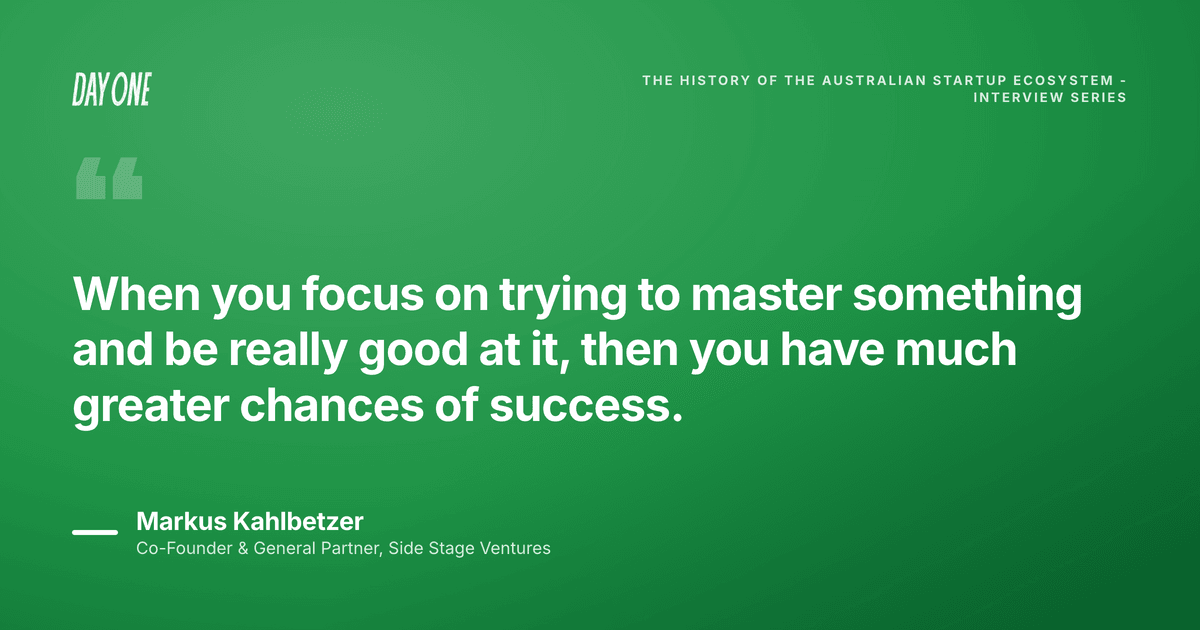
Transcript Synced · select any line to jump ▾ 0:00 Speaker: Let me tell you about our partner, Teamified. If you need to build a top-notch team quickly, Teamified is your go-to solution. They not only provide fractional CTOs, they can also do contractors and even remote team members tailored exactly to your needs. And whether you're looking for expertise in the Philippines, India, or Sri Lanka, Teamified has you covered. What's amazing is that Teamified uses a blend of AI and human expertise to cut hiring times by 50%, cent. Their platform handles everything from automated onboarding to day-to-day management and even performance tracking. You can also handle rewards and recognition, buy equipment, and order training all through their platform. Simplify your hiring process and get the best talent fast with Teamified. Check them out now and transform your team. Go to dayone.fm/teamified. That's dayone.fm/teamified. T-E-A-M-I-F-I-E-D, and get started today. Hi, I'm Adam Spencer, founder of the Day One Network, which is bringing the history of the Australian startup ecosystem to you. I believe in founders. It's why I do everything I do at Day One and our media company, W2D1 Media. And that's why the Day One Network exists, to create helpful content for founders. We've got some great shows in development, but a large part of what we do couldn't be done without support from our partners and sponsors. And I couldn't be happier than to be working with NTP, who get community better than any other technology recruitment company out there. A Newcastle company like mine, NTP are invested in seeing the growth of the local tech community in Newcastle, Sydney, and more broadly Australia. So thank you, NTP, for helping us bring helpful content to founders and the startup community in Australia. Back to the interview. Hi, I'm Adam Spencer, founder of the Day One Network, which is bringing the history of the Australian startup ecosystem to you. I believe in founders. It's why I do everything I do at Day One and our media company, W2D1 Media. And that's why the Day One Network exists, to create helpful content for founders. We've got some great shows in development, but a large part of what we do couldn't be done without support from our partners and sponsors. And I couldn't be happier than to be working with NTP, who get community better than any other technology recruitment company out there. A Newcastle company like mine, NTP are invested in seeing the growth of the local tech community in Newcastle, Sydney, and more broadly Australia. So thank you, NTP, for helping us bring helpful content to founders and the startup community in Australia. Back to the interview. Hi, I'm Adam Spencer and welcome to Day One, the podcast that spotlights Australian startups, founders, and the organizations that empower Australian entrepreneurship. We go back to the beginning to tell the story of Australia's most inspiring founders and how they built their companies. You're listening to a special interview series as part of a documentary W2D1 is producing about the history of the Australian startup ecosystem. This episode was conducted by guest host Will Cho. 3:19 Speaker: Hi everyone, and welcome back to the Australian Startup Series interviews. Our guest today is Marcus Carl Betzer. Welcome to the show, Marcus. Thanks, Will. So to start us off, could you introduce yourself and tell us what you're currently working on? 3:31 Markus Kahlbetzer: My name is Marcus Carl Betzer of been involved in, I guess, the startup ecosystem for well over a decade now and currently the CEO and founder of Bridgeline, which is the same place I've been for the last 13 years. 3:47 Will Tjo: What did the ecosystem look like when you first started about 10 years ago? 3:51 Markus Kahlbetzer: Yes, I mean, I probably started in 2010 and— well, between 2010-2012, it was definitely a lot smaller as obviously everybody would know. There were a few coworking communities. One would have been Fishburners, BlueChilli as an incubator, a few VCs. Blackbird was, I think, had just gotten started 6 months prior. And, you know, a few other VCs that have been around the market for a while, but not many of the current players. 4:17 Will Tjo: Yeah, and I'd love to walk through your journey over the last 10 years because I know that you're also the founder of Tankstream Labs, was it? 4:25 Markus Kahlbetzer: Yes. 4:26 Will Tjo: Yeah, could you tell me a bit about that? 4:28 Markus Kahlbetzer: Yeah, so Tankstream Labs started in 2012, which was, we just had our 10-year anniversary. And that was on the back of meeting two other founders that I had met through a previous company we had backed named Amazyn, which was a mobile virtual network operator that launched. And then they subsequently went out to found Air Tasker, Tim Fung and Jonathan Louie. And we had an empty floor in our building here in Bridge Street. Decided that it was a good idea to populate it. We had made a small investment in Airtasker and they had a lot of inquiry about filling up the space from other like-minded individuals who were trying to get their own gig started. So we turned that into something more formal and it's grown now from being a little corner on a small floor to over 8,000 square meters of coworking space with 800+ desks. 5:20 Will Tjo: Wow, that's amazing. Marcus, would you say that you've always been an entrepreneur? 5:24 Speaker: Yeah. 5:24 Speaker: Even towards university days? 5:26 Markus Kahlbetzer: Yeah, I think so, yeah. 5:27 Will Tjo: What attracted you to this space? 5:30 Markus Kahlbetzer: Well, I've been involved in family business for my entire career, and I think probably just my generational, I guess, age with regard to the rest of my family, I was probably a bit more keen to look at innovation and startups. I've always had a bit of a curiosity around it. And always keen to prove that, you know, I could potentially build something myself. You know, I've been not only an investor, which is probably what I'm better known for, but more so as well as a founder and entrepreneur building startups myself, which I'll get to later on in terms of, you know, what are some learnings and what are some main take-home points. 6:08 Will Tjo: Yeah, absolutely. When you first delved into the ecosystem back in 2010 to 2012 after being in the family business, did you find that there was a lot of support structures that you were able to rely on and in essence penetrate the ecosystem without much difficulty? 6:24 Markus Kahlbetzer: Well, I think it was so small, it didn't take much to kind of get involved. I mean, everybody was after funding essentially. There weren't many investors and there were some structures that were in place which are still in place today and I'd probably say namely the ESVCLP. Structure which is capital gains tax concession. I think many people have talked about that, especially on your podcast as well. So that was around R&D tax concessions which were giving you back almost half of the money that you'd invested in R&D back. So there were some government structures which were financial and helped startups get off the ground. But really it was funding and there was a lack of funding from, I guess, professional investors. You know, it was always still relying on family and friends. Yeah, I guess it's fairly low barriers to entry in that space and it didn't take long to kind of enter by meeting a few individuals and networking and was able to get yourself launched relatively quickly as an investor. 7:21 Will Tjo: Yeah. Do you think there is still an absence of funding even today? 7:25 Markus Kahlbetzer: Yeah, I definitely think so. And I think it's more a function that, you know, we've grown quite considerably over the last decade and obviously we're in a very different position to where we were. You know, it's great to see so many different success stories coming, different sizes, different, I guess, subsectors of the innovation space. But fundamentally, you know, I think that they still exist today, and the funding gaps at the early stage to support the ecosystem is still there. Whilst we have plenty of funding later stage through, you know, bigger investors, bigger VC funds, which have grown, as well as institutional capital which is starting to enter the market. We still have this gap potentially at the back as a proportion of total funding. Early stage, seed, and Series A is smaller today proportionally to the total funding in the market. 8:17 Will Tjo: Yeah, it sounds like it was never a startup problem or a founder problem because we, we have an abundance of those, as you mentioned, with the growth over the last 10 years. But why hasn't the funding matched in tandem? Why has Australia not provided that funding? 8:35 Markus Kahlbetzer: I mean, I think the funding has, undeniable that it's grown extremely quickly. And now I think there's lots of examples, but I just fundamentally think as investors continue to make gains and that they are trying to invest across the full spectrum from seed and even pre-seed all the way to late-stage rounds and growth rounds. But fundamentally, I think the quantum of money is still going to those later stages more from the support from, again, institutional and professional pension funds or future funds, so forth, are investing in those later stages, even from, I guess, international VCs as well. They're not participating early on. And I think we need more support at that earlier stage so that we can continue to prop it up and continue to have more and more positive success stories coming through the market. 9:28 Will Tjo: Yeah, I hear you. It's, it's later-stage startups that are essentially taking the lion's share of the funding available. 9:34 Markus Kahlbetzer: Yeah, as a proportion. Yeah, absolute terms, both, both sectors have grown, you know, quite a bit. Hmm. 9:40 Will Tjo: Has it been what you expected it to be, the growth over the last 10 years? 9:44 Markus Kahlbetzer: No, probably not. I mean, I was just looking at a, you know, our pitch deck for Tankstream Ventures Fund 1, which was launched in 2014. And, you know, we had in there that, you know, some of the success stories were, you know, Seek and BigCommerce and Xero had IPO'd and a few others. And Atlassian was about to do an IPO in NASDAQ and it was, you know, had a $1 billion plus valuation to it. So, you know, that was 2014. If we look back to say pre-COVID and even the last 2 years through COVID, you know, I would have never thought that those companies themselves would have evolved but have obviously a huge quantum of other players that weren't even really being named. 6 to 8 years ago that are now bigger than those and some of the biggest startups in the world in terms of being unicorns and Canva being probably one of the largest unlisted startups in the world, well, unlisted tech companies in the world. 10:40 Will Tjo: Yeah, that's absolutely amazing. I mean, the growth that we've experienced, I think it's pretty funny. 10:44 Markus Kahlbetzer: Yeah, less than 10 years ago, right? 6, 8 years ago. 10:47 Will Tjo: Yeah, it feels like an eternity ago, but at the same time, it feels like so recent. 10:51 Markus Kahlbetzer: That's right, that's right. 10:52 Will Tjo: Shifting gears a little bit, what would you say that we do really well compared to other geographies? 10:59 Markus Kahlbetzer: Yeah, I think that's hard, you know. I mean, we've always picked on ourselves in terms of what we don't do and how we should continue to improve ourselves to continue to be better. But generally, I mean, I do think those support structures that we have in place from the capital gains tax incentives on the ESVC, is always something that, you know, when you spoke to foreigners, they were quite surprised that we had that in place. And I think, you know, that's been great to see and see it continue to be, you know, important at least to the venture capital environment. There's a lot more things that can be done, but I also think that just the drive, the Australian drive to want to succeed, and I think early on, we talked about 10 years ago, we used to say that, you know, there was a real, I guess, animosity towards failure and people didn't come forward with it and so much so forth. But I think, you know, we've been able to evolve as an ecosystem and as founders to be able to, you know, adapt, take those things in our stride and continue to evolve, I guess, as a society and as a culture. So now we're not so shy about giving it a go. 12:08 Will Tjo: Hmm. The role of government seems to be a theme that regularly pops up with other founders that we've interviewed. It seems like from what I'm hearing, that you're really, I guess, happy with the ESG CLP structures. Is there anything else that you believe the government should be doing from a policy perspective, or do you think that their support is sufficient? 12:27 Markus Kahlbetzer: No, no, I definitely think there should be more done. And you know, I think it has been mentioned as well on your podcast that I think the capital gains incentives have been great. And whilst they're great, there's a lot of individuals out there who are amazing investors and maybe not amazing fundraisers, but they can do wonders for startups if they are able to get in early. And I think, you know, an incentive is to let these people who are taking significant financial risks and even time to be able to get capital gains concessions on those investments. Whilst that may not help, you know, early-stage venture funds in terms of having other people being able to compete— well, not invest in their fund because they don't need to anymore from a capital gains point of view. They would be able to provide a lot of expertise and and, you know, I guess solidify the mentorship or advice that a lot of these investors tend to give to startups when they're seeking those very early rounds. So basically more support from the individual investors. 13:34 Will Tjo: Do you have any unpopular opinions about our ecosystem? Something you believe is true but others aren't on the same page? 13:41 Markus Kahlbetzer: I probably have to say Yeah, this is one maybe with a caveat on it, but I think the ASX has actually done a pretty good job of trying to get tech startups exited and to the market. Having said that, I think the lion's share, the ones that you do see go through, probably aren't ready and potentially hurt the ability for other startups to exit or use the ASX and obviously the public market to access equity. I think some of them just aren't ready and tend to burn through a lot of mom and dad's money and make poor investment choices when the reality is the ASX could be a bit more of a guardian on that. So that's just from the exit point of view. I think a lot of people tend to think that you need to go to the US and pretty much find either investors to continue to back you over there, which is no longer the case. You can find plenty of investment here whether— in case you want to stay private and so forth. But if there is kind of the opportunity to make an exit as a founder or as investors or access a different market, I think the ASX has done a relatively good job. 14:53 Will Tjo: Yeah. Could you tell me more about what you meant by the ASX acting more of a guardian? 15:00 Markus Kahlbetzer: Well, I think they need to have a bit more regulation in terms of, you know, what's able to be listed or what should be listed. They do have a lot of obviously thresholds that companies need to cross from, you know, being a widely held register to minimum requirements from financial point of view. But I think some of the businesses just— yeah, those are things that you can get around. And I think some of the businesses might be flawed or just not ripe enough to take it to that point. You know, last thing you want to do is really list as a small cap or micro cap and Once you get to that stage, it's pretty hard, it's pretty hard to come back. So I think, you know, we could be setting the companies up or not accepting them and telling them to stay private longer to be able to achieve a positive outcome when they do get there. 15:51 Will Tjo: Yeah, absolutely. I'm not sure if this is the right take on this because one of, for context, one of the challenges that I hear other entrepreneurs mention on this podcast is when our founders decide to exit overseas and sell to overseas companies, that means the talent pool, the resources, and so on just go overseas. Overseas. Do you think exiting via the ASX could be a potential solution to that? 16:13 Markus Kahlbetzer: Yeah, I think so. I mean, I'm not so sure that when they do exit overseas that the talent pool necessarily leaves. There's plenty of examples where the talent pool has partially stayed here. If not, you know, maybe they've grown whilst they've sought extra funding or exited, and that extra funding has allowed them to grow their teams, and maybe they've grown their teams internationally. But I think, you know, I guess the support that's provided today in Australia from our education sector in terms of the quality of it as well as people wanting to stay here is probably changed and I think it's in a much better position. But yeah, definitely, I mean, I think if companies can fund themselves here through the ASX or through larger funds or international funds, you know, looking towards Australia or pension funds here supporting us, then, you know, I think absolutely. you know, that'll keep everybody here for longer and continue to evolve that ecosystem and those people that stay here and hold senior jobs in companies that are growing and becoming bigger, then they come back and it turns into, I guess, the full circle. 17:16 Will Tjo: Yeah, absolutely. I like what you mentioned about how our talent pool doesn't necessarily go overseas just because we do have quite a good magnet in keeping people here whether it be lifestyle or education. 17:27 Markus Kahlbetzer: That's right, that's right. I mean, it's pretty hard to find somebody that says they don't like living in, you know, Sydney or Melbourne or Brisbane or wherever they are. 17:34 Will Tjo: Yeah. So Marcus, as you know, what we're trying to do in this podcast is to document as historically as possible the history of our ecosystem, just so that we can look to the future. And we're aiming to reach all corners from founders, investors, policymakers, and academics. Is there anything we haven't discussed today that is always top of mind for you that you want to bring to their attention? 17:54 Markus Kahlbetzer: Well, I'm not sure what's been talked about not before, but I think, you know, again, this extra support from all kind of facets of the ecosystem. So that's, you know, government, education providers, so universities, and the private sector being VCs and larger startups. And I think that all needs to be tied together a bit better. And I think maybe universities are the one that's missing in that link to the degree when you compare it with, with the US and maybe what Stanford has, has meant to Silicon Valley and other universities in Australia— in, in the US to their I guess, sub-ecosystems. That's probably the main thing. From advice, I guess, from my point of view is I think we've gotten to the point where we have a lot of founders who are becoming investors, founders who have succeeded, founders who have failed, investors who have succeeded, investors who have failed. And I think, you know, that's extremely important for us to continue to evolve. And I think, you know, whilst failing is, you know, not something you congratulate people for, it's good to have. I think we're now at that point where we have a lot more diversity within our ecosystem and it's really, I guess, healthy. It's healthy and provides so many more experiences. I mean, we all know we learn much more through experiences than through education and I think that's critical. Now, I'm not sure if I've answered that one correctly, but I think that's pretty much it. 19:17 Will Tjo: No, I like it. My question when you described having universities being tied together. I suppose what you're referring to there is collaboration between universities and startups, right? 19:29 Speaker: Absolutely, yeah. 19:30 Will Tjo: Why do universities not collaborate as much with startups compared to, as you mentioned, with the United States, with Stanford University? 19:39 Markus Kahlbetzer: It's a good question. You know, I think part of it's, you know, they don't move fast, right? We don't have as many universities, you know, they're definitely large and they're large institutions and Just as we were talking now, I mean, I guess this whole— I mean, I want to keep talking to when did the ecosystem start and so forth. I mean, I think it's the next wave of the ecosystem that we've been talking about just now. I mean, more in terms of Web 2.0 rather than, you know, there's always been innovation. But I think this Web 2.0 or say to 2014 to now, 2012, 2014 to now, the universities just haven't been able to move that fast and to be able to, you know, take stock of, you know, where they could be helping more and so forth. And, you know, they're still quite fragmented, you know, different faculties don't necessarily talk to each other and it's up to the university to pull all that together and then, you know, come back to the market somehow to help. But I think there are changes that are taking place and I think there's some, you know, larger venture investors that are trying to you know, close that gap as well through programs that they're trying to facilitate. And, you know, I think that's just a matter of time rather than an error or anything on behalf of anybody. 20:59 Will Tjo: Yeah, absolutely. Lastly, Marcus, if a brand new founder or entrepreneur came to you, given all your wins, your mistakes, and your experience, what would you tell them to increase their chances of success? 21:11 Markus Kahlbetzer: Yeah, I mean, I think it's what I mentioned earlier. I mean, I've been a founder, I've started— startups myself and been an investor as well and I've had failures on both and more failures as a founder and I think just being able to live through those experiences and realize that they're all learnings is important. But then also think focus and I think trying to really nut down what you want to achieve is extremely important and be determined and motivated on that goal rather than trying to juggle many things. Sometimes I say that, you know, I'm a jack of all, master of none, but I think when you tend to focus on trying to master something and be really good at it, then you have obviously much greater chances of success. So, I'd say those two things. One is learn from your experiences and whether they're positive or negative, that's fine, and really focus when you think you've got something you want to do, to be determined and motivated and really nut it out. 22:09 Will Tjo: Yeah, I love that. Marcus, it's been so good to have you on the show today. Thank you so much for your time. 22:14 Markus Kahlbetzer: Thanks a lot, Will. 22:15 Will Tjo: Where could the audience go if they wanted to learn more and connect with you? 22:18 Markus Kahlbetzer: They could go on Twitter, @mkalbetzer is my handle there, LinkedIn, and Bridgeline has a website, bridgeline.com.au. Plenty of information on there. 22:28 Will Tjo: And what's next for you and your journey? 22:30 Markus Kahlbetzer: So right now we're doing a new fund, so it's, I guess, our Bridgeline Ventures Fund 3, which is a combination of Bridgeline and Tankstream Ventures, which was our subsidiary. So we're bringing that all under one name to make it a bit easier to, to understand. And that's, that's where we're going to be headed for the rest of the year. 22:52 Speaker: I hope you enjoyed that interview. More interviews are on the way. Follow the podcast wherever you're listening right now. Stay tuned for more interviews with many, many more amazing people from the Australian startup ecosystem. Thanks for listening and see you next time. 23:12 Markus Kahlbetzer: Bye.