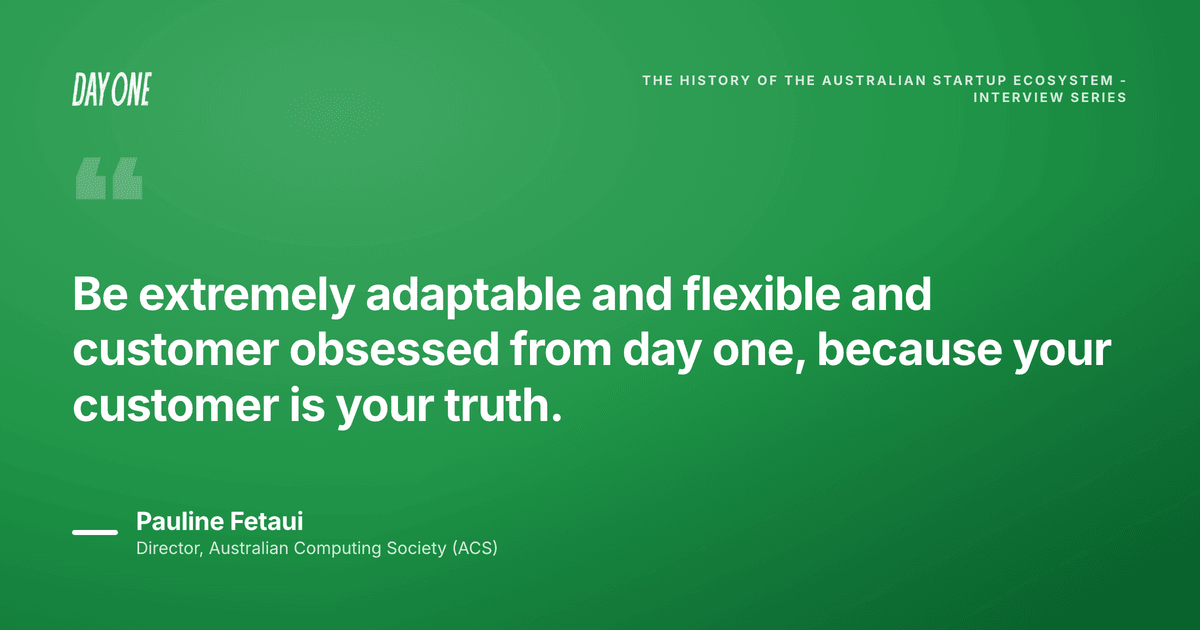
Transcript Synced · select any line to jump ▾ 0:00 Adam Spencer: Let me tell you about our partner, Teamified. If you need to build a top-notch team quickly, Teamified is your go-to solution. They not only provide fractional CTOs, they can also do contractors and even remote team members tailored exactly to your needs. And whether you're looking for expertise in the Philippines, India, or Sri Lanka, Teamified has you covered. What's amazing is that Teamified uses a blend of AI and human expertise to cut hiring times by 50%. Their platform handles everything from automated onboarding to day-to-day management and even performance tracking. You can also handle rewards and recognition, buy equipment, and order training all through their platform. Simplify your hiring process and get the best talent fast with Teamified. Check them out now and transform your team. Go to dayone.fm/teamified. That's dayone.fm/t-e-a-m-i-f-i-e-d and get started today. Thank you. Hi, I'm Adam Spencer, founder of the Day One Network, which is bringing the history of the Australian startup ecosystem to you. I believe in founders. It's why I do everything I do at Day One and our media company, W2D1 Media. And that's why the Day One Network exists, to create helpful content for founders. We've got some great shows in development, but a large part of what we do couldn't be done without support from our partners and sponsors. And I couldn't be happier than to be working with NTP, who get community better than any other technology recruitment company out there. A Newcastle company like mine, NTP are invested in seeing the growth of the local tech community in Newcastle, Sydney, and more broadly Australia. So thank you NTP for helping us bring helpful content to founders and the startup community in Australia. Back to the interview. Hi, I'm Adam Spencer, founder of the Day One Network, which is bringing the history of the Australian startup ecosystem to you. I believe in founders. It's why I do everything I do at Day One and our media company, W2D1 Media. And that's why the Day One Network exists, to create helpful content for founders. We've got some great shows in development, but a large part of what we do couldn't be done without support from our partners and sponsors. And I couldn't be happier than to be working with NTP, who get community better than any other technology recruitment company out there. A Newcastle company like mine, NTP are invested in seeing the growth of the local tech community in Newcastle, Sydney, and more broadly Australia. So thank you NTP for helping us bring helpful content to founders and the startup community in Australia. Back to the interview. Hi, I'm Adam Spencer and welcome to Day One, the podcast that spotlights Australian startups, founders, and the organizations that empower Australian entrepreneurship. We go back to the beginning to tell the story of Australia's most inspiring founders and how they built their companies. You're listening to a special interview series as part of a documentary W2D1 is producing about the history of the Australian startup ecosystem. This episode was conducted by guest host, Will Cho. 3:19 Speaker: Hi everyone, and welcome back to the Australian Startup Series interviews. Our guest today is Pauline Patouille. Welcome to the show, Pauline. 3:26 Pauline Fetaui: Thank you for having me. 3:27 Speaker: Could you tell us a bit about yourself and what you're currently working on? 3:30 Pauline Fetaui: So I'm the general manager of River City Labs. River City Labs is a tech startup incubator located in Brisbane, in Queensland. We have been around since 2012 and initially founded by Steve Braxton, One of the amazing guests, or hosts, should I say, on Shark Tank, and also a great initiator and agitator of the startup ecosystem in Queensland. At River City Labs, we've seen over 800 companies come through our doors, and we help them go from early-stage startup idea to scaling. We have pre-accelerator and previously accelerator programs that we run yearly, as well as we have a membership base where we have companies that we support all year round with education, network, research, resources, helping them with their capital raise journey. But more importantly, we have a large, active, thriving community that gets founders connecting with other founders and mentors to help them on their journey, because it can be a lonely one. I do know firsthand because I also have my own startup called Cheetahs, and it's an early-stage company. We're still looking to find product-market fit, uh, but it's going quite well, surprisingly, and has been a very real journey for me personally, and that is why I joined River City Labs, because creating a personal assistant for truly busy people is a passion of mine, and I'm looking to find technology that truly gives people back time, which is what Jihoo's all about. 5:02 Speaker: Pauline, you clearly have a very extensive experience and background in startups and entrepreneurship. Take us back. Even from high school, university, what made you want to get into this whole area? 5:19 Pauline Fetaui: Look, I'm going to be honest with you. I definitely did not set out to be an entrepreneur. In fact, I wanted to not ever do that because I saw how hard my parents worked. They had their own businesses and you never really saw them. Well, I never really saw them. But what I did spend a lot of time was when I was living with them, which I had an interesting childhood, it was spent a lot in their offices. So, I was very used to seeing them work. So, I think I had a very strong work ethic from the get-go because it was more from a necessity point of view rather than something you go out and set out to do, obviously for fun, because it's not for the faint-hearted. 5:59 Adam Spencer: Mm. 6:00 Pauline Fetaui: But I actually have spent, before joining River City Labs, spent 20 years in corporate. So, I actually used to work in technology, business, and digital transformation, previously working for some pretty large companies, global companies, including HP, Bupa, so many. I've had clients like Commbank, the federal government, as well as many others, including my last gig, which was heading up recovery for Allianz Partners with the Royal Commission in the banking service sector. In Australia. So I, I definitely had a very different world, but where I did set out was during my career in corporate, in the financial services sector mainly. I was extremely, uh, obsessed with problem solving, and I've carried that all the way through naturally from childhood. Um, I think most people who are entrepreneurs have an insane amount— appetite for actually solving problems and Some of us, it's an obsession or a natural go-to, and we thrive in it, and we enjoy the complexity that it brings. And that definitely was me all through my career, which is why I did a lot of work in recovery when I was in corporate. But one thing that comes as a downfall is that you're not very good at your home life. You're not very good at the personal side. In fact, you find yourself chasing your tail, being extremely busy, And that is what set me out to start building Chiahu because I was looking for technology to hack my life together. I'm quite technical, so I can do things for myself. And I found myself organizing my household like I would my work and hacking all these tools together to help me. And before I knew it, I was obsessed with the idea of trying to fix my own problem. And that's really where I started to look into what startups were. Mm-hmm. I actually didn't even know what it was. I had heard about or seen the typical stereotype of the t-shirt-wearing, jeans, males, typically white males and young. I did not fit any of that. And I was very corporate too, because I worked a lot with CEOs and in my career. And I definitely eyes wide open when I started to build it for myself. So kicking off with Chi Huu and going down the path of basically deinstitutionalizing myself and my ideal of what it took to build technology was put on its head when I started ChiHu. So on the back of that, I came across River City Labs, reached out, and I really wanted to spend more time in this space. So I got the job at River City Labs, and it has been the best decision I made because it's immersed me completely in this ecosystem. Mm-hmm. Get me connected, but not only that, I'm a problem solver. So my ability to help other founders is more of a gift to myself. In addition, I'm learning so much from them as well for my own business. So it's still a juggle struggle. I haven't solved that problem yet. Maybe, I don't know what I'm destined to ever solve it, 'cause I think it's in a continuous evolution as technology in our lives change, especially proven with COVID Mm-hmm. But I definitely have had a windy road into the startup ecosystem. I did go to uni, to answer your question. I dropped out because I actually had greater success in my corporate roles and I wasn't really learning much from university. I got to a point where it kind of was more of a time waster for me and the checkbox. And I don't really work color in the lines and I don't really live by checkboxes. 9:54 Speaker: That's amazing. It sounds like your almost stereotypical accidental entrepreneur journey. You know, you had a strong work ethic from childhood and that kind of fed into your various roles. You found that work-life balance wasn't really working out for you and then you decided to use that problem-solving obsession to solve your own problems and thus finding your own business. 10:14 Pauline Fetaui: Correct. You've like, that was a great summary. Yes, can I have some of that? And I'll use that whenever I get asked that question. You hit it on the head. 10:24 Speaker: What you said before about you joining River City Labs was one of the best decisions of your life because it helped you get connected into the ecosystem. That really piques my interest. Would you say that there is a sort of gap in our ecosystem where new founders find it hard to kind of get connected to what support infrastructure is there? 10:44 Pauline Fetaui: Absolutely, absolutely, especially if you have a background in corporate. I would somewhat say it's like a bit of an exclusive cult-like environment when I first approached it. You know, I came from an environment where my network was a global network and I spoke to so many people in all different countries. I had teams overseas and there was a line where, where you had your corporate career, your life, but it never really boiled into the personal life. when I joined River City Labs and made connections into the ecosystem, I could only really do that from within it. I could not do it from outside. And when I got in and I started to get to know people, I kind of started to understand why it's like that. And I think, I think it's like that because the personalities and people in there don't really have those lines like you do in corporate where your life as a founder is blended into your personal life. Or even if you're a community role like mine, you know, you get to know people at a very personal level, and there's a level of trust that comes with that and give-first attitude that doesn't really come in corporate to that degree. You give first in corporate because that's your job. In startup land, you give first because you actually care about everyone's journey. And I think, I think even though it may come across as not a good environment in regards to hard to get into. I think once you actually get very involved and you go all legs and arms in and throw yourself into it, you kind of realize why it's like that and why it's okay to be like that. I do think things could be a little bit more inclusive. And, you know, I demonstrate with the way that I behave at River City Labs and with the community around me. And it definitely was when I first came in, it felt very cliquey. Mm-hmm. And there were groups and you had to really know the history of what was in the ecosystem in order to get yourself networked and connected. But I find that's changing and evolving, especially in the 2 years that I've already been here. It's, it's already changed and evolved so much and there are new players coming in and COVID has helped it get a lot more connected and global connected because we're all online. So I think it's definitely improving, but I definitely had some resistance when I initially tried to approach River City Labs a few years ago with my idea of a startup. I think people looked at me like, "Oh, who's this crazy person from corporate? She's never going to do it." But when I got in, I felt quite welcomed, but I think that's to do with my role in the ecosystem. 13:30 Speaker: Yeah, I completely understand this. So was this 2019 when you first wanted to make that transition? 13:36 Pauline Fetaui: Yeah. Yeah, correct. Like, I got the role at River City Labs in October 2019, so I started. And I, look, I didn't get this role in a typical way as well. So I actually, which is quite funny, I don't even know if I should say this out loud, but I will anyway, but I actually emailed, messaged the CEO of the time at Australia Computer Society, and I told them they needed me. And that's how I got the job. 14:03 Speaker: That's absolutely bold and amazing. 14:06 Pauline Fetaui: I was very used to approaching because I was an ex-consultant. So for me, my jobs were as good as my last job, and I used my network to get my roles and, and do recovery work. And I was actually contacted by others in my network for jobs, so I never really went through a traditional interview process. And the times that I went through traditional interview processes, I failed miserably. Because I can be quite direct and straight up, and I don't know if that appeals to a lot of corporate roles in the traditional sense. So for me, that was just natural, just to— because I saw RiverSea Labs, I was like, okay, how do I get into this ecosystem? I'm just gonna email the CEO. I was like, stuff it, I'll just do that. I was actually in Thailand on holidays— wish I was there now— but on holidays on a beach, emailing him from my buffet breakfast in the morning, going, yeah, I'm gonna go and do this. Yeah. 15:01 Speaker: It's just like when you're eating a buffet, it's like, hmm, I want a new job. Maybe I should find a CEO. 15:06 Pauline Fetaui: Yeah, that's what I did. It's called no shame. 15:11 Speaker: Tell me more about this idea that the startup community was hard to get into at the beginning. You mentioned that it was because you had the background in corporate. So is it just because when people don't have that traditional you know, dropped out of uni straight into like a t-shirt and jeans, that sort of background, they look at you with skepticism. 15:33 Pauline Fetaui: Correct. I think, I think that is all, but I actually personally think it's, it's because we're in just two different worlds and we speak different languages. Because I did, did have to completely— I was wearing heels for the first 4 months when I was at River City Labs. Now, the— if for those who have not been there, it's wooden floors, it's a beautiful building and a great environment, and you feel inspired as soon as you walked in. And wooden floors and high heels don't work, but I was still clip-clopping my way around the place until I realized flats are so much more comfortable. And I haven't worn heels in a long time apart from a Christmas evening or party or something like that. So it's a completely different world. You operate differently, you connect with people differently, you dress differently. And I think that's— Yeah. That's what creates that divide. But I see the corporate world changing and evolving a lot more, but you are very institutionalized. And I had to, you know, kind of de-robe some of that old thinking and behavior and all the infrastructure that you learn in corporate and all the rules and the bureaucracy. And I never really got along with that, those rules and bureaucracy, which is why I did recovery work, because people are kind of desperate for you to do the work for them and get stuff fixed. But it definitely is a step change coming into this world. And the biggest blessing when I look back and reflect on it is it's because you actually can make your own rules up and people can be— you can show up as 100% yourself. And it's a better environment to be in. 17:15 Speaker: It's almost like a blessing disguised as a curse at the beginning. 17:18 Pauline Fetaui: Yeah, absolutely. Absolutely. Like sometimes I would meet people when I first came in and going, what are they talking about? I don't even understand what they are saying to me. And there's a lot of acronyms. But then when I went into banking in the first place, I learned so much as acronyms. So I think as humans, we automatically gravitate obviously to our tribe, our community. We create what feels comfortable and what feels important and unique and special to us. And that comes with all of the languages and the processes and the systems, the behaviors with it. And, and you create these little cliques all over the shop. Everywhere we go, we classify and catalog everything to make ourselves feel like we fit in. And I definitely think startup ecosystem versus the banking sector, fintech sector, all of those industries, as well as incorporate the little pockets that exist across each vertical, is exactly the same. So it's just our human behavior. But it's definitely been a refreshing change, and I can't really go back after this. 18:19 Speaker: Once you're in, you're in. Once you're in, that's it. So changing gears a little bit, what do you think that we're doing really well? 18:27 Pauline Fetaui: So many things, to be honest with you. Like, I think part of my first 3 months when I joined River City Labs in 2019 was to learn and just listen and get to understand where the ecosystem came from and where it was at that point in time so that I could then create a plan for River City Labs that would take us to the to where it needs to get to. And for me at the time, it was seeing an opportunity to actually— we were able to scale and bring in new connections and remove some of the borders that we had, you know, in the Brisbane, then in Queensland versus New South Wales versus Victoria, and start to connect across and scale a bit more our ecosystem and grow new networks. Mm-hmm. And that definitely is something I think we're doing really well because there is so many greater connections with investors, for example, as well as educational groups and universities and schools, anyone in the technology sector, and also the founders that are coming, returning from overseas to actually set up camp here and get and give back into the community. There really is a give first mentality in the startup ecosystem, and that is a true and earnest thing. And I think a lot of that honest need to give back is because so many people before them in their founder journeys, for example, for, you know, previous entrepreneurs who have returned to give back themselves, they receive that hand as well. And that community is very giving, and we do that really well. And that only comes on the back of each person that's contributing to it and giving first. The competitive nature that exists for some areas, I think, in the ecosystem, and I think a lot of that is dissolving a bit because people are realising what you can do by working together, even if you are competitors. For example, River City Labs is a, is a tech startup incubator. There is others out there in Queensland, and we look to work with everyone, and that inclusive behaviour is a real— Mm-hmm. Opportunity, but also something we're doing well across the ecosystem. 20:45 Speaker: What you mentioned about the borders, you know, the interstate borders between other startup ecosystems in Australia slowly starting to kind of break down, is, is quite interesting because throughout some interviews, some people either view having multiple different ecosystems in the country as a bad thing, while others think that it's a good thing. Do you think pros and cons of having a unified approach. Do you think we should have a national unified identity for our startup ecosystem? 21:12 Pauline Fetaui: No, I don't like to standardize and you know, there's this, I worked for a company, I'll tell you a bit of a sidetrack, I will answer your question. I worked for a company and they had a strategy of globalization, they were a global company. So they set out this mandate to instill consistent systems, platforms, processes across every country, they completely lost the concept of localization, and it really failed miserably from my perspective. And it was a continuous competition between cultural differences, actual differences from an environmental perspective, and systems process based on people's locations. And I don't think those standardized globalization approaches work in any environment. 22:04 Speaker: Mm. 22:04 Pauline Fetaui: I think you have to take in consideration the culture of that group or location. So, in this instance, each state has a different culture. I know that firsthand from working across every state, including Tasmania, in my career. People are different and they operate differently and networks and communities work differently and all of those have strengths that come with it. It's just knowing how to navigate it and how to use those strengths to the best. And also, if you have a principle of win-win, you will always come out on top and be able to work across any different, um, geography or demographic if you have an idea of win-win and you look to understand that community. So I don't think a standardized universal approach— do I believe we have an Australian startup ecosystem? Absolutely. And I think we can all connect and communicate and work across borders and boundaries and networking if we keep an open mind. But anytime you try and standardize too much and unify things, that just goes against the startup ecosystem philosophy, I think, where entrepreneurial spirit is a unique thing that comes because of that person, not because they're following any form of a template. 23:17 Speaker: Yeah, I hear you. Instead of trying to make everything the same, standardizing and erasing culture, ways of working and the environment, we should look towards how we can kind of synchronize everything and work together the best way possible rather than erasing all of that. 23:33 Pauline Fetaui: Correct, 100%. And if people want to adopt differences and changes and adopt traits from other ecosystems, they should. And why reinvent the wheel when you can leverage what someone else is doing brilliantly? I think being very fluid and very adaptable in our thinking and the way we're growing the ecosystem is really important, and we need to do that because we need to be more inclusive to oversee funding. 23:59 Speaker: Absolutely. You mentioned before that you, I think, worked in Tasmania. Tell me about some of these differences in our ecosystems. What makes, you know, the Brisbane, Queensland ecosystem unique versus Tasmania and so on? 24:11 Pauline Fetaui: Okay, so when I worked in Tasmania, that was when I was in corporate, and, you know, the ecosystem there is everyone knows everyone from my perspective. And that was in the corporate world, not in startup. I haven't got experience in the startup world, say, yet. But everyone knows everyone. So, whatever you do, do not go in thinking you know everything and try and take over because news will spread like wildfire. That's an example. Mm-hmm. But in Queensland, you know, I think the ecosystem here is extremely, it can be quite parochial. So, it is who you know and how to get connected and networked, and there's a real trust factor. So, you know, is that maybe a little bit country? Probably. And I'm just using classifying, cataloguing words again because I'm trying to translate what I've experienced and seen. But I think there's a very— with that trustworthiness becomes extremely strong bonds. So, I'll give an example. We went down to Adelaide last year for SouthStart in 20— what was it, 2021? Wow, last year. There was a large Queensland contingent that went down. And as soon as people started to see each other from Queensland, there was a WhatsApp group created straight away. Then everyone was meeting for breakfasts and coffees. So we basically met as an ecosystem who were Queensland-based in Adelaide multiple times over. Now, we were there to try and meet new people, but we end up gravitating to each other again. And I think that's kind of part of that ecosystem and trust and network where tight-knit community— even I was invited, and what was I, a year and a half into my role? And sometimes I think, you know, that could be a detriment because then you don't obviously get to create and build new networks and connections. But that's an example of how we can be quite peripheral. Sydney, you know, I do have team members in Sydney and in Melbourne, so I do know them in the startup ecosystem here. And they're, you know, fast-paced, quite— can be quite clinical, get things done. And I think that's refreshing, especially when it comes to the investment side, because— Yeah. The processes they're adopting are more akin to what is happening over in the US, and the VCs there really truly value time. And I love anything that looks for efficiencies in time management and time poverty. And I think that in itself is a benefit to Queensland founders who are looking for funding because their processes will be a lot faster and they'll be faster to say no or yes or take them to the next step without delaying them, whereas we can be a bit slow in Queensland, um, based on my experience that I've observed and also experienced. So I think each trait, uh, is, yeah, a little bit culturally different. Melbourne, again, I think is a blend of Sydney and Brisbane together. Can be a little bit clicky, still trying to be fast-paced, but not as fast as Sydney from my observation. 27:27 Speaker: So Pauline, what we're trying to do with this podcast is as truthfully and accurately as possible catalog our history so that we can look towards the future. And we're aiming to reach all corners of the ecosystem from founders, policymakers, academics, students, and so on. Either one of them or all of them, what one message would you want them to hear from you? 27:50 Pauline Fetaui: I think the message— that's a very difficult question because I think some of the messages will be different for founders compared to people who enable the ecosystem. So I will try my best, but I think the message for founders is, and maybe applies to all sectors, is that our network and the community, the strengths we do have, which is building a community of relationships where you can refer, promote, advocate, and help companies, technology founders, for example, to me, which is really critical for innovation, grow and progress and survive in what is a very, very challenging and capital-strained environment, is really what all of our roles are. Mm-hmm. So, if you are in an academic position, whether you're helping contribute to the R&D of a technology or a startup, not just a technology startup, but a startup, and helping them get connected with concepts, or maybe giving them an opportunity to commercialize your concepts is one way you can contribute. But giving first mentality, I think, is really important in every role. From an investment perspective, you know, the survival of a lot of the startups is determined by how much capital they can raise at the right time, noting that it's there to amplify their growth, not necessarily be the only pathway, but a very important pathway and definitely a common pathway for technology companies because of the cost it takes to build what you need to build and also the time it takes to get to product-market fit. Again, be considerate. If you can't help a founder raise capital, tell them why, be transparent with your feedback, and give them direct actions and tangible information that they can actually act on or move on or refer them to others. Because our network and our capital— there is money and the money is getting access, but it's still got a gap in the pre-seed and seed. Rounds and companies are still struggling to find capital, especially in Queensland. And although networks are growing and more investors are getting very actively involved, which is amazing, there is still probably— and I'm pretty sure statistically— a lot more ideas coming through the funnel that are amazing ideas backed by great founders who are going overseas because they can't get through a process here, it's taking too long and they're dying in between. So again, again, consider the journey that these companies are going through and the founders, refer them, network, give them feedback, but push things through faster. And the same goes for the government, you know, community and public service that's, you know, helping and not-for-profit groups that are helping in the startup ecosystem. Yeah. Time is precious, help these companies move fast. And in order to do that, strip down the bureaucracy. If you can't directly support a company through grants or initiatives, support them through mentoring and networking resources or converting corporates to actually buy from startups because that's a role where you really can play. And it's actually for a company, it's not about what you're doing on the government side in regards to your community voting. Mm-hmm. Founders and startups don't care about that, and they shouldn't be caring about that because they actually need to focus on commercializing a concept that is complex. And those are the good companies. And if they can do it, that brand community, that the voting and the, and the actions you've taken to support those early-stage companies, they'll come through to you regardless. So try and make this process simple for these companies. Try refer them and reduce the amount of bureaucracy. So yeah, I think the message for each group is probably be considerate of time. Time is money for these companies. And give first and continue to do that because that's already a strength of ours. You know, competition is in just in people's minds. You know, if everyone tries to find their space and work broader than ourselves, I think, you know, there's an opportunity truly to make this ecosystem a lot larger, attract more companies and also more investment. promoted these, which I think is needed. 32:23 Speaker: Do you have any unpopular opinions about our ecosystem? So something that you believe is true but others aren't on the same page as you? 32:31 Pauline Fetaui: Yes, I think I have a few. I think though, I don't know if people are not on the same page as me though, because I've heard many, there are many like-minded people in the ecosystem that have seen the data and know that this is a problem. So I don't think You can argue with that, but I kind of alluded to it, is I think the processes can be very slow, and that's on all sides. One thing that really irritates me, I guess, is seeing a lot of these amazing companies, and some Queensland companies, go overseas too early because they haven't been able to raise funds here, or they haven't been able to convert, get networks into the corporate sector here. And this is where the corporate sector has a lot to play— so the private and public sector has a lot to do with it— is we have amazing talent in Australia and innovative ideas that are being built and commercialized, and then they're going overseas. And we aren't high on the innovation scale in Australia. We're not known for that, which is really sad because we actually— Yeah. From an R&D perspective, have a very well-known history in delivering innovation. And we have very talented people, it's just that they go overseas. So I think, if anything, consider the processes that we have around us, and that also goes for capital raising. You know, I'm going through my own capital raise journey, a pre-seed round, very small, with angels, but— 34:05 Adam Spencer: Yeah. 34:05 Pauline Fetaui: Some of the investors I've met with have been extremely— they're using this as a game. And this is not a game to me. This is someone's livelihood. I've put my own money into my startup, just like many other founders. They've put their time, they've put their family in a predicament of risk where they've, you know, not been able to witness and see their kids' special events. And even though people might say, oh, well, they should they still be able to do that? No, they don't because they sacrifice a lot of their time to put— go all in on building a company. That is something we can improve on. The process and time to get funded is very long and a lot of it is because it's hard to find the right investor who's not going to waste your time and they'll either say no quickly, they will refer you to someone else or they'll fund you. Whatever it is, give feedback quicker. Yeah. Connect people quicker, and that is something we can improve on to help expedite our growth in this ecosystem. 35:04 Speaker: Yeah, absolutely. I love to hear that, but it's also disappointing to hear on the same breath, just because, you know, we do absolutely have the talent and the people, you know, we've got world-class people here, but it's just connections, funding, processes, all of those things in Australia that is lacking that forces our best and brightest to build elsewhere and not develop the ecosystem here in Australia. 35:27 Pauline Fetaui: Agree, agree. And I think we need more investors in the pool, right? So we are, we don't have the population here like in the US and the UK, you know, they're a lot more mature than us and they have a lot more investors who have been in the investing space for technology, especially for a longer period of time and are more experienced and therefore take more risk and know how to read the companies quicker. They also have probably deeper pockets. So there's, I just think if we, if we just got better at being very honest with our position. So if you're, if you are an angel investor and you have a portion of money, just be clear with what you want, what you're looking for, be transparent. Don't use this as a game because it's not a game for the person on the other side. Say no, say no, it's fine. No one is entitled to any money ever. 36:17 Speaker: Hmm. 36:17 Pauline Fetaui: That is not what I'm saying. It's just about the process and the steps speed and how we treat the people who are in the ecosystem trying to get these companies off the ground. 36:27 Speaker: Yeah, absolutely. It's either just say yes or no. If no, that's fine. Just tell me where I can go or tell me where I went wrong. 36:35 Pauline Fetaui: Yeah. 36:36 Speaker: What excites you about the future, about our ecosystem, like the next 5 or so years? 36:41 Pauline Fetaui: Ooh, I think I really, I see, I'm seeing amazing companies come through. So the technology companies that I see at River City Labs, like I've worked with over 135 in the last 2 years. 36:55 Speaker: Wow. 36:55 Pauline Fetaui: Personally. And I, I get inspired with the ingenuity and the creativity and resilience, the persistence, I should say, of these, of the founders that come through. That excites me the most because we have a lot more founders coming from industry and corporate who have basically, on the back of COVID seeing that they have the opportunity to pursue something bigger, but more endearing for them, and they're passionate about, and they're executing. And that innovation plus the actual ability to execute is what excites me, because what that means is that we will have a lot more technology startups in Australia in the next 5 years that are making, and already have, but are making waves at a global level. Yeah. And that really excites me. The other thing excites me is I'm really curious about technologies around metaverse. I'm learning a lot about that. And I think we will see a lot more companies in industry coming out with solutions in relation to that. And that, that really definitely from a personal level, which she gets me excited. And I think, you know, we have a lot more talent in Australia that's being built because of the investments that have been made in the past. With education into technology, and we'll see a lot more technology resources come through as well, and hopefully be known for the talent that we do send overseas, unfortunately, if they go overseas. But I think we have a lot more opportunity to commercialize some of the concepts and ideas with the talent that has been built and invested in, in the last few years in technology. And I think a lot of that will come home to roost in the next 5 years. I also look forward to seeing a lot more overseas companies bring money and investment into Australian companies, and I think that's already happening, has been happening for the last 2 years, and will definitely grow a lot more because we will remain digitally connected at a global level. That excites me. 39:01 Speaker: That's amazing. And lastly, Pauline, if a new founder or entrepreneur came to you, what's one piece of advice you'd want to give them to increase their chances of success? 39:10 Pauline Fetaui: This is something I wish someone told me from day one of my idea. Work quickly to understand whether your problem is worth solving, meaning you have a customer on the other side of it that actually wants to buy it and at scale. Because it is not an easy task to build a startup. And be extremely adaptable. And flexible and customer obsessed from day one, because your customer is your truth and it's the thing that's going to keep you centered, especially when you start to doubt yourself. And you also doubt, um, when things go wrong and you start to doubt those around you or where you should be, um, focusing on. Go back to your customer. Um, and if you don't, um, know who that is or you've lost your way with that, then those are sort of red flags that you have to come back to center because that's what's going to keep you motivated and passionate to keep going because it's not a quick journey. And don't believe the highlight reel. 40:15 Speaker: Definitely. What's next for you, Pauline? You mentioned that you were raising angel investment. 40:21 Pauline Fetaui: Yes, I am. So my goal is to invest more into Qi Hu. I have a pretty exciting feature that's being released to help our customers outsource from their to-do list. So it's a personal assistant app that looks to help people get things done. It integrates a lot of features, and in order to take it to the next level and actually give our customers back time, we're connecting virtual assistants to their to-do list to get stuff done so they can pay by the minute. And I want to make assistance affordable and accessible to everyone, especially the busy people. And most of my— 81% of my customers are female. So I definitely have a passion for solving time poverty with the female population so they can live their best life and not deal with the mundane all the time, which is sometimes what we feel like. That for me at a personal level, With River City Labs, we have an amazing year ahead. We have some great partners. We are launching a Queensland Festival in October this year, so look out for that. And we are continuing to grow our founder base and launch a digital membership for founders in the Queensland ecosystem and to access River City Labs and its programs all year round. And hopefully I'll get to see a lot more founders beyond just the Brisbane walls. 41:47 Speaker: Amazing. Well, it has been so great having you on, Pauline. Thank you so much for being a guest. 41:51 Pauline Fetaui: Thank you for having me. 41:52 Speaker: Where could the audience go if they wanted to learn more and connect with you? 41:55 Pauline Fetaui: Oh, please find me on LinkedIn. That's probably the easiest. I am on every social channel. I'm a bit of a social junkie, but find me on LinkedIn, Pauline Satoe, and also subscribe to River City Labs or check qihoo.me or rivercitylabs.net. 42:19 Adam Spencer: I hope you enjoyed that interview. More interviews are on the way. Follow the podcast wherever you're listening right now. Stay tuned for more interviews with many, many more amazing people from the Australian startup ecosystem. Thanks for listening and see you next time.