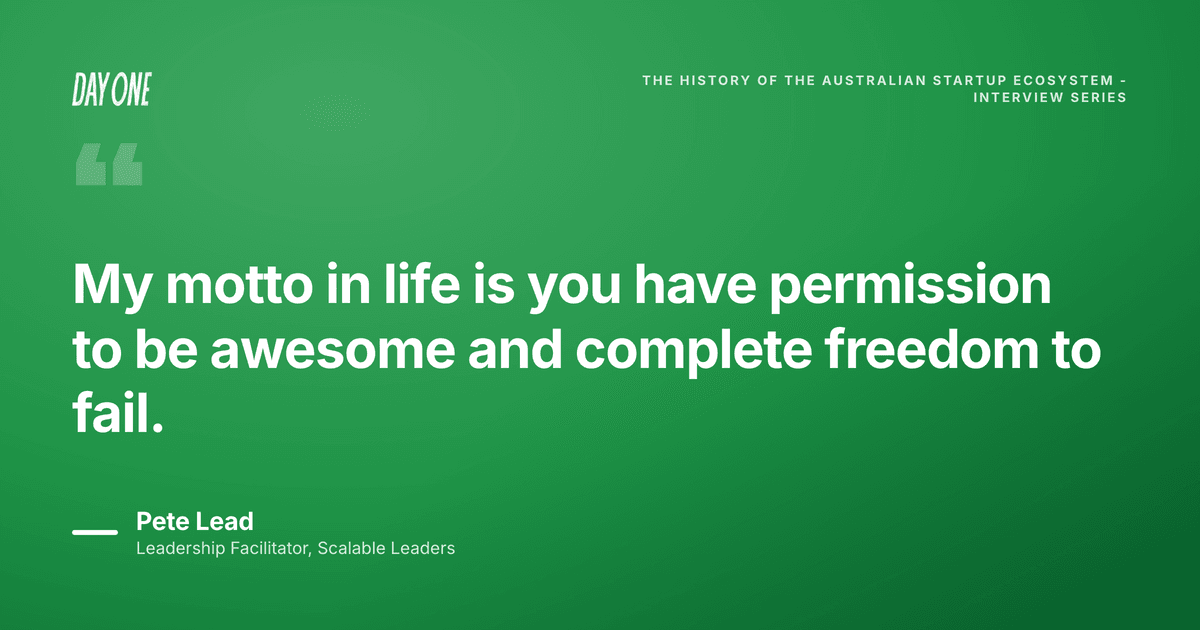
Transcript Synced · select any line to jump ▾ 0:00 Speaker: Let me tell you about our partner, Teamified. If you need to build a top-notch team quickly, Teamified is your go-to solution. They not only provide fractional CTOs, they can also do contractors and even remote team members tailored exactly to your needs. And whether you're looking for expertise in the Philippines, India, or Sri Lanka, Teamified has you covered. What's amazing is that Teamified uses a blend of AI and human expertise to cut hiring times by 50%, cent. Their platform handles everything from automated onboarding to day-to-day management and even performance tracking. You can also handle rewards and recognition, buy equipment, and order training all through their platform. Simplify your hiring process and get the best talent fast with Teamified. Check them out now and transform your team. Go to dayone.fm/teamified. That's dayone.fm/teamified. T-E-A-M-I-F-I-E-D, and get started today. Hi, I'm Adam Spencer, founder of the Day One Network, which is bringing the history of the Australian startup ecosystem to you. I believe in founders. It's why I do everything I do at Day One and our media company, W2D1 Media. And that's why the Day One Network exists, to create helpful content for founders. We've got some great shows in development, but a large part of what we do couldn't be done without support from our partners and sponsors. And I couldn't be happier than to be working with NTP, who get community better than any other technology recruitment company out there. A Newcastle company like mine, NTP are invested in seeing the growth of the local tech community in Newcastle, Sydney, and more broadly Australia. So thank you, NTP, for helping us bring helpful content to founders and the startup community in Australia. Back to the interview. Hi, I'm Adam Spencer, founder of the Day One Network, which is bringing the history of the Australian startup ecosystem to you. I believe in founders. It's why I do everything I do at Day One and our media company, W2D1 Media. And that's why the Day One Network exists, to create helpful content for for founders. We've got some great shows in development, but a large part of what we do couldn't be done without support from our partners and sponsors. And I couldn't be happier than to be working with NTP, who get community better than any other technology recruitment company out there. A Newcastle company like mine, NTP are invested in seeing the growth of the local tech community in Newcastle, Sydney, and more broadly Australia. So thank you, NTP, for helping us bring helpful content to founders and the startup community in Australia. Back to the interview. 2:46 Speaker: Hi, I'm Adam Spencer and welcome to Day One, the podcast that spotlights Australian startups, founders, and the organizations that empower Australian entrepreneurship. We go back to the beginning to tell the story of Australia's most inspiring founders and how they built their companies. You're listening to a special interview series as part of a documentary W2D1 is producing about the history of the Australian startup ecosystem. On the episode today, we have— 3:18 Pete Lead: Hi, I'm Pete Lead. I am head of programs at BlueChilli. I joined BlueChilli about 3 and a bit years ago, and what I do there, I started as accelerator manager. So I was helping to run the startup accelerator programs, taking founders from idea stage to launching a tech startup business. And my role has evolved over the years. I'm now head of programs. So looking at how do we structure and run our accelerator programs? How do we structure and run our engagement with corporates and other organizations that want to act more like a startup and get products and business models launched and validated? 4:01 Speaker: What drew you to the role originally? You know, it's like 3 and a half years ago now, I think. 4:11 Pete Lead: Yeah. The long version of the story is a whole— it was a confluence of a whole bunch of different things. So, when I started as an undergrad at university, we're going back, you know, 20 years to start this story, I started doing improv comedy, started doing theater sports. And really fell in love with that. And, you know, performing in the uni bar every week and rehearsing, practicing with friends during the week. And as I, as the more senior people left, it kind of fell to me to start training up the new batch of students that were coming in. And so I fell into a bit of a leadership role and a training role. And that training role is something I continued over the years. So I've been teaching improv for 23 years now. 5:01 Speaker: Wow. 5:02 Pete Lead: And that's just something that I always did outside of, you know, outside of my 9-to-5 job. It was just my hobby. And when I finished my undergrad, I finished a law degree and I didn't know what I wanted to do because I'd never actually set foot in a law firm. So, I chose to take a 9-to-5 admin job so that I could keep doing music and comedy and improv. And teaching in the evenings. And that's something that I just kind of kept doing, started a production company with a friend so that we were doing corporate training and putting on shows and festivals. And that's kind of like, you know, my job just remained a 9-to-5 job. And I got to, you know, 4 or 5 years ago, uh, 2016, I realized, well, I'm kind of like a professional generalist. And if I want to go traveling the world or I want to go and get a different job somewhere, I don't know what job I would apply for. I don't know who would sponsor a visa for someone who is just a general admin person. So I went and did an MBA. And it was during the MBA that I got into leadership coaching. One of the very first, the very first unit that we did was all about sort of self-reflection and how to be a leader and how to be a coach. And I trained up to be a peer coach. So a student who's been through the course before, who would then help the first-year students go through this skill training. So would be sitting there next to me— next to them and helping them to do feedback better and to have difficult conversations and solve problems in a really skill-based in-the-moment coaching. And I was doing that, started doing that with the lecturer outside of class. So doing it kind of for pay. And I took a day off work to go and do this half day of coaching with, you know, 30 executives from a legal and accounting firm. And at the end of the day, I realized I'd added more value to the world by doing half a day of this coaching than I would have done if I went to do my job for a full day. And that just got me thinking, you know, I should be— what if I did this as my day job? What if instead of doing all of these fun things outside of work, I actually brought this kind of joy of teaching and coaching and helping to develop people and ideas, and I brought that into my day job? And that's when my sister sent me the job at BlueChili that was working with startups, which was this cool new space that I was just hearing about. And it was working with founders and helping them to build better companies and be better CEOs. And I threw my hat in the ring and got the job, which was a massive surprise to me, and was thrown headfirst into the deep end, uh, running a boot camp for 40 startups, uh, day 3 of my job. 8:05 Speaker: What did you know about BlueChilli at that point? 8:08 Pete Lead: Almost nothing. Yeah, almost nothing. I'd had a conversation with my sister at Christmas, so like 3 or 4 months before, and she was like, "Oh yeah, I've got a new job. This is what I'm doing." And I'm like, "Ah, that sounds interesting. I don't really know what that means, but you know, it sounds fun." And I was actually looking at being a management consultant and spoke to someone at Digital McKinsey and he'd said, 'Well, if you've got an MBA and you've got digital experience, then, you know, that'd be a no-brainer to hire you. So you should go and do what your sister is doing.' I was like, 'What is my sister doing? I have no idea.' So yeah, like, before she sent me the job, I was like, I didn't know about BlueChilli. I barely knew anything about the world of startups except what I'd heard in the media about, you know, Uber and Airbnb and things like that. 9:01 Speaker: Can I ask what prompted the move for you from, what was Sydney to New Zealand? Is that right? 9:06 Pete Lead: Yeah, that's right. That was a kind of a personal choice of, so 2020 was going to be the year we went traveling, my partner and I. And obviously, you know, beginning of 2020, some things changed in the world that meant, you know, traveling to Europe was not a great idea. And we've always loved New Zealand. We eloped and got married here. 12, 13 years ago. So, we've just always loved New Zealand and the South Island and we wanted a change. I've never lived overseas. So, you know, I wanted to go on a big adventure, but one that was safe and close to home, I guess. So, yeah, we looked up, we're in Dunedin now, looked up kind of what the tech scene and the startup scene is over here and it's pretty good and the lifestyle's really good. So— Yeah, it's just a thing we wanted to do. 10:01 Speaker: This is just a fun question as well before I start hitting you with some hard ones. What would you say is the most important thing someone new, someone who hasn't met you, should know about you? You do improv, you've sold out a whole, I can't remember how many seats, show. 10:18 Pete Lead: Yeah, you've done your research. 10:19 Speaker: A little bit, yeah. 10:21 Pete Lead: So, my My motto in life is you have permission to be awesome and complete freedom to fail. And that has informed a lot of the stuff that I've done, like, and that comes from improv, like it's an improv philosophy. And so I will just think, hey, this thing should exist in the world, or this thing sounds like it would be fun to do, let's give it a go. And that's led me to do some weird things like, you know, starting a theater company or taking up parkour, moving to New Zealand, moving to Perth many years ago. It's just, yeah, I don't know, a bias for action and an acceptance in advance that it might not work out the way I want it to. 11:09 Speaker: That's an amazing mindset to embody, but, and also, you know, pass on to the founders that are coming through. The BlueChilli programs. 11:18 Speaker: Yeah. 11:19 Speaker: What's, what do you think is the biggest or most important thing you've learned since joining BlueChilli? 11:25 Pete Lead: The stuff that we think is super obvious is not obvious. You know, I've been in the startup world for 3 and a bit years, and so it's really easy to think, you know, obviously you should go out and validate a problem before you build a solution, you know, spend a lot of time coding and etc. And that's not super obvious to a lot of people, or it's not their default way of thinking. You know, if you tell a group of— so I teach at the university as well. If you teach it, take a group of students, or you take a group from a startup weekend, and you say, go and validate your idea, they'll start drafting a survey, and then they'll send the survey around on Facebook and Twitter and Instagram or whatever. And that's, that's validation. They think that that's good enough to, you know, spend a lot of time working on something because you like it or because people say they like it. And so the idea of like getting right down to brass tacks and validating, like, are you actually solving a problem? Do people actually want this value proposition? Will people actually pay for your solution? Before you go and build stuff. That's not a default way of thinking for most people. 12:46 Speaker: So let's just say that there's a brand new founder that they haven't started yet. They've got this idea in their head. What would you tell them? Like what would be step 1, step 2, and step 3 for them to go out and figure out if this, you know, to validate this idea? 13:02 Pete Lead: Yeah, so step 1 is forget about your idea. And look at what problem are you trying to solve. You know, it's not about the app, it's not about the features, it's about what problem are you actually solving and who are you solving the problem for. Then go and actually speak to these people who have this problem and find out how much of a problem it is. And also, how else have they tried to solve it? Because the thing that a customer thinks of or a user thinks of as an alternative or a competitor is not going to be what you expect. It's going to be, you know, a Google Sheet or a Facebook group or something as opposed to a competitor company. So step 1, you know, look at the problem. Step 2, look at what the alternatives are. And step 3 is work out, well, what does better have to look like? 13:53 Speaker: That's a good question. 13:55 Pete Lead: You know, what are the attributes of a better solution? Then you can go to all the fun stuff about ideating and sketching and prototyping. But until then, so I've got this thing against ideas that sound logical because they're the dangerous ones. 14:11 Speaker: Yeah, yeah. 14:12 Pete Lead: So if it sounds logical, then you get lulled into this false sense of security where you're like, yeah, that sounds, that sounds obvious. That sounds logical. We should do that. And people are not necessarily logical and things don't, are not always kind of neatly packaged in the way you'd like them to. And this is also kind of a knee-jerk reaction against the MBA projects that I did, where everything was kind of neatly tied in a bow and had 3 horizons. And in year 5, you'll do this and you'll get 5% of the market, et cetera. But when things sound logical, you know, they sound obvious, and you rely too much on assumptions about how pretty everything is, you know, how neatly everything ties up. As opposed to the real world things that people want and do. 15:01 Speaker: You know, I hope we can circle back to this kind of stuff because this is, you know, this is what I really enjoy talking about. But getting on track a little bit around the docuseries that we're putting together and trying to get some content for that. What— so joined BlueChilli a little over 3 and a half years ago or something around that in Sydney. You know, we've touched on this briefly, but so that was the first kind of, you know, experience you've had with the startup world. 15:33 Pete Lead: Yeah, yeah. 15:35 Speaker: What did it look like then for you from your perspective in Sydney, like community size, you know, programs and organizations that were around at that time and kind of very present and easy for you to see and know that they existed? Like, just give us a little bit of a snapshot. 15:53 Pete Lead: Yeah. So, I felt completely out of my depth and overwhelmed and a bit of imposter syndrome because obviously there was this massive community and industry that I knew nothing about. I'd read The Lean Startup and Running Lean and then kind of as I was applying for the BlueChilli job. So, it was like, yeah, that's my, that's the whole sum of my knowledge of the startup ecosystem. And, you know, we were talking, we, you know, we were talking to founders and we'd, we'd run these master classes and workshops and people would mention the different parts of the ecosystem, the different kind of investors and venture capital and angels and co-working spaces and incubators. And they were words that were becoming familiar to me, but I had no understanding of them. I actually remembered as I was hearing it that about maybe a year before, or when it, when it had just opened, the Sydney Startup Hub, I actually looked at it as, oh, could this be a potential theater venue where we could do improv shows and comedy shows? And, you know, it said if you want to use the space, then get in touch with one of the residents. And I had no understanding of what that meant. Now that I've been there, I understand what that means where, you know, you've got Fishburners is a resident and Stone Chalk are a resident and that, you know, these are companies that operate in a space and they have access to the theater. But at the time, as an outsider, I was just, oh, they have a theater. I wonder if I can use the space. And then I kind of got brought into the fold pretty early on. There's a hive mind, Sydney Excel— Sydney Accelerator? Yeah, I think it was Sydney Accelerator Hivemind run by Julie Trell and Ben, name escapes me. And they were just getting people together from the accelerators and incubators and working together and, you know, bring us together and have a discussion around, well, you know, what are you doing around alumni? What are the challenges you're having? What have you tried that's working? And that was just so welcoming and it was just a great way to meet other people and realize that Even though we're different accelerators and incubators, we're not actually competing. We're operating in a pretty small space and we want to lift the whole space up. We want to lift each other up. And that was just like, it took so much pressure off me as someone new to the ecosystem to just be in a room with other people who were in the similar space to me and learning about what they'd done and what they were doing and the different backgrounds they were from. I mean, you look at some people that are, you know, working in different parts of the ecosystem now and back then, and they have such amazing backgrounds. I was just looking at the new Chief of Staff at Folklore Ventures, and, you know, she's worked for Uber and Airbnb and ClassPass. And it's like, these are amazing companies that people have worked for and they're in the Australian ecosystem. You know, like, that's so amazing. And everyone is so welcoming and accepting of someone like me who doesn't have any of that background. So yeah, it was, it was for me really intimidating coming into it and pretty quickly realizing that it's just a group of really friendly people who are out to help each other. 19:33 Speaker: Yeah, coming into this space, into this kind of community, I guess, through the door that is, you know, BlueChilli, you've already surrounded with some amazing people. Were there any other names, any other people that were really helpful to you, you know, early on, you know, to help get your bearings? 19:53 Pete Lead: Putting me on the spot now. I'm going to feel bad if I don't name people. 19:57 Speaker: We can cut this bit out. 20:02 Pete Lead: I'm naturally an introvert, so I didn't go out of my way to connect with a lot of people. I mean, you know, obviously Julie Terrell, you know, is part of that accelerator Hivemind, even though I was intimidated when I met her. I mean, Alex Carpenter from the Genesis Program at University of Sydney was a great connection to make. Otherwise, I probably leaned a lot on my fellow Blue Chilians who already had a lot of great connections. Were more extroverted and had stronger relationships. One of the ones that really early on made a huge impact on me actually, sorry, was Phil Hay-Sinclair. Mm-hmm. We had him in for a masterclass, I think one of the first masterclasses that we put on at BlueChili in my time there. He just blew me away with the stuff he was talking about and, you know, making that head, that mindset switch from a corporate environment to a startup environment. And it's really, it sticks with me now. He said, if you want to get someone into the startup headspace, give them $50 and tell them to go to Officeworks and buy everything they need for the next 6 months. And you'll realize just how much you've relied on that kind of corporate budget. And so I did. I went to Officeworks to try and buy Post-it notes for one of our sessions, and it was super expensive. 21:25 Speaker: Wow. That's a great little Activity. I'm going to do that. And just a quick side note that I want to mention that you are an introvert, yet you run a theatre company and you do stand-up comedy. 21:41 Pete Lead: Yeah. 21:42 Speaker: Or improv. 21:43 Pete Lead: Yeah. 21:43 Speaker: That's interesting. 21:45 Pete Lead: It's a weird dichotomy. I think a lot of improvisers are introverts. I'm not sure what it is. I think it's the intellectual challenge. Or the perceived intellectual challenge of making something up on the spot versus, you know, the desire to be out there performing and connecting with people. But yeah, like I see kind of introvert extrovert as the, like the way it was described to me is what do you do at the end of the party? 22:17 Speaker: Yeah. 22:17 Pete Lead: So at a party, you know, introverts and extroverts, they can both get along and they can, make, you know, make connections and small talk and chat with people. But at the end of the party, the introvert wants to go home and just be on their own and recharge, and the extrovert wants to know where the after-party is so that they can keep going. 22:36 Speaker: Yeah, yeah, yeah, yeah, I understand that. And I'm the guy that wants to go home and just shut the door and be on my own. That's how I need to recharge after that party. 22:46 Pete Lead: And yet you run podcasts, which involves Yeah. Connecting and talking to people. 22:51 Speaker: I know, it's, why am I putting myself through this? 22:55 Speaker: Exactly. 22:57 Speaker: So biggest gaps, what are the biggest gaps that you've seen within the Australian startup ecosystem during your time at BlueChilli? Just any areas that we could improve on? 23:11 Pete Lead: I think the, I'm not sure if you like describe this as a gap, but I think the biggest, blind spot is that people don't really know what a startup is or that the startup ecosystem exists. I run some startup classes at University of Sydney and I start the first class by asking people, well, what is a startup? And most people don't even have a guess at what a startup is. Or they say, you know, it's just a company that's just starting. Or like it's a small business. So when we're in the ecosystem, we think we know what startups are and, you know, startups are this big booming thing. And I think we forget that most people only see the word startup when it comes up in the news, when, you know, an Afterpay gets acquired or Uber is doing something. And not that a startup is a particular thing that lots of people are trying to do. Yeah, so for me, that's the biggest gap is how do we get people to know that the ecosystem is there and be part of the ecosystem? And, you know, to come back to how do you market, you know, what do startups need to know about marketing? Like, what words are we using? Is the word startup enough? To have people understand what we're doing is entrepreneur or innovation. Like, what are the words that we should be using to get people to see what it is that we're doing and be more involved in the ecosystem if they want to be? 24:47 Speaker: Well, how do you describe what a startup is? 24:51 Pete Lead: I, I, this is interesting. When I started teaching this class, it was, uh, someone else had had taught this class, you know, a bunch of times before me and I was invited in to teach it. And I had to look it up. I was like, oh, what is the definition of a startup? Because even though I'd been working in startups for a year or something at that time, I hadn't actually defined it. So I took Steve Blank's definition, which is a startup is a temporary organization used to search for a repeatable and scalable business model. 25:26 Speaker: Mm-hmm. 25:26 Pete Lead: And I break that down into, you know, it's a temporary organization. So it could be a group of people forming for the first time. It could be part of a larger existing organization, say, in a corporate setting. It's used to search. So it's defined by a lot of uncertainty, or a lack of certainty, ambiguity around some part, some areas. It's searching for a business model, because for me, the super interesting part about startups is not creating a new product, but creating a new business model, a new way that the business works and makes money. And the business model should be scalable and repeatable because you don't want to just do it one time. You want to be able to grow either into new product lines, new markets, new geographies, etc. 26:17 Speaker: What do you think— and we've, we have touched on this a little bit already— but what do you think as a community, as you know, the Australian startup community, what do you think we're doing really well? 26:28 Pete Lead: Being open and supportive. I'm just amazed that there are things like, you know, the Airtree Open Source VC, where there's a spreadsheet of all of the venture capital and investors and angels, where they have templates and documents that you can use and adapt, you know, that the Blackbird Giants and Startmate Office Hours and, you know, all of these different ways that people are giving back to the community. And then things like the hive mind, as I said, the accelerator hive mind where people are supporting each other, you know, with particular challenges or sharing things that work or people who are coming and giving masterclasses and workshops and doing pitch practice. It's not something that I think would work if everyone was in it for the money. Everyone is in it for the community and helping and supporting each other., and that just, you know, as I said before, it lifts everyone up because everyone can do better as a result of that instead of individuals having to go out and find their own answers and build everything from scratch. 27:35 Speaker: Do you, when I asked one of the biggest gaps you've seen, this is, you know, that question asked a slightly different way, and feel free to dodge this one because it could be controversial because what, What unpopular opinion do you have about the Australian startup ecosystem? 27:52 Pete Lead: I don't know. I mean, I guess it's, it's, uh, you know, relating back to the biggest gap, maybe we're too insular and, um, too inward-looking as opposed to, uh, looking externally. I don't know, I probably don't have a hugely unpopular opinion about the Australian startup ecosystem. 28:13 Speaker: That's good. You, you seem way too nice to, to have that. Yeah. Unpopular opinion. There's like second or third last question. What's, um, from your point of view, one of the biggest kind of most recent developments in the startup ecosystem? Like something that's happened that has moved us forward a significant amount as a community, as an ecosystem? 28:38 Pete Lead: I don't know if this is Australia-specific, but the rise in no-code tools I think makes things so much more accessible. The fact that you can prototype something, put something out in the world and test it without having to be a coder. I mean, even if it's just putting up a landing page, a website landing page, the ability to do that cheaply and quickly and iterate is just amazing. And I think it's a game changer in terms of just more people being able to give it a go and validate something without having to invest a whole lot of time and money and find the right connections and know the right people. 29:24 Speaker: I think this next question is, is written for you, um, given that all the, you know, founders that you've helped. 29:31 Speaker: Yeah. 29:32 Speaker: And probably talked to. What, what is It's the advice question. So what one piece of advice, if you could only give one piece of advice to a brand new founder that would increase their chances of success, even just slightly, what would you tell them? 29:49 Pete Lead: So given what I said before, my motto is that you have permission to be awesome and complete freedom to fail. I would say spend 3 months trying to make it work and then reassess from there. Like, don't put a whole lot of pressure on yourself that this has to be a big thing that succeeds and is massive and is awesome and your idea is incredible. You will learn so much by spending 3 months, even if you completely fail, that it will be worth doing it and make you more likely to succeed next time. 30:23 Speaker: That's a piece of advice that I probably should have listened to back when I started Welcome to So last question isn't really a question, but it's just me wanting to open the floor to you. You know, as you know, this content here, and it's all happening to tell a story about the history of the Australian startup ecosystem and how we got to where we are today, and if we're on the right track moving forward. With that in mind, what do you, what do you think absolutely needs to make an into this series? 30:54 Pete Lead: Probably what I would say, the skills that you learn by trying to start a startup or running a startup or working for a startup can have a massive impact on the way we do business generally, the way that you are an employee or a manager generally. So don't think of it as a startup as an end in itself, but as a set of skills that can be applied to do things faster, better, cheaper, differently, and that should be supported. 31:35 Speaker: I hope you enjoyed that interview. More interviews are on the way. Follow the podcast wherever you're listening right now. Stay tuned for more interviews with many, many more amazing people from the Australian startup ecosystem. Thanks for listening and see you next time. Bye.