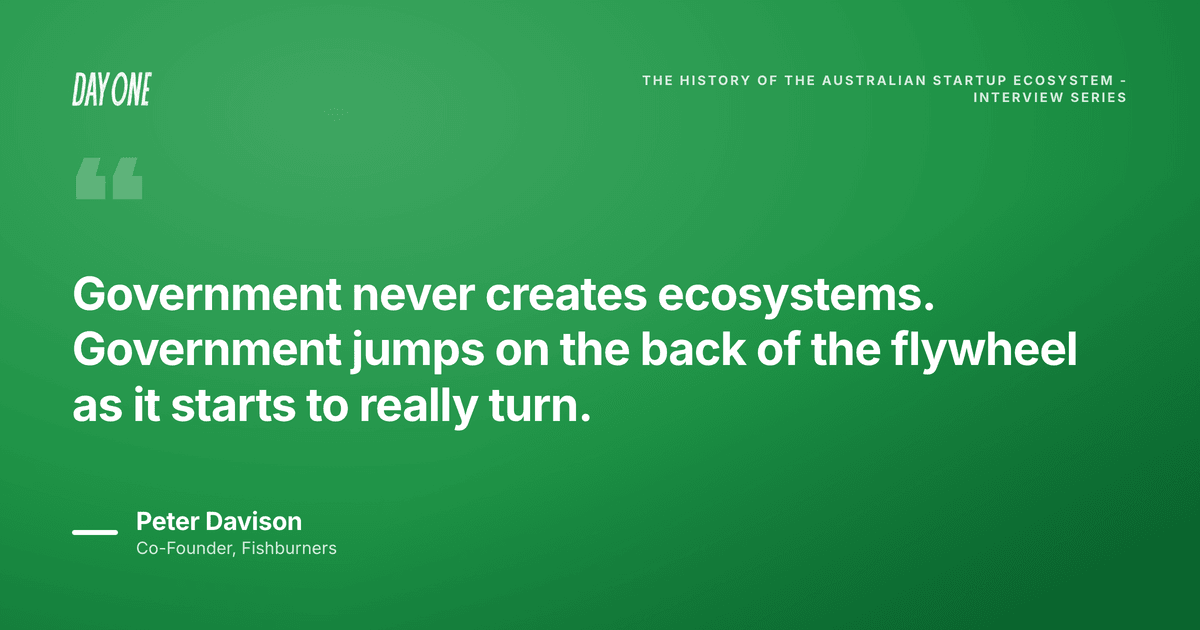
Transcript Synced · select any line to jump ▾ 0:00 Speaker: Let me tell you about our partner, Teamified. If you need to build a top-notch team quickly, Teamified is your go-to solution. They not only provide fractional CTOs, they can also do contractors and even remote team members tailored exactly to your needs. And whether you're looking for expertise in the Philippines, India, or Sri Lanka, Teamified has you covered. What's amazing is that Teamified uses a blend of AI and human expertise to cut hiring times by 50%, cent. The platform handles everything from automated onboarding to day-to-day management and even performance tracking. You can also handle rewards and recognition, buy equipment, and order training all through their platform. Simplify your hiring process and get the best talent fast with Teamified. Check them out now and transform your team. Go to dayone.fm/teamified. That's dayone.fm/teamified. T-E-A-M-I-F-I-E-D, and get started today. Hi, I'm Adam Spencer, founder of the Day One Network, which is bringing the history of the Australian startup ecosystem to you. I believe in founders. It's why I do everything I do at Day One and our media company, W2D1 Media. And that's why the Day One Network exists, to create helpful content for founders. We've got some great shows in development, but a large part of what we do couldn't be done without support from our partners and sponsors. And I couldn't be happier than to be working with NTP, who get community better than any other technology recruitment company out there. A Newcastle company like mine, NTP are invested in seeing the growth of the local tech community in Newcastle, Sydney, and more broadly Australia. So thank you, NTP, for helping us bring helpful content to founders and the startup community in Australia. Back to the interview. Hi, I'm Adam Spencer, founder of the Day One Network, which is bringing the history of the Australian startup ecosystem to you. I believe in founders. It's why I do everything I do at Day One and our media company, W2D1 Media. And that's why the Day One Network exists, to create helpful content for founders. We've got some great shows in development, but a large part of what we do couldn't be done without support from our partners and sponsors. And I couldn't be happier than to be working with NTP, who get community better than any other technology recruitment company out there. A Newcastle company like mine, NTP are invested in seeing the growth of the local tech community in Newcastle, Sydney, and more broadly Australia. So thank you, NTP, for helping us bring helpful content to founders and the startup community in Australia. Back to the interview. Hi, I'm Adam Spencer and welcome to Day One, the podcast that spotlights Australian startups, founders, and the organizations that empower Australian entrepreneurship. We go back to the beginning to tell the story of Australia's most inspiring founders and how they built their companies. You're listening to a special interview series as part of a documentary W2D1 is producing about the history of the Australian startup ecosystem. On the episode today, we have— 3:18 Peter Davison: G'day, I'm Peter Davidson. I guess I'm most well known for being the first non-family and friends investor in PayPal back in the day. We were pretty instrumental in getting them off the ground and giving them a business model. Since then, I've floated around the world helping different startups and institutions. I started a Chinese venture capital firm in Shanghai. I started Fishburners back in the day, funded that, and just a bunch of other things that I've been doing, a lot of education and a lot of just sort of advice to different governments and so on. Okay. 3:58 Speaker: Why entrepreneurship? Why investing? Where did that come from? 4:03 Peter Davison: Mate, to be honest, I was a very high achiever at university and then I went to, but not a very good student by the way. I just winged it. But when I went into the Australian workforce, it was an absolute disaster. I just couldn't cope. I couldn't cope with the culture, the values, the lack of, well, my perception that it was very, not innovative, it was very sort of corporate and political, and it was absolute hell for me. So I basically, yeah, I was very ambitious. I was a technologist, and a mate of mine at university, we sort of made a pact to each other that one day we'd get together and do something big, you know, as young dudes do. And so honestly, the internet came along, he'd made a lot of money in banking, He was completely sick of it as well. And he said, "Hey, man, why don't we do a VC firm? I'll fund you to go fly around Silicon Valley and find some deals for us. So I got the money, just go and make us lots of money." And I'd never been to Valley before. I'd never been involved in startup before. I did know technology. I'd never been, you know, I'd never been in that whole scene at all. I'd never— 5:22 Speaker: Yeah. 5:22 Peter Davison: Even been to, I think I've been to California once, but not Silicon Valley. So it was really just an act of desperation, to be honest. Just a young guy's act of desperation. I did know the internet very, very well, and that was unusual. I think that was a bit of a secret, 'cause I'd worked at Melbourne University, and that was the hub of it. 5:41 Speaker: What year are we talking that you went flying around? 5:44 Peter Davison: '98, '99, yeah. 5:46 Speaker: Right, and when you say you knew the internet well, What do you mean by that? 5:50 Peter Davison: See, I was at University of Melbourne, which was the hub of the whole internet network, and it was also the domain registry monopoly. So I was running a team there in intelligent decision systems, which had nothing to do with the internet. But the World Wide Web started out, we were the first to get decent access and good internet. And so we were all messing around with that and it really got me interested in that. So I'd plumb the depths of the internet looking for businesses and founders and how this all worked. So I mean, the reason why a guy like me with no background, no sort of pedigree in this area could succeed was because of the internet. You could poke around the corners of the internet looking for good companies, looking for good people. You didn't have to be a part of the networks. So I really leveraged that a lot. 6:45 Speaker: Were there any early, like '98, you know, in Australia, were there any early whisperings or precursors to, you know, the startup tech ecosystem that we have today? 6:55 Peter Davison: Not from my point of view. You know, let's see, I was in Sydney, but I hadn't heard about it. There were probably some sort of rich, wealthy circles talking about it, but it wasn't very You know, it certainly didn't pervade corporate and I hadn't heard about it. I guess I didn't have many mates in this area. I had technologist mates, but they were all working jobs. 7:19 Speaker: So you fly over to the US, start scouting. What was the VC firm's name that you and your mates started? 7:28 Peter Davison: Gürtel Capital. Gürtel is an Austrian mathematician. It's not a piece of clothing. 7:34 Speaker: Okay. How many conversations would you say you had or opportunities to explore before you sat down with Peter Thiel of PayPal? 7:42 Peter Davison: So I actually flew over there with the MP3 stuff because the MP3 was very accessible and I could see it was going to be a bit of a revolution in the music industry and I really studied that hard. So I went and met the guy who started the most popular MP3 player called Winamp, and he was in Sedona, Arizona, which is this beautiful place that's nowhere near Silicon Valley. And I, I got to meet him, and I got to meet a guy called Rob Lord, who, who actually was a bit of an internet pioneer. And I, I, I really learned a lot about Silicon Valley, you know. I mean, this is, this is another part of the secret, is that I let— I talked to all these people, and I really got up the curve of, you know, the right jargon how the internet works, how things are being monetized, what's getting funded, and so on. That deal actually fell through, which was sad, because they eventually sold for $80 million. They wanted to offer the whole company to us for $50 grand. The good thing was that everything I was looking at was turning to gold. I was on to something. I was picking up on something. I'd met Musicmatch, which sold for $200 million. I'd met mp3.com. It offered— MP3.com. Offered us an investment for $10 million, and they, they were eventually sold for $300 million, but at one stage we were a billion dollars. So everything was turning to gold, but we didn't capitalize on that. We were a little bit too nervous that this pirate scene could suddenly be this massive music, you know, takeover. 9:18 Speaker: Yeah, '98, so '98, '99, 2000 in the US. What struck you most about the the ecosystem over there, kind of coming to it from Australia? 9:28 Peter Davison: Oh mate, you know, chalk and cheese. You know, when I talked about business in Australia, a guy like me, people were like, ah, you know, settle down, wait your turn, and who do you think you are, that sort of thing. I walked around Silicon Valley pretending I was a venture capitalist. I mean, I was a venture capitalist, but I felt like I was pretending. And people just embraced it. I was young, I was ambitious, it seemed that I had money and my friend did. You know, I had a briefcase. And it just had an air of like, yeah, yeah, I'm not going to laugh at you because you might be the next big thing. And it was very, very young, vibrant. And I really— it was the best experience of my life. I really felt, yes, there is another place to be. And it doesn't have to be like where you are right now. And there's a place that embraces your crazy dreams and where young people are kind of heralded. It was fantastic, man. I know it sounds a bit romanticized. And it probably is in my mind. But at that stage, I just was getting doors opened. There was no question of who I was and, you know, wait my turn or whatever. It was embraced and I could get intros to some really hot people. It was fantastic. 10:38 Speaker: When did you move back to Australia? Or was it just like business trips over to the US to scout? 10:45 Peter Davison: No, I stayed there for a couple of years. You know, we were so by the seat of our pants that, um— We hadn't sorted out our visa. So I actually had visa problems at one point and got excluded from the country, which is hilarious because we were PayPal investors at this time and we were big shots, but we were becoming the potential to be big shots. But this one guy said he didn't like my visa, so he excluded me from the country. And then the crash happened. So I came back in 2001, I think it was. So I was there for a few years. It was all a big kind of blur of activity. But frankly, Denman, honestly, I could have gone back. Peter Thiel was putting out Fearless for me to work with him because my partner told me he was. Because guys like me were sort of rare, that were guys who were technologists who were in VC. That was my sort of shtick. Right now, later on, I became a dime a dozen. But at that point, I was pretty valuable because I kind of really knew how it worked. But I didn't take any of that, man. I just stayed back in Australia. It was all— it took such a mental kind of effort to exist in that world and fight my background. It was mostly psychological, the reason why I didn't pursue it. 12:05 Speaker: Being in Silicon Valley, that romantic view of it that you have had and just loving it so much, what was your thinking moving back to Australia in the early early 2000s. What was the plan? 12:18 Peter Davison: Ah, see, man, even then, I mean, things were happening, you know, you had, you did have a few startups. I mean, I met a guy, you know, a guy that I know, he was at Macquarie Bank and he met me in Silicon Valley and he was sort of introducing to me a few companies and I just, yeah, I just felt this is not the same. This is like, don't get me wrong, the founders are fantastic. They're, you People who can survive in this environment, I suggest are better, what I would consider better entrepreneurs than people who could get a check for $20 million. These guys had to fight to survive. I really respected the founders, but not the ecosystem. You really had to be someone super special to make yourself stand out. You had to fight a lot of things to stand out. The ecosystem, no, it wasn't the same. I was thinking, well, what's the point? Yeah. I mean, what's the point of being an investor here? It's not thrivy. I've got to wait for these occasional ones to pop up. I was a bit blown away by the Silicon Valley world. It really just sort of said to me, you know, it doesn't have to be like this. It really taught me that the best, often the best, [FOREIGN LANGUAGE] is to move geographies. So yeah, it wasn't changed, man. It wasn't changed at all. There was starting to be a few things. I poked my head up a bit in about 2001, 2002. There were the Jody Riches and guys like that. It wasn't an accessible scene by any means at that point. You had circles of wealth investing. That was kind of about it at that stage. 13:49 Speaker: Have you ever found anything close to reliving that experience in Silicon Valley? 13:55 Peter Davison: I mean, China is exciting because there's so much money there. So yeah, in pockets there, it's quite an exciting place. The future is possible. Possible, and crazy people are getting funded. I liked the Berlin scene when I was there. I was at a pretty good time. It was starting to get quite exciting, and Berlin had created itself. You see, Munich wanted to be the capital of Germany, startup capital of Germany, and it was, and yet these two guys, the rocket internet guys, chose Berlin, which was this artsy, rundown city. and they turned it into the German startup capital. It was a fantastic historic place as well, and I sort of love that stuff, but it really had a vibe about it as well. So that's about as close as I've come where you really feel the possible all around you. So yeah, but nothing quite like Silicon Valley. 14:47 Speaker: And before we hit record, you mentioned it would be good to figure out, you know, what Australia is missing, the characteristics that you see, like drawing on that experience from Germany, from Silicon Valley, from China. What do those ecosystems have that maybe Australia can learn from? 15:05 Peter Davison: Yeah, I mean, this is sort of a system-wide issue rather than picking on any particular group of people. I mean, we are a rich country, but we've got rich off the back of natural resources and continue to do that. And so the sort of capital that's created here has a different flavor to it. It doesn't have a sort of speculative, anything's possible type of flavour. And what you do notice in these other ecosystems is that, okay, you've got some big successes, but the flywheel starts. People talk about the flywheel. I don't see the flywheel in Australia. What the flywheel means is reinvestment in the local scene, tech management from that company that was present within the ecosystem has started their own companies and started investing in their own companies. If you look at Silicon Valley, 60% and up of the unicorn founders are repeat successful entrepreneurs who've had at least a $50-100 million exit previously. 16:11 Speaker: Right. 16:11 Peter Davison: Yeah, it's a different story. Yes, you've got these successes, but here's what you've got to ask. When you talk about an ecosystem, you're talking about a piece of dirt called Sydney. I mean, I'm not rubbishing Sydney. I'm saying you're talking about geography. You're talking about keeping people local. You've got to ask yourself, what is it about the local ecosystem that keeps people here? Now, in Silicon Valley, it was semiconductors in the early days. In Israel, when it started, why did people stay in Israel? Well, there was religious reasons, you know, it was the homeland, but there was also, there's this very strong specialization in cybersecurity, which came from the fact that young men had to do service, and a lot of them chose to go to technical colleges and were coming out very skilled in cybersecurity. That's what kept them there. They couldn't, even if they became successful, they wouldn't move to the Valley because there was too much of a concentration cybersecurity skills there. So you've got to ask yourself, why are people going to stick here? How do you solve that problem? When the resources— when you've got to ask yourself, why are tech people here more likely to join startups and take risks and so on unless you've got something that keeps them here? Now, we do have things that keep them here. 17:42 Speaker: Yeah. 17:43 Peter Davison: You know, but they're, they're not that sexy. I mean, they're, they're, they're the natural resources, the health tech, that is energy. You know, these are things that we're very— we're actually very good at in, in technological spheres, but it's not sort of mainstream kind of, kind of innovation. I think we, we, you know, if, if we were to talk about what policy should be at a top level, we should be encouraging the ones that are going to stick. And if the others start by themselves, great. But you've got to ask yourself, why would an Atlassian or a Canva middle top management person decide to restart a company that they feel is going to be adjacent, adjunct to the Canva success in Sydney? How quickly are they going to leave? So while I see these successes, what you see is happening here is you don't have much thick soil. You've got a desert here, and whenever it rains, you do get a bunch of beautiful flowers. And I think we're seeing a lot of really beautiful flowers, but they're not necessarily going to die and become— they're not necessarily going to complete their life cycle and become the soil of the next ones. So you've got to ask, if you look through the list of all the top companies out there and you say, what's in common with them in terms of human capital? They struggle to get tech management. You only need to talk to Matt Barry about that and to Mike Cannon-Brookes. I've heard them both say about how they can't get Silicon Valley management over here. So you've got to ask, why are people going to stay here? And I think you've got to focus on your strengths. I would say one thing. I do think if you look at the publicly listed companies in the tech sphere in Australia, You do see a lot of fintech. Now, some of it's very localized type fintech, like superannuation and stuff, but I think— the other thing about fintech is that it does tend to pay well, and the quality of a lot of these other ecosystems when they started was that you had a lot of unemployed tech people looking for jobs who couldn't find them, so they had nothing better to do than do startups, whereas we have a very well-paid workforce. Yeah. In the tech sphere here. So they're taking a bigger risk to join a startup, right? So fintech has those salaries. So I see some potential in fintech, but you've gotta see, you've gotta really zoom in. You can't just broadly say, "Oh, startups, tech, throw all money at that." I just don't think that's the way to go to create an ecosystem. 20:23 Speaker: I do wanna talk about government for a second, 'cause you just mentioned policy. Depending on who I talk to, and you know, as I mentioned, we've done about 100 interviews so far, you know, some people are really, really, really for government supporting the ecosystem in a variety of ways, and some people are against it. Where do you fit on that spectrum? 20:43 Peter Davison: Okay, it's a little bit nuanced, but you know, with respect, I don't care what these guys say, 'cause I don't think they, I honestly don't think a lot of people have actually studied this. And studied the historical record on this. And so people just sort of talk about this sort of home-baked knowledge. With respect, I went and studied economic history and I was doing a PhD for a while. So let me speak with some authority about this, if I may toot my own horn. Government never creates ecosystems. Government jumps on the back of the flywheel as it starts to really turn. That happened in Silicon Valley, that happened in Israel. It's the way that things are done. So Australia, I think, tried to do that too early. We didn't have the flywheel turning yet, but started to have the ESB/CLP structure in place because that was the sort of standard. So I honestly think, though, that Australia should be more focused on its innovation in its natural resources. A lot of people say, "Oh, there's only a finite amount of stuff in the ground." That's not actually true. We've only just scratched the surface. Why can't we innovate about digging deeper mines? I mean, we are leaders in this, in technology in this area. It is the source of our wealth. There's nothing wrong with being a natural resources-based economy. Most of the leading countries in the world, the wealthiest countries in the world, are to a large extent natural resource-driven, including the US. Yeah. I would say. So why don't we focus on where we're strong and where people are going to gather and stay, and let's innovate in those areas, and let's have government support for those areas, for the really advanced technical people in those areas, and try to create centres where we do attract the best people in those areas. And I think we would because we have such strong, strong, strong skills in those areas. Healthcare is another one that we're strong on. So I would say that Here's the one nuance to that that I want to add that I don't hear from anyone, and that's this. The truth about productivity and technology, we know entrepreneurship's a source of productivity gain, and technology plays a big part of it. But the truth of it is, the adoption of technology is more important for most Western countries than the creation of it. So if you've got a very vibrant, fertile business ecosystem that's willing to try the latest things and has the people with the skills to help them upgrade their technology, that's where most of the productivity gain comes from. There's very good studies about this, and including in the US. 23:25 Speaker: Yes. 23:26 Peter Davison: In the US, it's about 3/4, 1/4. 1/4 from their own technology creation and 3/4 from the adoption of it. Places around the world. So one thing Australia is very good at is adoption. We're, you know, we're very wide-eyed about the world, and so we tend to adopt very quickly. And the stats are there that shows that we were very strong adopters of ICT. So what you can do, and I think this is where, you know, places like TechCentral might have its best value creation, is in keeping the local environment psyched about tech. Yeah. Creating employees that go into the big companies who are going to adopt very quickly. That is the truth, that we're very bad at creation of new technology, I mean, historically, compared to some of the leading ecosystems, but we are very, very strong adopters. And adoption is even more important than creation. So, I think governments should bear in mind when it creates something like a tech central, that it's not just about creating unicorns and having a vibrant flywheel that makes a lot of rich guys even richer. It's about creating an environment that infects the business culture so that we are always on top of the new technology, we're always looking for the next advantage. That's what I see the role as government is. 24:49 Speaker: If we can just jump back on the timeline for a second, you know, you moved back to Australia around 2000, early 2000s. A lot of people point to around 2012 when I suppose, you know, Fishburner started, a lot of other coworking spaces started to, when the ecosystem started to ramp up a bit. Is there anything that happened in that prior decade after you moved back to Australia that kind of you saw, you know, the things getting put in place, you know, things starting to— some foundational work starting to happen? 25:30 Peter Davison: There were financial institutions that were— that had sort of speculative components to their funds, and that was becoming increasingly prevalent. But to be honest with you, by this stage, I had sort of given up on on geography. And this is another factor we need to consider. What I saw is that a lot of businesses will be being built completely online with no connection to the geography. And that's increasingly going to be the case. You've got very mobile venture capitalists now investing all across the world. What's the connection to geography? So I actually started internet businesses and got involved in this almost underground world that the venture capitalists and no one else really talks about and very, very rarely overlaps with that world of people becoming very substantially rich, not billionaires, but substantially rich by just working from their bedrooms and working and attacking markets. What I saw, what was going on in my mind is that, look, why focus on this this ecosystem that's got all these obstacles to achieve where it needs to be to become a Silicon Valley, when there's this whole other virtual world out there. It's even very prevalent to me. A lot of the people in Fishburners who were successful, you've never heard of and you will never hear of, but I hear of them because they were my friends. They've gone on to do amazing things with gaming and e-commerce and A whole bunch of other stuff. There's all these guys that have really smashed it, but they don't want to be known. They don't get on your radar. They don't want to talk to venture capitalists, yet they're running mini empires in different places around the world. You see, what you've got is a local group of vested interests that need geography really to thrive. And so that's where they look. And so you've got universities, government, you've got You've got factory, startup factories, you've got venture capitalists, they're all largely about geography. It's becoming a little bit less so, but largely about geography. That's what they push. They don't want to know about your opportunity to be a successful entrepreneur by selling some sort of new— There's a guy called Davey Fogarty, he's actually raised investment, poor guy, but he was this young kid. From his bedroom, created this e-commerce empire in South Australia. And then when they do poke their heads up and become successful, then this ecosystem claims them, of course, but they were homegrown. They were self-grown. So I suspect that that's going to be a large factor as well that's going to drive us away from this idea of geography. 28:17 Speaker: What do you think is the defining factor in those types of entrepreneurs that do start those e-commerce businesses from scratch in their bedroom or their lounge room, whatever. What makes them special? That's what I want to try to figure out. 28:31 Peter Davison: Well, one of the things is that they haven't been bitten by the startup culture. That is important, man, because a lot of these people are not in Silicon Valley. The people I've met in America, and there's tons of them in America, they're like, "Why would you join a startup?" They don't have that pull from all the press and the hype about the startup scene. So they generally, often quite nerdy, maybe they're tech people, and they've floated around the internet and they've seen money happen in circles around there, and they've decided, "Well, there's money out here and no one knows about it in my geography. Why don't I see if I can capitalize?" A lot of them are disillusioned like I was about the local workplace environment. To be fair, I'm not your usual guy. I'm a tech guy and I was very ambitious and I was a bit full of myself and all that. You've probably got a lot of those guys. There's a whole culture of guys that don't want to be startups. They don't want to network. They don't want to go to events, but they're really good at sussing out what's selling, what's working on the internet, what the latest thing is. And they really don't want to go into a job. Some of them still work, but the ones I've seen— There's a different class of people as well now that are non-tech that are starting because the tech has now become so accessible to everybody. You see people setting up Shopify sites and I honestly think, man, that a lot of them have had the good fortune of not being infected by the startup scene, which would totally distort what they think a success is. Yeah, man, 'cause once a vulnerable person looking to have an alternative path is told that the only path is this high-growth, raise capital, it completely changes the perception in their mind about what business looks like. Here's the other thing about Australian entrepreneurs, which, because it's so tough and it's such a capital-scarce environment, you've gotta be an actual entrepreneur to be successful. In other words, you've gotta be resourceful, you've gotta hustle, you've gotta really seek out, sniff out where the opportunities are. Yeah. Australians, because of the capital scarcity, I think you see a greater prevalence of that here. And so that's a great environment to get on the internet with and start sniffing around low cost, trying to make money and trying to bootstrap. Don't get co-founders and contracts and everything, just try to make something work. It's very different, man. It's a very different mindset. 30:54 Speaker: Coming from the perspective— and correct me if I'm wrong about what I just heard you say around geography and it being less and less important. What was the thinking around starting Fishburners? 31:07 Peter Davison: Oh yeah, good. Yeah, that's a good question. I had no friends basically. So I'd come back from Silicon Valley for 10 years. I mean, I came back to Australia and I thought this, well, if I'm back in Australia, there's no point poking my head up. I'll just go underground and do this internet stuff. And I was out as far as I could from civilization, i.e., Canberra, and then later Wellington in New Zealand. But I had no friends, you know, and no one knew what I'd done. No one had knew, I didn't tell anyone, I didn't seek press. I just went underground. No one had heard, no one had cared when I first came back. My accountant introduced me to this, like, you know, this guy who was doing this little hosting company, and that's about as much choice as we had in Canberra back then, and I was trying to work with him a little bit. And he met this other guy who knew about the Sydney startup scene, and I They said, "Oh, Pete, why don't you come to an event one day in Sydney? You'll make some friends." And I did. I went there and Nicky Szaback was there and Mike Casey was there and a whole bunch of other guys were there. They asked me what I did and I don't think they believed me at first, but I told them I was the first investor in PayPal and they were like, "What is this guy who lives near Queanbeyan, dresses like he does with this terrible haircut, he speaks like some kind of rural guy?" he must be pulling her leg. I think that's what they thought at first. But, you know, they're like, "Oh, paper investor. Oh, right, okay, yeah, sure mate. Like, yeah, I'm glad they let you out today, you know, of your hospital or whatever." But, you know, eventually they cottoned on that I just— I'm not the kind of guy that seeks sort of status. It's all— to me, it's very internal. I already realized myself that you've got to find your own measures. Yeah. I'm very extreme on that. So I just wanted to make friends, to be honest, man. And here's the thing about Fishburners. Look, we were playing a little bit of a double game there, man, because to ride the wave, you had to talk startups. To press government, you had to talk startups, you know, high growth, all that. So there was a lot of that around. But when anyone— you can ask the original Fishburners— when anyone came to me, I was saying, hey man, you don't need to do this. There's this other path. So a bunch of guys listened to me. I was only there for a year or so. I mean, I floated around all the time, but I was only hardcore there in the first year. And those guys have gone on to do really well and are so thankful that they never touched VC, that now they have complete life freedom. I mean, as much as life gives you freedom, especially when you have family, but they've done very well for themselves. But they were getting bombarded by this VC pitching, all this stuff. And I was saying, man, you don't need to do that. And coming from me, it didn't make real sense because I'm the PayPal guy. 33:57 Speaker: Yeah, it's not making sense to me right now. 34:00 Peter Davison: Well, see, mate, I'm someone that I'm not quite like Peter Thiel, who I think has a flavor of deliberate contrarianism. But I do believe in kind of very strongly questioning the dominant ethos. 34:15 Speaker: Yes. 34:16 Peter Davison: I'd already had 10 years saying this is not a startup place. It's just not ready. You've got a better chance with your career by learning how to build a business. I've seen it. I saw it, man, when I was in Silicon Valley even during those times and all the times after. I'll give you an example. If you can indulge me, you can edit it out if I go on too long. 34:39 Speaker: Please. 34:40 Peter Davison: Mate, one of the guys I met, so it was probably about 2003 online. I was messing around with search engines. I was making good money from that. And this one guy approached me from nowhere. He's seen me on the search engine, you know, and he was this young guy from Paraguay, right? He saw that I had this traffic and he set up this new site. He said, hey man, "Do you want to be an affiliate of mine? I reckon I can make you a lot more money." And he's just this guy from Paraguay. And I said, "Okay. Yeah, let's try it, man." Like, you know, everyone's trying things and I did make a lot of money with that guy. And he did that over and over again with lots of other different people with lots of traffic. He now owns a television station, owns a mobile phone company. He's like this big shot. People have talked about him being president of Paraguay, but he's— Paraguay's got its own political issues. He's not sure he wants to have his children kidnapped. But this is what I mean, man. Once you open your mind to that area, I meet these guys that come out of nowhere and then become— and he never raised any capital. He's only been to the US once, and that was after he became quite wealthy. He stays in Paraguay. He's got no— there's no ecosystem there. I think he was doing it for his family, you know, he had real— and he was a bit of a hustler. He's not a tech guy at all, which probably helped him because sometimes tech guys like me get stuck in their love of technology, whereas he was like, look, I respect tech guys, I'm just going to put it all together and take a piece of the action. You see what I mean? It's just, it's, um— 36:12 Speaker: Yes. 36:13 Peter Davison: I was trying to focus on building those guys, and I'd already seen that when I started in Fishburners, but we had to play a little, we had to cover both things, but Honestly, man, your best bet— now, I'm not talking about what's best for the economy at this point. I think that's natural resources and focusing on innovating that. But for you as an individual, your best bet is not to take money, generally speaking, unless you're in part of an elite group of business people coming from elite school or network. Your best bet is to learn how to do it yourself. And I can promise you 20 years later that it's just as vibrant and possible now to become a financially independent person with zero money down almost, you know, a domain name, a few other things from the comfort of your own bedroom. And it's probably never been as possible as it is now. So why— I don't get it. So, so I'm a realist, I guess that's what you'd call me. Yeah. A realist. I'm not a futurist. I'm not an idealist. I'm a realist. The reality is that that's your best bet these days. I'm not someone in love with technology. I'm not someone who loves views of the future. I'm still, at heart, a realist who just happens to have a lot of these tech skills at the same time. Hopefully, that explains a little bit why I'm the PayPal guy, I've seen Elon, I talked to Elon, I talked to Peter, I advised Peter, I saw how rich it could be. When I came back, I thought, oh my God, that's fantastic, but it's a fantastic environment. Yeah, you can reach the heights, but it's not for everyone. And I thank my lucky stars that I had these advantages in this unique period of time. If I went there now, without my reputation or anything, I wouldn't go anywhere, man. So I'm very realistic about what made me successful, why nobody like me could pull that off. It's all about realism, I guess, in the end. And the realist inside me tells me that, you know, your better bet is to grow online. Why wouldn't you do that? And then you can live anywhere around the world. You don't have to work in a job again. And you also have the option of, of, of growing to a startup if you've caught on to something that turns out to be good. 38:37 Speaker: In terms of ecosystem, what are some of the biggest gaps today that if we have any chance of creating a really rewarding and flywheel ecosystem, what do we need to do? 38:52 Peter Davison: Okay, well, you asked me specifically about the flywheel. I mean, there are other types of ecosystems you can create here, which I think would be really advantageous. But so first of all, don't forget that the world is not all about Silicon Valley, especially now, right? It's just not. It's a small part of commerce on the internet and in technology. The gaps— this is— it comes down to human resource and human capital. It comes down to what differentiates us against the world. What do we have here that would be hard to duplicate or hard to lose in terms of people, right? No doubt we've got a really smart group of people here, right? I've seen really great entrepreneurs, in my definition of entrepreneur, really great technical people, but why would they stay here? And the answer is, well, because we're the best at this in the world. Yeah. We've got the best ecosystem, you know, the best professors, the best speciality in this world. I think you start from that and grow outwards. You don't scattergun it. I don't want to discourage all these fantastic companies we've got around there. It is fantastic what they've done, but what are they going to— what are they doing to start the flywheel? And I don't think you do that by government. That's always been done by private initiative, and the private These guys are not silly. They go, "Well, why would I start in Australia?" And if they see something that's advantageous in terms of growth for the long term within their vehicle, then they might start seriously backing— perhaps Atlassian might decide that, "Well, we do have this ecosystem of really smart tech management people and tech people who are adjacent to what we're doing, and I want to really invest heavily in that." Now, we'll see what they do. Same as Canva. Do we have this design crowd that's better than anywhere else, or that's going to stay here in Australia? You know, are they going to reinvest? I'm not putting pressure on them to do that. It's a system-wide question. But look for those signs. And I would suggest to you that the best chance we have of that starting to happen is by a focus on where we're strong. Mm-hmm. And not this shameful kind of embarrassment of the fact that we're a natural resources-based economy. We have become a strong natural resources-based economy because of innovation. Because of innovation. Why don't we encourage more mining engineers and agricultural tech engineers and energy? Why don't we become a centre of that? And attract them and use that as the sort of beacon of how we grow outwards. You look, look, Israel did that and they've grown outwards, right? They go in all sorts of different things, not just cybersecurity, but they focus on a strength where the capital and the people would stick around to help grow the geography. All right. So that's my answer for the, for the geography question. 42:03 Speaker: Yeah. 42:03 Peter Davison: Yeah. 42:04 Speaker: Before I ask, there's two questions that I end every interview, interview with. But before I ask those, is there anything for the documentary that we're trying to create that you think that we should include that maybe we missed? 42:16 Peter Davison: Like, I want to say that I don't think we're that far advanced, to be honest. So that's what I want to say. Yes, we've got some good companies, but see, that to me comes from the accessibility of global markets and global, you know, technology and ideas rather than that we've, you know, that's just a one-off kind of enablement from this globalized world that we've got. It's not because we've really started to take off. But did you talk to Matt Barry? 42:50 Speaker: Yes, that was an amazing interview. 42:52 Peter Davison: Okay, see, look, Matt talks a lot of stuff. I read in the press that I think, yeah, he's way out on a limb. Like, he is far too about the scene. Than I am. He's far, in my view, he goes way off, and he's far too bullish. But I have fantastic respect for the guy to stick around in Australia when it probably made more sense to go overseas and really try to make it work in this country. Plus, I also have respect for the guy that he kickstarted his company by acquiring previous successes rather than bootstrapping his way and selling a story. He'd look for realistic science. I have a lot of respect for what he did. So I think his experience in terms of what he's seen is probably— I don't share his view of the future, and I think we should be natural resources focused. And he thinks we're a house of cards in our economy. I don't believe that. But I do have a lot of respect for the fact that he was a guy who was willing to stick in here. Why did he stick with it here? And does he think that there are people out there that would stick with it here in the future? Does he feel that there— because I've also read how terrible it is to try to find tech management. He's written publicly about that, which I feel really sorry for. Why did he stay here when it was so difficult to attract these people? And has that changed? So, you know, I look towards what Matt says in terms of his experience because he's stuck it out. 44:22 Speaker: Yeah. 44:23 Peter Davison: Quite a lot. In terms of the other stuff, I mean, you've got to give it to Blackbird to try. Are they creating the flywheel? They're introducing a lot of international investors in there, but they've done some really— they've really done some good stuff. But I don't share their view that we're— that it's all happening now, give us some money and make this happen. I don't share that. But you've got to hand it to them. And who else would I say? Yeah, this is in terms of the flywheel. I mean, look, frankly, look, the government is trying to do the best, but they are too influenced by wealthy success stories. They don't, you know, they don't go to grassroots. I think the federal economists understand, but I don't. I think they're too inspired by flashy things because it's sort of populist rather than get to the grassroots of it. I mean, I think government should step back a bit, to be honest. And I know the startup scene's putting their hand out and stuff, but I think that's wrong. That is wrong. Government should stay out and focus on our strengths and let that side of things go. So I don't know if that answers your question. 45:33 Speaker: It's good. Thank you for sharing. 45:34 Peter Davison: No worries. 45:35 Speaker: This is the advice question. And I think you've already given your advice to founders, to entrepreneurs, sorry, but let me ask it anyway. If a new entrepreneur came to you tomorrow, what would you tell them to do? What would be your advice? 45:50 Peter Davison: I'd say, mate, have you gone to an elite school? Is your dad in an elite network? Have you had an elite job? Are you either financially pretty well off or so dissatisfied with the system that you can't do anything else? Okay, maybe you should think of startups. Maybe you should go on this path. You know, why don't you go get an office in Surry Hills and mix with those guys, mix with what you'd have to call the elite circle. Don't mix with the grassroots circles. Not because they're not as good, but because they don't have the access to the capital and those boys in the elite networks are looking for elite people. So you've got buckleys if you don't come from that. And that's the reality. Otherwise, I would say, in all other cases, and that's the majority of cases, build it yourself. Why would you work for a venture capitalist? Why would you go on that ridiculous journey of burning yourself out when you can be financially independent and more while having your own freedom, working around the world, completely owning your company, starting new ventures, meeting fantastic people? Why would you do that to yourself? Your opportunity is far far greater than the visible circles in the local environment tell you. Just get amongst it, man. Get amongst it and you'll see there's so much more choice than what the mainstream tells you. 47:18 Speaker: I love that. Last question, not really a question. I don't know if you'll have an answer to it, but as you know, I'm trying to create a documentary about the Australian startup community. That's why I'm interviewing so many people because I do want to tell an accurate and truthful account. And I'm so glad that I've got you speaking as well in this series, honestly, for that counterbalance. 47:40 Peter Davison: Thanks, man. That's my role. 47:44 Speaker: I want investors, entrepreneurs, policymakers, academics, people from all corners of the kind of community to listen to this story. Any one of those categories or all of them What do we need to hear to sign off? What do we need to hear from Peter Davison? 48:02 Peter Davison: So you're saying all the ecosystem people, blah, blah, blah, right? Is that who you're targeting? 48:08 Speaker: Yeah, yeah, yes. 48:09 Peter Davison: Mate, the world is a massively big place now that in the year 2000, thereabouts, was connected like we've never seen before. You don't know, I guarantee, You don't know the opportunities that are out there. I guarantee you have not even scratched the surface of what is possible to make your life now. So what are you doing mixing with your local crowd, trying to make friends with people that you happen to be sort of born around when the world is such a bigger place? Like, go out, just disconnect. Go somewhere completely different and where these people exist, you know, there are places like Puerto Rico where they have this, all these digital nomad scenes around the world and there's virtual places if you can work in a virtual world. Most people can't because they're highly socialized, but try to practice being an introvert. Practice being an introvert instead of the socially minded person that we're told is what an entrepreneur is. Yeah. Practice digging deeper and finding those gold nuggets of life opportunity that are so blind, you know, it's so invisible to the average, to our average daily sort of journey. That's what I'd say, man. Opportunity, look for it. It's there. I can't, I really can't believe, man, I've been in this scene for years, for years, and it's still driven by a small group of people in a small connected circle and that don't see beyond their own little, little environment. There are some, but you're never going to hear about them because they don't want to be well known. Try to seek those invisible people out. You will learn so much. That's what I'd say. 50:03 Speaker: I hope you enjoyed that interview. More interviews are on the way. Follow the podcast wherever you're listening right now. Stay tuned for more interviews with many, many more amazing people from the Australian startup ecosystem. Thanks for listening and see you next time.