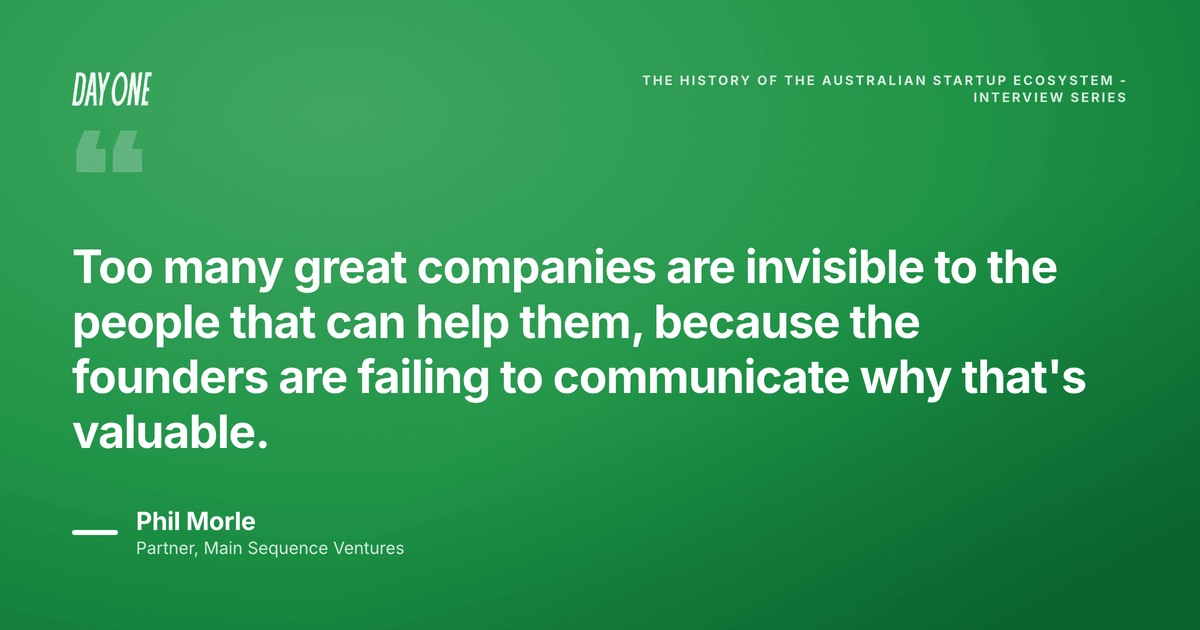
Transcript Synced · select any line to jump ▾ 0:00 Speaker: Let me tell you about our partner, Teamified. If you need to build a top-notch team quickly, Teamified is your go-to solution. They not only provide fractional CTOs, they can also do contractors and even remote team members tailored exactly to your needs. And whether you're looking for expertise in the Philippines, India, or Sri Lanka, Teamified has you covered. What's amazing is that Teamified uses a blend of AI and human expertise to cut hiring times by 50%, cent. The platform handles everything from automated onboarding to day-to-day management and even performance tracking. You can also handle rewards and recognition, buy equipment, and order training all through their platform. Simplify your hiring process and get the best talent fast with Teamified. Check them out now and transform your team. Go to dayone.fm/teamified. That's dayone.fm/teamified. Thank you, T-E-A-M-I-F-I-E-D, and get started today. Hi, I'm Adam Spencer, founder of the Day One Network, which is bringing the history of the Australian startup ecosystem to you. I believe in founders. It's why I do everything I do at Day One and our media company, W2D1 Media. And that's why the Day One Network exists, to create helpful content for founders. We've got some great shows in development. But a large part of what we do couldn't be done without support from our partners and sponsors. And I couldn't be happier than to be working with NTP, who get community better than any other technology recruitment company out there. A Newcastle company like mine, NTP are invested in seeing the growth of the local tech community in Newcastle, Sydney, and more broadly Australia. So thank you NTP for helping us bring— Thank you. Helpful content to founders and the startup community in Australia. Back to the interview. Hi, I'm Adam Spencer, founder of the Day One Network, which is bringing the history of the Australian startup ecosystem to you. I believe in founders. It's why I do everything I do at Day One and our media company, W2D1 Media. And that's why the Day One Network exists, to create helpful content for founders. We've got some great shows in development. But a large part of what we do couldn't be done without support from our partners and sponsors. And I couldn't be happier than to be working with NTP, who get community better than any other technology recruitment company out there. A Newcastle company like mine, NTP are invested in seeing the growth of the local tech community in Newcastle, Sydney, and more broadly Australia. So thank you NTP for helping us bring helpful content to founders and the startup community in Australia. Back to the interview. 2:46 Speaker: Hi, I'm Adam Spencer and welcome to Day One, the podcast that spotlights Australian startups, founders, and the organizations that empower Australian entrepreneurship. We go back to the beginning to tell a story of Australia's most inspiring founders and how they built their companies. You're listening to a special interview series as part of a documentary W2D1 is producing about the history of the Australian startup ecosystem. On the episode today, we have— 3:18 Phil Morle: Hi, I'm Phil Maul. I'm a partner at Main Sequence Ventures, which is an Australian venture capital firm founded by Australia's national science agency, the CSIRO, investing in early-stage technology companies with science at their core. 3:38 Speaker: When did you first get involved? You know, before maybe the vocabulary was even there, but when did you first get involved? 3:46 Phil Morle: Well, I think when I first started in the technology business, which would have been, well, even the beginning of the '90s. So at the beginning of the '90s, believe it or not, I was a theatre director and I did that for most of the '90s. And theater direction, of course, doesn't make much money. And so I had this side hustle, which was this sort of emerging new practice of building websites on top of this Mosaic browser that was starting to catch people's attention throughout the '90s. As we got to the end of the '90s, I got very busy doing this and I realized I needed to get on the train or watch it go off into the sunset. And I decided I was going to get on the train and I moved to Sydney and a career in technology began, building websites for people. I worked for a big Sydney company called Brilliant Digital Entertainment. And I wouldn't really describe that as a startup by today's standards, but it probably was as close as you get to a startup. back then in that it was a private business founded by a couple of people. It had about 100 employees and it was leaning into this whole new world of digital entertainment as the company name said. But this wasn't a world of raising venture capital, starting off in a garage, working in a coworking space, building a business on Amazon Web Services off your laptop. This was a classic Sydney startup in that it had raised money from high-net-worth families that were known to the founders. And from my perspective, I was almost entirely unaware of that. I was just an employee in the company. I I had a small amount of share options, and I did my job as the VP of web development at the time. Then we created the website for this little company in the Netherlands called Kazaa, and that company very quickly exploded because it was an alternative to a very popular piece of software at the time called Napster, which was one of the file sharing— Napster. Applications, and that company, Napster, was being sued by the entertainment industry. And all the consumers moved very quickly over to Kazaa, and Kazaa moved very quickly to Australia. And before I knew it, I was the chief technology officer of Kazaa. And Kazaa really became one of the first high-growth startups in Australia's history in my reading of this because it was an early-stage internet company. It was growing like the clappers. At one stage, it was 80% of the world's internet traffic because these are the days before YouTube and high bandwidth internet websites. And Kazaa was really how you shared videos of your party at the weekend and things like that. And that business became enormous, not by today's standards, but by the standards of those days, having millions of users on it at any any one time tens of millions of customers altogether. It was my first taste of operating a digital business at scale. And that's where I met Mick Lubinskis, who was also working at Kazaa. And we kind of, we found our mojo, him on the marketing side and me on the technology side, building this massively growing company. And that was a real rollercoaster. And that all happened out of Military Road in Cremorne in Sydney. No one would know, you would drive past it every day, but it's just opposite the cinema in Cremorne. And millions of users each day were going through that office. And so, yeah, I think once you've had that experience, first of all, you know a lot. We learned so much about building businesses and technology. And, you know, on a world stage. And we also learned about the bad things that happened because we were sued by all the big movie studios and all the record companies. And so there were lots of challenging times there as well. But we came out knowing a lot and feeling excited about the digital universe that was unfolding. 8:45 Speaker: Mm-hmm. 8:45 Phil Morle: And Mick and I wanted to do that again. And so now, so where are we up to now? Let's see on the timeline. Kazaar, our time at Kazaar began in around 2000 and we were done by about 2006 or something like that. Mick and I did some consulting for various people, but we were hunting for a startup to join. That's what we had really enjoyed, wanted to do again. And from our perspective at the time, there weren't any. And there was a real trend at the time. I mean, Australian founders were starting companies just like Brilliant Digital. They were generally raising capital from families that are known to them. And then they were very quickly going offshore to the United States largely. And not really building the value here in Australia. Atlassian was really the first company to start that trend of putting the roots down and starting things here. But at this stage, Atlassian, I don't think had even been founded. And we looked around for startups, couldn't find any, and decided we'd make our own. At the time, everyone was trying to— sorry, everyone, there were a number of people in Australia trying to create Australia's version of Y Combinator, which had started recently in Silicon Valley. And Mick and I said, well, why don't we do that? And let's not wait to raise money. Let's just get started. Let's bootstrap. Let's offer what we know, what we learned at Kazaar to people. You offer the marketing, I'll offer the technology, and we'll get people going quickly. And over time, we'll raise a little bit of money and we can start investing in companies like Y Combinator does. And that's when the whole Pollinizer thing started. And, and, and really, it was around that time that the startup ecosystem that we know today really started to get into its stride. 11:01 Speaker: What year would you say that was, 2010? 11:04 Phil Morle: No, that would have been 2008. 11:07 Speaker: Just side note, I've got a few side notes here actually, but one, I'm curious about the name Pollinizer. How did you come up with that? 11:15 Phil Morle: Well, when we finished at CASAR, I mean, one of the things I was doing was just thinking of lots of different ideas for companies to start. Back then, you know, you could have a stab at grabbing domain names and get interesting ones. So I had this little list of, actually quite a big list of domain names. And Mick and I sort of shortlisted off that and we came up with some other ones as well. I mean, I remember one of the alternative names was Red Kangaroo or something, which is kind of a bit, I think Qantas would have sued us if that's what we did. Yeah. Done, but it was, um, but we didn't go that way. I think I, I, but I, I did have the domain name for pollinizer.com, and I remember just in the years leading up to that, if I remember correctly, I was doing a whole bunch of work with Chris Saad up in Brisbane at the time, who had this whole idea of data portability, which Of course, data portability is part of the backbone of the internet these days and becoming increasingly so with Web3 and so forth. But back then, it was really a one-way internet. And Chris started talking about this idea of what if we could sort of encapsulate data into a sort of formal markup so that it can be things like addresses and biographies. And things like that could be embedded into websites and be portable across the internet. And I started thinking of business ideas around that, and I sort of got this whole idea of bees pollinating things and started coming up with a whole bunch of random words around that, and Pollinizer was one of them. And we thought, well, that could work because, you know, we're going to connect people, we're going to create a— 13:14 Speaker: A network. 13:15 Phil Morle: A kind of, you know, a froth of creativity and technical accomplishment. And Pollinizer kind of describes it. So let's do that. And that's where it came from. 13:28 Speaker: And before we keep moving forward through the timeline, I want to go back to your time in theater quickly with a side note here. What was the biggest lesson you think you took from, you know, teaching theater? That you brought across into the tech world? 13:44 Phil Morle: I'd say actually everything. 13:46 Speaker: Okay. 13:48 Phil Morle: I'd say every startup entrepreneur should go to drama school and then try and run a theater company for 10 years. And by the time you've done that, you've learned everything that you need to know. And I'll sort of, I'll break that down briefly. If in theater, First of all, you can't pay people with money. Some money comes in from ticket sales and Australia Council grants and things like that, but it's very, very little. I think in my final year in theatre, I, as the head of the company, had— I had the top-tier Ansett frequent flyer status, but my taxable income was $7,000. So that kind of gives you an idea. And so But we had a team of people, a theater company who were, who had worked consistently together for about 10 years and had done it under those conditions. So what that means is you have to convince people to join you, join the mission if you like, without money being the reason to do that. You have to gather around an idea and everyone has to be excited about making that idea. So that's the first thing. The second thing is the process of putting a play on is usually a process in which you have very little in the way of resources and you have a year to kind of think about it and put it together. But at the beginning of that year, you have to make all the advertising collateral that goes in the arts festival programs and things like that. So Putting those two things together, what you've got is you've got a ragtag bunch of people, practically no resources, a big idea that's got a whole bunch of people excited. You then describe that idea, you describe what you think you can build over the next year, and you write about it and you make some imagery about it. That goes, that gets published, and a year later you've got to make that real and you've got no alternative but to do that because a lot is resting on it. Including everyone's reputation, which, you know, I've learned is a very important currency in startups as well. And so this is a kind of a set of skills, the same skills that allow you to do that allows you to actually have the confidence to have an idea which isn't a play now, it's actually, it's a company, it's another entity which is going to— 16:27 Speaker: Yeah. 16:27 Phil Morle: Create impact in a different way. But the process is actually just the same. So it gives you the strength, it gives you the ways of working with people and having empathy for their struggle during a process. And it teaches you how to tell a story as your first product and then materialize that product and bring it to life. And that's the skill I think that you the powerfully learning theater that's so valuable for startups. 16:58 Speaker: Can you tell me about the concept or thinking behind your title that you, at Pollinizer, Startup Scientist, and bringing, what did you guys call it, bringing— 17:11 Phil Morle: Well, we had this, the journey of that was, well, it's quite prophetic to where I've ended up today, I guess, but the journey through Pollinizer was, Began at the beginning with us really just intuitively doing what we do without really knowing what we were doing, if that makes sense. So we had an instinct about what to do and we just did that. We interacted with people, we helped them, we rolled up our sleeves and got involved. And then as we scaled the team, we realized that we needed to actually stand outside of ourselves and understand what it was we were doing. And the way we talked about it at the time is we needed to wrap the science around the art, right? It's not just intuitively showing up and letting the magic happen. You actually have to try and encode that and you have to sort of find the recurring patterns and the ways of measuring progress. And at the time as well, the whole Lean Startup idea was emerging, which we became very proficient at, and it became very helpful in our work. And at the heart of that is this whole idea of a sort of scientific method, if you like, to creating a company. So having a hypothesis about what's valuable or what's going to work, testing it with a consumer or customer, knowing what success looks like in the— in what you measure. And then moving forward as a company around that. So we sort of started describing what we were doing as startup science. And then we started giving each other names around that idea. So I was Chief Startup Scientist, I think, at the time. But it, as it turned out, it was a very powerful way of working. We designed a number of accelerator programs and startup programs around that, not just our own, the last one being the CSIRO's National Science Accelerator, ON. And, you know, a lot of that work still exists today. You know, you see it in, in the sort of, in the workbooks and, and the playbooks that people give out in accelerator programs and things. So we certainly didn't invent it all. A lot of it was a a brilliant sort of riff that was happening across what was then a, you know, it still is a global ecosystem of people just rabidly learning from each other and then building upon each ideas and finding other ways to do it. But that was what we were calling startup science at the time. 19:54 Speaker: Looking at the whole timeline of the Australian startup ecosystem and how it's grown, why do you think people look at Polynesian is such an important part of that timeline? 20:06 Phil Morle: Well, I think it's because nothing existed beforehand that I know of. I mean, it was just a crazy idea to start it. It was very hard and I will say it never had a business model that worked. I mean, it was a love project for the 9 years that it existed. And, but it was really the first entity of its kind that was helping other people make startups. And of course, our ecosystem today is abundant with those. And it was, people often ask me, you know, why didn't you carry on with Pollinizer? And I think that the reason that I consistently give is, that I think it served its purpose. And I often describe it as a booster rocket on Saturn V or on a, you know, on a SpaceX rocket. It's required. It was required. It was one of the required pieces to get our ecosystem into orbit. But once the ecosystem was in orbit with its own momentum, it wasn't needed anymore. It could fall back to Earth and— Yeah. And one way of describing Pollinizer sort of less romantically is it was a general purpose incubator that helped all kinds of people wanting to start all kinds of companies. And it worked with them with a certain methodology, this sort of startup science approach, consistent way of bringing people together and working. But again, it was general purpose. It wasn't helping AI startups, or it wasn't helping people with disabilities, or it wasn't doing something particular for the Melbourne ecosystem. It was a general purpose for everyone in Australia that was crazy enough to want to start a startup at a time when there was no venture capital and practically no other support. But now there's a lot, and we don't need a Pollinizer anymore. I think there's so much of what the Generation One accelerators and incubators did is now table stakes and baked into what the army of people who are creating companies today just know. It's part of our vernacular and our core skillset as Australian entrepreneurs today. 22:38 Speaker: I know there's a lot happened between Apollonizer, I think a lot happened that we're gonna skip over between Pollinizer and Main Sequence. But why did you start Main Sequence and where did that come from? Oh, sorry, not start. Why did you start Main Sequence? 22:54 Phil Morle: No, but I was a founding partner. It was very fortunate actually. So we definitely, we chose to end Pollinizer because it was the right thing to do, not because something else was coming up. And I can tell you some stories around that. But I was doing, at the time, Pollinizer's last customer, if you like, was the CSIRO. And it was the job of designing and running the On Accelerator program. And that's where we applied what we had learned over the last 9 years to a group of people who were very inexperienced with entrepreneurship, which was the nation's scientists. And realized there was just phenomenal value. It was just a huge unlock. I mean, it's those, it's that great feeling that you have when you're working in a certain space and you do what you do and you just kind of see the magic happen. I remember when we did the first On Accelerator workshop, there were about 100 people in the room. And not only did I not understand what they were trying to communicate. But I think the other people in, the other scientists in the room didn't really understand it because they were still operating as scientists describing precisely as a scientist to peers in that area how their innovation works, as opposed to how entrepreneurs sort of tell their story and help people understand, you know, what could happen. Yeah. In a world that had this startup in it. You know, by the time we finished that program, there was just an incredible capability that sort of wrapped around these incredible inventions, a way of describing those inventions to people, a way of thinking about raising capital, a way of building a business with people around it, and a way of being, in essence, entrepreneurial. Yeah. And so that was a wonderful feeling. But I thought, you know, when we ended Pollinizer, that would also end as well. And, you know, I was literally out of Pollinizer looking for a job. And actually, I'll tell you the story about how it ended, because I think that's interesting, because we ended Pollinizer with two experiments. So we ran startup science on our own company. We did it very openly with the whole team. Wow. And we ran two experiments. One was, at the time, Qantas was putting out to tender the Avro Accelerator program, which it ran for a few years. And the team had designed what they wanted to do with that terrifically well. And we were excited by that. And we said to ourselves, if we bid for that deal and we get it, and we do it high integrity, we design the perfect program, which we have a high conviction it's going to work, you know, then that's a, that's a past experiment. That's a win. And that's a reason to carry on with Pollinizer. So we designed an amazing program. We spent months on it with everything that we knew. We costed it at what it costs to do it properly as a proper business. And we put that into the Qantas team. The other thing we did, and I'll tell you what happened in a minute, then the other thing that we did was we were running the On Accelerator program for CSIRO. A lot, all the universities started reaching out to us saying, can you do something similar for us as well? And we thought, well, that's interesting. So we, how about this for an experiment? We go to CSIRO. Yeah. With this idea that together we build a business to roll this out at scale across the whole country. And we went to David Burt, who was running On Accelerator at the time. He's now Director of Entrepreneurship at UNSW. And I said, so what do you think? How about we basically go into business together and do this? And again, I thought that was a win. That would be proof that there was a market that was ready to properly sustain a pollinizer. And so here's what happened. In the case of David, very openly and for all the right reasons, he said, I have a strong belief that all this material that's made needs to be free. It shouldn't be part of a business. And we should just give it out so that all researchers are using it and benefiting from it and changing what they do for the better. And, you know, of course, I was a bit grumpy about that at the time. But actually, you know, he's right that the impact of doing that is very powerful. But it was a failed experiment in terms of Polynesis proof of life, if you like. And then on the Qantas deal, we didn't get the deal because we were too expensive. And again, you know, it was— there's no sort of judgment on Qantas's decision there in any way. It's just that that's what it cost. That's what it would have cost us to deliver such a program. So it just wasn't going to work. So we realized that there was no sustainable business model. Ironically, you know, that the startup science that we'd espoused to everybody was how to find as rapidly as possible a sustainable repeatable business model. And after 9 years, we had failed to do that ourselves. We had a business model that, that functioned, kept the lights on, but it was certainly not going to grow. And there was no make money while you sleep business there. So, so we moved on. So that was all finished. And then as luck for me would have it, Bill Bartee, who I knew well, had been recently tasked with forming the venture capital fund in CSIRO that later became known as Main Sequence. And Bill asked me to come along and join the gang. You know, just felt like the luckiest person in the world because everything in my life up to that point had led me to that door. And here I am today. 29:32 Speaker: Could you have done anything differently before you even began Pollinizer? Like, have you ever thought back and thought about what could we have done differently? 29:41 Phil Morle: To make Pollinizer successful or? 29:45 Speaker: Yeah. 29:45 Phil Morle: Well, we tried so many business models. I mean, it's a problem, frankly, that endures today. The people that are the service workers, if you like, of the startup ecosystem, I think are unvalued in the system. They find themselves going from gig to gig, you know, helping, for example, a big company start its startup program, which lasts for about 3 years, and then the whole thing collapses and they're out of a job or they have to become a scrum master or something, you know, more justifiable in a software company or something. You know, big programs like ON happened, but ON was a 5-year government-funded program which ended after 5 years. And there was just such an amazing army, frankly, of incredibly talented startup coaches, you might call them, who were all suddenly out of work. And I think the problem there is that it's a very— it's a job which takes a long time to really get an instinct for. And each time these systems collapse, these people are out of work and we lose some of them or they lose a little bit more hope. And I think that's disappointing. I think that's one of the things, you know, I hope we'll get right over time. One of the good things that's happening is many of us, I suppose I could say, are ending up in venture capital. And that is a model that works. You know, now we're in a world of capital. There's enough capital to get enough management fees to do the work we do. And it all works in a sustainable way, uh, in a reasonable-sized venture capital firm. And I think that's also good because we've all got skin in the game and we're all trying to do the same thing, which is making tremendously valuable companies. When you don't have that kind of business model, you do things like Pollinizer needed to do, which is, so for example, at the beginning of Pollinizer, we had two concurrent business models. We worked as a software agency and we charged clients professional rates. So for example, we worked on the BBC iPlayer platform. And in parallel to that, we helped startups and that we did that for a very low, rate, sometimes free, and for equity in the company. And we realized that didn't work because we were basically doing a bad job at both. You know, we were billing the BBC like they were a startup and doing all this work for free because we cared a lot, but that wasn't making us enough money. And for the startups, we're saying, hey, it's Wednesday and that's not your day because we're on the BBC today, so we can't work for you. So— Which of course is just no good for a startup. You have to do everything you can every day. And so we tipped into, that was the first time we actually raised some money into Pollinizer, which is a very small amount. I think the first amount we raised was $500,000. And we used that to fund our first generation of companies. But frankly, there was a little bit, it wasn't a perfect business model 'cause we were having to use some of that money to sort of pass back to Pollinizer and pay some of the teams instead of having to hire those people directly into the company. So it was that kind of startup studio model. But you've got to kind of— whether you like it or not, you have a conflict then because you're on one hand an owner of the company trying to give it as much runway as possible, as much chance of success. And on the other hand, that company is paying for some of your team with your other hat on. And it becomes very difficult. And we can see these, you can see these business models happening across a number of different organizations that rose out of the startup ecosystem. But the summary of it is, it's very, very hard to make money. Startups are not great customers because they don't have much in the way of funds and they need to work at a breakneck pace. And they're generally not great for services businesses. So— Yeah. Yeah, it was always a struggle, but very worthwhile doing. And I think we're seeing business models emerge now which are a little bit more sustainable. 34:10 Speaker: What are some of the biggest gaps you see still in the Australian startup ecosystem today? 34:17 Phil Morle: I'll begin my answer to that question with the observation that one benefit I have is That I started very deliberately building an ecosystem with other people in 2008. When we started that journey, there were no accelerators, no incubators, no angel investors. The venture capital pool of the country, I think, was about, was smaller than the main sequence venture fund today. And if we look at what we have today, it is phenomenal. I mean, I think there is an entrepreneurial playbook that so many people understand and have a basic skill set in. You know, we start teaching it in schools now. Universities have very sophisticated tiered textured startup programs with all sorts of services which are offered. The coworking centers, the startup centers that exist, the extent to which big companies actually know what to do with startups now, I think is, you know, is also valuable. Government knowing what to do with things, having things like R&D tax concessions. It's an amazing time. To be starting a company and it's hugely supported. And, you know, I think that the startup ecosystem, if it has a weakness, it doesn't celebrate itself enough and it complains a lot. And, you know, I think the ecosystem that we've created together with thousands of people is incredibly productive and it's exponentially getting better every day. And so most of the The things that we don't have, which we'd like to have, I think will come with time as the layers of the jungle start to get laid out and the ecosystem can grow out of those different layers. I think one of the areas that I'm spending a lot of time on at the moment is building out the connective tissue between parts of the innovation system, which are too siloed or have been too siloed. 36:42 Speaker: Mm-hmm. 36:44 Phil Morle: Historically, when startups and organizations and people start working together and they do that prolifically, great things happen and we become greater than the sum of our parts. One of the areas I'm working in today is in the world of quantum computing. Now, you could— you can pretty much draw a direct parallel back to the early days of Silicon Valley when companies like Hewlett-Packard were making calculators and look at what we have in Australia today in terms of quantum technology. Now, for one reason or another, but a lot of it just around the people, we have an extremely world-class quantum technology talent base here in Australia. 37:33 Speaker: Yeah. 37:34 Phil Morle: 20 years ago, a professor came to UNSW and started talking to people about this crazy theory of quantum physics. And people have gathered around that, that person initially, and then that group, and then different universities pick it up. And we have, you know, one of the top 5 talent communities building quantum technology today in Australia. But to my point, it's siloed. Or at least it has been siloed. There's a lot happening to make that better, but it takes time. But it's been siloed inside university labs. There's been very little going on in the entrepreneurial community. There's been very little going on in the large enterprises and companies that can become customers of these quantum technology businesses. And I think what we're looking at now is the possibility of a quantum technology revolution rising out of Australia in the same way that digital computers rose out of Silicon Valley. And that's only gonna happen if we prolifically communicate, build bridges, smash down the silo walls at every opportunity. 38:54 Speaker: Yeah. 38:55 Phil Morle: We make our habit telling everyone about what we're doing. We still have a little bit in Australia of people keeping it a secret, wanting it to be proprietary. You know, I still get people as an investor wanting me to sign an NDA before they've even told me any details about their company. And it's, you know, in my mind, it's the wrong posture, which doesn't lead to success. The companies that are successful that I've observed have been companies that are just telling everybody about what they're doing and getting them excited. and looking for every opportunity to hire the great people, work with the great partners, get investment from the right investors. It's just a silo-smashing, bridge-building requirement which we're still not as good at as we need to be, but we're getting better. 39:47 Speaker: This is the advice question that I ask everybody. If a brand new founder came to you tomorrow, what one thing would you tell them? To help them not fail? 39:57 Phil Morle: I would tell them to be very, very clear about what their story is. And that sounds quite shallow, I know. It's not a reflection on the need for founders to, you know, tell a fib or weave a tale about their company. It's more a reflection on too many great companies are invisible to the people that can help them, be they investors, customers, people that might work for them, because the founders are failing to communicate why that's valuable to those people. And I find that's a skill and a habit which is very powerful when it happens from the very first day. And you can probably see the connection here back to my theater days in how I've arrived at this, but even, even if you haven't got anything to show yet, even if you've got 2 years of building to do, even if you've got 18 months in the lab to prove what you're trying to get done, there is a story you can tell about what you intend to do as a founder. And as soon as you start making that statement, and you start having that conversation and you start engaging with people about what they think about that idea, the idea becomes stronger, the company becomes richer, more people want to help you, and the world comes to you rather than the founder needing to feel like they've got to do the big sell and push hard to actually get people to support this company. 41:43 Speaker: Yeah. 41:43 Phil Morle: And I find if that happens from the very first day, everything from that moment becomes easier. 41:50 Speaker: So as you know, what I'm trying to do here is tell the whole story of the Australian startup ecosystem. We want people from all corners of the ecosystem to hear this story, founders, investors, academics, policymakers. With that in mind, this last question isn't really a question, it's just a, I wanna give you a few minutes to, What do these people need to hear? 42:13 Phil Morle: Yeah, I think what we've unlocked in our people is an incredible power to make the world better. And what is happening in the world right now is that power is starting to become synchronized with global capital markets being able to fuel this. And with massive problems on planet Earth that we need to solve. And those problems can be solved, I believe, with the conviction of an entrepreneur and the inventiveness and creativity of the research community, industry, government, and— 43:02 Speaker: And— 43:03 Phil Morle: We've started to understand how we can mobilize ourselves, and we've really put that to the test during COVID especially last year. It was fantastic just seeing how, when the moment comes, people do what they need to do to push the boat out, do extraordinary things, and fix problems in a dramatic way. I feel like that is happening massively now on a global stage and certainly here in Australia. It's a very important time in history that we're ready for as an ecosystem. And I think we've just gotta get our heads down, build companies, fix problems, and take Australia to the world with solutions to the problems that it has, and now's the time. 44:11 Speaker: I hope you enjoyed that interview. 44:16 Speaker: More interviews are on the way. Follow the podcast wherever you're listening right now. Stay tuned for more interviews with with many, many more amazing people from the Australian startup ecosystem. Thanks for listening and see you next time. 44:28 Speaker: Bye.