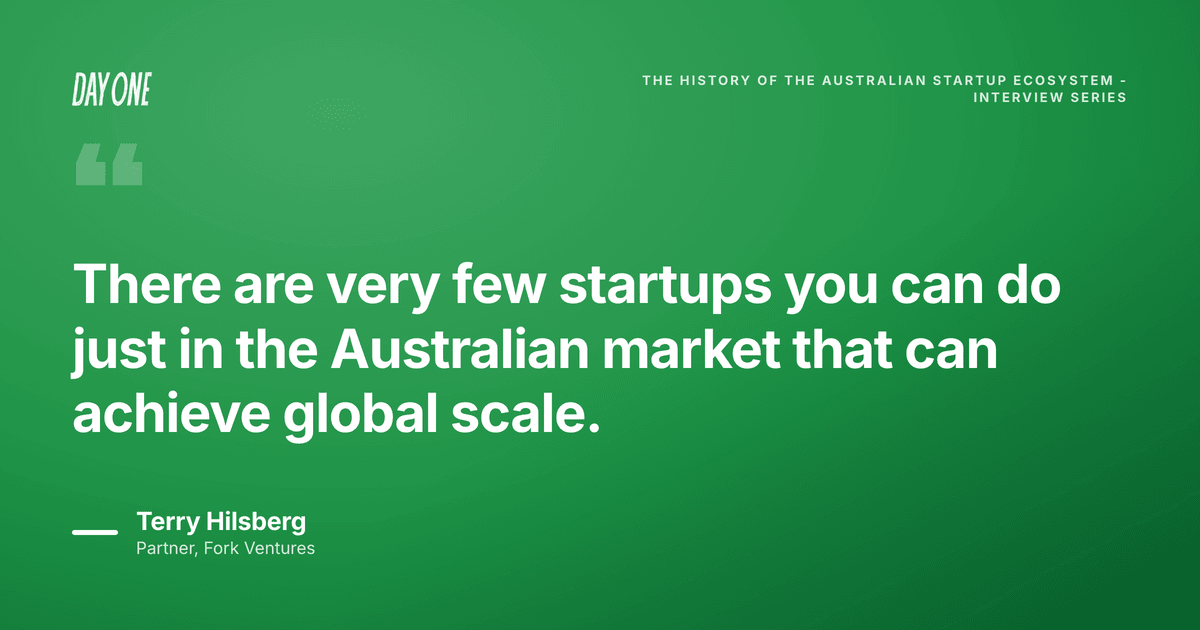
Transcript Synced · select any line to jump ▾ 0:00 Speaker: Let me tell you about our partner, Teamified. If you need to build a top-notch team quickly, Teamified is your go-to solution. They not only provide fractional CTOs, they can also do contractors and even remote team members tailored exactly to your needs. And whether you're looking for expertise in the Philippines, India, or Sri Lanka, Teamified has you covered. What's amazing is that Teamified uses a blend of AI and human expertise to cut hiring times by 50%. Their platform handles everything from automated onboarding to day-to-day management and even performance tracking. You can also handle rewards and recognition, buy equipment, and order training all through their platform. Simplify your hiring process and get the best talent fast with Teamified. Check them out now and transform your team. Go to dayone.fm/teamified. That's dayone.fm/teamified. Thank you. T-E-A-M-I-F-I-E-D, and get started today. Hi, I'm Adam Spencer, founder of the Day One Network, which is bringing the history of the Australian startup ecosystem to you. I believe in founders. It's why I do everything I do at Day One and our media company, W2D1 Media. And that's why the Day One Network exists, to create helpful content for founders. We've got some great shows in development, but a large part of what we do couldn't be done without support from our partners and sponsors. And I couldn't be happier than to be working with NTP, who get community better than any other technology recruitment company out there. A Newcastle company like mine, NTP are invested in seeing the growth of the local tech community in Newcastle, Sydney, and more broadly Australia. So thank you, NTP, for helping us bring helpful content to founders and the startup community in Australia. Back to the interview. Hi, I'm Adam Spencer, founder of the Day One Network, which is bringing the history of the Australian startup ecosystem to you. I believe in founders. It's why I do everything I do at Day One and our media company, W2D1 Media. And that's why the Day One Network exists, to create helpful content for founders. We've got some great shows in development, but a large part of what we do couldn't be done without support from our partners and sponsors. And I couldn't be happier than to be working with NTP, who get community better than any other technology recruitment company out there. A Newcastle company like mine, NTP are invested in seeing the growth of the local tech community in Newcastle, Sydney, and more broadly Australia. So thank you, NTP, for helping us bring helpful content to founders and the startup community in Australia. Back to the interview. Hi, I'm Adam Spencer and welcome to Day One, the podcast that spotlights Australian startups, founders, and the organizations that empower Australian entrepreneurship. We go back to the beginning to tell the story of Australia's most inspiring founders and how they built their companies. You're listening to a special interview series as part of a documentary W2D1 is producing about the history of the Australian startup ecosystem. On the episode today, we have— 3:18 Terry Hilsberg: Hi, I'm Terry Hillsberg. I am one of the owners and partners in a private investment company where my partner and I invest mainly in crypto projects. 3:34 Speaker: When did you first get involved in the Australian startup ecosystem? And let's just forget about the vocabulary that we know it by today. Go back as far as you want. 3:47 Terry Hilsberg: I started out life as a pilot, but then became an economic bureaucrat in the Commonwealth Government in the late 1970s. By the late '70s, early '80s, the so-called failure of the Australian economy to adapt and become a highly valued economy was already an interest of the day. So for instance, literally in the early '80s, the then Fraser government was undertaking studies as to how to attract Intel and National Semiconductors to set up fab plants in Australia. And so I was a part of a lot of that when I was a bureaucrat. And then the Hawke-Keating government came in in '83 and started putting very significant money into R&D subsidies and subsidies of venture capitalists. And so you had the first great wave of that taking place from 1983 to 1987. And during that period, many of the venture funds that were started and some of the great iconic Australian unicorns were created, companies such as Cochlear and slightly later companies such as ResMed. And during that period, I was a Commonwealth bureaucrat in charge of that stuff. And then in '87, I left the Commonwealth bureaucracy and became a partner in a venture firm in Melbourne called— Cochlear. CP Ventures, the management company, the GP that was Venture Management Associates, working with a fellow called Roger Buckridge, who is probably the iconic figure in the Australian venture capital industry. And he had decided that we need to raise some more capital, and the Australian capital markets had basically collapsed for venture after '87. So I was then sent off around the world to raise venture capital. To invest in Australian startups. And so he and I then roamed around the world raising money. And it turned out that the only place in the world that really wanted to give us a lot of money was in Japan. So I moved to Japan and raised a fund called the Japan-Australia Venture Capital Fund, which was by then probably the only fund raised in the early '90s in Australia. Plus I also was associated with and helped raise a thing called the Apple Computer Australia Fund. Which was— not many people realised that Apple Computer, in fact, had a venture capital arm in Australia in the early '90s. And those funds then proceeded to invest in some of the more iconic companies in their expansion phases, such as Cochlear, et cetera. And then that sort of phase ended and I went off. I sold my partnership in that venture firm and went from Tokyo and went to live in Beijing, 'cause my the money that I'd made as a general partner, I said, "Oh well, I might as well invest that sort of amount of money in Chinese startups." And China was just starting to get going. So I went and started investing my money in Chinese startups. I mean, all sorts of things, anything from light aircraft design and manufacture through to coal trading systems, et cetera. But then eventually in about 1998, I ended up doing a bunch of startups myself. And for the next, until about 2010, I did 5 or 6 education, edtech startups in a row, mainly in China, but to some extent in Australia. Companies such as NextEd and others. And one of the things that also, out of all that, was quite relevant was that both in what Roger Buckridge and I had done, as fund managers and in terms of my own startups, the venture capital industry over that period was, in Australia, was very international and had some of the best venture firms in the world co-investing with the company, with the Australian venture scene and into Australian startups. So for instance, one of my startups, Nexted, did quite a large Series B raise in 2000, just literally just after the crash of the Web 1.0 scene. And that edtech startup raised nearly all of its capital from top-tier American venture firms. And so we did all that for a while and did a bunch of stuff, made a little bit of money in the edtech scene, and eventually came back to Australia in about 2005. Full-time in 2012 to 2014 and found a very different scene. A scene which had withdrawn into itself and become very domestic market focused. It was starting to reignite, but it was mainly around deals which were very domestic market focused. Because what had happened in the meantime was that the cost of getting into doing mobile type apps had come down. The cost of doing startups had come down quite dramatically due to the software eating the world. As Marc Andreessen said. And as opposed to when, for instance, Cochlear got going back in the '80s, it required $20 million before it even really had a very good product. So that change around 2010 totally changed things. But also, it was good, but it made the Australian venture scene very inward-looking. And so it then rebuilt itself with a bunch of new fund managers and stuff. But then what also was happening was the whole accelerator scene, the sort of stuff that Phil Morley and others were doing. And they were doing some good work, but it wasn't really till things like Startmate came along or Telstra's Murudhi that you started to get people again looking internationally, again looking at, starting to look at deeper tech. So I then said, oh well, what's my competitive advantage? My competitive advantage is I know China. And I'll try and get some investment into some of these companies from Chinese VCs and also help the companies go into China. The latter was not terribly successful because Xi Jinping started closing down investment, closing down money leaving China in around 2016. But we did get a bunch of good investments. And so out of those accelerators, you now find some of the really classy deep tech companies. And in the meantime, the scene had also divided between the light tech and the deep tech. And I was tending to be more in the deep tech, in the AI space, in the robotics space, et cetera. And I made a few investments there. And some of those are starting now to give good returns. Like 4 years into some of those investments today, we're getting sort of 30 times our money. It's all doing reasonably well. And then the next big fork was that, you know, it was obviously you get people like Main Sequence doing the deeper tech stuff and a lot of this lighter tech stuff. But the next big fork was when the industry had to come to grips with crypto and blockchain. And that took place in about 2017. And that is a split that, to this day, is probably the largest split in the last 5 years. Mm-hmm. Where the crypto investors have different business models than the traditional VCs. And there's very little overlap. Now, there's some small overlap where you get, you know, like Airtree recently invested in a startup called Immutable, or Reinventure invested in Coinbase way back and recently in Immutable. But most of the VCs are still stuck in traditional land, as are most of the angel investors. And they're totally different than the young generation of— Yeah. Entrepreneurs who are building the DeFi companies and the NFT companies. 11:42 Speaker: I want to talk more about crypto, actually. And why is the industry struggling to come to terms with that so much? 11:49 Terry Hilsberg: Mainly because the models are totally different. There's a number of aspects of it. For instance, in crypto deals, liquidity is much earlier. Usually by the second year, you start to get some liquidity. Not necessarily, but second to fourth year, you start to get some liquidity. Therefore, the fund structures tend to be structured more like hedge funds. In other words, they're still an aggregation of funds to invest, but investors are putting money in and taking it out almost constantly, as opposed to the long-term locked-in nature of traditional venture models, which work on 10-year liquidity cycles. So that's one difference. A second difference is that most crypto deals are totally in the virtual world. And particular DeFi deals and NFT deals are all in the virtual world, the so-called metaverse. And so what you, what you see is that this metaverse is at the intersection of DeFi, NFTs, traditional crypto, and gaming, and VR/AR. So there's deals that I've got investments in that do all of those things in one. Mm-hmm.— and it's evolving incredibly quickly. It makes the rate of progress in AI look very slow in comparison. But this is all happening in the metaverse, which is largely unregulated. And therefore, compared with, say, for instance, traditional venture investing in health tech, say in Cochlear, or in traditional fintech, which is heavily regulated, or in a number of— Or even space tech. There's a lot of the latest deep tech type investments are in heavily regulated industries or even food tech, like Phil's stuff. A lot of them are very regulated compared with investment in the metaverse, which is the whole crypto space, which is largely unregulated. Now, the regulators may come and try and stop it, but in the meantime, it's unregulated. Another feature of the metaverse and the whole crypto world is that it's international day one. It goes back to what Roger Buckridge was doing 30, 40 years ago. Roger used to create companies which would say, bring Australians back from the USA and invest in them here. But day one, they would be Australian and US companies. That was forgotten about for 20 or 30 years. To some extent, Startmate and Blackbird started doing it when they started sort of taking companies to the US. Or some were born global day one like Canva, but most Australians were inward looking and then they'd eventually go overseas, I think. But crypto is global day one. The teams are global day one, even if they might have a headquarters in Sydney. They have teams throughout the world in their infrastructure. And what is the most fascinating thing is that Sydney is one of the global centers. Sydney to— And to Melbourne to some extent. Is one of the great centres in these metaverse companies. The market cap of, for instance, just NFT and DeFi companies in Sydney today is between $10 and $15 billion. 14:56 Speaker: Wow. 14:57 Terry Hilsberg: And this strips out and is, you know, is in a different world than your traditional startup scene. 15:04 Speaker: And you've just outlined this great history of venture capital going back to the '70s, but I'm hearing venture capital was hard for startups to get access to and it only started to change in around 2010 onwards. And that doesn't sound like that's the case from what you've been, why is there that misconception? 15:24 Terry Hilsberg: I just think people forget history and no one wrote the history down, which is why your project, at least from 2010 onwards, is a very good idea. And the old stages, like the Phil Morleys of the world who were doing it, even back in 2010, people have forgotten what they were doing. But it was very difficult at that stage where there was probably, there was this revolution being undergone in mobile, which was making cost of developments and everything, cost of development come down dramatically, the software eating the world thesis. But the sources of capital had not adapted to that. And more importantly, the world, the Australia venture scene had just gone through a failed cycle. If the cycle in the '80s and early '90s was reasonably successful, which it was, The cycle from the mid-'90s to the late '90s and early 2000s largely produced nothing in the way of unicorns, right? So people just didn't want to invest in it. The irony is, is that the Australian superannuation funds were investing in VC funds back in the late '80s and early '90s and then just stopped for 10 to 15 years. And a new generation of managers came along. And eventually started investing again. Similarly, like for instance, in that Japan-Australia venture fund that I mentioned that I raised, my investors were the main Japanese insurance companies, whether it's Nissei, Sahi Life, et cetera. So these were major international insurance companies invested in Australian venture fund. And our anchor Australian investor was the ANZ Bank. And so That sort of died then for a long time. That was sort of late '80s, early '90s. And then there was this cycle in venture capital, which just didn't work in the late '90s, early 2000s. And I think part of it was that cost of product development was quite high. Australia had lost people who were willing to take big bets like Roger Buckridge, even though he was still in the scene. Mm-hmm. We weren't doing those global deals which could get big global scale quickly. Our appetite had diminished to domestic market type stuff. And so people like me who were creating companies over that period, I would look at the Australian venture capital scene and I'd say, these venture capitalists are domestic market focused, as are the angels. I'm not going to bother talk to them even. I'm not gonna try and raise any money in Australia. I raised the money for all of my startups over that period just by hopping in a plane and going to America, Japan, and Hong Kong. And that's what people who were successful did. 18:05 Speaker: Going back to when you said you were sent overseas to look for investment to come back into the country and the only place you had luck was Japan. 18:14 Terry Hilsberg: Yeah. 18:15 Speaker: Why was that the case? And not even why was it the case that Japan come on board, but why couldn't you convince anybody else? 18:21 Terry Hilsberg: Maybe the Americans were arrogant. And one of the great things that a company like Canva has done is that people started realizing in recent years that there was good deal flow out of Australia and that the deals didn't have to be 10 miles away from your door, you know, in Menlo Park. That sort of feeling of arrogance amongst the Valley venture scene meant that for a long time Americans weren't interested. And in particular, the American funds of funds and the American pension funds and that were not interested. Now, that's also changed. The nature of the business has changed in early-stage venture in the last 5 to 10 years, such that the big American funds will be friendly with the early-stage Australian angel investors and seed funds and Series A type funds and realise that deal flow out of Australia isn't too bad. And this is completely different in the crypto metaverse stuff where, you know, for instance, a deal which I just made a commitment to invest in today, where the lead investor is one of the world's top 5 venture funds. Another investor in that deal is a top 20 US fund. And the Australians investing in that are mainly family offices. Yeah. So there's like 5 or 10 Australian investors and some international investors. That's all day one. Now that comes about because the current generation of Australian investors who invest in this risky stuff are very well internationally connected. And that was lost for 10 to 20 years, whereas it existed back in the '80s. But existed back in the '80s mainly because some of the VCs then, whether it's Nick Or Roger Buckridge would hop on a plane and every second week be in America or Europe, setting up the deals. And indeed creating the companies. Another thing that was lost for a long time was that in Australia, generally speaking, the venture scene until again, perhaps 5 years ago, were largely recipients of what founders wanted to do. And so backing the great founders was the only business model. The problem is, is there may be a shortage of great founders. So whereas back in the '80s, the problem was there was too much money and not enough good founders. So the great venture capitalists of that era, like Roger Buckridge, would go out and literally create the companies. 20:52 Speaker: That's really interesting. 20:54 Terry Hilsberg: And bring the Australians back home to create them around. And sometimes they failed, sometimes they won. A story like this, which not many people remember now, is that there was this young chap called, there was this guy called John Shine who was one of the early biotech people in the Valley, a world leader. He was an Australian. So he was brought home to live in Sydney and run a research institute. And a venture firm was set up around him called Pacific Biotechnology. And a lot of money was poured in and all of it was lost. Because their products just didn't work in the end. But in the meantime, the CEO that was recruited to run that was a fella called Brian McNamee. And Brian did such a good job and everyone said, "God, this guy's world-class," that he was then invited basically to take over CSL and turns a crappy old government blood transfusion type factory into what is today's, if it's not the largest company in Australia, is one of the top 5. Companies in Australia. And Brian did that transition over 20 years. And that came directly out of him learning the ropes via a venture investment made by CP Ventures and Roger Backridge associated with bringing an Australian, John Shine, home from America. And I can give you 10 stories like that that occurred in the '80s. 22:17 Speaker: Can you give me one more? That's amazing. 22:20 Terry Hilsberg: Another one. The problem is I can't remember the names of the the people, I can find them for you afterwards. But there was another fellow who became, who was part of the creation of this CP Ventures along with Roger Buckridge called Roger Allen, who was running a thing called Computer Power Group, which was Australia's only international systems integrator. He grew that in the '80s to becoming about a $400 million a year business, and he eventually sold it. And this was one of the world's larger, medium to larger size systems integrators. So Roger would go around the world finding the latest trends in software and stuff, which he could put into his systems integration company, including AI. So he then found that there was this guy, again, at the Stanford Research Institute, SRI, in Menlo Park called Mike Georgoff, who was one of the world's then-leading AI experts. And so Roger literally set up an institute and a company around him in Melbourne to exploit Mike's expertise and brought him home. And unfortunately, this was at the period where the rules-based AI didn't really work real well. And so that went into the tank. But for every one or two of them that went into a tank, there'd be another one that would get somewhere and make a little bit of money. And the classic stories there— Ah, to give another story, which was not done by a VC, but was done by the person himself, of course, was Peter Farrell. Peter Farrell had been a senior vice president at Baxter-Travenol, had come back to Australia, an Australian who'd come back and was looking around to create a company, became a professor, I think, at UNSW, you said. 24:03 Speaker: Yeah. 24:03 Terry Hilsberg: And he figured out that this whole sleep apnea thing was a thing. And so he then created a company around that. And lo and behold, some Japanese venture capitalists put some money in in the early '90s. And Peter went on and founded ResMed. And ResMed, to this day, has the single largest concentration of engineers in Australia out at North West Park. And, you know, is a foundation of the New South Wales economy. And that came out of a venture capital investment by a Japanese venture firm together They were backing this Australian expat who returned to Australia after a stellar career in America. And there's not many people who do that to this day. It's happening in the crypto scene a lot, but in the traditional venture scene, we're sort of trying to educate all our entrepreneurs starting out from Australia rather than finding Australians who know what they're doing and are successful around the world and bringing them back. 25:01 Speaker: If we go now to today, present day, what are some of the biggest gaps apart from that one, obviously, that you just said? That you see in the ecosystem today? Like, where could we improve? 25:11 Terry Hilsberg: I think elements of the ecosystem are now reasonably well integrated internationally. So, you know, you've got good accelerators like Antler and others who are very integrated into the world scene, right? So that is good. But when you get— that's good in the top tier. But if you've got 50 or 60 accelerator-type programmes helping form new companies and work with companies, many of those programmes are just not very internationally focused. And so the lack of international focus in the ecosystem that develops entrepreneurs, I still think is a major international prob— a major problem of the ecosystem. Because if you're not prepared to go and find the Australians who are successful overseas, you've got to develop that talent with an international focus. Mm-hmm. In Australia because there's very few startups you can do just in the Australian market that can achieve global scale just in Australia. There are exceptions, of course. So, you know, for instance, in the renewable energy area, there will be a number where you can do it. Now, again, the exception is the metaverse or the crypto game where deals are international day one and where teams will typically have developers in the Philippines, Russia, Nicaragua, you know, all over the place. And the Aussies are part of these global day one teams and sometimes leading them. But that's the exception. 90%, I'd say, of the startup scene in Australia is still inward looking and dealing with inward looking players in the incubator and accelerator ecosystem who are very domestically focused and dealing with VCs and angels who who are very domestically market-focused. Now there are exceptions. Some of the top-tier venture firms are very good in this regard. Like Airtree has deliberately structured themselves by bringing back Aussies who have been reasonably successful as VCs internationally. And that's great. And alternatively, there are people like Nicky Skvack who have been international themselves for a fair old period and have brought that experience and linkage back. Into their firm. But by and large, 80% of the Australian VCs are very domestic market focused. And more importantly, the angel infrastructure, the 500 or so angels unfortunately are very domestic market focused and really can't help their companies. So the average founder doesn't really have anyone they can turn to if they're a global day one startup. Now there's the odd exception like a Mal Perkins who just gets on a plane anyway and goes and does it. And really does do a great job, but they're the exception amongst most startups. Most startups are still sitting in that sort of thing, "Ah, I'll try and be successful in Australia, then eventually I'll sort of go international." But what often happens along the way is they— Roger Buckridge once described it, they get the, what we call the kids in private school, the Merc in the garage, and the mortgage paid off syndrome, and somehow don't quite go international. Yeah. 28:18 Speaker: If I asked you what advice you'd have for founders, I mean, you've already dropped some good advice, but if you could give them one piece of advice, what would you tell them? Would it be go international? 28:30 Terry Hilsberg: If you're dealing in a market that doesn't have global scale in just the Australian market, yes, it's go international pretty quickly. With the exception, there are some markets like renewable energy or even traditional finance that you can get to global scale in the Australian market. But if you're going to deliver venture-like returns to your investors, then you've got to deliver global-like scale in most markets. So going global day one, I think, is, or at least looking global day one, is incredibly important. 29:01 Speaker: This has been amazing. I have one more question that I want to ask you now. 29:06 Terry Hilsberg: Sure. 29:06 Speaker: As you know, I'm trying to put together this documentary that will have the entire history of the Australian startup ecosystem. I want people from all corners of the ecosystem to actually listen to this. What would you want to tell them? What do they need to hear? 29:21 Terry Hilsberg: I think the key thing is that when the next big crash comes, how can we stop all the good work of the last 10 years from disappearing? Because let's look at history. The simple fact is there's been 3 crashes in the Australian venture scene. In my lifetime, and each time we lose a substantial proportion of the infrastructure, 'cause people get disillusioned and go off and do something else. That has some good aspects in that you get renewal, but it has some bad aspects in that we forget everything we learnt the first time around, or the second time, or the third time round. When we have that crash, which is inevitable, how do we stop the whole scene just disintegrating? Yeah. And I have some confidence that that may— this time around when the crash occurs, that it may be okay because there are some firms, at least the big ones, who've got sufficient powder that they— indeed, a crash would be good for them because it would make the valuations of startups more reasonable. I mean, you've got situations in Sydney now where, you know, you get seed rounds on pre-moneys of $68 million. Yeah. One I was involved in the other day, or Series A on seed round, Series A rounds on $200 million pre-money. It's become absurd. And that's great for founders to some extent, if they can then build their companies quickly enough to get those valuations justified. But it is becoming a bit ridiculous, and I think is not healthy. But all I'm suggesting though, the big issue will be when there is a downturn, which is inevitable, and there is a crash, don't forget the learnings of the last 10 years. 30:59 Speaker: Actually, one follow-up question to that is what drives that craziness, those crazy valuations? How does that happen? 31:08 Terry Hilsberg: Yeah, it's a number of forces. One is just that the equivalent of the US Fed is just printing money around the world and therefore interest rates are at zero. And therefore it's extremely hard in traditional asset classes to make a buck unless you put everything into property. Or into collectibles. So the venture asset class, whether it's traditional venture or the crypto version of it, it's one of the few places where you can get decent returns on your money. So for instance, most crypto funds this year in Australia are up 500% to 600%. So that's one thing that drives it, which is related to interest rates. So, and then some asset classes will also be a hedge against the inflationary times we're about to experience.. And so in particular, you know, the countercyclical nature of, say, crypto investing will be seen in that regard. But traditional venture may have problems with very inflationary times. It was why, amongst other things, it was extremely difficult to raise money during inflationary times in the late '80s, early '90s in Australia. So that's one set of factors that may lead to such a situation. Another set of factors may be that good deals get run out of. Now, that shouldn't be the case, but deal quality is going down a lot at the moment. And stuff like even 4 or 5 years ago, you could invest in really good robotics deals driven by AI, and they were great and great quality at a reasonable valuation. And therefore, by going in at a reasonable valuation, give them 5 to 6 years to get a global presence and make money. Whereas now, if you go in and the thing's already a pre-money of, say, $50 million in a seed round or something, the pressure on the founders is just extraordinary. And then I think another aspect of all of this is that in the way I've described, even though I'm suggesting things have not internationalized enough, Part of what's driving up prices is internationalization. In other words, very few deals 20 years ago involved international venture firms, even at the Series B level. So for instance, when I founded a company called Nexted, and so I got in some of the world's leading VCs, but that's because I got on a plane and went and got their money. But that was the exception at the time, whereas now, Typically you'll see the Series A or B, but particularly the B, you'll see the world's leading VCs getting to the best deals, whether it's a Canva or an Airwallex or whatever, because people like Sequoia and others have been getting in at that sort of level because the Australian valuations are lower. But that's in turn driving up the Australian valuations, and therefore they're having to get in even earlier to get valuations. So literally, as I said, One of the world's leading venture firms is investing in the next couple of weeks in a Sydney startup that has very little revenue on a pre-money of $200 million. And this is at a Series A level. And as I said, I've seen seed rounds now at say $68 million. By the way, when I talk of dollars, I'm not talking about Australian dollars, I'm always talking about US dollars. So these are the— International participation in the venture industry in Australia inevitably is also driving up prices. 34:35 Speaker: Why do you think deal quality is going down? 34:38 Terry Hilsberg: Well, to some extent, you start to run out of people who actually know what they're doing. At the moment, if you are a Solidity programmer on the Ethereum blockchain, or on the Ethereum Virtual Machine, or you know how to do Rust or something in another chain like Definitive you can name your own price. That's if you have to be located in Australia, which sometimes you have to have in your teams. And so there's a shortage of skills. Similarly, good machine learning people, you know, we're running out of. And then that part of that is also the stop we've put on immigration for the last 2 years. And we will see the impact on startups of our sending all the students home and our stop in skilled immigration in another 1 to 2 years. There will be a dire problem. And most people will be doing their development work offshore 'cause they just have to do it offshore. In the old, like until recently, what you do is you keep the highly skilled people like the people who've got the crown jewels in machine learning or in crypto programming, you keep them them in as Australian residents and you'd send the other stuff off elsewhere. But that's going to be extremely difficult to do in the coming few years. And in addition, what we've also done is because Australia's decided— the Australian government basically has gone in bad odour with the Chinese, which has quite good national security things that we're looking after our national interests. But people tend to forget that a a very goodly proportion of the machine learning engineers in Australia come from either India or China. And so you go to meetups 2 years ago in Sydney, where there'd be like 200 or 300 people come to a machine learning meetup, and you'd look around and you'd say, hmm, there's not too many Caucasians here, and the ones that are here are Russians. And you know, we're gonna have some problems unless we get our skilled immigration program and our international student programs rebooted, the startup sector's gonna have a few problems. 36:57 Speaker: I hope you enjoyed that interview. More interviews are on the way. Follow the podcast wherever you're listening right now. Stay tuned for more interviews with many, many more amazing people from the Australian startup ecosystem. Thanks for listening and see you next time. 37:14 Speaker: Bye.