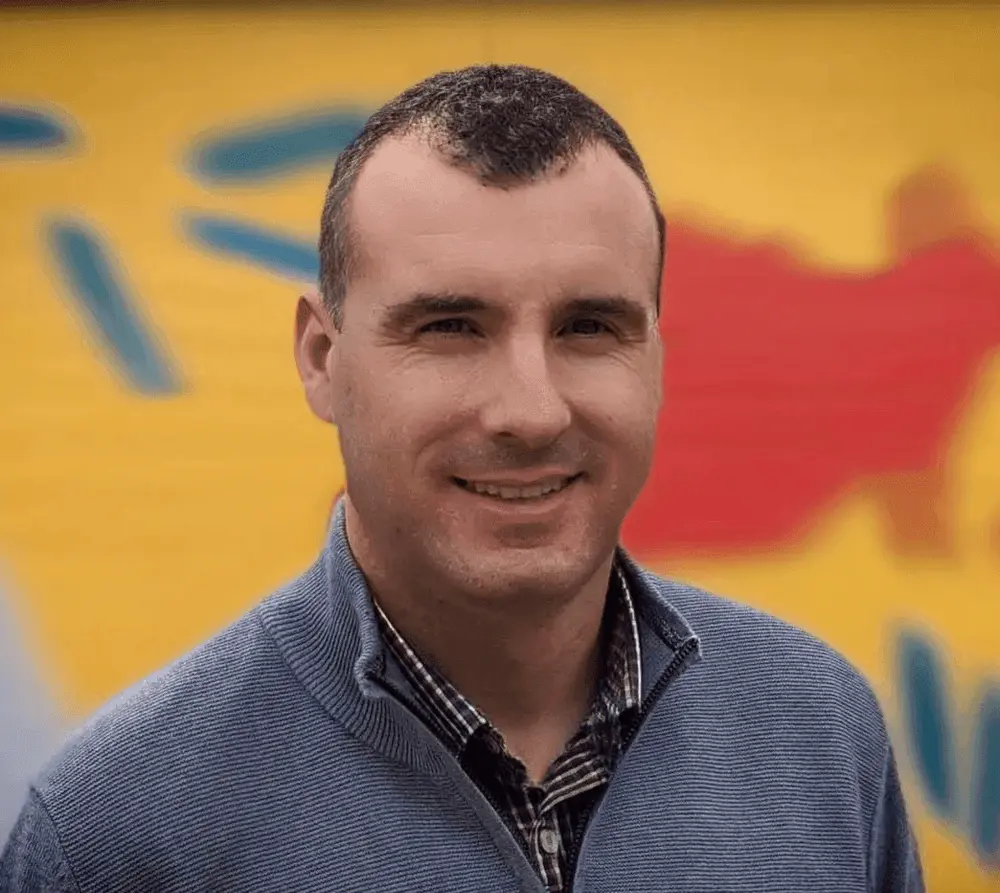
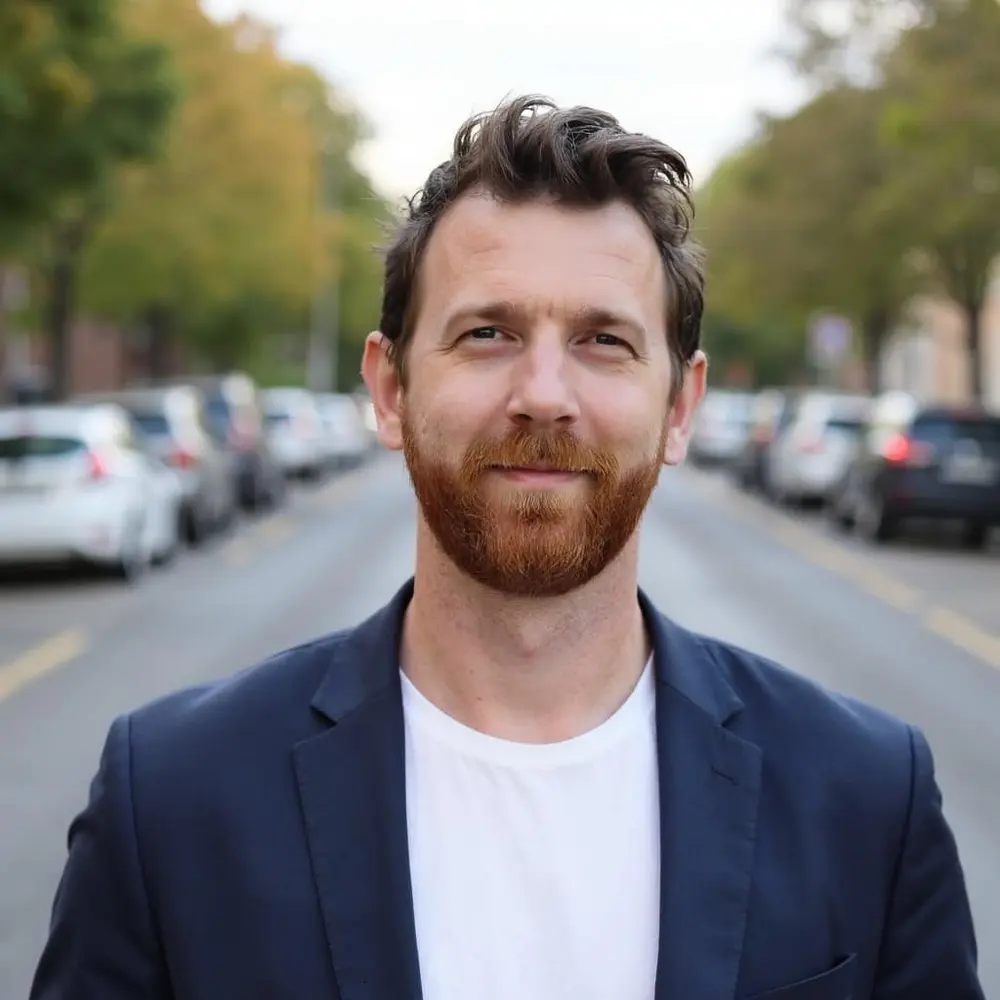
Transcript Synced · select any line to jump ▾ 0:00 Speaker: Let me tell you about our partner, Teamified. If you need to build a top-notch team quickly, Teamified is your go-to solution. They not only provide fractional CTOs, they can also do contractors and even remote team members tailored exactly to your needs. And whether you're looking for expertise in the Philippines, India, or Sri Lanka, Teamified has you covered. What's amazing is that Teamified uses a blend of AI and human expertise to cut hiring times by 50%, cent. The platform handles everything from automated onboarding to day-to-day management and even performance tracking. You can also handle rewards and recognition, buy equipment, and order training all through their platform. Simplify your hiring process and get the best talent fast with Teamified. Check them out now and transform your team. Go to dayone.fm/teamified. That's dayone.fm/teamified. Thank you, T-E-A-M-I-F-I-E-D, and get started today. Hi, I'm Adam Spencer, founder of the Day One Network, which is bringing the history of the Australian startup ecosystem to you. I believe in founders. It's why I do everything I do at Day One and our media company, W2D1 Media. And that's why the Day One Network exists, to create helpful content for founders. We've got some great shows in development, but a large part of what we do couldn't be done without support from our partners and sponsors. And I couldn't be happier than to be working with NTP, who get community better than any other technology recruitment company out there. A Newcastle company like mine, NTP are invested in seeing the growth of the local tech community in Newcastle, Sydney, and more broadly Australia. So thank you, NTP, for helping us bring helpful content to founders and the startup community in Australia. Back to the interview. Hi, I'm Adam Spencer, founder of the Day One Network, which is bringing the history of the Australian startup ecosystem to you. I believe in founders. It's why I do everything I do at Day One and our media company, W2D1 Media. And that's why the Day One Network exists, to create helpful content for for founders. We've got some great shows in development, but a large part of what we do couldn't be done without support from our partners and sponsors. And I couldn't be happier than to be working with NTP, who get community better than any other technology recruitment company out there. A Newcastle company like mine, NTP are invested in seeing the growth of the local tech community in Newcastle, Sydney, and more broadly Australia. So thank you, NTP, for helping us bring helpful content to founders and the startup community in Australia. Back to the interview. 2:46 Speaker: Hi, I'm Adam Spencer and welcome to Day One, the podcast that spotlights Australian startups, founders, and the organizations that empower Australian entrepreneurship. We go back to the beginning to tell the story of Australia's most inspiring founders and how they built their companies. You're listening to a special interview series as part of a documentary W2D1 is producing about the history of the Australian startup ecosystem. On the episode today, we have— 3:18 Tim Boyle: Yeah, hi, I'm Dr. Tim Boyle. I'm the Director of Innovation and Commercialization at ANSTO. ANSTO is a national lab. We're similar to the CSIRO, except we focus on nuclear science and technology only. We are the custodians of most of Australia's significant landmark research infrastructure. So these are things like the Opal Reactor, the Australian Synchrotron, the Australian Centre of Neutron Scattering, the Centre for Accelerator Science, National Duration Facility, and several other national-level facilities of interest and significance. What's really cool is that these facilities are a convening point for innovators from industry and academia So we attract the best people to come and work with us in collaboration with the ANSTO scientists. I'm also the Director and Founder of Nantan. Nantan is ANSTO's Innovation Centre, and in a short period of time of just under 3 years, we've grown from a concept to having a thriving ecosystem of over 30 startups. We also have a Design Innovation Program which connects our researchers and technologies coming— deep technologies coming from our research with our smart people, students, Ilukuri researchers and entrepreneurs to build products and services which you wouldn't normally think of and changing the way we do tech transfer and commercialisation. We call it an approach called systematising serendipity and it's fantastic. Nandan has just moved into a 1,500 square metre redesigned building which was one of Australia's first innovation centres, the Woods Innovation Centre. What's really cool about Neanden is it's not just around startups. We have a design innovation program. We're a member of the Design Factory Global Network, which is a network of 32 innovation centres globally that focus on using design methods to solve wicked problems that face society and humanity. We also have a challenge-based innovation program within this where we take deep technologies, intellectual property from research And we get smart people, entrepreneurs, students, and early career researchers, and we pull them together and do a big challenge program to develop solutions based upon intellectual property to accelerate commercialization and tech transfer, which is a really interesting initiative to solve a problem of how you commercialize platform technologies that arise from research. 5:37 Adam Spencer: Why are you so passionate and interested in commercialization? 5:46 Tim Boyle: Yeah, so this started a long time ago. So throughout my whole career, from when I did my first honors project in 2000, I've walked this intersection of research and commercial, the commercial world industry. So my honors project was with an industry partner, Amrad. They're a Melbourne-based biopharmaceutical company, and I was developing antibiotics. I did a PhD with a company called Avexa doing the same thing. Then I worked with Johnson Johnson as Johnson Johnson Fellow before moving to the UK. I took an academic position, which I realized I didn't like, so I wasn't an academic for very long, and then moved back into industry, but working with in-licensing technologies from universities for product development. So I've had this recurring trend of treading the line between academic or publicly funded research and business. And I think I had a bit of a eureka moment when I left research because I was sitting in a lecture theater and there was one of my contemporary peers presenting their work. And in their work, they put up a proton NMR, which is nuclear magnetic resonance, which is a characterization technique for organic chemistry. And I sat there thinking, this is a— the only people who understand this globally are a handful of people. It has no meaning, there's no reason to do this and it doesn't create any impact. And I knew from all my experience thus far to then that if you're going to do something, unless someone's going to pay for the outcome, it won't really be valued and you won't create impact other than through disseminating that knowledge to other academic peers. So that took me on the path down a career more on the commercial side of academia and publicly funded research, and I moved into tech transfer at that point. But the whole driver is around creating impact, and impact isn't necessarily just the way it changes our lives. The best way to measure impact from research is through economic development measures. We hear about impact assessments And in terms of government policy space, impact assessments generally tend to be a box-ticking exercise. In terms of what the government expects and the publicly funded research, the government agencies that fund public research, they're looking at impact as being something arbitrary that isn't through publication in the literature. When you, you go to the third force or the third stream, that's how you take the outcomes of your research and put it into the hands of people who wouldn't normally consume that type of knowledge. These are policymakers, these are people in government, this is society, entrepreneurs, industry. These are people who can take the outcomes of that research, apply it, and translate it into products and services that can really move the dial on, on society and the economy. And that's something I'm really passionate about because Australia spends $9 billion a year on research and development through public money. The ecosystem as a whole is worth over $12 billion a year, and yet whenever there's a discussion around the commercialisation of publicly funded research, we hear the same old stories. We hear the Victor lawnmower, the Hills hoist, the black box flight recorder, the cochlear implant, uh, Wi-Fi, and polymer banknotes. For the amount of investment that we've seen over the last 50 years into research and development, I think we should have a few more examples of note, and there are many of note, but the stories aren't told in the same manner as these big ones. We have this shtick that we're fantastic at doing research, uh, and we're poor at doing commercialization, but that's not necessarily true. I think that we're— we punch above our weight with doing commercialization, except we have to often go offshore to make the impact that we need. 9:34 Adam Spencer: Before I get into some of the questions for the documentary, you know, looking back when you first got involved in this space. Just a little kind of fun question, just, I'm just curious to know what you find most exciting about your role, like, and kind of maybe some context around that, like a bit of a day in the life of, um, and, and what is the most rewarding part of your job? 10:00 Tim Boyle: Yeah, so I think there's two facets to my role which I find really, really fascinating. And the first one is that I get to sneak a sneak peek of these future technologies as they're being developed. And by that I mean that I'm engaging with researchers actively, and the projects are short and sharp. Sometimes I can go for a lot longer, but, you know, each project I'm— is like almost like a mini course in a university. I get to learn quite deep understanding of a technology that has the potential to change the way that we live if I do my job right and get it to the hands of people who can build products and services. And I think that's just absolutely amazing, and that's the most privileged position that anyone could be in, to be almost responsible for creating the future. 10:46 Adam Spencer: That's awesome. 10:47 Tim Boyle: The second part, the second facet, is that I get to help people. I'm engaging with people, startup entrepreneurs and founders, and it's so exciting so rewarding to see them succeed and being part of their journeys as well. I find the giving back part almost as rewarding from a career perspective as the driving and doing. And when you get the both of those together and all the other activities I do in the technology transfer and research commercialization space, you know, I do really am so privileged to have the world's best job. 11:21 Adam Spencer: Can you share any Or just one exciting technology that you've worked with recently? 11:27 Tim Boyle: Yeah, there's one that— so I haven't done a lot, I haven't been doing licensing type commercialization for a few years, and last year I had the opportunity to work with one of our researchers at ANSTO on a technology that's got very, very relevant environmental sampling. So last year we had bushfires and we saw a lot of the air quality problems that came from bushfires, a lot of carbon particulates in the air. When you go beyond bushfires as well, we have a lot of diesel trucks and cars driving around our streets now, and these are heavy polluters. And we have coal-fired power stations. So while we can't see carbon particulates in the air, they have a high impact on our health, and we don't even realize it. And one of our— and the, the scientific equipment that you use to measure these carbon particulates in the in the air is quite expensive. One of our researchers in ANSTO developed a low-cost, simple scientific instrument to detect carbon black and carbon particulates in the atmosphere. So I did a license to a local manufacturer to commercialize, develop, manufacture, and distribute this scientific instrument that we developed at ANSTO. It's called MABE, and, and it's now widely available, and it's one way you can see the impact straight away. Normally when you commercialise intellectual property from a research organisation, it may take years for the product to be developed and put into the hands of customers and end users. Where this was one where we could do the development very, very quickly, got it to the hands of our partner, and you can go and ring up Thomson Scientific Instruments down the road here in Sutherland Shire and buy one of these devices, and they're now in over 30 countries around the world, having massive impact on the metrology of air quality, which I think is just fantastic. 13:16 Adam Spencer: So how long have you been like involved in this, inverted commas, startup ecosystem? 13:22 Tim Boyle: Yeah, so my first exposure to the startup ecosystem was in 2009 when I moved back to Australia and I was working at New South Innovations, which is the tech transfer office at UNSW. So I was involved in the commercialization of research, setting up spin-out companies, licensing technologies, and finding new technologies from our faculty and academics at UNSW. And the head of the School of Computer Science and Engineering, Maury, he invited me to along to a student startup event. So, and it was a bit of a trial and experiment where He observed that there are a number of students starting to form startups and it was becoming quite trendy. And he's asked me to come along and see if there's any commercial lens that we could put across this and whether, you know, UNSW could gain benefit from it. And I went to this startup pitch event. There was 90 startups that turned up. They were from around the world and there was no ecosystem or formal organizational structure around this at all. And we knew at that point that there was something special happening. So I worked with Maury from UNSW to put together a framework, and from that he then appointed the founders of Atlassian, Scott Farquhar, Mike Cannon-Brookes, as adjunct professors to the faculty at UNSW, Faculty of Computer Science and Engineering. And from the NSI perspective, we decided to start a student entrepreneur development program, and we recruited Josh Flannery to coordinate and run that, that student startup development program for us. 15:01 Adam Spencer: Hmm, that name sounds familiar, uh, Josh Flannery. I think he's on my guest list. 15:06 Tim Boyle: Yeah, so Josh Flannery was a fantastic hire. I didn't get too involved in the program after that. I sort of sat on the periphery and watched him do some magical work where I think after the first 18 months of running the program, they had coached over 200 startup teams where there hadn't been any before. And working with Ben Chong, they put together a program called the Startup Games, and that flushed out a whole new raft of entrepreneurs from the ecosystem. Some of them which are contacts that I still work with today, and some of the, the founders that went through that program are the founders within Nandan at the moment. 15:46 Adam Spencer: Wow. 15:47 Tim Boyle: So it's great links through, and I've managed to maintain relationships across that sort of 10-year period since that program started. And that program then led to investment in the Michael Crouch Innovation Centre, and then formally the program name changed from Student Entrepreneur Development to the UNSW Founders Program in 2015, 2016, I think. And now it's gone great guns and they've got a whole raft of programs and it's a very, very well-resourced program. 16:17 Adam Spencer: Yeah, yeah, one of my guest hosts just interviewed David Burt this morning. And I think he's heading up that program now. And I had a great chat with him a month or two ago and yeah, they're doing amazing things. What are some of the biggest changes you've observed over the past 10 or so years since first coming into this world of startups, either positive or negative changes? 16:48 Tim Boyle: Well, I think overwhelmingly it's positive. I think there's, we've seen, I think the first signs of sprouts that we saw were ATP Innovations, which became Cicada Innovations, wasn't the only incubator in town. We started to see, Startup Central, we started to see Haymarket HQ come on board, as well as some of the, the first accelerator programs, Startmate, Ignition Labs was the first deep technology accelerator program, and there was mixed model programs like BlueChilli, which opened in 2011, and also had a UNSW connection with the founder Sebastian being a former UNSW student, and I'd also commercialized some research that he did when he was a student at UNSW Canberra. 17:34 Adam Spencer: Wow. 17:34 Tim Boyle: From there, we start to see the corporate space started to come in. So we started to see Muradhi, the IAG corporate accelerator program, and then suddenly everyone had a corporate accelerator program at some point, most of the big corporates in Sydney. The ecosystem was exploding, so much so that, you know, the 2016 Crossroads report from StartupAus started to pull together a strong argument for place-based innovation, and I'm pretty sure that was the one recommendation that drove the development of the Sydney Startup Hub at 11 York Street. The establishment of the Sydney Startup Hub, along with other things such as StartCon, reinvestment back into the ecosystem by some of the more seasoned and successful founders like Matt Barry into StartCon as well, as well as the establishment of the Spark Festival and having some real leaders in the ecosystem start to stand up. I think Josh Flannery, I count him as one of those people, and he became the founding director of the Sydney Startup Hub. That's what cemented the ecosystem in my mind. I think there was lots of activities happening and there was an ecosystem, but having that big anchor at 11 York Street sort of changed the game in my mind. 18:47 Adam Spencer: That's definitely going into the documentary. 18:50 Tim Boyle: Oh, good. 18:52 Adam Spencer: What are some of the biggest gaps you've observed? And, you know, I'm sorry to hammer on to find some negative points, but part of this series, I really do want to look at both sides of the coin. 19:03 Tim Boyle: Yeah, I think the biggest gaps that we've seen is there's a massive bias in the ecosystem towards digital technologies and web mobile platforms and all the things that come with that, fintech and, other applications which are very specific to digital and net-enabled infrastructure. And, you know, this comes at sometimes the compromise with deep technologies and hardware, which are what really drive economic development. That's what I'm passionate about. And if you look at the big disruptive digital startups such as, say, Uber— it's the one I like— it's great for consumers in that it provides more variety, but It also, and it's a subtle disruption to taxi drivers. I don't think it's as disruptive to the taxi industry now than a lot of people would make it out to be, but it's created an underclass of employees where there's people who work in these jobs as Uber drivers. They don't have the job security. They don't have some of the benefits and protections that come through regular employment. And you look at Uber Eats and you start to see things like dark kitchens pop up. In that environment as well, the restaurants take a huge cut on their margins to access that service. And I don't even know if that's necessarily, these things are necessarily good for our economy and the economy makeup through jobs. Deep technologies, on the other hand, you have to manufacture something at the end and based upon IP and science. And I think when you do that, you start to create there are jobs, and when you create the jobs to manufacture, it could be automation in those manufacturing processes, but there's jobs to maintain the equipment that's used to manufacture. You start to create value chains. So all the suppliers start to get activated. There's more sales coming from suppliers, and you get that ripple, that ripple-down effect through the economy, which drives, you know, a better economic outcome for everyone. And I think that's more important as we shift from being a resources economy to a knowledge economy. We can certainly leverage the tools that digital technologies bring, but at the same time, we still need to build things, and building things is important. 21:13 Adam Spencer: Yeah. What's some of the, what is one thing that you think as a national community we're doing really well? 21:22 Tim Boyle: I think we're starting to do really, really well at the socialization of what, we're here for and joining up. It was very much a Melbourne scene, a Sydney scene, an Adelaide scene. And I think we're seeing a bigger link up between these ecosystems now. 21:40 Adam Spencer: Mm. 21:40 Tim Boyle: And we're seeing that some of the bigger hubs are opening in multiple regions and cities. So we're getting our act together, have a consolidated, more solid message that we are one. And by doing that, we're also getting a better advocacy advocacy position. I think that in October 2015, there's another landmark point in time where the dial shifted when the National Innovation and Science Agenda, NISA, was announced. And at that point, there was a massive amount of investment and spotlight put on innovation and start— and the startup community. And from that, we've seen the green shoots grow into flowers. And that policy wasn't perfect, And there was a lot of speculation around the second phase of that policy, NISA 2, was going to have a big place-based innovation slant. Then that never came to fruition. But I think place-based innovation for startup ecosystems and innovation precincts is firmly entrenched in everything we do. If you look at the New South Wales policy environment, the economic development backbone is across 3 lighthouse precincts, the Tech Central precinct, the Westmead Health and Medical precinct, and the Bradfield Aerotropolis mixed-use precinct, which is innovation, education, and manufacturing. And these sorts of approaches to policy and economic development wouldn't have occurred pre-NISA in October 2015. 23:01 Adam Spencer: You probably, given your position, speak to a lot of founders, I would imagine, a lot of entrepreneurs. And you've probably seen a lot of them come and go and a lot succeed and a lot fail. If you had to, if a brand new founder came to you tomorrow, what one piece of advice would you give to slightly increase their chances of success? 23:24 Tim Boyle: In the benefit of hindsight now, I know exactly what the challenges are, and I can think of one particular example of where a brilliant entrepreneur who's still active in the ecosystem, and I won't name them because I don't want to embarrass them, but they were very, very green when they, when I first started to engage with them. And they went off and they spoke to absolutely everyone and they got the complete gamut of advice and it wasn't always the best advice. So I think my advice to those next generation startup founders is to get the authoritative, find the authoritative mentors to guide you in the early stages and take counsel from them and listen to them. And don't get caught up in all the noise. 'Cause it's the, you know, having the experienced mentor who you trust will serve you better than taking advice from everyone. Where we've got a community where people are also looking out for their own interests, including generating consulting fees and enhancing the prospects of their own investment portfolios. 24:30 Adam Spencer: That's really good advice. And I feel like that's relevant to me in my, early time jumping into this space. I wanted to take advice from everyone. And you end up going in so many different directions though, and conflicting advice, and that you just become more confused than anything. 24:45 Tim Boyle: Yeah, well, a good one I see at the moment is, you know, I work a little bit in the radiopharmaceutical space and the theranostics space. And it's, you know, some of the venture capital, local venture capital players are starting to get interested in this space as well. And we're seeing a deliberate push away from venture capital for this type of technology. And we've got, yeah, Teelix is an ASX-listed company. They're 4.5 years old. Their market cap is over $1.5 billion now. We've got a company called Clarity Pharmaceuticals, and they've just been admitted to the ASX. And I think their valuation at market, at the ASX market listing, will be around $400 million or just below below. And they're a 10-year-old company. They've gone in with a $90 million raise from their ASX listing, which is the biggest Australian biotech raise ever. And there's another company coming on which are going to list later in the year called Radiofarm Theragnostics. And, you know, from a company that's only 4 or 5 months old, you know, they're raising $20 million and listing. So there's a big push from venture capital to not to keep away from the ASX, but for some technologies, I think there's such a strong track record of listing on the ASX, even though with all the challenges that come with that, you know, it can be a lot more successful and get market traction a lot quicker if you do so. 26:07 Adam Spencer: The last question I have is not really a question, it's me just wanting to give you, you know, 5 minutes to talk about whatever is top of mind for you, keeping in mind that what we're doing here today is we're getting a small part, your perspective, of a massive story, which is the history of the Australian startup ecosystem. Keeping that in mind and the fact that the audience we wanna reach here are policymakers, founders, investors, academics, from every corner of the ecosystem, what do you want them to take away? Like, what do you want them to hear? About the Australian startup ecosystem, either positive or negative? 26:49 Tim Boyle: Yeah, I think, yeah, the Australian startup ecosystem has so much promise, and it's the balance and diversity of our ecosystem which is a strength. We should stop comparing ourselves to Israel and Silicon Valley and other innovation systems, ecosystems of note, and start to think about what's unique and makes us work very, very well. It's very easy to critique what we have as not being as good as somewhere else where there's no good or bad in this space. And in some respects it's not even competition. It's because we, you know, the ideal scenario is where everyone prospers and everyone is successful. And we will only get that through being positive and supporting each other and recognizing the significance that what we have is unique. 27:32 Speaker: Yeah. 27:32 Tim Boyle: I think that that sometimes is lost on people because our, as Australians, I think we are, innately competitive with each other. And we are, in the entrepreneurial space, we all want to win. And that means we have to win, we have to be competing with someone. So there's something in the Australian psyche that I think holds us back. And I think that's very, very different to what you find elsewhere in the US. And in the US situation, I put that down to, you know, is it optimism gene there? You know, when the founders were went to the US 250 years ago, there were those that got there and thought there's snakes and spiders and it's uncivilized and those people didn't, you know, they went back to Europe. There were people that found hope, green spaces and a place where they could make their home and that sort of optimism has continued to spread as they embraced, became the world's biggest capitalist culture. And I think in Australia we need to work out how we can make our psyche unique to us and how we leverage that so we all win and we remove some of the, you know, the self-depreciating parts of our culture and the way the Australians do things, how we remove that so we can be successful and, or recognize the success that we already have. 28:53 Adam Spencer: One follow-up question to finish off the interview. You mentioned this word many times just then, unique. If you had to pick something, what would you say makes us a unique community, a unique ecosystem? 29:08 Tim Boyle: Yeah, I think we are unique 'cause we are young and we don't do things the same way that we do everywhere else. You know, I was talking about different funding modalities and the way things are funded in the US or Israel may not necessarily be the best way to do it do things in Australia. And we have other ways, other mechanisms of raising capital. We have different risk appetites. And that, that's a unique environment. I think the research, the fact that we have such strong research here and we are the best at doing broad research in the world in some respects, is a unique proposition. And we're starting to see sub-ecosystems around quantum computing and advanced manufacturing and nuclear medicine even where we do have deep strength in the deep science around these areas. And then we're seeing value chains and clusters starting to form in, led from the startup space, not led from traditional big industry, which is how most other clusters start to form. I think that's something that is very, very unique to Australia, especially Sydney. 30:14 Adam Spencer: I hope you enjoyed that interview. More interviews are on the way. Follow the podcast wherever you're listening right now. Stay tuned for more interviews with many, many more amazing people from the Australian startup ecosystem. Thanks for listening and see you next time. Bye.