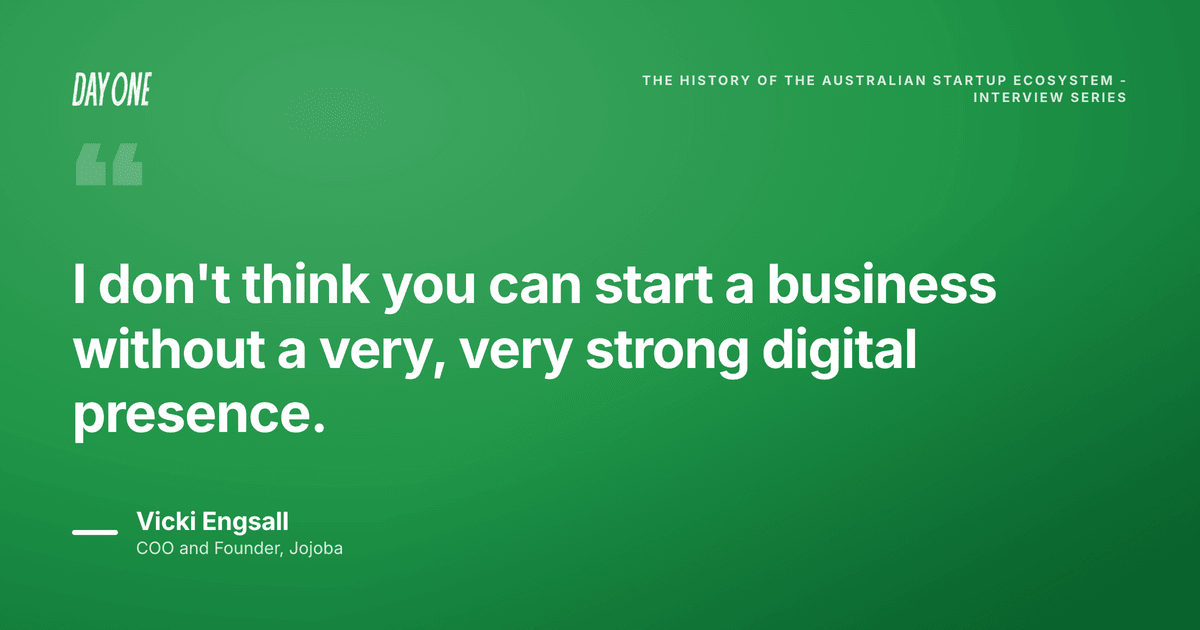
Transcript Synced · select any line to jump ▾ 0:00 Adam Spencer: Let me tell you about our partner, Teamified. If you need to build a top-notch team quickly, Teamified is your go-to solution. They not only provide fractional CTOs, they can also do contractors and even remote team members tailored exactly to your needs. And whether you're looking for expertise in the Philippines, India, or Sri Lanka, Teamified has you covered. What's amazing is that Teamified uses a blend of AI and human expertise to cut hiring times by 50%, cent. The platform handles everything from automated onboarding to day-to-day management and even performance tracking. You can also handle rewards and recognition, buy equipment, and order training all through their platform. Simplify your hiring process and get the best talent fast with Teamified. Check them out now and transform your team. Go to dayone.fm/teamified. That's dayone.fm/teamified. Thank you, T-E-A-M-I-F-I-E-D, and get started today. Hi, I'm Adam Spencer, founder of the Day One Network, which is bringing the history of the Australian startup ecosystem to you. I believe in founders. It's why I do everything I do at Day One and our media company, W2D1 Media. And that's why the Day One Network exists, to create helpful content for founders. We've got some great shows in development. But a large part of what we do couldn't be done without support from our partners and sponsors. And I couldn't be happier than to be working with NTP, who get community better than any other technology recruitment company out there. A Newcastle company like mine, NTP are invested in seeing the growth of the local tech community in Newcastle, Sydney, and more broadly Australia. So thank you NTP for helping us bring— 1:48 Speaker: Thank you. 1:48 Speaker: Helpful content to founders and the startup community in Australia. Back to the interview. Hi, I'm Adam Spencer, founder of the Day One Network, which is bringing the history of the Australian startup ecosystem to you. I believe in founders. It's why I do everything I do at Day One and our media company, W2D1 Media. And that's why the Day One Network exists, to create helpful content for founders. We've got some great shows in development. But a large part of what we do couldn't be done without support from our partners and sponsors. And I couldn't be happier than to be working with NTP, who get community better than any other technology recruitment company out there. A Newcastle company like mine, NTP are invested in seeing the growth of the local tech community in Newcastle, Sydney, and more broadly Australia. So thank you NTP for helping us bring helpful content to founders and the startup community in Australia. Back to the interview. Hi, I'm Adam Spencer and welcome to Day One, the podcast that spotlights Australian startups, founders, and the organizations that empower Australian entrepreneurship. We go back to the beginning to tell the story of Australia's most inspiring founders and how they built their companies. You're listening to a special interview series as part of a documentary W2D1 is producing about the history of the Australian startup ecosystem. This episode was conducted by guest host Will Cho. 3:20 Speaker: Hi everyone, and welcome back to the Australian Startup Series interviews. Our guest today is Vikki Yangsell. Vikki, it's so good to have you on the show today. 3:26 Vicki Engsall: Thank you. Thanks for having me. I'm very excited. 3:29 Speaker: To start us off, could you tell us a bit about yourself and what you're currently working on? 3:33 Vicki Engsall: Sure. Well, I'm the co-founder of The Jojoba Company, and we started back 13 years ago using the jojoba from my dad's farm in southwestern New South Wales, which is in Yenda, which is a little place sort of halfway between Sydney and Melbourne, I guess, and inland. And I started The Jojoba Company in a quest to help people fix their skin, help their skin to help itself, people with sensitive skins, and yet just because of my love of jojoba. And what am I working on at the moment? Lots of new products. Products at the moment. We're working on expanding our team to grow more digitally, and of course always working on new products. We're forever busy. 4:17 Speaker: For the uninitiated, could you tell us what Jojoba is? You mentioned that it was for sensitive skin. 4:26 Vicki Engsall: Definitely. Look, it's for all skin types. So Jojoba is first and foremost a liquid wax ester, and it every other plant in the plant kingdom produces an oil, and jojoba produces a liquid wax ester. And this liquid wax ester is the closest botanical match to our skin's own natural oil. So there's nothing botanically that suits our skin or is closer to our own skin than jojoba. And because of this, it's able to get down into the skin, it's able to help the skin to help itself, it's able to help skin conditions, it's able to balance out oil production, it's able to do over 100 things for our hair, our our bodies. It can work so well to deeply moisturize the skin. It can help the skin with any, anything going on with the skin. And it's just a great all-round product. It's one that when we started out, I said it needs to be in every single person's bathroom cupboard because, you know, it suits anyone from a newborn baby right up to, you know, someone who's 100 years old. It can suit anybody, any stage of life, and any age. 5:32 Speaker: So many things that I'd love to dig into, but to start us off, I'd love to take the audience right back to the beginning. Vicki, what was your first exposure to the Australian startup community? 5:42 Vicki Engsall: So really, my first exposure was through MYOB. I was introduced through MYOB to the startup community, and that was really my first exposure. I hadn't really had much to do with them prior to that. 5:55 Speaker: I see. And what year are we talking about here? 5:58 Vicki Engsall: What year? This year. It was, it was just this year when MYOB introduced me to The Startup Series that I investigated and had a look and saw a few episodes and became interested in it. 6:11 Speaker: Ah, okay. So before this, you didn't really delve into the startup community or ecosystem, any sort of like support structures, even though the Hooba company's been running for a really long time? 6:23 Vicki Engsall: Yeah, exactly. No, we didn't. I didn't realize there was anything like this out there to support us back in, you know, 13 years ago when we started our business. I wasn't aware of any communities out there to help. I wish I was aware. There. Uh, it would have been great to have had support back then because of course we had our challenges and our bumps in the road, and it would have been great to have had a supportive community to sort of, you know, I guess brainstorm with and chew the fat with, really, you know. 6:50 Speaker: Yeah, I totally understand. So who would you say, or what organizations were there to support you, if any? 6:56 Vicki Engsall: Well, I guess it was more because we're in skincare and cosmetics, it was more the Cosmetics not from a business perspective, more from a product perspective, the cosmetics community. So we had the Australian Cosmetic Chemists who supported us in a lot of ways as far as regulations for our products and that sort of thing and things that we needed. But from a business perspective, we didn't really have a lot of support. My dad helped, he's a co-founder, we founded it together, and he's a very established businessman. So a lot of our business help and that sort of thing came from my dad. 7:35 Speaker: Okay, that makes sense. So what were the events that led up to the formation of the jojoba company back in '08? 7:43 Vicki Engsall: Yeah, so the very first event which started the whole thing was my dad planting jojoba on his farm in the year 2000. He attended a farmer's expo where the Department of Agriculture and the CSIRO were there exhibiting jojoba and trying to encourage farmers to plant jojoba on their farms. They wanted to bring the crop crop to Australia because it's a drought crop. It doesn't require a lot of water, and they looked at it as the perfect crop to be grown here in Australia. It wasn't previously grown. 8:16 Adam Spencer: Mm-hmm. 8:16 Vicki Engsall: It originates in America, in the Arizona desert. It grows naturally over there. And so they— what the CSIRO and Department of Agriculture together did was create a variety of ajoba that would suit our Australian soils. So they spent quite a few years working out the best, you know, I suppose it was natural selection, it wasn't GMO, but it was natural selection, growing jojoba plants, looking at the ones that produced the best yield and the best quality, and obviously propagating those and continuing to get a most amazing strain, which was the Wadi Wadi jojoba. 8:52 Speaker: Hmm. 8:52 Vicki Engsall: And they developed this strain, which they named Wadi Wadi jojoba. And all the farmers had the opportunity to be pioneers, be the first people to grow jojoba and bring it to the Australian people and the Australian farming community. My dad, as I said earlier, ever, ever a businessman, ever looking for an opportunity, he decided to be one of the first people to pioneer and to grow jojoba on his farm. He was previously growing wheat, barley, rice, canola, lots of different things on his farm. He had a spare plot. He planted the jojoba along with about 7 other farmers at the time, and he left it. The thing with the jojoba is it takes about 8 years to get a crop. 9:34 Speaker: Wow. 9:34 Vicki Engsall: So he did plant it back then in the year 2000, yep, and he left it. Of course, watered it, he looked after it, but there wasn't a lot of knowledge about jojoba growing. So really it was trial and error. He did get a crop in the year 2008, and it was then that the Jojoba Company started. He came to me and he said to me, Have you ever heard of jojoba? And I said, wow, yes, I absolutely love this stuff. I had been using it right the way through my pregnancy on a recommendation from my naturopath, and I was on maternity leave with my son, and I'd been using it on his skin. It's great for on my babies, I was using it on my pregnant belly, I was using it on my own skin. I'd turned to everything natural, only using, you know, no chemicals in my life. And jojoba was one main thing recommended to me. So I'd grown to absolutely love jojoba. And so of course, I had no clue that my dad had been growing it on his farm. And when he came to me and said, have I heard of it? My first thought was, wow, I have a supply of jojoba. It was so hard to buy. There wasn't much around. And there certainly wasn't much Australian or any Australian jojoba. Mm-hmm. So I said to him, "I know exactly what we're gonna do with this jojoba. We're gonna bottle it up into big bottles and make it available to everyone. Everyone should have access to this amazing ingredient, this amazing liquid wax ester." And that's how we started. We started by just bottling up pure jojoba in larger— we were selling it in bulk as well to big cosmetic houses and other big brands in the beginning when we had excess. But of course, nowadays, that's not— Yeah. That's, uh, we now use everything we produce. 11:16 Speaker: Yeah, that's an amazing story. It sounds like very much an accidental opportunity or entrepreneurship pathway, if I must say. And Vicki, I know that you have a background in education. You're an assistant principal before this. What was going through your mind when your dad asked you to run a company, and what did it look like at the very early days? 11:36 Vicki Engsall: Yeah, look, what initially went through my mind was I was off with my son. I didn't really wanna go back. I loved teaching and I was prepared to go back. I was gonna go back, but I didn't, I wanted to be flexible and be able to stay home with my son and look after him and not rush back to work. And I guess my first thought was, this is an opportunity for me to work from home and spend more time with my son. How wrong that was, but that's what I initially thought. And I took that as an opportunity. And I also, my dad's always been a businessman and I really thought, I could learn about business from him and I would love to learn, you know, how to start a business, how business starts, and really be mentored by him. He's my opportunity in my life to really learn how to start a business. So I guess it was twofold. It was one selfish reason that I wanted to be home with my son and the second reason really for me to learn. And the third reason was I was so passionate about ho'oponopono that I really, I just wanted it out there. I wanted everybody to experience this, you know, what I felt was a miracle product. 12:44 Speaker: How did you get your first customer? And can you recount what you felt when that first purchase came through? 12:51 Vicki Engsall: Yes, well, we spent a long time obviously developing a range. So we started from bottling up pure jojoba to then once we realized the benefits of this amazing ingredient, that it would be a great ingredient in a full skincare range. So what we did was then heroed out a jojoba and created a full skincare range. So we ended up with this full, you know, 30 SKU skincare range based around jojoba. And what we did was back then, we're talking 13 years ago, and it doesn't sound like very long ago, but the landscape, the retail landscape has changed dramatically since then. 13:28 Speaker: Mm-hmm. 13:28 Vicki Engsall: Back then, the internet wasn't big, buying online wasn't big. How did you educate customers? How did you get people to buy? So back then, trade shows were really big. And there was a beauty trade show for beauticians and beauty therapists. It was called the Beauty Show, and we decided that our product— yes, we're gonna, we're gonna target beauty salons and we're going to get into beauty, beauty therapy and that sort of thing. So we, we built a beautiful big stand, um, we paid for a space at the Beauty Expo, and that was our launch of our 30 SKUs. And, you know, let's show Australia, I was, you know, what, what we've got, and let's recruit some customers. And they were our first customers. Some— it was a lot of home salon owners. There was a few bigger ones, but most of them were people who came and they just loved it. There were a lot of massage therapists. So they were our first customers, these beauty salons, these small beauty salons who saw our products and just loved them and, um, started using them in their salons. 14:31 Speaker: Yeah, like within the trade shows, that's how things really started to gain traction. When did you pivot to e-commerce? 14:38 Vicki Engsall: So that was only very recently. So we, when we first started out, so that was beauty salons. As time went on and we were supplying these beauty salons, we realized that our product was maybe, it still is good in beauty salons, but we were very much health foods and pharmacies as well, that, you know, they were a great distribution channel for us. So we started to sell to pharmacies and health food stores, and it was quite difficult because although we had a website, it was educational, there was no e-commerce on that. So we relied solely on sales reps that we employed to actually, for us to train them and for them to go out and train people in stores and teach people about our products. And it was difficult and paying expensive, paying for expensive ads in glossy magazines and that sort of thing to advertise the product and get some awareness. 15:30 Speaker: Hmm. 15:30 Vicki Engsall: We slowly, I guess we had a website which didn't sell, so there was no e-commerce attached. And we very, very slowly improved our website and eventually opened it up to e-commerce, I would say probably about 6 years ago, but we didn't, not in a big way. It was just sitting there in the background. If people wanted to buy online, they could. Even back then, people didn't trust paying for things, putting their credit card down and that sort of thing. They were worried that, you know, they would get scammed or whatever. So, you know, the sales weren't very big back then. 16:03 Speaker: Mm. 16:03 Vicki Engsall: It was only about 4 years ago where we decided to really expand our digital presence and really, and luckily it was great timing 'cause COVID came just after we'd done this. We really, we employed a digital marketing manager, we started employing agencies to help us with SEO and content, and we've now, you know, grown to have a full team of people who are helping us with our e-commerce. So I guess it was 4 years ago that we really moved into the e-commerce space, but at the same time, we really ramped our digital presence up. 16:36 Speaker: Right at the beginning of our conversation, you mentioned that you first got exposure to the startup ecosystem from MYOB. Can you tell me how you first became aware of them and what's the relationship here? 16:52 Vicki Engsall: We've used MYOB since the beginning. We started with their very basic programs, which weren't in the cloud and that sort of thing. And one of the reasons we moved into MYOB Advance, which is what we use now, was because they were one of the first adopters to be using a cloud and we needed things to be in the cloud. It was just so much easier. Much easier for us to have everything in the cloud. People could work at home, people could work from anywhere, people could work remotely. So that was one of our main drivers in using MYOB, but there was also things like the support that we can get. If there's any issues or whatever, they've got agencies. We use Kilimanjaro, but there's a whole lot of other companies that can support you with MYOB, and they're just right at the end of the phone. So we love that, you know, we can use that support. It's very flexible, we can integrate everything. So since we've gone more heavily into our e-commerce, we're now able to integrate, you know, our orders, our inventory, everything's integrated into the one system and we find it very easy to use. And we're even able to integrate third parties now and we're able to do dropshipping. So we've brought on a few big retailers such as The Iconic, who do dropshipping. So, you know, we're even able to integrate the third-party dropshipping. So our relationship with MYOB has grown dramatically over our 13 years. We've always been with them, but we have moved from their basic non-cloud version to their cloud version and the advanced version. And yeah, it's been a great relationship and we found it's really helped our business. 18:24 Speaker: Yeah, it was just a combination of multiple factors: support, flexibility, you know, integration with third parties. It was just there to, to support your business over the last 13 years. 18:36 Vicki Engsall: Exactly. 18:36 Speaker: Could you tell me more about the sort of split between e-commerce and, and distribution? You mentioned just then that you're, you're heavily into e-commerce now. Do you have sort of like a split moving forward, which one you're going to be focusing on more? 18:51 Vicki Engsall: Look, we are focusing on both equally. We believe, especially for beauty, a 360 approach is really, really important. So our bricks and mortar stores are very, very important to us, but we We believe by ramping up our digital and our digital marketing, that will also help the sales in our bricks and mortar stores as well because, you know, most people nowadays when they want to find out about a product, they go to the internet, they research it, they find out about— most people are finding out about products via Instagram, via ads on digital channels. That's how they're learning. They'll even, you know, look at the back of a packet, they'll Google ingredients. So for us, Our focus, I guess, from a marketing perspective is digital, definitely. Like most of our marketing is now digital, but as far as distribution goes, we definitely diversified that and we would never just focus on one channel. I don't, I think that's not a great thing to do. We really want to make sure that we're diversified and all of our channels are important to us. So our bricks and mortar, we do TVSN, so we do TV shopping, our international clients equally important to our own online store as well as our e-retailers. So our third-party retailers that are online. So we actually give equal emphasis to each channel, but I suppose at the core is our digital marketing, which I guess is how I've seen our business change the most because the marketing is all digital. 20:17 Speaker: Yeah, I, I know what you mean. It's, it's hand in hand. There is no one that is more preferable or the other. They go hand in hand and they're complementary. 20:27 Vicki Engsall: Yes, exactly. 20:28 Speaker: So I guess starting off within trade shows and over time, Hooba company has begun to adopt more and more technologies to, you know, keep up to date with the fast-paced digital world. How do you manage? What do you know what's around the corner? 20:43 Vicki Engsall: As far as the digital world goes or as far as products go or as far as, so what do you mean by what's around the corner? So do you mean as far as digital goes? 20:53 Speaker: Yeah, just like digital technology. So for example, going into digital marketing, and if you expanded into e-commerce, so what gave you these ideas? 21:04 Vicki Engsall: Oh look, I think, well, it's just, I suppose, keeping up with— oh look, it's our staff that we've employed, it's consultants we've employed, it's really just living within the beauty industry and looking at the trends and being part of beauty industries and conferences and that sort of thing, and going to different sorts of courses to learn about what the upcoming trends are. And I guess e-commerce was just something that's always been on our radar, and it was always something, even from when we started back 13 years ago, e-commerce was on our radar. And, and back then though, if you opened up an e-commerce store, you were looked upon to be competing with the retailers. So the retailers wouldn't necessarily bring you on into their stores if you had your own e-commerce store, because that was looked upon as competing. 21:53 Speaker: Mm-hmm. 21:53 Vicki Engsall: Nowadays, I think retailers look very differently and look at it as a support for them. If you've got all this digital presence, then fabulous for us, you know, we're going to have more customers come into our door because they'll see it digitally. But, you know, it's that sort of thing and it changed over time. And I think, yeah, it's just knowing what's there and knowing when to implement it and when to use what's there for you. 22:16 Speaker: I know what you mean. It's just the continual learning process. 22:19 Vicki Engsall: Yes. 22:20 Speaker: So A couple more questions now, Vicki. If a brand new entrepreneur or founder came to you and given all your experience, your mistakes and your wins, what piece of advice would you give them to help them succeed? 22:34 Vicki Engsall: I think in this day and age, you know, looking through our whole 13-year journey, in this day and age, the best piece of advice would be to have a digital presence. I think that is the most important thing in today's day and age. Back 13 years ago, the advice might be different, but today, I don't think you can start a business without a very, very strong digital presence. I think that's where people are shopping, that's where people are getting their entertainment, that's where people are learning about everything. I think without a digital presence, it would be very hard to start a business. Along those lines, staff, staff that know how to do that for you. It's been one of our big wins is employing the right staff and people who really know the digital landscape and are really across it and know exactly what to do. I mean, we've got great graphics people who can create amazing content for us. We've got great backend people who can really work on the backend and make sure that everything's really smoothly running because, you know, you can look after that frontend of your website and make it look pretty and beautiful, which is what I focused on in the beginning because I was all all about beauty and wanting this beautiful looking website, but the backend in the beginning didn't really match up to our frontend and we had a few issues with deliveries and, and all that sort of thing. So, you know, making sure that you don't neglect that backend, which is really important for everything to go smoothly and run smoothly, and just getting the right staff who have the right skills to make sure everything does run smoothly. And yeah, focusing on the whole website, not just the prettiness or the, you know, the functionality is the boring part, but it's important. 24:16 Speaker: Absolutely. Vicki, it's been an absolute pleasure having you on the show. Thank you so much for your time. 24:22 Vicki Engsall: Thanks for having me. 24:23 Speaker: What's next for you and your journey within the Hooba company? 24:27 Vicki Engsall: Oh gosh, well, look, it's just more growth. I think we, at the moment, we're headed internationally, so we have just opened Vietnam and we're opening up Korea. We are expanding our UK and we've just entered the US. So I think Australia, we've— we haven't really saturated the market, but we really, we feel that we've expanded in Australia to a point where there's not a lot of expansion left. So we've moved offshore. So that's our— obviously our next step is the international, the global stage, and hoping to really kick some goals globally. 25:11 Adam Spencer: I hope you enjoyed that interview. More interviews are on the way. Follow the podcast wherever you're listening right now. Stay tuned for more interviews with many, many more amazing people from the Australian startup ecosystem. Thanks for listening and see you next time.