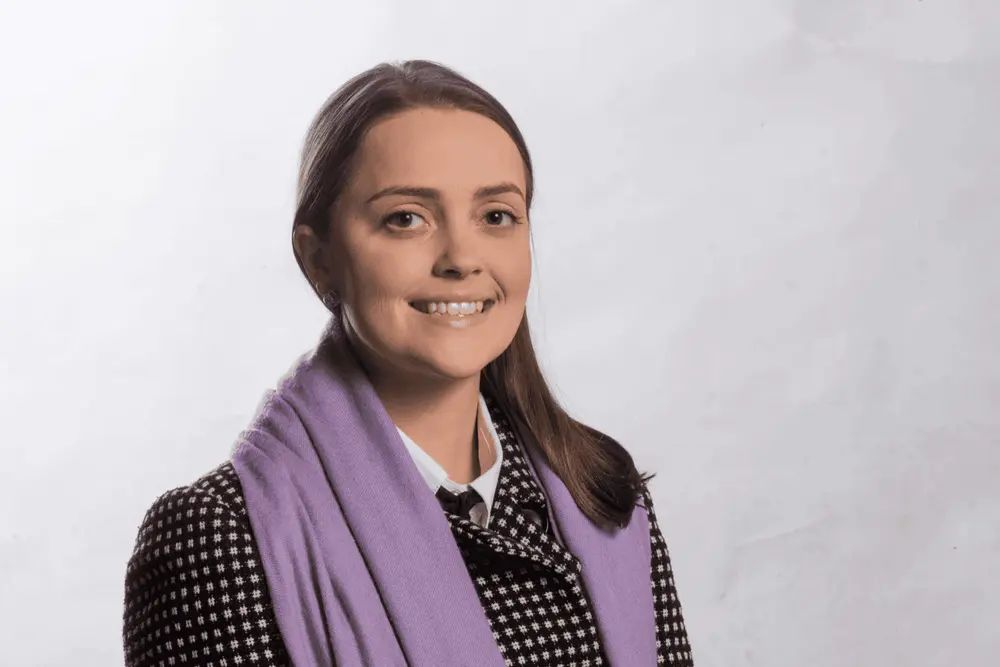
Transcript Synced · select any line to jump ▾ 0:00 Speaker: Let me tell you about our partner, Teamified. If you need to build a top-notch team quickly, Teamified is your go-to solution. They not only provide fractional CTOs, they can also do contractors and even remote team members tailored exactly to your needs. And whether you're looking for expertise in the Philippines, India, or Sri Lanka, Teamified has you covered. What's amazing is that Teamified uses a blend of AI and human expertise to cut hiring times by 50%. Their platform handles everything from automated onboarding to day-to-day management and even performance tracking. You can also handle rewards and recognition, buy equipment and order training all through their platform. Simplify your hiring process and get the best talent fast with Teamified. Check them out now and transform your team. Go to dayone.fm/teamified. That's dayone.fm/t-e-a-m-i-f-i-e-d and get started today. 0:59 Speaker: Thank you. 1:01 Speaker: Hi, I'm Adam Spencer, founder of the Day One Network, which is bringing the history of the Australian startup ecosystem to you. I believe in founders. It's why I do everything I do at Day One and our media company, W2D1 Media. And that's why the Day One Network exists, to create helpful content for founders. We've got some great shows in development, but a large part of what we do couldn't be done without support from our partners and sponsors. And I couldn't be happier than to be working with NTP, who get community better than any other technology recruitment company out there. A Newcastle company like mine, NTP are invested in seeing the growth of the local tech community in Newcastle, Sydney, and more broadly Australia. So thank you NTP for helping us bring helpful content to founders and the startup community in Australia. Back to the interview. Hi, I'm Adam Spencer, founder of the Day One Network, which is bringing the history of the Australian startup ecosystem to you. I believe in founders. It's why I do everything I do at Day One and our media company, W2D1 Media. And that's why the Day One Network exists, to create helpful content for founders. We've got some great shows in development, but a large part of what we do couldn't be done without support from our partners and sponsors. And I couldn't be happier than to be working with NTP, who get community better than any other technology recruitment company out there. A Newcastle company like mine, NTP are invested in seeing the growth of the local tech community in Newcastle, Sydney, and more broadly Australia. So thank you NTP for helping us bring helpful content to founders and the startup community in Australia. Back to the interview. Hi, I'm Adam Spencer and welcome to Day One, the podcast that spotlights Australian startups, founders, and the organizations that empower Australian entrepreneurship. We go back to the beginning to tell the story of Australia's most inspiring founders and how they built their companies. You're listening to a special interview series as part of a documentary W2D1 is producing about the history of the Australian startup ecosystem. On the episode today, we have— 3:18 Yolanda Redrup: Hi everyone, my name's Yolanda Redrup. I'm a senior journalist with the Australian Financial Review. I've been covering the technology and startup space for about 9 years now. And yeah, I was first introduced to it in my first job when I was working as a small business journalist at SmartCompany. 3:38 Speaker: What was your very first exposure to this thing we call the startup ecosystem? 3:44 Yolanda Redrup: Okay, all right, taking me back. I think my first exposure was probably within my first couple of weeks starting at SmartCompany and my editor at the time, her name was Cara Waters, she now works for The Age. She had asked me to start looking after a segment that they were kicking off called Diary of an Entrepreneur. And at the time, to be honest, I was pretty young and green and I didn't have a lot of exposure to the startup world. In the world, but I was familiar with some entrepreneurial stories and I thought that would be a great column to sink my teeth into and cut my teeth as a young journalist. And that was probably the starting point. I'd be lying if I said I could remember who the first person was that I interviewed for that column, but I definitely spoke to some colorful characters in my sort of year and a half when I was at SmartCompany. People like Jeanine Ellis of BoostJuice, Matt Barry of Freelancer, Abigail Forsyth who started KeepCup, and I think one of my favorite interviews probably was Meagan Quinn, who did Net-a-Porter, some of the entrepreneurs that were already quite prominent about a decade ago. 4:46 Speaker: Yeah, wow. How has your view changed of the ecosystem or what your understanding of the ecosystem since you've been covering it for all these years? 4:56 Yolanda Redrup: I think the first point there is probably just that it was extremely different as an ecosystem when I first started. I think back and I started covering the space around 2013 and at the time Blackbird had really only just started or were finishing raising raising their first $29 million fund. Square Peg was equally in its extremely early days, and Craig and Daniel hadn't even launched Airtree yet. It didn't, it didn't exist. So there was really only, you know, a handful of notable funds in, in the ecosystem at the time, and the amount of investment was just so much lower. And I went back and had a look over some of the articles I was writing back then, and it was quite common for us to cover rounds that were below a million dollars. Mm-hmm. You know, if a company raised $5 million, it was quite a big deal. So the progression in only 9 years has just been astronomical. So it was just a very different landscape. I guess impressions of it at the time were that the majority of investors back then were male. And it's been great to see some additional diversity come in, particularly in the past couple of years, as it's been a real priority for the funds here. Equally, most of the founders I wrote about were male who were out there raising capital. I went back and pulled up some AvCal stats from 2013. And interestingly, there was actually a drop-off in investment that year. There was a 20% decline in the amount going into local startups. And I think the grand total for that entire year was only $111 million. And now I could probably name off the top of my head 5 rounds by individual companies that were bigger than that size in the past 6 months. 6:33 Speaker: Yeah. 6:33 Yolanda Redrup: So it's just a totally different landscape now to what it was back in 2013. 6:37 Speaker: From your assessment of it, what would you say has driven that change? 6:42 Yolanda Redrup: It's been a combination of factors. I think we can't underestimate how important it was to have the sort of the building blocks of the ecosystem being put in place, and that's things like having angel investors to fund the really early-stage ideas, to having money for follow-ons, Series A and Series Bs. Then you needed to have the sort of architecture around it, I guess. So having the little hubs, you've got a thriving community around Cremorne and Richmond in Victoria, and you've got a health precinct, which is well known around Parkville. And then obviously in Sydney, great software and fintech hub up there. And then you've got the sort of accelerators that came in, which were able to provide some of that early coaching and mentoring and help founders that had a good idea put the pieces in place to turn that into something that was commercially viable. And I think the sort of connection of all those pieces is probably what led to this acceleration. And then there just had to be enough money. And I think we can't undervalue the importance of the original sort of LPs that put money into those early VC funds because they were doing so, and it would have been a risk. They would have remembered how burnt some of the investors were from the dot-com crash that effectively had been a 10-year drought. Mm-hmm. In Australia for VC. And that would have been really fresh in their minds back a decade ago. So to come in and put money in, I think they took a big risk and fortunately it's paid off. 8:11 Speaker: Yeah. Off topic slightly, but I just wanted to go back to, you know, a green journalist just kind of given this column, you know, 9 years later, what keeps you excited about the space? 8:21 Yolanda Redrup: Ah, it's the stories and it's the people. I feel like it's been a real, just a really great round to have and I've got to grow up with it, which has been really nice. It was very green like I was when when I was back in 2013. And now the stories and the quality of the founders is just really impressive. I think too that just the scale that everyone's able to reach has been extremely great to see. And they're able to do it quicker because of having the money, obviously, to back them. They're able to go global from day one. It's just something they always talked about. But it's really just, it's the people and the stories and the community. And there's always a new innovation. So— Mm-hmm. There's a lot to be excited about. 9:03 Speaker: Aside from the dramatic increase in funds available over the last decade, and you know, we're getting better at diversity, still a long way to go obviously, but what are some other trends that stand out to you? 9:15 Yolanda Redrup: I think certainly the Australia, it's been very clear where we've got some real strengths. Software is obviously one of them. SaaS products, not surprising given the success of Atlassian. We've had some real strength in the software as a service model. And then I think we've also seen a real strength in fintech, which probably isn't surprising given how regarded our banks are globally, that we were able to have some of that talent. And I think a lot of our strengths comes down to those existing industries where there was talent, there was people that might have been getting frustrated about doing things the same way and had ideas about how to solve problems and then had all of a sudden had the ability to go out and do that and have some funding behind them to get there. So I think we've definitely seen it's come through in those sort of key areas. Mm-hmm. We've certainly seen a lot of investment into AI and autonomous technologies, be it from a business process perspective or things like IoT sensors that enable better, better maintenance of assets. So there's a whole range of things happening in that space as well. And then more recently, we've obviously seen a lot of investment starting to flow through into battery technology and renewables and clean tech. So I think that's really great to see. And I think the investment in the clean tech space will flow through as well into more broadly deep tech, which is an area which obviously takes more upfront investment, has longer lead times and longer times to get to an exit, but is critically important. 10:47 Speaker: Looking back over the last 9 or 10 years, what has inspired you the most to see in the startup space? 10:54 Yolanda Redrup: I just think that it's the success stories, right? Thinking back, to the early days when Canva was a really young business. I covered Go1, and I think their first round was about, first round I covered was about $4 million that they did, and they're obviously now a unicorn. Employment Hero, which have come out today as a unicorn. And we're seeing all of these companies come through, which I was lucky enough to get to cover when they were really young little businesses with tiny teams doing small raises. And then a reasonably short period of time, they've come out and they are global leaders in their fields. And that's impressive. It's great to see. 11:30 Speaker: You know, looking to the future, what are some areas that you would like to see us really leap forward in? 11:36 Yolanda Redrup: There's probably a couple of different angles to that question, but we touched on diversity before, and I think I've done a bit of work over the last number of years in tracking the diversity of the ecosystem, both in terms of the founders getting funding and also the, venture partners that have investment sway. And it's been great to see that there are a lot more women in investing roles within VC now, which is good. Certainly nowhere near equal 50/50, but, you know, people like Sam Wong and Michelle Deeker and Jackie and Melissa Widner and Sarah Nolan and Kim Jackson, there's some great women who are creating pathways, I guess, that others can follow in their footsteps into the ecosystem. But I think one way where there's probably not enough data, but from my own understanding of the space, I could say that it still hasn't equalized, would be in around the amount of money flowing to founders with diverse teams, particularly from that gender perspective. But also, it's far worse when you look at race or a number of other metrics. Gender is just the one that usually gets used. But by and large, when you're reporting on a large round company raising $30 million, $40 million, $100 million, it's still all male teams. So I think it would be really great to see more funding flowing through to those diverse teams, which, you know, studies have shown us that diverse teams get better outcomes, but still the majority of funding will flow to all male teams. 13:01 Speaker: Do you have any numbers right there in front of you in terms of the split? 13:05 Yolanda Redrup: That's part of the challenge is that it hasn't been well tracked in Australia specifically how much of the value is going to diverse teams. In the States there's been a lot more modeling on that, but there's been less here. What I have looked at in previous years has been just the number of deals that have gone to diverse teams. They've made 40 investments in a year, how many of those went to teams with female co-founders? And those numbers certainly improved. So Artesian were always a standout, almost 40, 42% of their deals tend to go to diverse teams, which is great. 13:37 Speaker: Wow. 13:38 Yolanda Redrup: And certainly the other funds have made strides in that respect. Rampersand were above 30%. All the funds generally across the board were of 20%. So that's certainly an indication that we are ahead of the states in some regard in that respect. But there hasn't been as much data pulled out on the value of money into these companies. 14:00 Speaker: You just mentioned diverse teams get better outcomes. What does that look like in the real world? 14:05 Yolanda Redrup: In the real world, the studies that have come out on that tend to show that on a financial basis, they tend to have higher growth rates and get better financial outcomes, which is, you can only put that down to most likely having that diversity of thought around the table. I think that's the metric everyone looks at is, are they financially, economically more successful? And for the most part, it seems like they are. 14:28 Speaker: Yeah, the diversity of the different perspectives approaching the same problem. 14:33 Yolanda Redrup: Yes, that's right. And I think that can't be undervalued. And it's also why diversity goes a lot further than just gender. Really what you need to be getting at here is not having a men and women round table, it's by having different perspectives, people from different walks of life, people from different socioeconomic backgrounds, different cultural experiences. All of that feeds into building a better business. Because you, at the end of the day, startups talk about all the time being customer-centric and customer-obsessed, but how can you be customer-obsessed if you don't have a realistic representation of your customer around the exec table. 15:11 Speaker: Before I ask this last question, is there anything that you wanted to touch on? 15:17 Yolanda Redrup: Ah, I always ask that too, so should have seen that coming. Look, I think what's just most remarkable is truly how far the ecosystem has managed to come. I don't think we can undersell that. I remember pieces back around 2014, 2015 where there was this constant comparison getting made between if Australia could have a city be like Silicon Valley. And it wasn't the right comparison to be making. It was fundamentally flawed. But there were certainly learnings that we could take from places like Silicon Valley or Tel Aviv and how those could influence the creation of our own startup ecosystem here. But while we're not going to be Silicon Valley, what we have managed to do is pretty, pretty remarkable. I saw some stats recently from Cutthroat Venture, and they said that in 2021, more than $10 billion of capital had flowed through the Australian startup ecosystem. Founders just called Chris, and this is a little alarming, but founders called Chris personally raised over $1.3 billion. 16:20 Speaker: Wow. I know what I'm naming my son. 16:22 Yolanda Redrup: Yeah. Bring that back to those AvCal stats from 2013, which showed that only $111 million got raised in the entire year. To have done that in a 9-year period, that growth is just astounding. 16:34 Speaker: And also, I mean, Silicon Valley and all these other ecosystems, they've got like at least a 2-decade head start on us, so— 16:40 Yolanda Redrup: Exactly, that's right. It's just, it's not a correct comparison. Yes, there's learnings, but we don't need to be Silicon Valley. We should be playing to our own strengths and building what works for us rather than trying to aspire to, you know, be somewhere else. 16:53 Speaker: So what we're trying to do here is we're trying to create the most comprehensive, kind of holistic documentary that will tell the story of the Australian startup ecosystem. We want founders, academics, policymakers, investors, everybody from every corner of the ecosystem to hear this story. Any one of those categories or everybody, what do they need to hear from you? 17:15 Yolanda Redrup: Well, first up is just the importance of this space to the future economic growth of this country. We can't undervalue how much of our future economic prosperity comes from technology. There's been plenty of talk about shifting away from mining, about— resources obviously have a finite lifespan. But if we want to maintain our quality of life, then improving tech exports, investing in this space, and creating the policy settings to make it flourish, that's incredibly important to the future of our nation. I guess the only other thing that I would add is there was a lot of commentary back when I first started reporting on this space about this thing called a fear of failure. You know, it was something that was really holding Australians back. I feel like we've shifted beyond that now. I feel like it's probably less a part of the sort of Aussie story is this fear of failure. I think it's— a real milestone for us to achieve, that founders can go out there and they can start businesses and they can do it and not think that if it fails they won't get another shot. 18:24 Speaker: Mm. 18:25 Yolanda Redrup: You know, in my sort of time, I've spoken to people that have started 3 or 4 businesses before finally landing on their 5th venture, and that's the one that's really successful. So I think it's a real mark of the sort of maturing of the ecosystem that personally I feel like we've progressed past fear of failure. I think there's less of a tall poppy syndrome than there was a decade ago. So I feel like we've got all the hallmarks now for this just to keep growing and growing. 18:57 Speaker: I hope you enjoyed that interview. More interviews are on the way. Follow the podcast wherever you're listening right now. Stay tuned for more interviews with many, many more amazing people from the Australian startup ecosystem. Thanks for listening and see you next time. 19:14 Speaker: Bye.