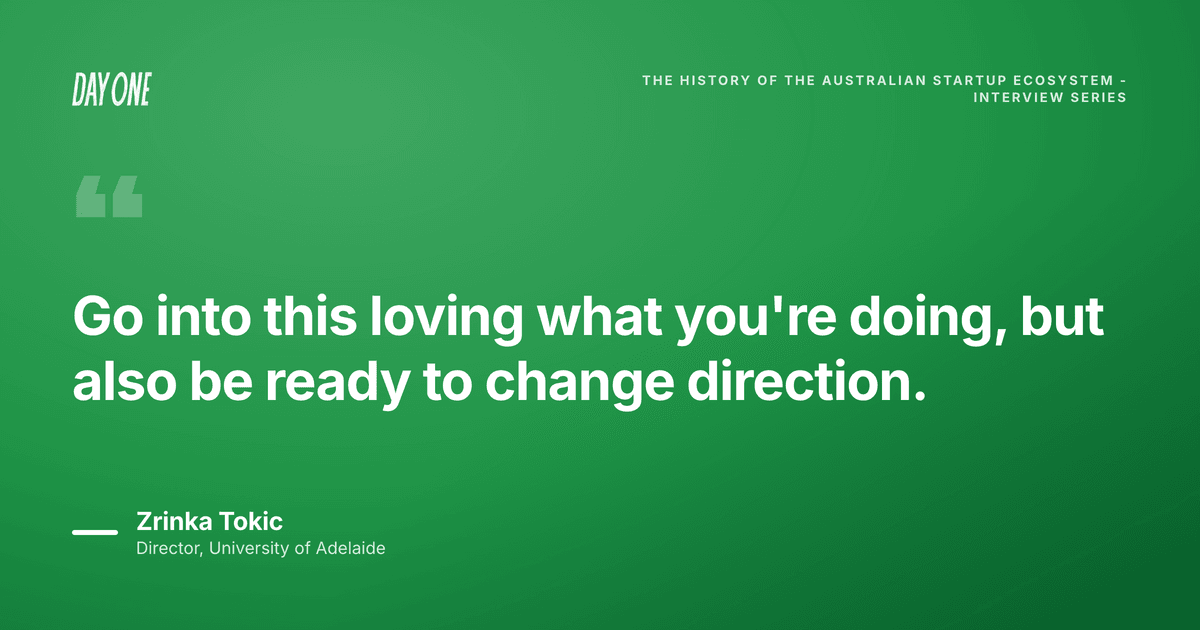
Transcript Synced · select any line to jump ▾ 0:00 Speaker: Let me tell you about our partner, Teamified. If you need to build a top-notch team quickly, Teamified is your go-to solution. They not only provide fractional CTOs, they can also do contractors and even remote team members tailored exactly to your needs. And whether you're looking for expertise in the Philippines, India, or Sri Lanka, Teamified has you covered. What's amazing is that Teamified uses a blend of AI and human expertise to cut hiring times by 50%, cent. The platform handles everything from automated onboarding to day-to-day management and even performance tracking. You can also handle rewards and recognition, buy equipment, and order training all through their platform. Simplify your hiring process and get the best talent fast with Teamified. Check them out now and transform your team. Go to dayone.fm/teamified. That's dayone.fm/teamified. Thank you, T-E-A-M-I-F-I-E-D, and get started today. Hi, I'm Adam Spencer, founder of the Day One Network, which is bringing the history of the Australian startup ecosystem to you. I believe in founders. It's why I do everything I do at Day One and our media company, W2D1 Media. And that's why the Day One Network exists, to create helpful content for founders. We've got some great shows in development. But a large part of what we do couldn't be done without support from our partners and sponsors. And I couldn't be happier than to be working with NTP, who get community better than any other technology recruitment company out there. A Newcastle company like mine, NTP are invested in seeing the growth of the local tech community in Newcastle, Sydney, and more broadly Australia. So thank you NTP for helping us bring— Thank you. Helpful content to founders and the startup community in Australia. Back to the interview. Hi, I'm Adam Spencer, founder of the Day One Network, which is bringing the history of the Australian startup ecosystem to you. I believe in founders. It's why I do everything I do at Day One and our media company, W2D1 Media. And that's why the Day One Network exists, to create helpful content for founders. We've got some great shows in development. But a large part of what we do couldn't be done without support from our partners and sponsors. And I couldn't be happier than to be working with NTP, who get community better than any other technology recruitment company out there. A Newcastle company like mine, NTP are invested in seeing the growth of the local tech community in Newcastle, Sydney, and more broadly Australia. So thank you NTP for helping us bring helpful content to founders and the startup community in Australia. Back to the interview. Hi, I'm Adam Spencer and welcome to Day One, the podcast that spotlights Australian startups, founders, and the organizations that empower Australian entrepreneurship. We go back to the beginning to tell a story of Australia's most inspiring founders and how they built their companies. You're listening to a special interview series as part of a documentary W2D1 is producing about the history of the Australian startup ecosystem. On the episode today, we have— 3:18 Zrinka Tokic: My name is Zrinka Tokic. I'm the director of ThinkLab and the E-Challenge at the University of Adelaide. So ThinkLab is the University of Adelaide's business incubator. So we have locations in Adelaide. We've got headquarters here in Adelaide. We have a location in Singapore. New Zealand, we have regional locations in Loxton, and we have a ThinkLab at WAIT, which is our WAIT campus, which is really around agri, food, and wine. 3:51 Speaker: We'll probably go a bit deeper on this when we get really into the interview, but just, you know, as a bit of a summary, what's the eChallenge? 3:59 Zrinka Tokic: What's the eChallenge? Okay, so the eChallenge is a pre-accelerator program. And it's been running for 21 years, and it really is a program that takes you from idea to market ready, or as we put it, kind of incubator ready. So we use the E-Challenge as a program to feed into our ThinkLab. So it is the first step. So ultimately, you come in with an idea, and you spend 3 months working on that idea so that you're incubator ready. And that goes from testing the market to, you know, really looking at whether there's a need for this product or service, and then you get mentoring and support the whole way. So it's a 3-month program. 4:38 Speaker: What was your first exposure to the Australian startup ecosystem? 4:42 Zrinka Tokic: I started working at the university in 2005. I really just started working at the university and it was the Entrepreneurship Center. And at the time, you know, I really didn't even know what entrepreneurship meant. I actually just came in to work there for a few months and I was an interior designer, so I didn't know anything about business. I thought, look, I'll give this a go, this sounds interesting. So it was the Entrepreneurship Center for Innovation and Commercialization. It was a big mouthful. And it was this small center that had 3 people working there. And basically, we used to run programs that were involved with commercialization. So we had a Master of Technology Commercialization and a Master of Entrepreneurship. And that was where I really basically learned about entrepreneurship and what it was. 5:24 Speaker: Is, are there any, What lesson have you brought across from your interior design background that's helped you in this, you know, this world of entrepreneurship and startups? 5:35 Zrinka Tokic: So, you know, that's really interesting that you say that. Design thinking in particular, that was something that I brought from interior design, and I found that having that background, when you're working on projects designing for people, you really have to listen to the customer and really see that you're designing for them. And that's basically what I brought to the university with me, without realizing it though, because design thinking wasn't a really big kind of buzz thing at the time, and it is now. And so, and I went to Stanford later on in life, you know, in 2018 to actually learn more about design thinking and to actually bring that into everything that we do. So yeah, that's probably what I brought. But, you know, Ultimately, working at the university and being involved in entrepreneurship gave me a lot more. I was handed the eChallenge program, which is our current pre-accelerator. It had been running for a few years and the school didn't want to run it anymore. And they said, "Surenka, do you want to look after it?" So I said, "Look, I'll give it a go." And I didn't understand anything about business plans or business at the time. So it was quite, quite quite an interesting journey for me because I had to find presenters for different topics, you know, around intellectual property and marketing and, you know, opportunity assessment at the time. So I had to find all these different kind of business professionals, which actually launched me into the world in a great way, actually, because I actually met all these amazing people that could actually help entrepreneurs. And then we put this program together, this 3-month program together, And the most wonderful thing about it is I'd see the students actually take part in the program and see the change that it brought in them. You know, they'd come in with an idea, but then they became— they did all this research and they became the experts. And that's what I really loved about the program is they became these experts and they actually pitched and we all learned from them. So I actually learned more from them than I think they probably learned from me. Yeah. From us and over that probably a 5-year period, I actually picked up so much myself that now, you know, I run a number of businesses outside of work and I've launched products into the, you know, US markets and other markets. So it actually has made me more relevant being an entrepreneur myself because I'm no longer someone that just talks about entrepreneurship, I'm doing it and I'm relevant and I can actually pass on my current knowledge to the participants. And I think that's where I have actually learned so much from the program, and I learn so much every day from the students that are involved as well. 8:14 Speaker: Jumping back for a second to Stanford University and the design thinking course there, what do you think the main takeaway that you brought out of that was? 8:24 Zrinka Tokic: I think we spend a lot of time thinking and overthinking our designs, and I remember the first day we got there, you know, no computers, no phones for 4 days, 4 days straight. And we actually worked from 8:00 AM to 8:00 PM. And everything we did was in 8-minute blocks. And I was exhausted after the first day because we would actually do activities. You'd have to draw something, build something in 8 minutes. And, you know, I used to panic. I was thinking, "Oh my goodness, how am I gonna do this?" After the end of the kind of 4 days, I was finishing tasks in 5 minutes. And so I really think— Wow. That's what I took away is that we spend too long overthinking, overthinking things and designs, the way we're gonna draw things, just do it. 9:09 Speaker: Was there a, you know, you joined the uni in 2005 and you mentioned, and I can't remember the full name of the department, Entrepreneurship Centre for Commercialisation or something like that? 9:22 Zrinka Tokic: Yes, it was called the Innovation Centre for Entrepreneurship and Commercialisation. Then it changed to ECIC, so the Entrepreneurship Centre for Innovation and Commercialisation. So it was always this big mouthful and no one really understood what it meant, so I spent a lot of time explaining what we did. 9:40 Speaker: I'm assuming that was all rebranded and repackaged into what we know today as the ThinkLab, or am I wrong about that? 9:47 Zrinka Tokic: No, the ThinkLab was actually part of ECIC at the time. It was designed, and this was in 1993, so ThinkLab is one of the oldest incubators, I think, in Australia. So in 1993 it was launched, and it was designed to support students so that they could actually work on a business and do a degree at the same time. So they'd do a Master of Entrepreneurship or a Master of Innovation and Commercialization, and they would actually walk away with a degree and a business. So it was very, very clever at the time. And it wasn't called ThinkLab at the time, it was just called Theberton Incubator. And we shortened it to ThinkLab. So it was at Theberton, it was based at Theberton, and it was an incubator and then laboratory. So, so that's pretty much how the name was born. And it was soon after that, that it actually was more and more embedded in the university around commercializing innovations, commercializing research. So it was really around education. ThinkLab was around education and working on a business with support while you're working on your degree. And still is the same thing. So to this day, it's about having a degree and working on your business and finishing and leaving the university with a degree and a business. And I think that's a really, really special thing. That's a special thing about ThinkLab. 11:05 Speaker: I'm sure it's very challenging running, is it 5 different locations? 11:10 Zrinka Tokic: 5, yeah, we had 6 up until last year. So last year we had a location in France. Obviously COVID, that hit the region very hard, so we're still looking at heading back to France and having a location there. So we had 6 prior to that. 11:23 Speaker: It must be very challenging running that. What's the most rewarding part about your job? 11:28 Zrinka Tokic: You know, what I love about it is each time that we enter a new location, for example France, it's, we're a startup. I feel like I'm constantly in startup mode, constantly learning, constantly looking for new new markets, constantly testing as well. And I think that's the most rewarding part. It keeps me interested in the job. That's what I love about it. It's actually quite thrilling launching a new location, meeting new people, working out whether there's a need for the ThinkLab in a certain location. Where does it fit? How does it fit into the local ecosystem there? You know, there are lots of cultural issues, and how do we fit in there as well? It is a really fascinating thing to actually launch a product or a new service or a company in a new location. And for example, in France, it took, probably took me about 3 years to actually build it there, to actually get it off the ground. But that was through our e-challenge program. So we started actually teaching the e-challenge program in Nice and Lyon and Paris and all these business schools. And they actually said, look, we don't really have anything like this here. Would you like to have a ThinkLab here as well? And so basically that's how ThinkLab was born in France as well. It was a very exciting time, and at the time entrepreneurship wasn't that big in universities. This was around 2015 in France, so we actually, you know, hit a market that there was a real need. 12:57 Speaker: You know, speaking about entrepreneurship wasn't really as big of a thing back in 2015, you've been involved in the uni since 2005. The Australian startup scene, for lack of a better word, didn't really start getting going until 2010, 2011, 2012. 13:15 Zrinka Tokic: Exactly. 13:15 Speaker: Going back to 2005 in Adelaide and in South Australia, can you paint a bit of a picture about what did the community look like in terms of people? Who did you look to? Who were kind of those beacons? What organizations were there that were doing great things in the space? 13:32 Zrinka Tokic: Yeah, so back then there was a venture capital board, and that was a South Australian government initiative. So they kind of would sponsor and give us some money. Our main money came from Hewlett-Packard. So Hewlett-Packard was really looking to engage students, and they were looking to be attached to innovation and entrepreneurship. And so they were actually, really wonderful to work with in those first few years because they really were supportive of innovation, entrepreneurship, and new product design and development. Locally, you know, there were pockets of people that were interested in investing. You know, we had Playford Capital around, there were other investors, private investors. It was very ad hoc. It wasn't like there was— the only kind of real body that was around that would actually that I had a fair bit to do with was the Venture Capital Board of South Australia. So otherwise, you know, you'd have your law firms, some of those kind of were interested in entrepreneurship as well. Yeah, I would say that's probably about it. That's probably about it at the time. 14:43 Speaker: What did you, at what point, what year maybe, what, I don't know, that you started to notice things were shifting? There's more of a community developing, a lot more started to happen. Is there any, can you pinpoint any time? 14:57 Zrinka Tokic: Yeah, look, I remember, I think it was Paul Daley and a couple of other people, they decided to map the entrepreneurial ecosystem. I can't remember what year that was actually in. That may have been way back in 2012, '13, or maybe more recently. I can't remember the year, actually. When they started to map the entrepreneurial ecosystem in South Australia, we realized how many, things were happening in the entrepreneurial space. And I think that was a turning point because people actually started noticing each other. We were kind of doing our own thing in silos. And as soon as they mapped this ecosystem and they brought us together for meetings, we started meeting each other. And so we, it wasn't such a lonely journey. This, the group grew and then we had the Marjoram Distillery, you know, they— Yeah. I think they also started that kind of incubation space as well. More incubators started turning up around Adelaide, but ultimately, you know, ThinkLab was around on its own for quite a while. 15:56 Speaker: You mentioned silos, and that's a theme that comes up quite regularly in these interviews. Do you have any idea around why silos develop? You know, why groups tend to kind of form and they don't really understand what else is going on over there or over there. They just get stuck like in their own little group. 16:15 Zrinka Tokic: You know, it's competition, and I think South Australia in particular is small, and as soon as universities start competing, it's competition for students, it's competition for kudos as well. It's like, who's doing it the best? You know, it's a really interesting thing because ultimately I haven't felt like we've had to compete so much with others because we do have students. We have students, so we're designed, ThinkLab is designed to support staff, students, and alumni of the University of Adelaide. So locally, right? So we do take companies and startups from outside the university, but not that many, and we select those carefully so that they add to the community. So we have a constant influx of students and alumni and staff that are wanting to enter ThinkLab. So we don't so much have to be as aggressive on the outside to get all these startups in. And I think that's where the competition really starts, because if you're competing for great startups and you want to be seen as the best, that's how those silos sort of form and you get a bit competitive. But ultimately, we have these wonderful students that we work with. So I haven't felt like I've had to compete on that sort of stage. And I've always felt very happy to collaborate because it's always— Yeah. Helped us grow and helped the university grow and help students, open opportunities for students as well. 17:40 Speaker: Fast forwarding to present day, what are some of the biggest gaps that you've observed today? Where can we make the biggest improvements? 17:51 Zrinka Tokic: It's that early stage funding. You know, I deal with lots of startups at the early stage, and I don't think it's about government funding, they don't, it's not government funding that they need. It is, they really need to just get $50,000, that's all they need. Some of them really just need that start and the big gap is no one wants to invest in you till you've got some traction, basically. So how do you get that traction with no money? It's hard. So that's the biggest gap. It is ultimately, you can't get an investor on board here in Australia until you have traction, you've got customers. Until you've really proven yourself. And how do you get there without money? And that's where a lot of them actually fail. And I remember years back, we had this amazing innovation that would, this is back in 2010, a vine pruning AI kind of machine. I had phone calls from all over the world as soon as they heard about this team, and no one would actually invest in them. No one would put any money in them until they could prove that this thing could work. And the only way they could get it to work was under, in really controlled conditions and at nighttime under lights because daytime would actually affect the actual movement of the robot. So, you know, this was an amazing South Australian innovation that was never going to take off because they couldn't get that early-stage funding. But, you know, everyone, everyone all over the world was ringing saying, we want this, if you can make it work, we want it. So, you know, that's just an example of an innovation that was just actually just kind of left up to sit because we couldn't get that early stage investment. 19:29 Speaker: If a brand new founder came to you tomorrow, what one piece of advice would you give them to help them succeed? 19:36 Zrinka Tokic: Oh, you've gotta stay hungry. You've gotta love it. You've gotta love it. You've gotta be committed. I see time and time again, if you're not committed and you don't love what you're doing, and if you're not agile as well, you have to really ultimately go into this process with an open mind and think, this may or may not work, but I'm ready to change direction. And so I think that's my big takeaway, is go into this loving what you're doing, but also be ready to change direction. 20:04 Speaker: Do you have an unpopular opinion about the startup ecosystem or startup community? You know, either positive or negative, just something you firmly believe, but you find yourself having to convince everyone about it. 20:16 Zrinka Tokic: Okay, the startup community, I think, can be a bit cliquey, and this is, we've noticed recently, there are more kind of groups coming and forming, and I have spoken to a lot of startups downstairs in ThinkLab, and a lot of them say it's hard to penetrate the startup community sometimes. So that's, I found really interesting because I'm in there, and so I don't feel like I have to penetrate it, but then on the outside, looking in and wanting to enter this community and be embraced by this community as startup, and sometimes they're not welcomed with open arms. 20:51 Speaker: Does anything come to mind in terms of a broad sweeping or a, you know, a big movement that you have seen in your time in the space that really helped push the community forward or get, you know, get us to the next level, stage, whatever that is? 21:08 Zrinka Tokic: So when I started way back in 2005, we'd take students or participants through a 3-month program and, you know, very rare would they have a website at the end, very rare would they have a proper logo. Now I think with the adoption of these open source online tools, every single student, every single participant, every single startup has a logo, has a website, at least a landing page, or even an app that you can click through. So I think the emergence of these amazing online tools have changed the startup world and made it faster, and you can actually go from idea to your prototype in days. And I think that is a most amazing aspect of what's happened to the startup ecosystem as well, that things are moving a lot faster and you can actually create and change and make things very quickly. 22:01 Speaker: That's so true, like the cloud hosting services where you can get a website up now for a few dollars a month as opposed to having, you know, 20 years ago having to buy all the hardware and it cost $10,000. 22:15 Zrinka Tokic: Exactly. 22:16 Speaker: You've got all these amazing tools like Canva, whereas previously you would have to spend thousands of dollars on a graphic designer to do something. 22:22 Zrinka Tokic: Yeah, you do logo generators, anything. 22:25 Speaker: Yeah, so all of these things that have taken away roadblocks and made things a lot easier. What roadblocks still exist? What's the next roadblock that you think we need to work on smoothing out? 22:38 Zrinka Tokic: Okay, that's an interesting question. I think ultimately it is investment perception as well. I still, that's a perception. So ultimately we are in the entrepreneurial ecosystem, so we get it, right? But I still I speak to parents of students that will come on campus and they still don't get it. They want their kids to be lawyers, accountants. They don't realize that these jobs are disappearing, that they're no longer existing and that their kids have to be agile. And one thing that entrepreneurship teaches them, and if they do an entrepreneurship course at university, is it teaches them to look at opportunities to understand what is a good opportunity and how to pitch that opportunity. So ultimately, whether they, they work on a startup or not, they're gaining amazing soft skills that they can take to an employer. So they're actually entrepreneurial within an organisation, they're intrapreneurial. And I think, I think perception has to change outside of the startup community as to what entrepreneurship can do for a person. Yeah. And for their personal growth. 23:46 Speaker: Keeping in mind that what the team and I are trying to do is create a documentary that will as honestly and holistically as possible tell the story of the Australian startup ecosystem over the past few decades. We want people from all corners of the ecosystem to listen to this story, founders, investors, academics, policymakers, either thinking about any one of those categories or all of them. What message do you have for them? Like, what do you think people need to hear? 24:15 Zrinka Tokic: You know, I suppose I have been doing this for a very, very long time, and I found it absolutely thrilling and exciting, and I learn more every day from the participants than anything else. So I think governments are starting to realize the value of entrepreneurship, the value of small business, And I actually think, you know, that's probably the biggest thing that has kind of emerged over the last few years is finally, finally entrepreneurship has its place. And I hope it will actually continue to extend and be and grow and that the entrepreneurial ecosystem will grow. There are some amazing accelerators and incubators all over the world. Yeah. World. And I think, you know, we also need to link in more. And as soon as I go overseas or to our other locations, I realize there's a massive world out there and there are so many new connections that we can make. And sometimes we do kind of stick very close to home, and I think it's time to really branch out as much as we possibly can. We may need a bit more help with that, and it would be great to see more Australian startups hit international markets and have assistance to do that. 25:46 Speaker: I hope you enjoyed that interview. More interviews are on the way. Follow the podcast wherever you're listening right now. Stay tuned for more interviews with many, many more amazing people from the Australian startup ecosystem. Thanks for listening and see you next time. Bye.